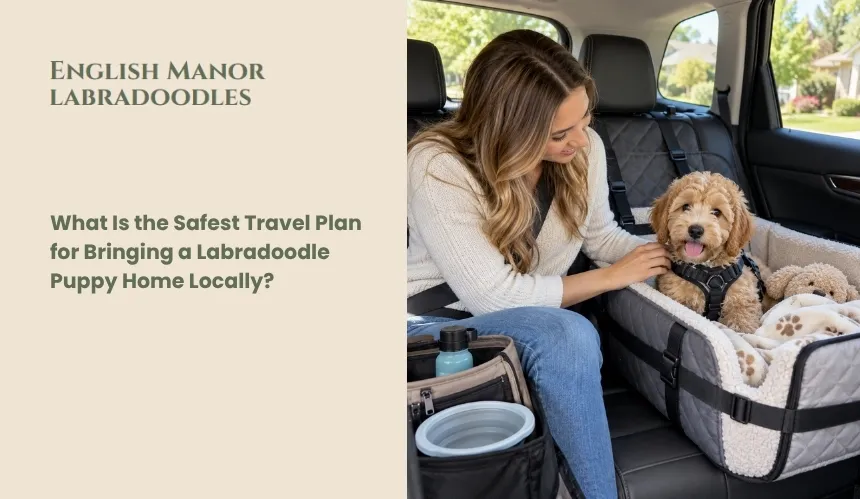
- englishmanor
What Is the Safest Travel Plan for Bringing a Labradoodle Puppy Home Locally?
Quick Overview: The safest local travel plan for bringing a Labradoodle puppy home involves using a secure travel crate or puppy carrier inside a temperature-controlled vehicle while keeping the environment calm, quiet, and low-stress. Puppies should never travel loose inside a car because sudden braking, falls, overstimulation, or distractions can increase injury risk and emotional stress during the first trip home. A safe puppy pickup setup usually includes:
Owners should also avoid exposing young puppies to unfamiliar dogs or heavily trafficked public areas before vaccinations are completed. Keeping the trip simple, secure, and quiet usually helps Labradoodle puppies adjust more comfortably during their first major transition. Did You Know? Many puppies experience temporary stress, whining, or motion sickness during their first car ride because they are leaving familiar littermates and environments for the first time. |
Bringing a Labradoodle puppy home is an exciting experience, but the first trip can also become stressful and overwhelming for a young dog experiencing a major environmental change for the first time. New sounds, unfamiliar movement, separation from littermates, and car travel can quickly increase anxiety if transportation is not planned carefully. Many owners unintentionally make the first ride more difficult by allowing loose travel, overstimulating the puppy, or exposing it to unsafe environments during pickup day.
Young puppies are still physically vulnerable and emotionally sensitive during early development stages. Sudden braking, excessive handling, loud environments, temperature fluctuations, or contact with unfamiliar dogs can increase both safety risks and stress-related behavior during transportation. Puppies may also experience motion sickness, fear responses, whining, or accidents during travel, especially when routines and surroundings change suddenly.
One of the most important goals during puppy pickup is creating a calm, secure, and controlled travel experience that helps the Labradoodle adjust gradually rather than becoming overstimulated. Proper preparation before pickup often reduces travel stress significantly while improving comfort and safety during the transition home.
This guide explains the safest local travel plan for bringing a Labradoodle puppy home, including secure car travel setup, stress reduction strategies, health precautions, and the most common mistakes new owners should avoid during the first trip.
Preparing Before Picking Up a Labradoodle Puppy
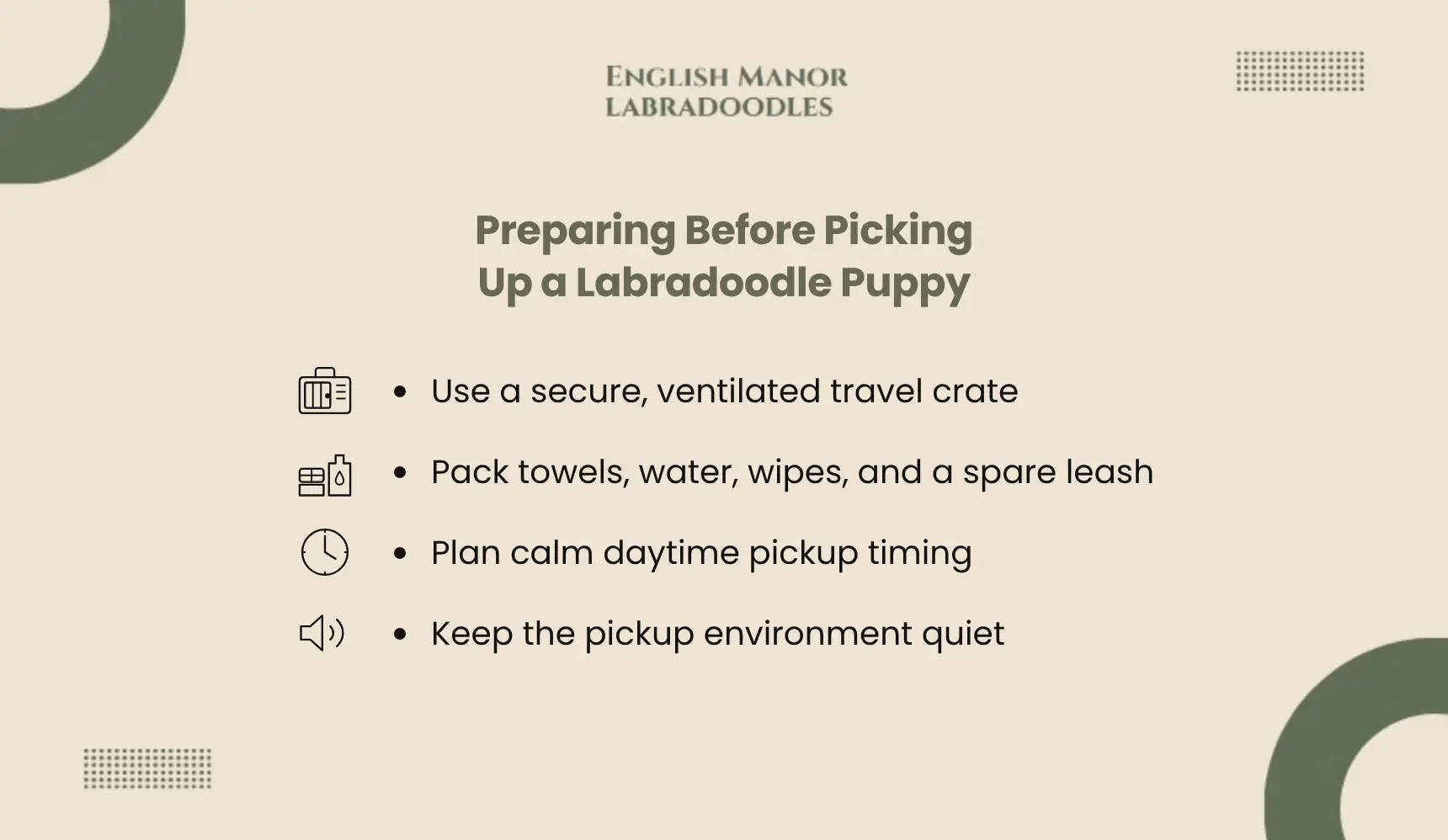
Proper preparation before pickup day can make the first trip home significantly safer and less stressful for a Labradoodle puppy. Because young puppies are still adjusting emotionally and physically, a calm travel setup helps reduce overstimulation, motion stress, and safety risks during transportation.
Should Buyers Use A Travel Crate Or Carrier?
A secure travel crate or puppy carrier is usually the safest option for local puppy transportation. It helps protect the puppy during sudden stops while preventing unsafe movement inside the vehicle. Soft bedding or absorbent pads inside the crate can improve comfort during the ride.
The crate should remain:
- Well-ventilated
- Properly secured
- Large enough for comfortable movement
- Quiet and stable during travel
Did You Know?
Veterinary safety experts generally recommend secured crates or carriers for puppy transportation because loose travel can increase injury risk during accidents or sudden braking.
What Supplies Should Be Brought During Pickup?
Basic travel supplies help owners handle accidents, stress, hydration needs, and comfort during the trip home. Puppies may become nervous or motion sick during their first ride, especially after separation from littermates.
Helpful travel items commonly include:
- Absorbent towels or pads
- Water and collapsible bowls
- Cleaning wipes
- Extra leash and collar
- Paper towels
- Comfort blankets with familiar scent
Keeping supplies simple and organized usually helps reduce unnecessary stress during pickup.
Why Does Travel Timing Matter?
Carefully planning pickup timing can help avoid heavy traffic, excessive travel delays, and unnecessary overstimulation. Puppies generally handle calmer daytime travel more comfortably than long late-night or high-traffic trips.
Owners should also avoid stacking multiple stressful activities into the same day, such as introducing crowded environments, meeting numerous visitors, or stopping at busy public locations before arriving home.
Why Should The Pickup Environment Stay Calm?
Excited voices, excessive handling, loud music, and constant interaction can overwhelm young puppies during the first transition away from their familiar environment. Labradoodle puppies may already feel anxious because of separation from littermates, breeder environments, and familiar scents.
A quieter and calmer pickup environment usually helps puppies settle more comfortably during travel while reducing fear-related stress responses during the ride home.
What Is The Safest Way For A Puppy To Travel In A Car?
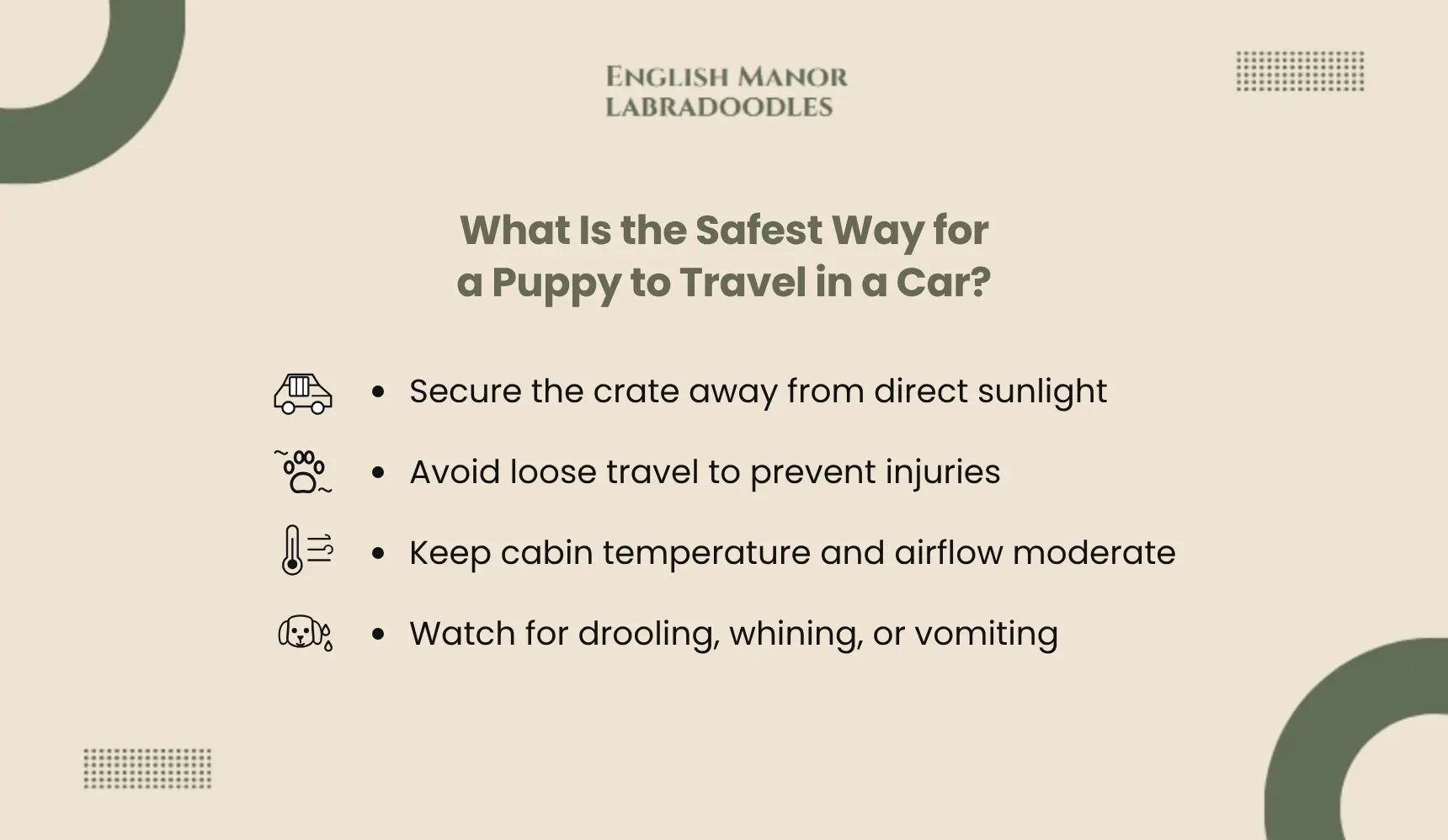
Safe car travel is one of the most important parts of bringing a Labradoodle puppy home because young puppies are physically fragile and easily overwhelmed during their first transportation experience. Proper restraint, airflow, temperature control, and stress management all help reduce injury risk and emotional distress during local travel.
Should Puppies Ride In Crates?
A secured travel crate is generally considered the safest way for a puppy to ride in a car. Crates help prevent sudden falls, unsafe movement, and distraction-related accidents while giving the puppy a smaller, more controlled space to settle during travel.
The crate should be:
- Properly secured in the vehicle
- Well-ventilated
- Away from direct sunlight
- Comfortable but not overcrowded
Many puppies feel more stable and protected when enclosed in a quiet travel space during their first ride home.
Did You Know?
Young puppies can become overstimulated quickly during travel because unfamiliar movement, sound, and vibration create sensory stress they have not experienced before.
Why Is Loose Puppy Travel Risky?
Allowing a puppy to move freely inside the vehicle can create serious safety risks for both the dog and passengers. Sudden braking, sharp turns, or unexpected movement may cause falls, injuries, or dangerous distractions while driving.
Loose travel may also increase:
- Fear-related panic
- Motion sickness
- Unsafe climbing behavior
- Driver distraction
- Accidental escape during stops
Keeping the puppy securely restrained usually creates a calmer and safer travel experience overall.
How Important Are Temperature And Ventilation?
Young Labradoodle puppies are sensitive to heat buildup and poor airflow during travel. Vehicles can warm quickly, especially during sunny weather or slow-moving traffic, which increases the risk of overheating and dehydration.
Owners should maintain:
- Moderate cabin temperature
- Consistent airflow
- Shade from direct sunlight
- Comfortable ventilation near the crate
Puppies should never be left unattended inside parked vehicles, even for short periods.
Can Labradoodle Puppies Get Motion Sickness?
Some puppies experience temporary motion sickness during their first car rides because balance systems and travel tolerance are still developing. Signs may include drooling, whining, vomiting, shaking, or restlessness during movement.
To reduce motion-related stress, owners should:
- Keep the ride smooth and quiet
- Avoid heavy feeding immediately before travel
- Limit unnecessary stimulation
- Maintain a calm environment
Most puppies gradually become more comfortable with car travel through positive and controlled experiences over time.
How To Reduce Stress During The First Car Ride
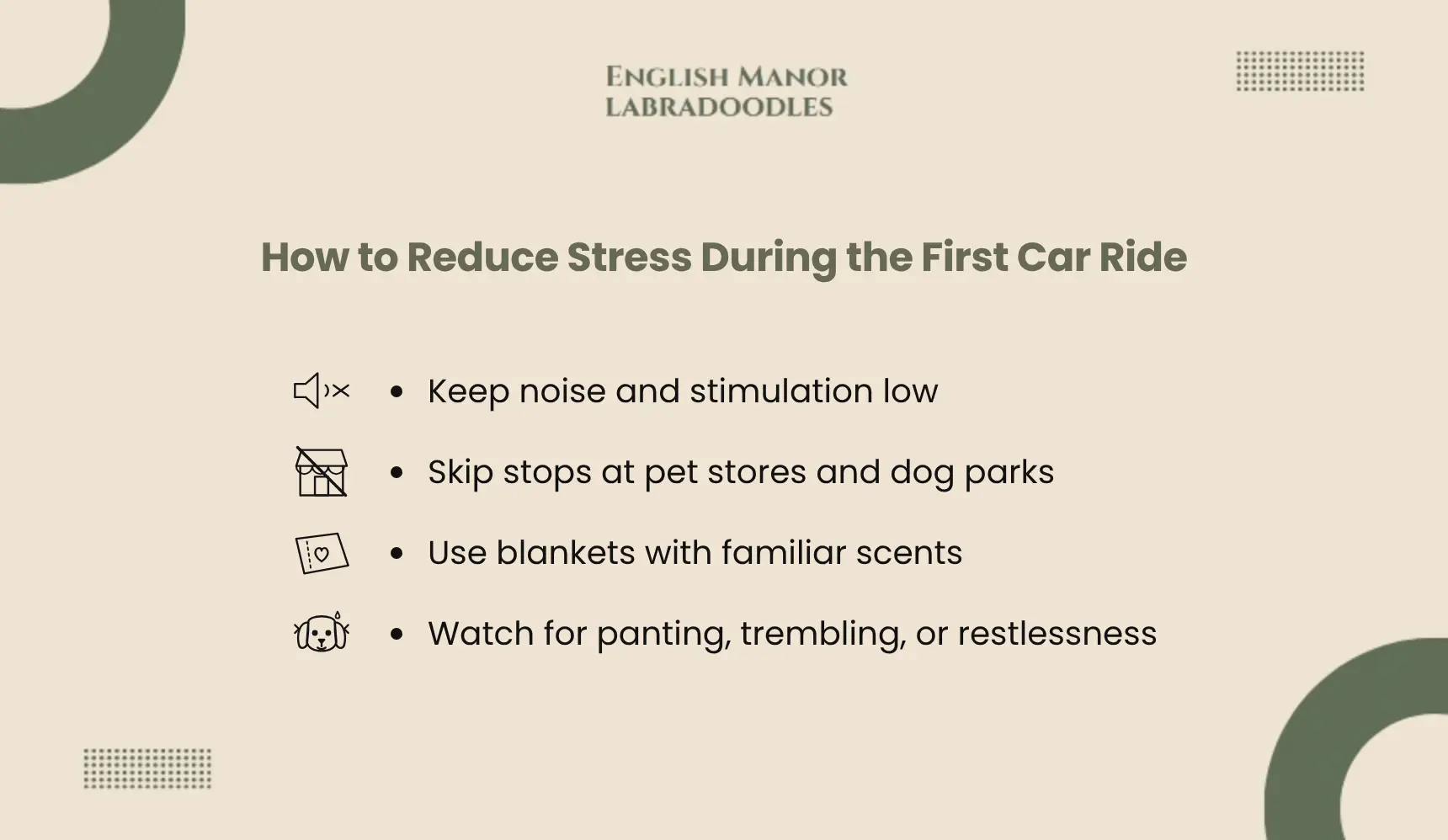
The first car ride home can feel overwhelming for a Labradoodle puppy because it involves separation from familiar surroundings, littermates, and routines all at once. A calmer travel environment helps reduce fear, overstimulation, and anxiety-related behavior during this major transition period.
Why Should Noise And Stimulation Stay Low?
Loud music, constant excitement, and excessive handling can increase stress levels during travel. Puppies are still adapting to unfamiliar sounds and movement, so quieter environments often help them settle more comfortably during the ride.
Many owners reduce stress by:
- Keeping voices calm
- Limiting unnecessary interaction
- Avoiding crowded stops
- Maintaining a relaxed travel atmosphere
Did You Know?
Behavior specialists often note that calmer early travel experiences may help puppies develop better long-term confidence around car rides and environmental changes.
Should Owners Avoid Unnecessary Stops?
Short local trips are usually safest when kept simple and direct. Frequent stops, public exposure, or unnecessary handling can overstimulate puppies that are already adjusting to a new environment.
Young puppies should especially avoid:
- Pet stores
- Dog parks
- Busy sidewalks
- Public pet areas
Before vaccinations are completed, exposure to unfamiliar dogs and contaminated surfaces may increase health risks.
Do Familiar Scents Help Puppies Feel Safer?
Blankets or towels carrying familiar scents from the breeder or litter environment can sometimes help reduce anxiety during travel. Familiar smells may provide comfort while the puppy adjusts to unfamiliar surroundings and movement.
Soft comfort items may also help puppies settle more quietly inside the travel crate during the ride home.
What Are Common Signs Of Travel Stress In Puppies?
Stress responses vary between puppies, but many Labradoodles display temporary signs of anxiety during their first trip home. Some puppies remain quiet and withdrawn, while others may whine, shake, drool, or become restless during travel.
Common travel stress signs may include:
- Excessive whining
- Panting
- Trembling
- Drooling
- Vomiting
- Restlessness
Most puppies begin relaxing gradually once they arrive in a quieter and more stable home environment.
Important Health and Safety Precautions During Travel
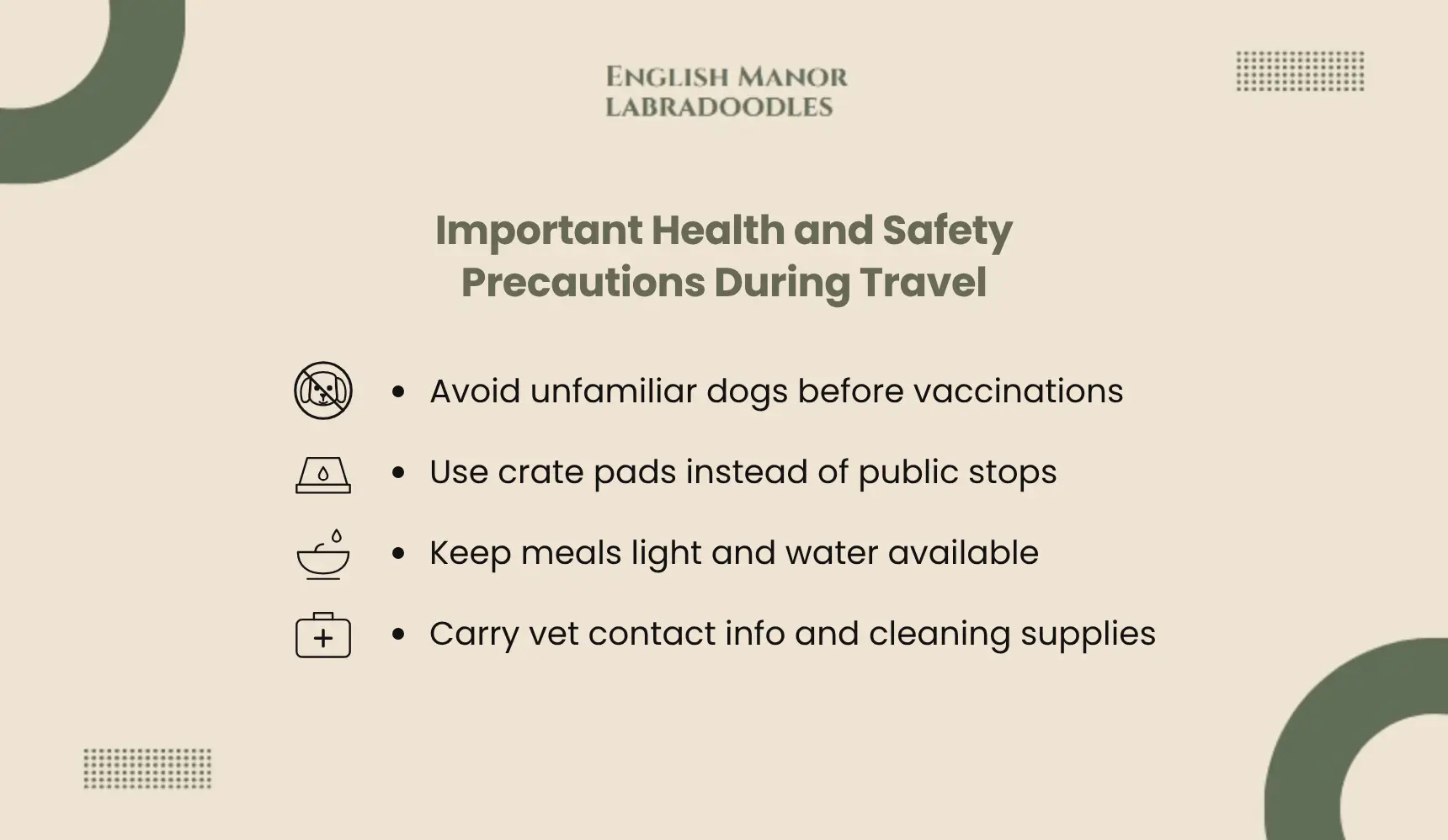
Health and safety precautions are especially important during puppy transportation because young Labradoodles still have developing immune systems and limited exposure tolerance. Simple mistakes during travel can increase stress, illness risk, dehydration, or accidental injury during the first transition home.
Why Should Puppies Avoid Unfamiliar Dogs During Travel?
Puppies that have not completed their vaccination schedule remain more vulnerable to contagious illnesses commonly spread in public pet environments. Contact with unfamiliar dogs, shared water bowls, or contaminated surfaces can increase exposure risk during travel stops.
Owners should avoid unnecessary interaction with:
- Unknown dogs
- Public dog areas
- Pet store floors
- Shared relief stations
- Busy animal facilities
Did You Know?
Veterinarians often recommend limiting public dog exposure until puppies complete core vaccination schedules and immune protection becomes stronger.
How Should Bathroom Breaks Be Handled Safely?
For shorter local trips, many puppies may not require multiple bathroom stops. If breaks become necessary during longer drives, owners should choose quieter low-traffic areas away from public pet exposure whenever possible.
Using absorbent pads inside the crate can also help manage accidents safely without requiring unnecessary public stops during travel.
Should Puppies Eat During The Trip Home?
Large meals immediately before travel may increase the chance of nausea or motion sickness during the first car ride. Many owners keep feeding light before pickup while focusing more on hydration and calm travel conditions.
Fresh water should remain available during longer drives, especially in warmer weather or stressful travel situations.
What Emergency Preparation Should Owners Have During Transport?
Although local travel is usually uncomplicated, basic emergency preparation helps owners respond calmly if problems arise during transportation. Puppies may occasionally experience stress-related vomiting, accidents, overheating, or sudden illness symptoms during travel.
Helpful preparation may include:
- Emergency veterinary contact information
- Cleaning supplies
- Backup towels or pads
- Extra leash and collar
- Drinking water
Simple preparation often helps reduce panic while making the first trip home safer and more manageable overall.
What To Do Immediately After Arriving Home
The first few hours after arriving home are an important adjustment period for a Labradoodle puppy. Even calm puppies may feel physically tired, emotionally overwhelmed, or uncertain after leaving their litter environment and experiencing car travel for the first time. A quiet and structured transition usually helps reduce stress while supporting safer early adjustment.
Why Should Puppies Have A Quiet Transition Space?
New puppies often adjust more comfortably when introduced to a calm, limited area rather than being overwhelmed with immediate access to the entire home. A quiet transition space helps puppies rest, decompress, and observe their surroundings gradually.
This area should ideally include:
- Fresh water
- Soft bedding
- A crate or resting area
- Limited noise and activity
- Safe chew toys
Did You Know?
Many puppies sleep significantly more during the first 24 hours after travel because stress and environmental adjustment can be physically exhausting.
Should Family Introductions Happen Gradually?
Excited greetings, constant handling, and large group introductions can overwhelm puppies during the first day home. Labradoodle puppies usually adjust better when introductions remain calm, controlled, and gradual.
Limiting stimulation during the first few hours often helps reduce fear-related behavior and overstimulation.
What Adjustment Behaviors Are Normal?
Some puppies settle quickly, while others may temporarily display stress-related behavior after arriving home. Mild whining, hiding, reduced appetite, extra sleep, or clingy behavior are commonly observed during early adjustment stages.
Most puppies gradually become more comfortable as routines, feeding schedules, and familiar interaction patterns begin developing.
When Should The First Veterinary Visit Be Scheduled?
Many veterinarians recommend scheduling a wellness examination shortly after bringing a puppy home, even when vaccination records are already provided by the breeder or rescue organization. Early veterinary visits help confirm overall health, review vaccination schedules, and identify any hidden medical concerns.
Initial veterinary appointments commonly involve:
- Physical examination
- Vaccination review
- Parasite screening
- Feeding guidance
- Preventative care recommendations
Early veterinary evaluation also helps establish a long-term healthcare baseline for the puppy’s ongoing development.
Common Mistakes New Owners Make During Puppy Pickup
Many puppy pickup problems happen because owners unintentionally create stressful or unsafe situations during the excitement of bringing a Labradoodle home. Avoiding a few common mistakes can significantly improve both safety and early emotional adjustment during the first travel experience.
Why Is Overstimulating A New Puppy A Problem?
Constant handling, loud excitement, frequent photos, and multiple introductions can overwhelm puppies already adjusting to separation from littermates and unfamiliar surroundings. Excess stimulation may increase anxiety, whining, restlessness, or fear-related behavior during travel and early adjustment periods.
Keeping the environment calmer usually helps puppies settle more comfortably during the transition home.
Did You Know?
Animal behavior specialists often recommend allowing puppies to observe and adjust gradually instead of forcing constant interaction during the first day home.
Why Is Loose Car Travel Unsafe?
Allowing puppies to move freely inside a vehicle increases the risk of falls, panic, distraction-related accidents, and injury during sudden braking. Even short local drives become safer when puppies travel inside a secured crate or properly restrained carrier.
Loose travel may also increase motion sickness and emotional stress during the first car ride.
Why Should Owners Avoid Public Places Too Early?
Young puppies remain vulnerable to contagious illness before completing core vaccinations. Taking puppies to pet stores, dog parks, or heavily trafficked pet areas immediately after pickup can increase unnecessary health risks during an already stressful transition period.
Safer early exposure usually involves quieter and more controlled environments.
Why Should Stress-Related Behavior Not Be Ignored?
Whining, trembling, drooling, vomiting, hiding, or excessive panting may indicate fear, overstimulation, or motion stress during travel. Ignoring these signs can make the experience more difficult for the puppy.
Calm handling, reduced stimulation, proper ventilation, and quiet transportation conditions usually help puppies recover and adjust more successfully after arriving home.
Frequently Asked Questions
Can a Labradoodle puppy ride home without a crate?
Although some owners hold puppies during short trips, a secured travel crate or carrier is generally considered the safest option. Loose travel increases the risk of injury, panic, distraction, or accidental escape during sudden braking or unexpected movement inside the vehicle.
How long can a puppy safely travel in a car?
Most healthy puppies can tolerate shorter local car rides comfortably when the vehicle remains cool, quiet, and properly ventilated. Longer trips may require controlled bathroom breaks, hydration monitoring, and opportunities for the puppy to rest calmly during travel.
Should puppies eat before traveling home?
Heavy meals immediately before travel may increase the risk of nausea or motion sickness during the first car ride. Many owners provide lighter feeding before pickup while focusing on hydration and a calmer transportation environment instead.
Can Labradoodle puppies get motion sickness?
Yes, some puppies experience temporary motion sickness because balance systems and travel tolerance are still developing. Drooling, whining, vomiting, trembling, or restlessness are common signs that the puppy may be struggling with travel-related nausea or stress.
Is it safe to stop at pet stores during travel?
Pet stores and public pet environments are usually not recommended immediately after pickup because young puppies may not have completed core vaccinations. Exposure to unfamiliar dogs and contaminated surfaces can increase unnecessary health risks during early development stages.
When should a puppy visit the veterinarian after pickup?
Many veterinarians recommend scheduling a wellness examination within the first few days after bringing a puppy home. Early visits help confirm overall health, review vaccination records, identify hidden concerns, and establish a preventative healthcare plan.