- englishmanor
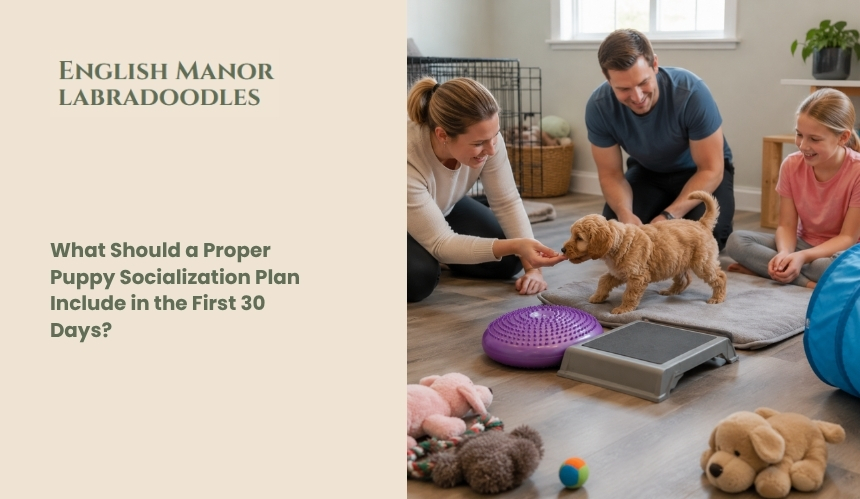
What Should a Proper Puppy Socialization Plan Include in the First 30 Days?
Quick Overview: A proper puppy socialization plan in the first 30 days should include structured exposure to new people, environments, sounds, and surfaces, combined with routine building, trust development, and basic training foundations. During the critical 8–12 week socialization window, gradual and positive experiences help build emotional stability, confidence, and adaptability. This first month should focus on:
When guided by positive reinforcement principles, such as those used in Positive reinforcement, early socialization becomes proactive rather than reactive. The goal is not overwhelming exposure, but controlled confidence-building experiences that shape lifelong behavior. |
The first 30 days with a new puppy are not just about adjustment; they are about neurological development. Between 8 and 12 weeks of age, puppies are in a critical socialization window when their brains are highly receptive to learning about the world. Experiences during this period can permanently influence confidence, fear responses, adaptability, and emotional resilience.
Did You Know?
Behavioral research shows that the primary socialization period in puppies begins to narrow around 12–14 weeks. Positive exposures during this stage are far more effective than attempting to correct fear-based behaviors later in life.
Without a structured plan, important exposures may be missed. Puppies that lack early, controlled introductions to sounds, handling, environments, or routine may develop:
- Noise sensitivity
- Stranger hesitation
- Grooming intolerance
- Separation stress
- Poor impulse control
A proper socialization plan does not mean overwhelming the puppy with constant activity. It means intentional, gradual exposure combined with predictable routines and trust-building interactions.
To build an effective 30-day roadmap, it’s essential to first understand what socialization truly includes and what it does not.
What Does Puppy Socialization Actually Mean?
Socialization is the deliberate process of teaching a puppy how to respond calmly and appropriately to unfamiliar experiences. It is not about overwhelming exposure or constant activity. The objective is emotional neutrality, helping the puppy observe new stimuli without fear, panic, or excessive excitement.
Did You Know?
Puppies are typically most receptive to social learning between about 3 and 12 weeks of age. Experiences during this window tend to shape long-term confidence and fear responses more strongly than later exposures.
A proper plan addresses four core areas.
Environmental Exposure
Puppies need controlled introductions to different physical settings. Walking across tile, hardwood, carpet, grass, or gravel helps prevent surface sensitivity later. Exposure to stairs, doorways, and mild elevation changes improves spatial confidence and coordination.
Sensory Conditioning
Exposure to sound and motion should be gradual and structured. Low-volume recordings of thunder, traffic, or household appliances can be paired with rewards to create positive associations. Gradual intensity increases help prevent future noise reactivity.
Human Interaction
Social exposure should focus on calm engagement rather than high excitement. Puppies benefit from meeting individuals with varied appearances and movement patterns. The goal is to teach appropriate responses, not to encourage overstimulation or jumping.
Handling and Care Tolerance
Early acceptance of touch is critical. Brief, positive sessions that include paw handling, ear checks, brushing, and collar placement build cooperation for future grooming and veterinary care.
When these four areas are addressed intentionally, socialization becomes structured learning rather than accidental exposure. With this foundation clarified, the first week can be planned with specific objectives and measurable progress.
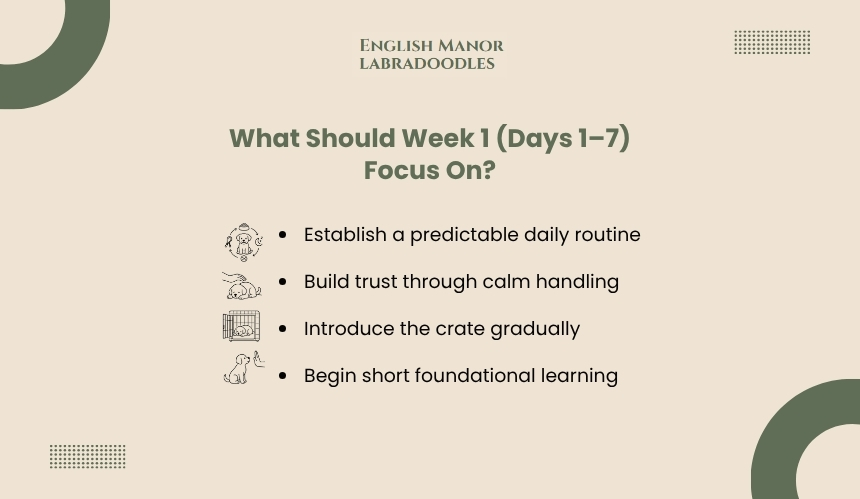
What Should Week 1 (Days 1–7) Focus On?
The first week should prioritize stability, predictability, and emotional security. Before expanding exposure, the puppy must feel safe in the new environment. Stress reduction during this stage supports faster learning and healthier attachment formation.
Did You Know?
Elevated stress hormones in young puppies can interfere with memory processing, making early overwhelming experiences more likely to create avoidance rather than confidence.
Week 1 is not about quantity of exposure; it is about quality of adjustment.
Establishing a Predictable Daily Structure
Consistent timing for feeding, potty breaks, rest, and short play sessions helps regulate the puppy’s internal rhythm. Predictability reduces anxiety and accelerates house-training progress. Puppies adapt more quickly when routines remain stable during the first several days.
Building Early Trust Through Calm Interaction
Trust develops through controlled handling, soft verbal tone, and responsive caregiving. Short engagement sessions, gentle petting, and reward-based interactions build emotional safety. Overhandling or constant stimulation should be avoided during this adjustment phase.
Introducing the Crate Properly
Crate training should begin immediately, but gradually. The crate should be associated with comfort rather than confinement. Brief, positive sessions with treats and open-door exploration prevent resistance from forming. The crate becomes a den-like security space when introduced correctly.
Managing the First Night
The puppy should sleep in a crate or designated sleeping space near the caregiver’s bedroom during the initial nights. Proximity reduces distress while encouraging independent rest. Sudden isolation in a distant room may increase nighttime anxiety and vocalization.
Beginning Foundational Learning
Short, reward-based sessions can introduce name recognition and simple engagement cues. Training during Week 1 should focus on attention and responsiveness rather than obedience complexity. Sessions should remain under five minutes to match the developmental attention span.
Week 1 creates the emotional and structural foundation for broader exposure in the following weeks. Once routine and trust are established, carefully controlled novelty can be introduced.
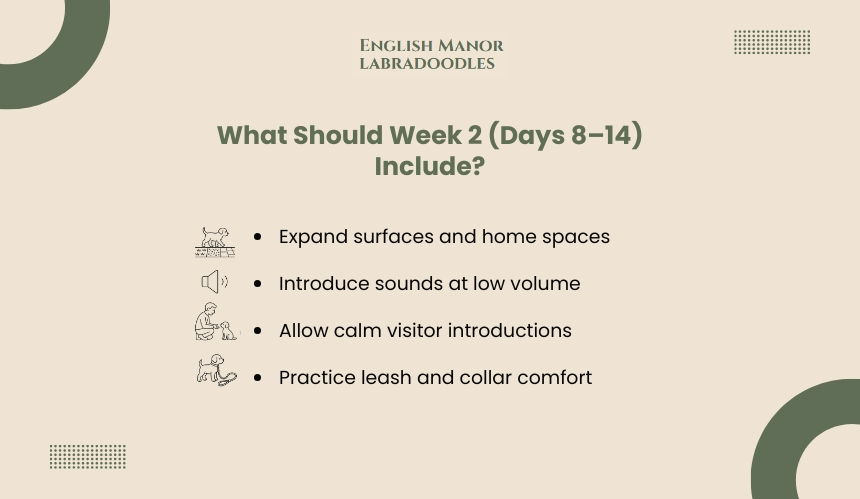
What Should Week 2 (Days 8–14) Include?
Once the puppy shows comfort with routine and the home environment, Week 2 should introduce controlled novelty. The goal is gradual expansion, not intensity. At this stage, confidence builds through repeated low-stress exposures rather than dramatic new experiences.
Did You Know?
Repeated positive exposure to mild stimuli strengthens neural pathways associated with confidence, making future unfamiliar situations easier to process.
Expanding Surface and Environmental Familiarity
Week 2 is ideal for introducing additional textures and mild spatial variation. Short walks across different surfaces and supervised exploration of new rooms help prevent environmental hesitation. The puppy should remain relaxed and able to disengage if unsure.
Structured Sound Conditioning
Introduce recorded environmental sounds at low volume while pairing them with treats or play. This can include distant traffic, mild construction noise, or doorbells. Volume should only increase once the puppy displays neutral body language.
The objective is association, not endurance.
Calm Visitor Introductions
Invite one or two calm guests to the home. Interactions should allow the puppy to approach voluntarily. Guests should avoid a looming posture or excessive excitement. Controlled exposure to different voices and appearances broadens social comfort without overstimulation.
Leash and Collar Familiarization
Brief indoor leash sessions allow the puppy to adjust to light restraint and guided movement. The leash should not be used for correction at this stage. Instead, it becomes a tool for communication and safety.
Reinforcing Attention and Basic Cues
Continue developing name recognition and introduce simple cues, such as “sit” or brief eye contact. Sessions should remain short and end on a positive note. The focus remains engagement and clarity rather than precision.
Week 2 builds environmental adaptability while maintaining emotional stability. Once these exposures become neutral and predictable, the puppy can begin experiencing slightly broader social settings in Week 3.
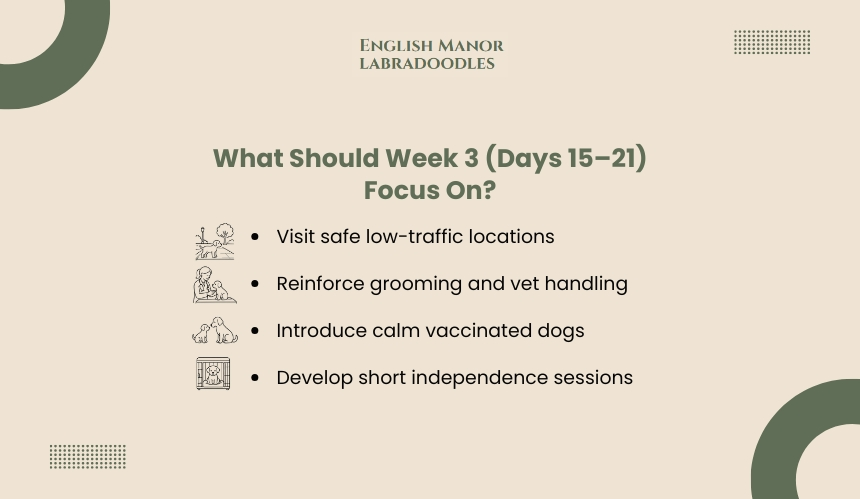
What Should Week 3 (Days 15–21) Focus On?
By Week 3, the puppy should show increasing comfort with routine and mild novelty. This stage focuses on broadening exposure beyond the immediate home environment while maintaining safety and emotional control. Experiences should remain structured and measurable.
Did You Know?
Controlled exposure during the early socialization window is associated with lower rates of adult fear-based reactivity compared to delayed or inconsistent exposure.
Introducing New Locations Safely
Short visits to low-traffic outdoor areas, such as quiet sidewalks or a friend’s yard, allow observation of new sights and movement patterns. The puppy should not be placed in high-risk public dog areas before vaccination protocols are complete. Exposure at this stage emphasizes observation rather than interaction.
Positive Veterinary and Handling Experiences
Schedule a brief “happy visit” to the veterinary clinic if possible. The goal is not treatment but exposure, stepping on the scale, receiving treats, and leaving calmly. Continued grooming preparation, including light brushing and nail-touch exercises, should also be reinforced during this week.
Controlled Dog Introductions
If health status permits, introduce one calm, fully vaccinated adult dog known for a stable temperament. The interaction should be supervised and brief. Proper canine communication, such as play bows or respectful disengagement, reinforces social literacy.
Developing Short Independence Sessions
Begin short periods of supervised alone time in a crate or safe area. Start with a few minutes and increase gradually. This prevents future separation distress by teaching that absence is temporary and predictable.
Advancing Foundational Training
Add simple recall exercises in low-distraction settings. Introduce brief-duration work for sitting or standing. Keep sessions structured and consistent, focusing on clarity rather than complexity.
Week 3 expands the puppy’s social and environmental awareness while preserving emotional balance. With these foundations in place, Week 4 can focus on strengthening confidence and resilience.
What Should Week 4 (Days 22–30) Include?
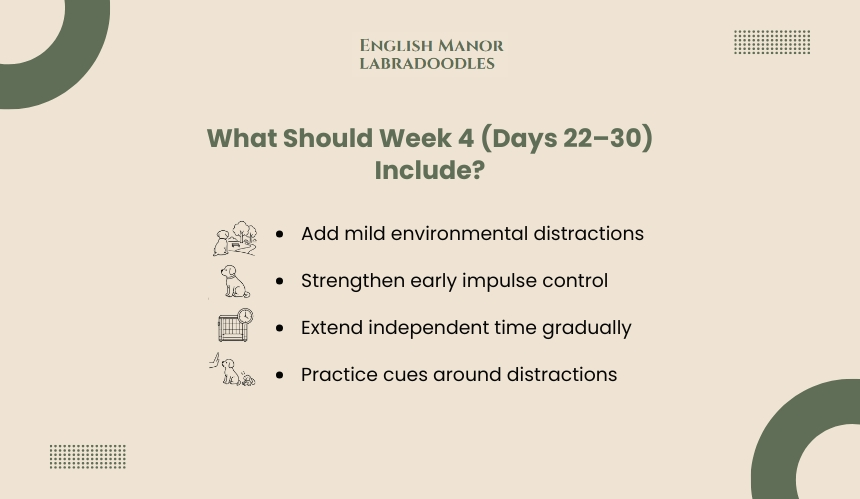
By Week 4, the puppy should demonstrate comfort with basic routine, home sounds, and low-level novelty. This stage focuses on strengthening resilience, impulse control, and adaptability in slightly more complex environments. The emphasis shifts from simple exposure to confidence under mild distraction.
Did You Know?
Puppies who experience gradual increases in environmental complexity during early development tend to recover from startling events more quickly than those with limited early exposure.
Introducing Mild Environmental Distractions
Short visits to busier but controlled locations, such as a quiet shopping strip or park perimeter, allow the puppy to observe movement, bicycles, strollers, and distant dogs. The puppy should remain below threshold, meaning calm enough to respond to its name and accept rewards.
Distance management is critical at this stage.
Strengthening Impulse Control
Impulse control exercises begin here. Simple games like waiting briefly before exiting a doorway or offering eye contact before receiving food reinforce emotional regulation. These exercises build frustration tolerance without putting pressure on.
Extending Independent Time Gradually
Alone-time training should progress slightly, extending crate or safe-area sessions in small increments. The goal is calm independence, not endurance testing. Monitoring body language ensures sessions remain productive rather than stressful.
Expanding Obedience Foundations
Basic cues introduced earlier should now be practiced in slightly more distracting environments. Recall practice can include short-distance calls in a fenced yard or an indoor hallway. Duration and focus can be increased gradually while maintaining positive reinforcement.
Exposure to Unfamiliar Objects and Movement
Introduce items such as umbrellas, rolling suitcases, or hats in a controlled setting. The puppy should be allowed to investigate voluntarily. Reward calm curiosity rather than forcing interaction.
Week 4 consolidates the first month’s progress by combining exposure, structure, and emotional regulation. With this foundation, the puppy enters the next developmental phase with greater confidence and adaptability.
What Sounds and Stimuli Should Be Introduced Early?
Sound sensitivity is one of the most common behavioral concerns in adult dogs, and it often stems from limited or poorly managed early exposure. The first 30 days provide an opportunity to condition calm responses to everyday noises and unexpected environmental changes.
Did You Know?
Noise-related anxiety, including fear of thunderstorms and fireworks, is one of the most frequently reported behavioral issues in dogs, particularly when early sound conditioning is absent.
Exposure should be structured, brief, and paired with rewards. The goal is a neutral or positive association, not endurance.
Household Sounds
Begin with common indoor noises such as vacuum cleaners, blenders, washing machines, and doorbells. Start at a low intensity or distance. If the puppy remains relaxed, gradually reduce the distance over multiple sessions.
Avoid turning exposure into a test. If stress signals appear, freeze, tail tuck, refuse food, and lower intensity immediately.
Environmental and Urban Sounds
Recorded traffic, sirens, construction noise, and distant barking can be introduced through controlled playback. Volume should increase incrementally across sessions, paired with food or play.
Controlled exposure prevents sudden real-world encounters from triggering fear responses.
Movement and Visual Stimuli
Beyond sound, puppies should observe moving objects such as bicycles, skateboards, and strollers from a safe distance. The objective is calm observation rather than forced interaction.
Pairing novel sights with calm verbal praise and rewards builds emotional neutrality.
Unexpected but Common Triggers
Introduce items such as hats, sunglasses, umbrellas, and backpacks in a non-threatening way. Sudden visual changes in human appearance can startle under-socialized puppies.
Exposure should be intentional and repeated until the puppy demonstrates consistent relaxation.
Early conditioning across these categories significantly reduces the likelihood of future reactivity. With sensory exposure addressed, the next consideration is structured interaction with people.
How Many People Should a Puppy Meet in the First Month?
The goal during the first 30 days is not to reach a specific number of interactions, but to create meaningful, calm, and varied exposure to different types of people. Quality of experience matters more than quantity of greetings.
Did You Know?
Puppies who experience controlled, positive exposure to a range of human appearances during early development are less likely to develop stranger-directed fear later in life.
Exposure should be structured and brief. The puppy should remain relaxed, able to take treats, and free to disengage.
Introducing Adults with Varied Appearances
Puppies benefit from meeting individuals of different heights, voices, clothing styles, and movement patterns. Exposure to hats, sunglasses, facial hair, uniforms, or mobility aids broadens recognition and reduces novelty sensitivity later in life.
Interactions should allow the puppy to approach voluntarily. Forced petting should be avoided.
Supervised Exposure to Children
Children move unpredictably and may produce high-pitched sounds. Calm, seated introductions under supervision help the puppy learn to remain composed. Sessions should be short and structured.
The emphasis is on neutrality and appropriate engagement, not high excitement.
Teaching Appropriate Greeting Behavior
Rather than encouraging jumping or overenthusiastic behavior, reinforce four paws on the floor and calm eye contact. Rewarding controlled greetings builds social manners from the beginning.
Avoiding Overexposure
Introducing too many people in a short timeframe can create overstimulation. If the puppy becomes hyperactive or withdrawn, the pace should be reduced. Socialization should expand gradually, not intensify rapidly.
Structured human exposure builds confidence without creating dependence or reactivity. With social interactions covered, it is equally important to understand common mistakes that can undermine early progress.
What Mistakes Should Be Avoided in Early Socialization?
A structured plan is only effective when common errors are avoided. Inconsistent exposure, overwhelming intensity, or improper timing can unintentionally create fear rather than confidence.
Did You Know?
Behaviorists caution that overwhelming a puppy with intense exposure, often referred to as “flooding,” can strengthen fear responses rather than reduce them.
Forcing Interaction
A puppy should never be compelled to approach a person, object, or animal. Pulling a hesitant puppy closer to a stimulus can create negative associations. Voluntary engagement builds confidence; forced proximity builds avoidance.
Moving Too Fast
Introducing multiple new environments in a single day can exceed a puppy’s capacity to cope. Progression should be incremental. If a puppy cannot respond to its name or accept food, it is likely above its comfort threshold.
Visiting Dog Parks Too Early
Dog parks present unpredictable behavior from unfamiliar dogs and carry an increased risk of disease before vaccination schedules are complete. Early negative experiences with uncontrolled dogs can contribute to leash reactivity or fear-based aggression later in life.
Ignoring Stress Signals
Subtle signs such as lip licking, yawning, freezing, or turning away indicate discomfort. Recognizing these signals allows owners to adjust intensity before stress escalates.
Using Punishment During Fear
Correcting or scolding a puppy for fearful behavior reinforces anxiety. Instead, distance should be increased and positive reinforcement used once calm behavior returns.
Avoiding these mistakes preserves the integrity of the socialization process. Next, it’s important to address how vaccination status influences safe exposure during the first month.
How Does Vaccination Status Affect Socialization?
Health safety must be balanced with behavioral development during the first 30 days. While puppies are not fully vaccinated until approximately 16 weeks of age, delaying all exposure until then can increase the risk of fear-based behavior due to missed socialization opportunities.
Did You Know?
Core puppy vaccinations are typically administered every 3–4 weeks beginning around 6–8 weeks of age, with full immunity developing after the final booster near 16 weeks.
This creates a temporary window requiring careful planning.
Understanding Disease Risk
Viruses such as parvovirus can survive in soil and high-traffic dog areas. Public dog parks, pet store floors, and heavily trafficked sidewalks present a higher exposure risk before the vaccination series is complete.
Avoiding these environments during the early weeks reduces health complications.
Safe Socialization Alternatives
Behavioral development does not require risky exposure. Safer options include:
- Inviting vaccinated dogs to your home
- Carrying the puppy in public to observe environments
- Using a stroller or secure carrier
- Visiting controlled puppy training classes that require proof of vaccination
Observation from a safe distance still provides valuable learning.
Coordinating With Your Veterinarian
A veterinarian can assess local disease prevalence and advise when certain exposures are appropriate. Regional risk levels may influence how quickly outdoor exploration can expand.
Balanced planning ensures the puppy gains critical experiences without compromising health. With safety addressed, the final foundational element is understanding how reinforcement methods influence socialization outcomes.
What Role Does Positive Reinforcement Play in the First 30 Days?
Early socialization works only when new experiences are paired with positive outcomes. Reward-based training builds confidence and prevents fear associations during the critical learning window.
Positive reinforcement strengthens behaviors by rewarding the puppy for doing something correctly rather than correcting mistakes.
Did You Know?
Reward-based methods are associated with lower stress responses compared to punishment-based training, especially in young puppies.
Key Principles
- Immediate timing – Reward calm behavior the moment it happens.
- Match reward value to difficulty – Higher distractions require higher-value treats.
- Reinforce calm responses – Reward neutral observation, not overexcitement.
- Avoid reinforcing fear – Increase distance calmly, then reward once the puppy relaxes.
Consistent reinforcement shapes emotional stability and makes early exposures productive rather than stressful.
Frequently Asked Questions
Is it safe to socialize a puppy before full vaccinations?
Controlled socialization can begin before the vaccination series is complete, provided exposure is managed carefully. Avoid high-traffic dog areas such as public parks and pet store floors. Safer alternatives include home visits from vaccinated dogs, carrying the puppy in public spaces, or attending structured puppy classes that require proof of vaccinations.
How many new experiences should a puppy have per day?
One to three structured exposures per day is typically sufficient during the first month. Each experience should be brief and positive. If the puppy shows stress signals or disengages from food, the intensity should be reduced rather than adding more novelty.
Can too much socialization overwhelm a puppy?
Excessive or intense exposure can create stress rather than confidence. Puppies that are pushed beyond their comfort threshold may freeze, avoid interaction, or become overstimulated. Progress should be gradual, with increasing complexity only after the puppy remains relaxed at the current level.
What should I do if my puppy seems scared during exposure?
Increase the distance from the stimulus and allow the puppy to recover. Avoid forcing interaction. Once the puppy shows relaxed body language, reward calm behavior. Gradual reintroduction at a lower intensity is more effective than immediate repetition.
Are puppy training classes recommended in the first 30 days?
Structured puppy classes that require age-appropriate vaccinations can be beneficial during the first month. Controlled group settings provide exposure to new environments and calm peer interaction while maintaining health safety standards.