- englishmanor
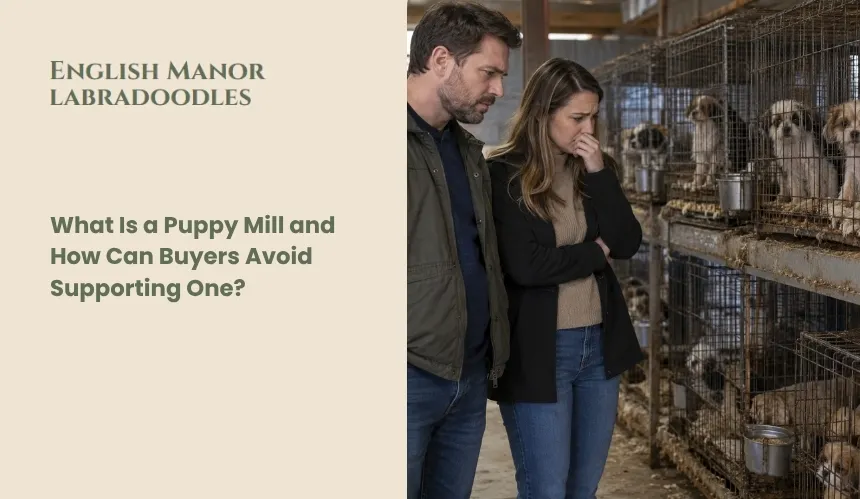
What Is a Puppy Mill and How Can Buyers Avoid Supporting One?
Quick Overview: A puppy mill is a large-scale commercial dog breeding operation that prioritizes profit over animal health, welfare, and responsible breeding practices. Dogs in puppy mills are often kept in overcrowded or unsanitary conditions with limited veterinary care, poor socialization, and repeated breeding cycles that can lead to serious physical and behavioral problems in puppies. Buyers can help avoid supporting puppy mills by:
Responsible breeders usually focus on health screening, early socialization, transparency, and long-term support rather than high-volume sales. Did You Know? |
Bringing home a puppy is often an emotional and exciting experience, which is one reason many buyers make fast decisions without fully researching where the dog came from. Attractive online listings, low prices, immediate availability, and promises of “healthy puppies” can make unethical breeders appear trustworthy at first glance. Unfortunately, many buyers unknowingly support puppy mills because the warning signs are not always obvious during the early search process.
Puppy mills prioritize large-scale production and profit rather than proper animal care, responsible breeding, or long-term puppy health. Dogs raised in these environments may experience overcrowding, poor sanitation, inadequate veterinary treatment, repeated breeding cycles, and limited human interaction. As a result, puppies from puppy mills are often more vulnerable to genetic disorders, chronic illness, anxiety, fear-based behavior, and expensive medical complications later in life.
One of the biggest problems is that puppy mills frequently disguise themselves through polished websites, third-party sales platforms, or pet stores that hide the true breeding source. Buyers focused only on convenience or low prices may accidentally support harmful breeding systems without realizing the long-term consequences for both the dogs and future owners.
Understanding how puppy mills operate and learning how responsible breeders differ can help buyers make safer, more ethical decisions before purchasing a puppy. This guide explains what puppy mills are, why they are harmful, the warning signs buyers should recognize, and the practical steps that help avoid supporting unethical dog breeding operations.
What Is A Puppy Mill?
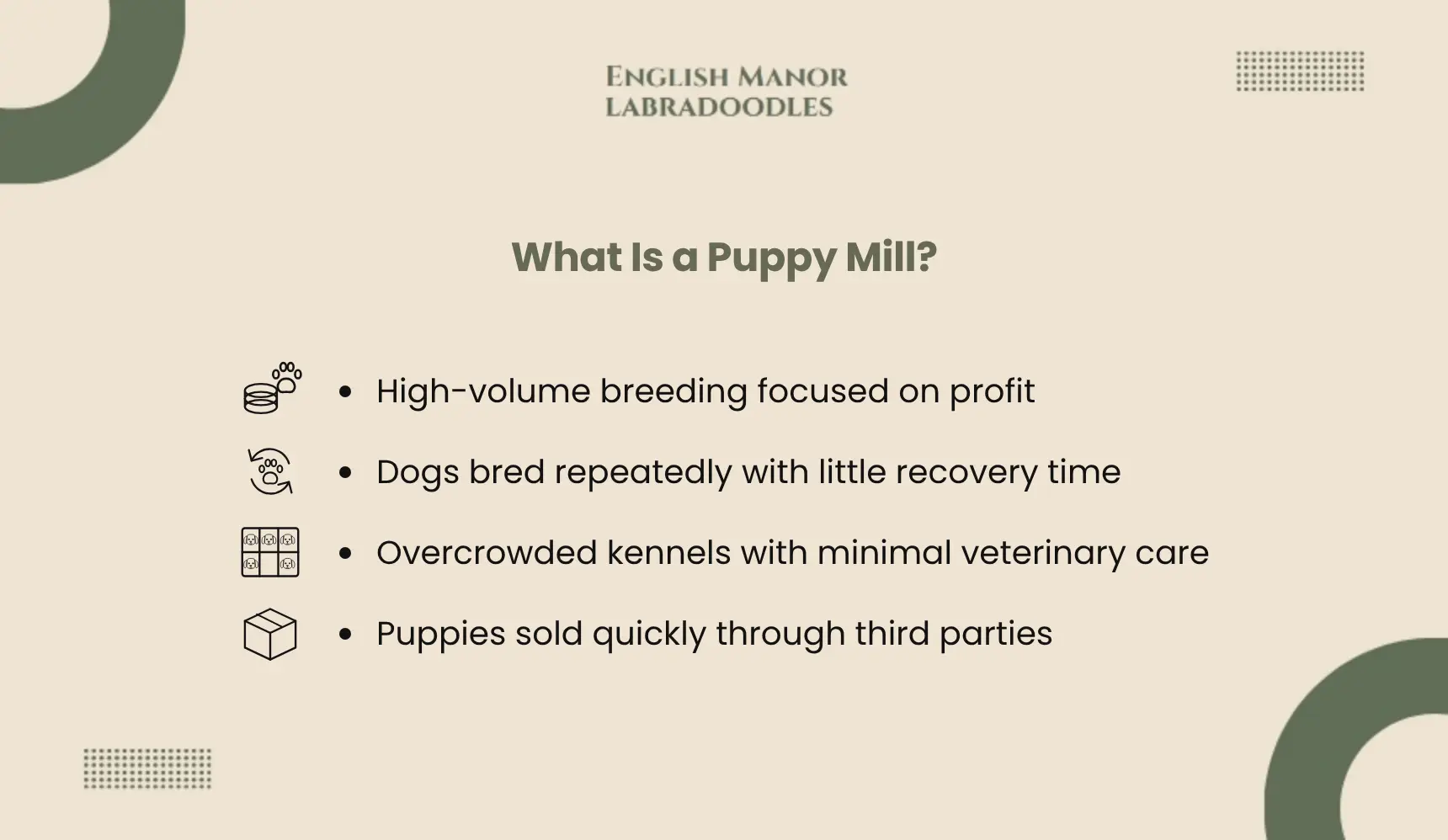
A puppy mill is a high-volume commercial dog breeding operation where profit is typically prioritized over animal welfare, responsible breeding standards, and long-term puppy health. Unlike ethical breeders who focus on controlled litters, health testing, and proper socialization, puppy mills often produce large numbers of puppies under poor living conditions with minimal investment in veterinary care or behavioral development.
Definition Of Commercial Puppy Mills
Commercial puppy mills are breeding facilities designed to maximize puppy production and sales volume. Dogs are frequently bred repeatedly with little recovery time between litters, while puppies are often sold quickly through online marketplaces, brokers, pet stores, or third-party distributors.
Many puppy mills attempt to appear legitimate through professional websites or marketing language, even when breeding conditions remain unethical behind the scenes.
Did You Know?
Some large-scale commercial breeding operations may house dozens or even hundreds of dogs at the same time, making proper individual care and socialization extremely difficult.
How Puppy Mills Typically Operate
Puppy mills commonly operate through high-volume breeding systems where efficiency and rapid sales become the primary focus. Puppies may be separated from their mothers too early, transported long distances, or sold before receiving proper socialization and behavioral exposure.
Common puppy mill practices may include:
- Continuous breeding cycles
- Overcrowded kennel environments
- Minimal veterinary care
- Limited human interaction
- Fast online or third-party sales
- Poor sanitation standards
Because puppies are often treated as inventory rather than companion animals, emotional development and long-term health may receive very little attention.
Why Profit-Driven Breeding Becomes Harmful
When breeding focuses primarily on profit, important health and welfare practices are often ignored to reduce operational costs. Genetic testing, veterinary screening, quality nutrition, behavioral development, and safe living conditions all require time and financial investment that many puppy mills avoid.
This can increase the risk of:
- Hereditary disorders
- Chronic illness
- Anxiety-related behavior
- Aggression or fearfulness
- Weak immune systems
- Poor socialization skills
Buyers may initially pay less for puppies from unethical breeders, but long-term medical and behavioral expenses often become significantly higher later.
Common Living Conditions In Puppy Mills
Dogs in puppy mills are frequently housed in cramped or unsanitary environments where exercise, enrichment, grooming, and social interaction remain extremely limited. Breeding dogs may spend most of their lives inside cages or overcrowded kennel systems with inadequate physical and emotional care.
Poor living conditions commonly involve:
- Dirty kennel flooring
- Limited outdoor access
- Inadequate grooming
- Poor ventilation
- Insufficient socialization
- Lack of regular veterinary monitoring
These conditions can negatively affect both the physical health and emotional stability of puppies long before they are sold to new owners.
Why Puppy Mills Are Harmful To Dogs
Puppy mills can create serious long-term health and behavioral consequences because dogs are often raised in environments that lack proper sanitation, veterinary care, emotional stimulation, and responsible breeding practices. Even when puppies appear healthy at first, underlying medical and psychological problems may develop later because of poor early-life conditions.
Poor Sanitation And Overcrowding
Many puppy mills house large numbers of dogs in confined kennel systems where cleaning standards and living space remain inadequate. Overcrowded conditions increase stress levels while allowing parasites, infections, and disease to spread more easily between animals.
Dogs raised in unsanitary environments may experience:
- Skin infections
- Respiratory illness
- Parasite infestations
- Poor coat condition
- Chronic stress exposure
Limited exercise and confinement can also negatively affect muscle development and emotional wellbeing.
Did You Know?
Animal welfare organizations frequently identify overcrowding and poor sanitation as major contributors to disease outbreaks in large-scale commercial breeding facilities.
Lack Of Veterinary Care and Health Testing
Responsible breeders usually perform health screening, vaccination planning, and genetic testing before breeding dogs. Puppy mills often skip these steps to reduce costs, increasing the likelihood of inherited disorders and untreated medical conditions.
Many puppy mill puppies may receive:
- Incomplete vaccinations
- Limited veterinary examinations
- No genetic screening
- Delayed treatment for illness
- Poor preventative healthcare
Without proper medical oversight, health problems can remain hidden until after puppies are sold.
Genetic Disorders and Chronic Illness Risks
Because unethical breeders frequently prioritize quantity over healthy breeding practices, puppies from puppy mills may face increased risks of hereditary diseases and chronic medical problems. Repeated breeding without genetic evaluation can pass serious conditions through multiple generations.
Potential long-term health risks may include:
- Hip dysplasia
- Eye disorders
- Heart conditions
- Weak immune systems
- Digestive problems
- Neurological disorders
These conditions may eventually lead to expensive veterinary treatment and long-term emotional stress for owners.
Behavioral and Socialization Problems In Puppies
Early socialization plays a major role in emotional development, confidence, and behavioral stability. Puppies raised in isolated or stressful environments often miss critical exposure to people, sounds, handling, and normal household interaction during important developmental stages.
As a result, some puppy mill dogs may later struggle with:
- Fear-based behavior
- Anxiety
- Excessive barking
- Aggression
- Difficulty with training
- Separation-related stress
Poor early socialization can affect dogs long after they leave the breeding facility, especially when emotional development during puppyhood was heavily neglected.
Warning Signs of a Puppy Mill
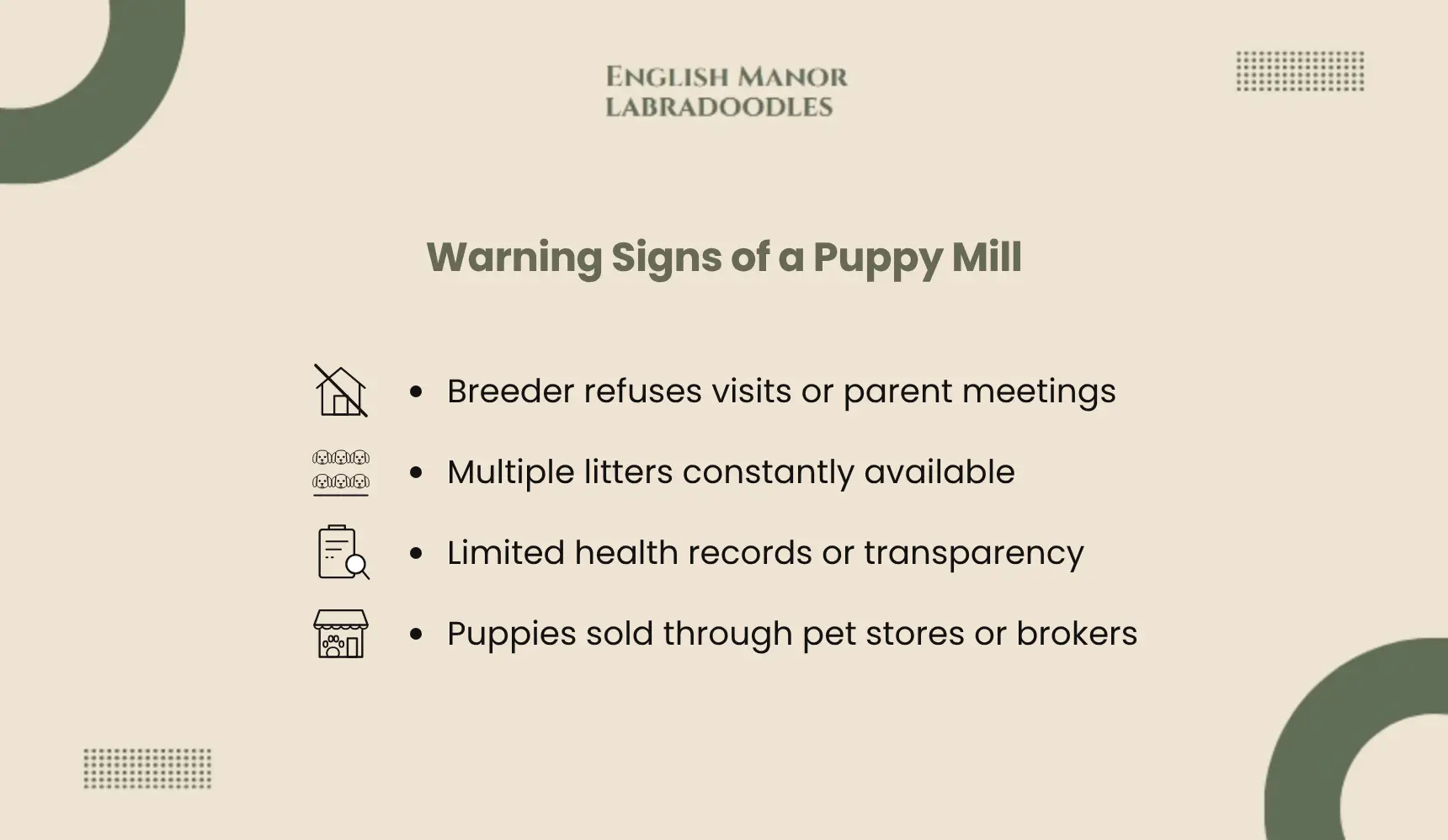
Many puppy mills attempt to appear trustworthy through polished advertisements, social media listings, or professional-looking websites, which makes unethical breeding operations harder for buyers to recognize. However, certain patterns and breeder behaviors often reveal when profit is being prioritized over responsible animal care. Learning these warning signs can help buyers avoid supporting harmful breeding practices.
Breeders Unwilling To Allow Visits
One of the most common red flags is a breeder refusing to let buyers visit the breeding environment or meet the puppy’s parents. Ethical breeders are usually transparent about living conditions and willingly answer questions about how puppies are raised and socialized.
Puppy mills often avoid in-person visits because buyers might notice overcrowded conditions, poor sanitation, unhealthy dogs, or inadequate socialization practices. Some sellers may insist on parking lot exchanges, shipping-only sales, or meeting at neutral locations to prevent buyers from seeing the actual facility.
Did You Know?
Responsible breeders often encourage visits because observing the puppy’s environment helps buyers evaluate cleanliness, temperament, and overall animal welfare standards.
Multiple Litters Available Constantly
Ethical breeders typically produce limited litters with planned breeding schedules focused on health, temperament, and responsible placement. Puppy mills, however, often advertise multiple breeds or large numbers of puppies year-round to maximize sales volume.
Constant puppy availability may suggest:
- Continuous breeding cycles
- High-volume production
- Limited recovery time for breeding dogs
- Profit-focused operations
When sellers always have puppies immediately available without waitlists or screening questions for buyers, it can indicate irresponsible breeding practices.
Lack Of Health Records Or Transparency
Responsible breeders usually provide vaccination records, genetic health testing documentation, veterinary information, and detailed explanations about the puppy’s lineage and care history. Puppy mills frequently provide limited documentation or vague answers regarding health screening and breeding practices.
Buyers should be cautious if breeders avoid discussing:
- Genetic testing
- Veterinary care
- Vaccination schedules
- Parent dog health history
- Socialization practices
Transparency is often one of the clearest differences between ethical breeders and high-volume commercial breeding operations.
Puppies Sold Through Third Parties Or Pet Stores
Many puppy mills distribute puppies through brokers, online resellers, pet stores, or large shipping networks that separate buyers from the original breeder. This process makes it harder for buyers to verify breeding conditions or evaluate how puppies were raised.
Puppies sold through third parties may come from facilities where breeding dogs receive little direct care, exercise, or emotional interaction. Without breeder transparency, buyers may unknowingly support operations that prioritize fast sales over long-term puppy health and welfare.
How Responsible Breeders Differ from Puppy Mills
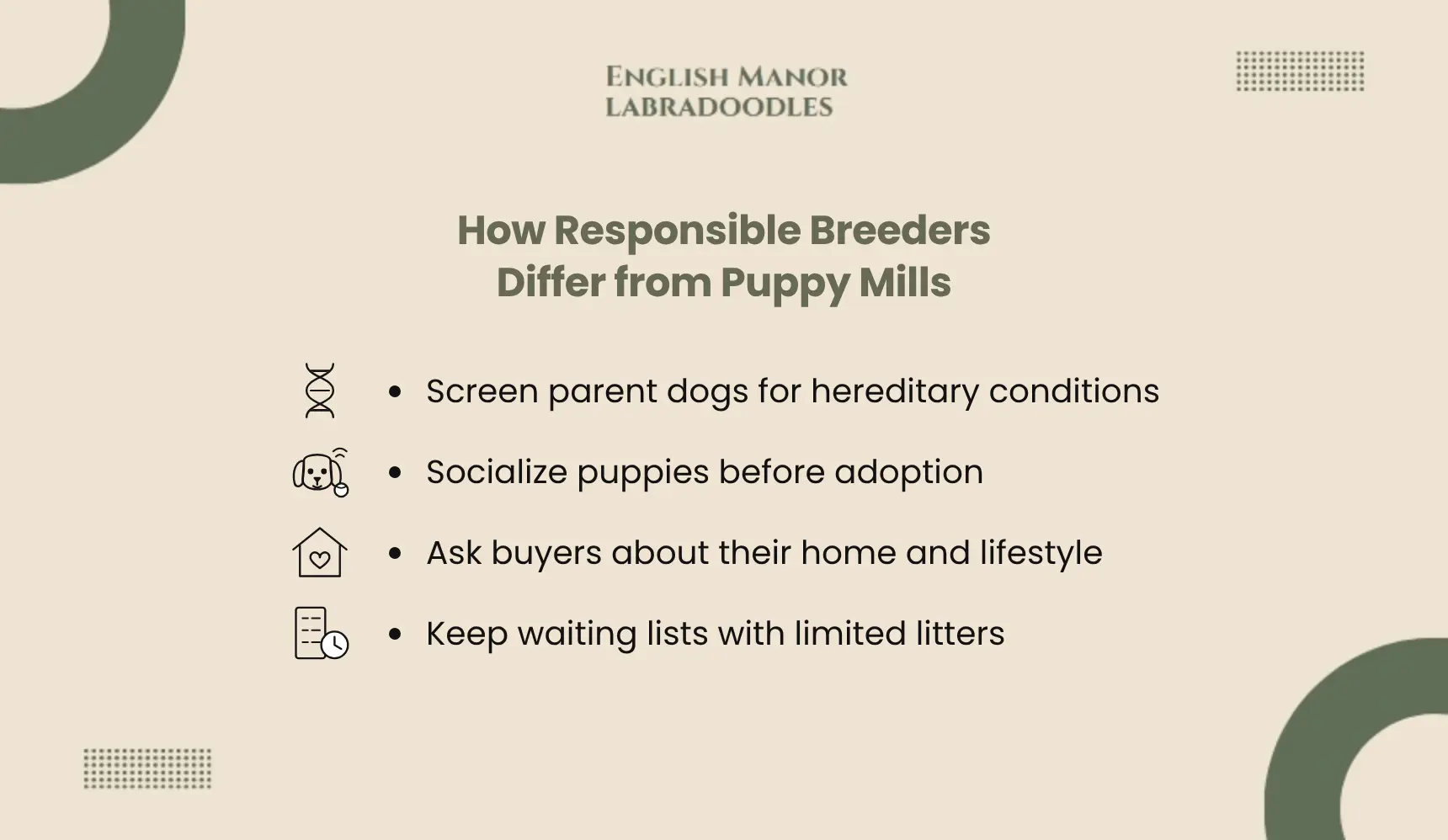
Responsible breeders focus on long-term puppy health, ethical breeding practices, and proper animal care rather than high-volume sales. They usually invest significant time in health testing, early socialization, breeder transparency, and careful placement decisions. Understanding these differences helps buyers recognize safer and more ethical sources when searching for a puppy.
Do Responsible Breeders Perform Health Testing?
Ethical breeders commonly screen parent dogs for hereditary conditions before breeding. This may include genetic testing, hip evaluations, eye exams, and veterinary health certifications designed to reduce inherited disease risks in puppies.
How Are Puppies Socialized Before Adoption?
Responsible breeders usually expose puppies to household sounds, human interaction, handling, grooming routines, and supervised play during early developmental stages. Proper socialization often helps puppies develop stronger confidence and emotional stability later in life.
Did You Know?
Behavior specialists consider the first several weeks of puppy development extremely important for long-term social behavior and adaptability.
Why Do Ethical Breeders Ask Buyers Questions?
Unlike puppy mills that focus on quick sales, responsible breeders often screen potential owners carefully. They may ask about living environment, work schedules, activity level, previous dog experience, and long-term care plans to ensure proper placement.
Why Do Responsible Breeders Usually Have Waiting Lists?
Ethical breeders typically produce limited litters rather than keeping puppies constantly available year-round. Waiting lists often exist because breeding frequency is controlled to protect the health of parent dogs and improve puppy quality rather than maximize production volume.
Questions Buyers Should Ask Before Purchasing A Puppy
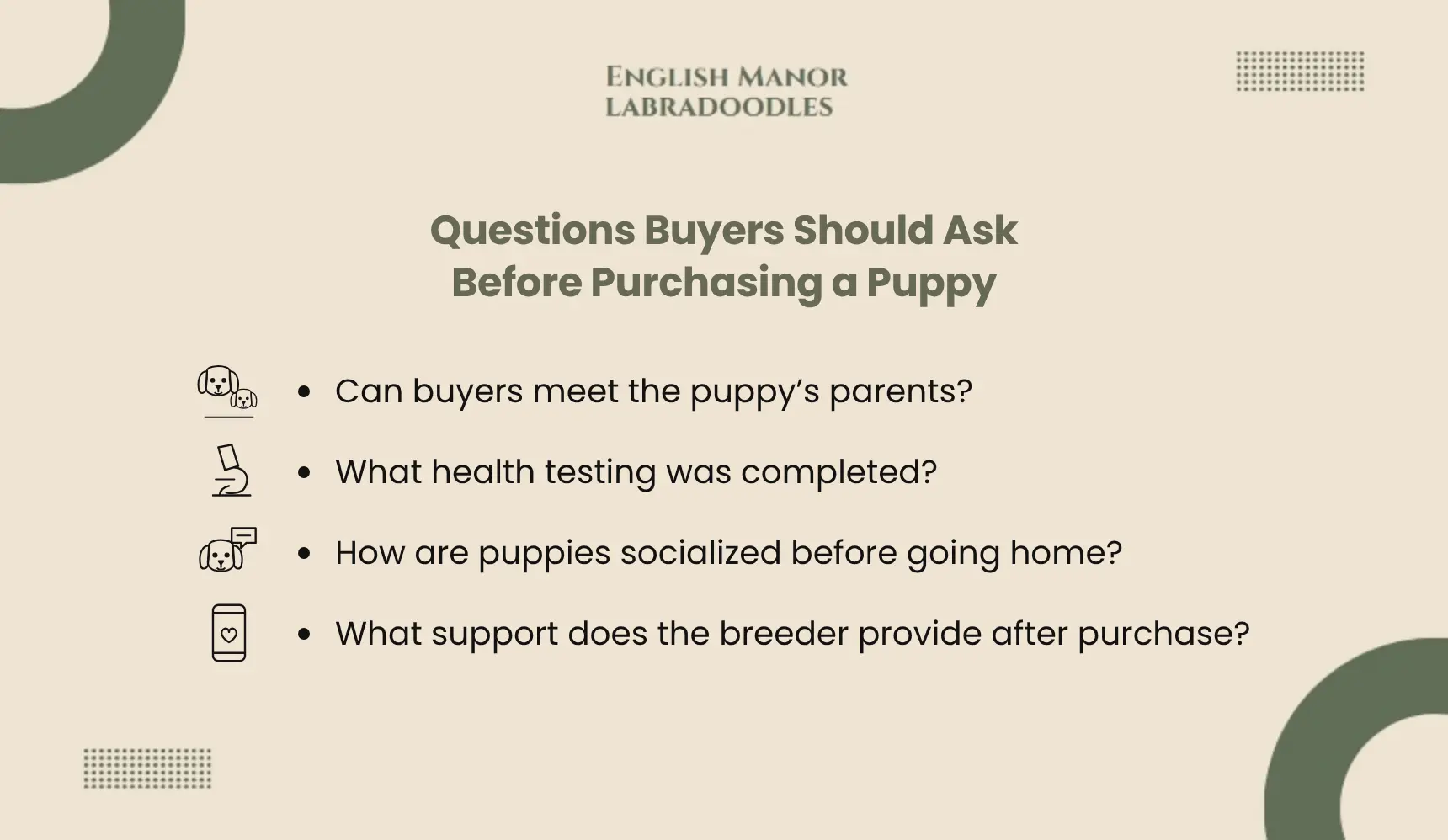
Many buyers focus mainly on appearance, price, or availability when searching for a puppy, but asking the right questions can reveal whether a breeder follows responsible practices or operates more like a puppy mill. Ethical breeders are usually open, transparent, and willing to discuss health, socialization, and long-term puppy care in detail.
Can Buyers Meet The Puppy’s Parents?
Responsible breeders commonly allow buyers to meet at least the puppy’s mother and observe the environment where the litter is being raised. Parent dogs should appear healthy, socialized, and properly cared for rather than fearful or isolated.
Breeders unwilling to show parent dogs or living conditions may be hiding overcrowding, poor sanitation, or unhealthy breeding practices.
What Health Testing Was Completed?
Buyers should ask whether parent dogs received genetic health screening, veterinary evaluations, and breed-specific testing before breeding. Responsible breeders are usually comfortable providing documentation and explaining hereditary conditions they actively screen for.
Did You Know?
Many hereditary diseases can remain hidden for generations unless breeders perform proper genetic testing before pairing dogs.
How Are Puppies Socialized Before Going Home?
Early socialization plays a major role in confidence, emotional stability, and future behavior. Ethical breeders often expose puppies to handling, household sounds, grooming routines, and supervised interaction during critical developmental stages.
Puppies raised with little human interaction may face higher risks of anxiety, fearfulness, and behavioral instability later in life.
What Support Does The Breeder Provide After Purchase?
Responsible breeders usually remain available after adoption to answer questions about feeding, training, health concerns, and adjustment periods. Some also provide written contracts, health guarantees, or return policies if owners can no longer care for the dog.
Ongoing breeder involvement often reflects a stronger commitment to animal welfare rather than simple puppy sales.
Why Cheap Puppies Can Become Expensive Long Term
Low puppy prices can appear attractive initially, especially for buyers eager to bring home a specific breed quickly. However, puppies from unethical breeders or puppy mills often create much higher long-term expenses because poor breeding practices increase the risk of medical problems, behavioral issues, and ongoing care complications.
Emergency Veterinary Costs
Puppies raised without proper health screening or veterinary oversight may later develop infections, congenital disorders, digestive issues, respiratory illness, or chronic immune-related conditions. Emergency treatment, surgery, medication, and specialist care can quickly become far more expensive than the original puppy purchase price.
Did You Know?
Animal welfare organizations frequently report that puppies from irresponsible breeding operations are more likely to require expensive veterinary treatment during early life stages.
Chronic Health Conditions
Repeated breeding without genetic testing increases the risk of hereditary disorders being passed through multiple generations. Some dogs may later develop hip dysplasia, eye disorders, heart disease, neurological conditions, or chronic skin problems that require lifelong management.
Long-term medical care may involve recurring veterinary visits, prescription medication, specialized diets, mobility support, and diagnostic testing.
Behavioral Rehabilitation Expenses
Poor early socialization can affect emotional development and long-term behavior. Puppies raised in isolated or stressful environments may struggle with fearfulness, anxiety, aggression, separation-related behavior, or difficulty adapting to normal household routines.
Owners sometimes spend significant amounts on:
- Professional behavioral training
- Anxiety management
- Specialized obedience programs
- Property damage caused by stress-related behavior
Emotional And Financial Stress For Owners
Beyond financial costs, caring for a medically or behaviorally unstable dog can become emotionally exhausting for families unprepared for long-term rehabilitation and healthcare management. Many buyers initially choose cheaper puppies to save money but later face years of unexpected expenses, emotional stress, and difficult treatment decisions because of unethical breeding practices.
Safer Alternatives To Buying From Puppy Mills
Avoiding puppy mills often starts with choosing sources that prioritize animal welfare, breeder transparency, and responsible placement practices. Ethical alternatives may require more research, waiting time, or higher upfront costs, but they usually reduce the risk of serious health, behavioral, and welfare-related problems later.
Ethical Breeders
Responsible breeders typically focus on controlled breeding programs, health testing, proper socialization, and long-term puppy wellbeing rather than high-volume sales. They are usually transparent about breeding practices, veterinary care, and parent dog health history.
Many ethical breeders also:
- Maintain limited litters
- Allow facility visits
- Ask buyers screening questions
- Provide health documentation
- Offer ongoing support after adoption
Breed-Specific Rescue Organizations
Breed-specific rescues often help rehome Labradoodles and other dogs that need stable environments. Many rescue organizations evaluate temperament, provide veterinary care, and match dogs with suitable households before adoption.
Adoption may also help reduce demand for irresponsible commercial breeding operations.
Did You Know?
Many breed rescue organizations place dogs in foster homes first so they can better evaluate temperament, behavior, and long-term compatibility with potential adopters.
Animal Shelters and Adoption Programs
Animal shelters and nonprofit adoption programs can provide safer alternatives for families open to adopting rather than purchasing from breeders. Many shelters vaccinate, microchip, and medically evaluate dogs before placement.
Although breed availability may vary, adoption programs often prioritize responsible placement and long-term animal welfare over rapid sales.
Verified Breeder Referral Networks
Some kennel clubs, veterinary organizations, and breed associations maintain breeder referral programs designed to connect buyers with breeders who follow ethical standards and responsible health practices.
Buyers should still perform independent research, but verified referral networks may reduce the risk of unknowingly supporting puppy mills or deceptive third-party sellers.
Frequently Asked Questions
Are puppy mills illegal?
Some puppy mills operate legally under minimal commercial breeding regulations, while others violate animal welfare laws related to sanitation, overcrowding, or neglect. Legal status can vary by region, which is why buyers should evaluate breeder practices carefully rather than assuming licensing automatically guarantees ethical treatment.
Can puppy mill puppies appear healthy at first?
Yes, many puppy mill puppies initially appear healthy despite underlying genetic disorders, weak immune systems, or behavioral problems. Some medical and emotional issues may not become noticeable until weeks or months after the puppy arrives in a new home.
Why are pet store puppies controversial?
Many pet store puppies are sourced through brokers or large commercial breeding operations where buyers cannot directly verify living conditions or breeding practices. This separation often makes it harder to identify whether puppies originated from responsible breeders or puppy mills.
What is the difference between a puppy mill and a backyard breeder?
Puppy mills usually involve large-scale commercial breeding focused on high-volume sales, while backyard breeders are often smaller unregulated breeders lacking proper health testing, experience, or breeding standards. Both can contribute to poor animal welfare when responsible practices are ignored.
How can buyers verify breeder legitimacy?
Buyers can verify breeders by visiting facilities, meeting parent dogs, reviewing health testing records, asking detailed questions about socialization practices, and checking breeder references or veterinary documentation. Responsible breeders are typically transparent and willing to provide detailed information.
Do responsible breeders charge more?
Responsible breeders often charge higher prices because they invest in genetic testing, veterinary care, quality nutrition, proper housing, socialization, and long-term puppy wellbeing. Higher pricing frequently reflects responsible breeding practices rather than mass-production sales methods.