- englishmanor
Preparing for Your Labradoodle Puppy: Tips from NJ Breeders
Bringing home a Labradoodle puppy is an exciting and transformative experience for first-time dog owners in New Jersey, offering companionship, joy, and lifelong memories. Proper preparation before the puppy arrives ensures a smooth transition, reduces stress for both the puppy and the family, and fosters healthy development and positive behavior from day one.
Reputable Labradoodle breeders in NJ, such as English Manor Labradoodle, emphasize preparation, home readiness, and establishing early routines. Following these expert tips helps first-time owners create a safe, structured environment that allows puppies to adapt quickly, remain healthy, and develop confidence, obedience, and proper socialization habits in their new home.
Puppy-Proofing Your Home for Safety

Creating a safe and secure home environment is the first critical step before bringing a Labradoodle puppy into your household. Puppies are naturally curious and energetic, exploring spaces indiscriminately, which can lead to accidents, ingestion of harmful objects, or injuries if preventive measures are not taken.
Remove Potential Hazards
Homeowners must identify and secure potential hazards such as exposed electrical cords, small objects that can be swallowed, toxic plants, and cleaning products or medications. Blocking access to stairs, balconies, and unsafe areas protects the puppy and reduces the risk of accidents or property damage.
Designate a Safe Space
Providing a specific area, such as a crate, playpen, or dedicated puppy bed, allows the puppy to rest, feel secure, and adjust to its new surroundings. A defined space reduces anxiety, encourages proper sleep habits, and supports training in setting boundaries and establishing routines in the home.
Outdoor Safety Measures
Inspect the yard thoroughly for gaps in fencing, loose gates, or potential hazards. Ensure gates are securely latched and remove poisonous or harmful plants. Preparing the outdoor area helps the puppy safely explore, exercise, and play without risk of injury or escape.
Tip: Use baby gates indoors to gradually introduce the puppy to larger areas while maintaining safety and supervision.
Gathering Essential Puppy Supplies
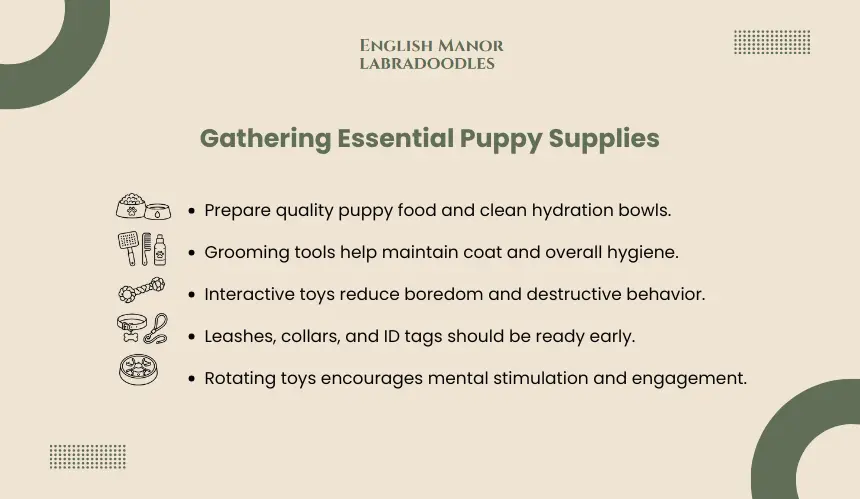
Having the necessary supplies ready before the puppy’s arrival ensures smooth daily routines and reduces stress for both the puppy and household members. First-time owners must gather feeding items, grooming tools, training aids, and mental enrichment toys to provide a healthy and engaging environment.
Feeding and Hydration Essentials
High-quality puppy food appropriate for Labradoodles supports optimal growth, energy, and coat development. Provide clean water in secure bowls, and establish consistent feeding schedules that help the puppy develop regular eating habits and healthy digestion.
Grooming Tools
Toys and Mental Enrichment
Provide a variety of interactive and chew toys to engage the puppy physically and mentally. Puzzle feeders, safe chew toys, and rotating playthings prevent boredom, reduce destructive behaviors, and stimulate cognitive development during the puppy’s critical learning stages.
Bullet Tips:
- Ensure leashes, collars, and ID tags are ready before arrival.
- Keep cleaning supplies accessible for accidents during house-training.
- Rotate toys to encourage engagement and mental stimulation.
Establishing Routines and Training Plans
Potty Training Schedule
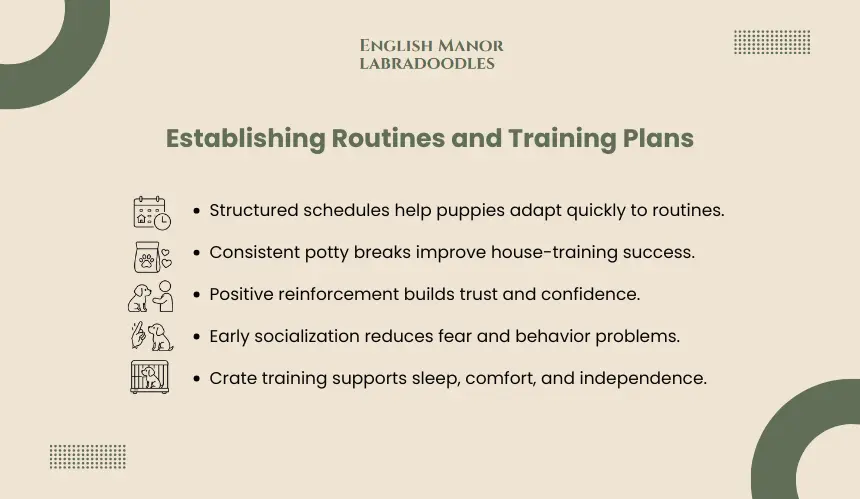
Consistently taking the puppy outside at regular intervals, observing cues, and reinforcing successful elimination promote effective house-training. First-time owners should track behavior, adjust routines as necessary, and maintain a patient, positive approach to reinforce learning.
Positive Reinforcement Training
Use praise, treats, and play to encourage desirable behaviors. Positive reinforcement builds trust, reinforces obedience, and reduces anxiety, helping the puppy develop confidence and social skills essential for long-term well-being and proper adaptation to family life.
Socialization Practices
Gradually introduce the puppy to new people, pets, and various environments. Proper early socialization reduces fear, builds confidence, and encourages adaptive behavior, helping Labradoodles integrate smoothly into households and public spaces while minimizing behavioral issues.
Tip: Crate training provides a secure resting space and supports house-training, sleep routines, and the puppy’s independent comfort.
Veterinary and Health Preparation
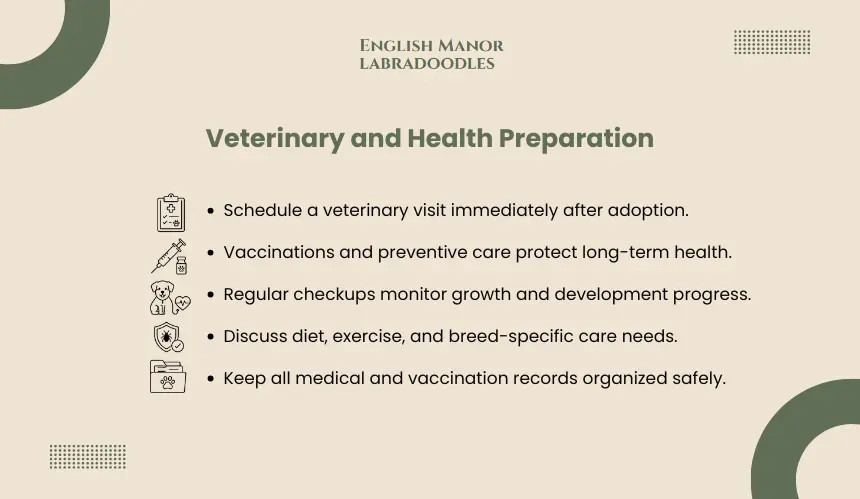
Timely veterinary care is essential to ensure the health, safety, and longevity of Labradoodle puppies. Scheduling veterinary visits immediately after adoption allows early detection of health issues and supports preventive care.
Schedule Initial Veterinary Visit
A comprehensive veterinary check-up confirms the puppy’s health, evaluates growth, and ensures vaccinations are up to date. This first visit guides diet, exercise, and ongoing preventive care for long-term well-being.
Vaccinations and Preventive Care
Adhering to vaccination schedules, deworming, flea and tick prevention, and dental care is critical to avoid illness. Preventive care reduces the risk of infectious diseases and ensures the puppy grows healthy and strong.
Health Planning for Growth
Consult the veterinarian about spaying/neutering, dietary adjustments, exercise requirements, and breed-specific concerns. Structured health planning supports physical development, coat condition, and overall vitality, ensuring the Labradoodle thrives in a safe and nurturing home.
Note: Keep all veterinary records, vaccination certificates, and health documents organized for quick access.
Preparing Family and Household Members
A new puppy impacts all members of the household. Educating family members about responsibilities, rules, and safe handling practices helps maintain harmony and reduces stress during the transition period.
Assign Roles and Responsibilities
Clearly define who handles feeding, walking, grooming, and training. Responsibility assignments prevent confusion and maintain consistency, helping the puppy adjust to routines and reinforcing proper behavior.
Educate Children and Visitors
Children and guests should be taught gentle handling, safe play techniques, and respect for the puppy’s space to prevent accidents and encourage positive, safe interactions.
Set Boundaries and Rules
Establish off-limits areas and consistent behavior expectations. Clear rules guide the puppy in learning boundaries, reduce stress, and prevent destructive or undesirable behaviors throughout the household.
Bullet Tips:
- Maintain consistent commands across family members.
- Schedule daily playtime and interaction to reinforce bonds.
- Reward positive behavior consistently to encourage compliance.
Frequently Asked Questions
How do I find reputable Labradoodle breeders in NJ?
What is the ideal age for a puppy to go home?
What essential supplies should I have before bringing the puppy home?
How can I ease the puppy’s transition?
Introduce gradually to household routines, provide comfort items, maintain consistent schedules, and offer positive reinforcement to reduce stress and encourage confidence.
Do Labradoodles require special grooming?
Where can I find healthy Labradoodle puppies in NJ?
Final Thoughts
Preparing your home before bringing a Labradoodle puppy from a NJ breeder is essential for a smooth, stress-free transition. Proper puppy-proofing, supply preparation, routine establishment, veterinary planning, and family education ensure the puppy adapts confidently, remains healthy, and thrives in its new environment.
English Manor Labradoodle provides socialized, healthy Labradoodle puppies from trusted breeders in New Jersey, with expert guidance for first-time owners. Following their recommended preparation tips ensures a safe, nurturing, and structured home environment, promoting long-term happiness and well-being for both the puppy and its family.