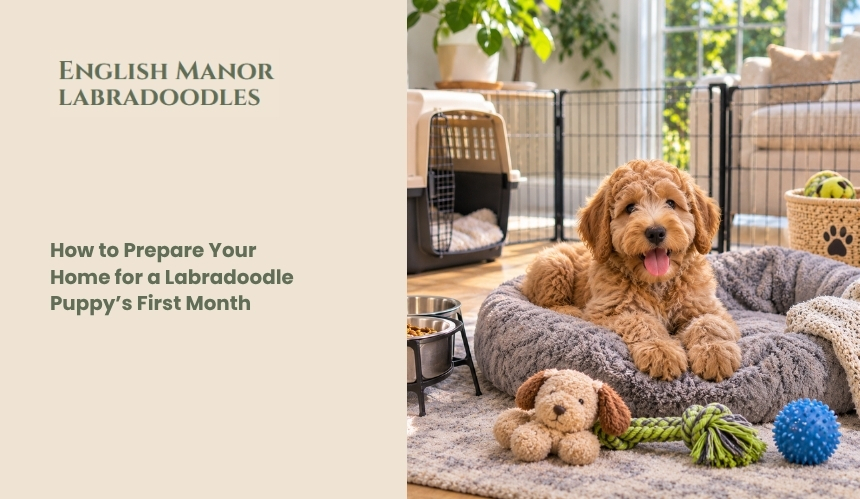
- English Manor Labradoodle
How to Prepare Your Home for a Labradoodle Puppy’s First Month
Quick Overview: How to prepare your home for a Labradoodle puppy’s first month starts with creating a safe, structured, and welcoming environment before the puppy arrives. Labradoodles are intelligent, curious, energetic, and highly social dogs, so preparation involves more than simply buying supplies. New owners should puppy-proof the home, establish designated sleeping and feeding areas, gather essential puppy supplies, create a consistent daily routine, and prepare for early training and socialization. The first month is a critical adjustment period that helps shape the puppy’s confidence, behavior, and long-term habits. Key Steps to Prepare Your Home for a Labradoodle Puppy
Did you know? Labradoodle puppies are highly observant and often begin learning household routines within their first few weeks at home. Consistency during the first month can have a lasting impact on behavior and training success. The first month is not just about helping a Labradoodle puppy settle into a new environment. It is also about building routines, creating positive experiences, establishing boundaries, and laying the foundation for future training. Proper preparation before the puppy arrives can make the transition smoother and help both the puppy and the family adjust more comfortably. |
Bringing home a Labradoodle puppy is an exciting milestone, but it can also be a significant adjustment for both the puppy and the family. While many new owners focus on purchasing food, toys, and a bed, successful preparation involves much more than gathering supplies. During the first month, a Labradoodle puppy is learning how to navigate a completely new environment, understand household routines, build trust with family members, and adapt to life away from its littermates. The experiences during this period can play an important role in shaping future behavior and confidence.
Labradoodles are known for their intelligence, curiosity, and social nature. These qualities make them highly trainable, but they also mean that puppies are quick to explore their surroundings and investigate anything within reach. Without proper preparation, common household items, unrestricted access to rooms, inconsistent routines, and a lack of structure can create unnecessary challenges during the adjustment period.
The first month is often when important habits begin to form. Sleeping routines, potty training, feeding schedules, socialization experiences, and early obedience training all begin to take shape during these early weeks. Preparing the home in advance helps reduce stress, creates a safer environment, and allows the puppy to settle in more comfortably. By focusing on safety, routine, and positive experiences from the beginning, owners can help create a smoother transition and establish a strong foundation for their Labradoodle’s future development.
Did you know? Labradoodle puppies are often highly observant from the moment they arrive home. Many begin learning household patterns, daily routines, and family behaviors within their first few weeks in a new environment.
Why the First Month Matters So Much
The first month in a new home is one of the most important periods in a Labradoodle puppy’s life. During this time, the puppy is adapting to a completely different environment, learning new routines, and beginning to understand what is expected within the household. While it may seem like a short period, the experiences and habits formed during these early weeks can influence behavior, confidence, and training progress for months to come.
Preparing for this transition helps create a smoother adjustment and gives the puppy a stronger foundation for future development.
A Major Adjustment for the Puppy
Leaving the breeder, littermates, and familiar surroundings is a significant change for any puppy. Everything in the new home is unfamiliar, including the people, sounds, smells, and daily routines. It is normal for Labradoodle puppies to need time to settle in and become comfortable with their new environment.
During the first few weeks, owners may notice:
- Increased curiosity and exploration.
- Occasional nervousness or uncertainty.
- Changes in sleeping patterns.
- A need for reassurance and consistency.
- Gradual improvements in confidence as familiarity grows.
Creating a calm and predictable environment helps make this adjustment period less overwhelming.
Building Early Habits and Routines
Puppies begin learning from the moment they arrive home. Feeding times, potty breaks, sleeping arrangements, play sessions, and household rules quickly become part of the puppy’s daily experience. Consistency during this stage helps the puppy understand what to expect and can make future training easier.
Establishing routines early helps:
- Create structure and predictability.
- Support house-training efforts.
- Encourage healthy sleeping habits.
- Reduce confusion during the adjustment period.
- Build positive daily behaviors.
The habits introduced during the first month often become the foundation for long-term routines.
Did you know? Puppies thrive on predictability. Consistent daily routines often help them adapt more quickly to a new environment and understand household expectations sooner.
Setting the Foundation for Future Training
The first month is also when many important training opportunities begin. Labradoodles are intelligent dogs that tend to learn quickly, making early experiences especially valuable. Simple lessons in name recognition, basic commands, positive reinforcement, and household boundaries can begin during this period.
The goal is not advanced obedience training but creating positive learning experiences that encourage confidence and cooperation. Early training helps establish communication between the puppy and the family while gradually and in a manageable way introducing expectations.
Did you know? Puppies learn rapidly during their first weeks in a new home. Positive experiences and consistent guidance during this period can influence behavior long after the adjustment phase has ended.
Puppy-Proofing Your Home Before Arrival
One of the most important steps in preparing for a Labradoodle puppy is making the home safe before the puppy arrives. Labradoodles are naturally curious, intelligent, and eager to explore their surroundings. During the first month, they often investigate the world by sniffing, chewing, and interacting with anything they can reach. Because of this, everyday household items can quickly become potential hazards if the environment is not properly prepared.
Puppy-proofing helps create a safer space while also reducing opportunities for unwanted behaviors to develop.
Removing Household Hazards
Many items that seem harmless to people can pose risks to a young puppy. Before bringing a Labradoodle home, it is important to carefully inspect accessible areas and remove anything that could be chewed, swallowed, or knocked over.
Common hazards include household chemicals, medications, toxic plants, cleaning supplies, sharp objects, and small items that could become choking hazards. Taking the time to identify and remove these risks helps create a more secure environment for exploration.
Securing Electrical Cords and Small Objects
Puppies are often attracted to dangling cords, loose cables, shoes, children’s toys, and other small household items. During teething, the urge to chew can be especially strong, making these objects even more appealing.
Securing electrical cords, organizing loose items, and keeping small objects out of reach can help prevent accidents while protecting household belongings. This preparation is particularly important in rooms where the puppy will spend most of its time during the first month.
Did you know? Many puppies explore new environments with their mouths before they fully understand boundaries, which is why everyday household objects often require extra attention during puppy-proofing.
Protecting Furniture and Valuables
The first month often involves a combination of curiosity, teething, and learning household rules. Furniture legs, rugs, decorative items, and personal belongings can quickly become targets for exploration if they are left easily accessible.
Protecting valuable items and temporarily limiting access to certain areas can help reduce frustration while the puppy learns what is appropriate to chew and interact with. Establishing these boundaries early often makes household management easier during the adjustment period.
Creating Safe Puppy Zones
Rather than giving a new Labradoodle puppy unrestricted access to the entire home, many owners find it helpful to create designated puppy-friendly spaces. These areas provide a safe environment where the puppy can rest, play, and explore under controlled conditions.
Safe puppy zones often include:
- A comfortable sleeping area.
- Access to fresh water.
- Appropriate chew toys.
- Space for supervised play.
- Limited exposure to household hazards.
Creating these areas before the puppy arrives can help support house training, establish routines, and provide a sense of security during the first month.
Did you know? Many puppies adjust more comfortably when they have a smaller, consistent area to call their own during the first few weeks, rather than having immediate access to every room in the house.
Essential Supplies Every Labradoodle Puppy Needs
Having the right supplies ready before bringing a Labradoodle puppy home can make the first month much smoother for both the puppy and the family. While no product can replace proper training, supervision, and routine, certain essentials help create a comfortable environment and support the puppy’s adjustment to its new home.
Preparing these items in advance allows owners to focus on helping the puppy settle in rather than making last-minute trips to purchase necessities.
Food and Water Bowls
Every Labradoodle puppy needs easy access to fresh water and a consistent feeding area. Establishing a designated feeding location from the beginning helps create routine and makes mealtimes more predictable.
Choosing bowls that are appropriately sized and easy to clean can help support daily feeding habits throughout the first month and beyond.
Crate and Sleeping Area
A comfortable sleeping space is one of the most important parts of preparing the home. Many owners use a crate, a puppy bed, or a combination of both to create a secure area where the puppy can rest and relax.
The sleeping area should be kept in a consistent location and provide a quiet environment where the puppy can feel safe as it adjusts to unfamiliar surroundings. This space often becomes an important part of establishing daily routines during the first few weeks.
Did you know? Many puppies feel more secure when they have a dedicated sleeping area that stays in the same location each day, helping them become familiar with their new environment.
Toys and Chew Items
Labradoodle puppies are active, curious, and intelligent. Providing appropriate toys helps satisfy their natural desire to explore and chew while reducing the likelihood that household items will be targeted for teething.
Toys also play an important role in:
- Mental stimulation.
- Interactive play.
- Teething support.
- Early training activities.
- Building positive habits.
Rotating toys periodically can help keep the puppy engaged and interested in appropriate play objects.
Grooming and Cleaning Supplies
Even during the first month, basic grooming and cleaning supplies are useful additions to the home. Labradoodles often benefit from early exposure to brushing and gentle grooming routines, helping them become comfortable with coat care as they grow.
Cleaning supplies are equally important because accidents and messes are a normal part of puppyhood. Being prepared helps owners respond quickly while maintaining consistency during house-training efforts.
Collar, Leash, and Identification
A properly fitted collar, identification tags, and an appropriate leash are essential items for a new Labradoodle puppy. Even if outdoor adventures are limited during the adjustment period, introducing these items early helps the puppy become familiar with wearing them.
Early exposure supports future training and helps establish positive experiences with walking equipment before more structured leash training begins.
Did you know? Puppies often adjust more easily to collars and leashes when they are introduced gradually during the first few weeks at home rather than waiting until formal training begins.
Setting Up a Comfortable Living Space
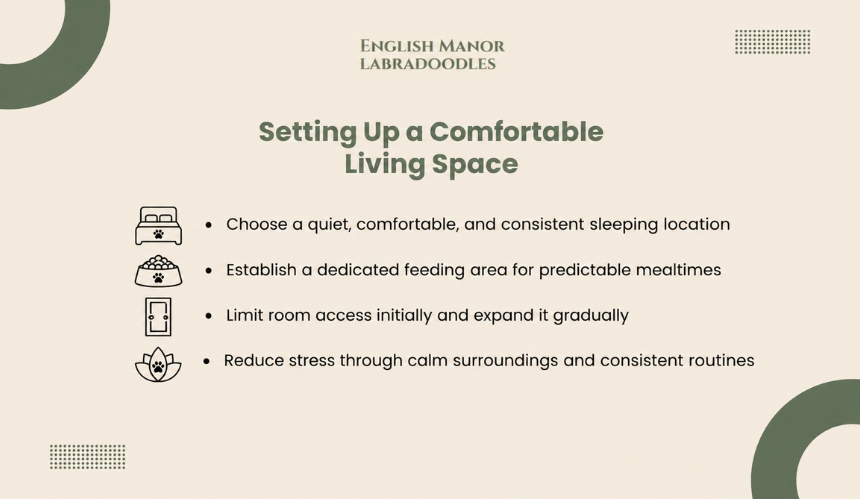
A Labradoodle puppy’s first month at home can feel overwhelming because everything is new and unfamiliar. Creating a comfortable living space before the puppy arrives helps reduce stress and provides a sense of security during the adjustment period. A well-planned environment also makes it easier to establish routines, manage behavior, and support successful training.
The goal is to create a space where the puppy can rest, eat, play, and gradually gain confidence as it adapts to its new surroundings.
Choosing a Safe Sleeping Area
One of the first decisions new owners should make is where the puppy will sleep. Whether using a crate, puppy bed, or designated sleeping area, consistency is important. Constantly moving the sleeping location can make it harder for a puppy to feel settled during the first few weeks.
The sleeping area should be:
- Quiet and comfortable.
- Free from excessive household traffic.
- Easy for family members to supervise when needed.
- Consistent from day to day.
A predictable sleeping environment often helps puppies feel more secure as they adjust to their new home.
Creating Consistent Feeding Locations
Puppies benefit from routine, and feeding is one of the easiest routines to establish. Providing meals in the same location each day helps create predictability and can make mealtimes less stressful.
A dedicated feeding area also helps owners monitor eating habits and maintain consistency throughout the first month. As the puppy becomes familiar with the routine, feeding times often become an important part of its daily schedule.
Did you know? Many puppies adapt more quickly to a new home when key activities such as sleeping, eating, and playtime occur in predictable locations.
Managing Access to Different Rooms
It may be tempting to allow a Labradoodle puppy to explore the entire home immediately, but gradual access is often a more effective approach. Restricting access to certain rooms during the first month helps prevent accidents, reduces exposure to hazards, and allows the puppy to become comfortable with one area before expanding its environment.
Controlled access can also:
- Support house training.
- Reduce overstimulation.
- Encourage supervision.
- Reinforce household boundaries.
As the puppy gains confidence and demonstrates reliable behavior, additional areas of the home can be introduced gradually.
Reducing Stress During the Adjustment Period
The first month involves significant changes for a young puppy. New sights, sounds, people, and routines can all contribute to temporary stress. Creating a calm environment helps the puppy adjust at a comfortable pace.
Simple steps such as maintaining consistent schedules, providing opportunities for rest, limiting overwhelming experiences, and offering positive interactions can make the transition easier. Labradoodles are highly social dogs, and a stable environment often helps them build confidence more quickly.
Did you know? Many puppies experience periods of uncertainty during their first few days at home. A predictable environment and consistent routine often help them settle in faster and feel more secure in their new surroundings.
Establishing a Routine During the First Month
One of the most effective ways to help a Labradoodle puppy adjust to a new home is by creating a consistent daily routine. Puppies thrive on predictability because it helps them understand what to expect throughout the day. During the first month, routines provide structure, support training efforts, and reduce confusion while the puppy learns household expectations.
Although every family’s schedule is different, maintaining consistency in key daily activities can make the transition much smoother.
Feeding Schedules
Regular feeding times are often one of the first routines a puppy learns. Providing meals at consistent times each day helps establish structure and makes it easier to monitor eating habits during the adjustment period.
A predictable feeding schedule can also support:
- House-training efforts.
- Healthy digestion.
- Energy management.
- Daily routine development.
Rather than leaving food available all day, many owners find that scheduled mealtimes create more consistency during the first month.
Potty Training Routines
House training typically begins as soon as the puppy arrives home. Labradoodle puppies learn best when potty breaks are consistent and tied to important daily events such as waking up, eating, playing, and resting.
The goal is to establish a clear pattern that helps the puppy understand when and where bathroom breaks should occur. Consistency and patience are often the most important factors in successful house training.
Did you know? Puppies often learn potty-training routines more quickly when bathroom breaks occur at predictable times throughout the day rather than on an inconsistent schedule.
Sleep and Rest Periods
While Labradoodle puppies are energetic and playful, they also require a significant amount of sleep. Rest plays an important role in physical growth, learning, and overall development.
During the first month, owners should expect:
- Frequent naps throughout the day.
- Longer periods of nighttime sleep.
- Occasional quiet time after training or play sessions.
- A need for uninterrupted rest in a comfortable environment.
Providing opportunities for rest helps prevent overtired behavior and supports healthy development.
Exercise and Play Sessions
Labradoodles are intelligent and active dogs, making play and exercise important parts of their daily routine. During the first month, activity should focus on age-appropriate play, supervised exploration, and short training sessions rather than intense physical exercise.
Regular playtime helps:
- Build confidence.
- Encourage positive social interactions.
- Provide mental stimulation.
- Strengthen the bond between the puppy and family members.
A balanced routine that includes feeding, potty breaks, rest, training, and play helps create a stable environment where a Labradoodle puppy can thrive during its first month at home.
Did you know? Labradoodle puppies often respond exceptionally well to structured routines because their intelligence allows them to recognize patterns and learn household schedules quickly.
Preparing for Training and Socialization
The first month is not only about helping a Labradoodle puppy settle into a new home. It is also an important opportunity to begin building positive behaviors and introducing the puppy to the world around it. Labradoodles are known for their intelligence, eagerness to learn, and strong desire to interact with people, making early training and socialization especially valuable.
Rather than focusing on advanced obedience, the goal during the first month is to create positive experiences that encourage confidence, trust, and good habits.
Early Positive Reinforcement
Labradoodle puppies generally respond well to positive reinforcement. Rewarding desirable behaviors helps the puppy understand what is expected while creating a positive learning experience.
During the first month, positive reinforcement can be used to encourage:
- Calm behavior.
- Successful potty-training efforts.
- Appropriate play habits.
- Attention to the owner.
- Comfortable interactions with new experiences.
Consistency is often more important than the complexity of the training itself. Small successes repeated regularly can have a significant impact over time.
Basic Commands and Boundaries
The first month is an ideal time to introduce simple household expectations. Puppies do not need to master advanced skills immediately, but they can begin learning basic concepts that support future training.
Many owners start with:
- Name recognition.
- Simple recall exercises.
- Basic commands such as sit.
- Appropriate chewing habits.
- Household boundaries and routines.
Introducing these lessons gradually helps prevent the puppy from becoming overwhelmed while encouraging steady progress.
Did you know? Labradoodles are often quick learners and may begin recognizing routines and simple commands within a surprisingly short period when training remains consistent.
Introducing New People and Experiences
Socialization is one of the most important parts of a puppy’s early development. The first month provides opportunities to expose the puppy to a variety of people, sounds, sights, and environments in a positive and controlled manner.
Experiences might include:
- Meeting different family members and visitors.
- Hearing common household sounds.
- Exploring new rooms and safe outdoor spaces.
- Encountering different surfaces and objects.
- Experiencing short car rides or supervised outings.
The emphasis should always be on helping the puppy feel comfortable rather than forcing interactions.
Encouraging Confidence and Good Behavior
Confidence develops when puppies are allowed to explore, learn, and experience new situations at an appropriate pace. A Labradoodle puppy that feels secure in its environment is often more willing to engage in training and adapt to unfamiliar situations.
Owners can encourage confidence by maintaining routines, rewarding positive behavior, gradually introducing new experiences, and providing opportunities for successful exploration. These early experiences help create a strong foundation for future learning and social development.
Did you know? Labradoodles are highly intelligent and often learn routines quickly when training is consistent and positive. Early socialization and positive experiences can influence confidence and behavior long after the first month has passed.
What to Expect Week by Week During the First Month
The first month with a Labradoodle puppy is often filled with rapid changes. What begins as a period of uncertainty and adjustment gradually evolves into a more predictable routine as the puppy becomes familiar with its new home. Understanding what commonly happens during each week can help owners set realistic expectations and respond appropriately to the puppy’s needs.
While every puppy develops at its own pace, many Labradoodles follow a similar adjustment pattern during their first month at home.
Week 1: Settling In
The first week is primarily about adjustment. The puppy is learning to navigate a new environment while becoming familiar with new people, sounds, and routines. During this stage, it is common for puppies to appear cautious, curious, or occasionally overwhelmed.
Owners should focus on:
- Establishing basic routines.
- Providing a safe and comfortable environment.
- Introducing household members gradually.
- Allow the puppy time to explore at its own pace.
- Beginning simple potty-training habits.
The emphasis should be on helping the puppy feel secure rather than introducing too many new experiences at once.
Week 2: Learning Household Routines
By the second week, many Labradoodle puppies begin recognizing patterns in their daily lives. Feeding times, potty breaks, sleeping arrangements, and play sessions start becoming more familiar.
During this stage, owners may notice:
- Increased confidence.
- Improved comfort within the home.
- Better recognition of family members.
- Growing curiosity about surroundings.
- Early responses to routines and simple training.
This is often when consistency begins producing noticeable results.
Did you know? Many puppies start anticipating routine activities by the second week, such as mealtimes, walks, or potty breaks, because they quickly learn predictable daily patterns.
Week 3: Building Confidence
As familiarity grows, Labradoodle puppies often become more adventurous. They may show greater interest in exploring new environments, interacting with people, and participating in training activities.
This stage commonly includes:
- Increased playfulness.
- Stronger social interactions.
- More enthusiasm for learning.
- Greater independence during exploration.
- Continued progress with household routines.
Owners can use this growing confidence to introduce positive experiences and reinforce desirable behaviors.
Week 4: Developing Daily Habits
By the fourth week, many puppies have established a stronger sense of belonging within the household. While training and socialization are still ongoing, routines often become more predictable and daily life begins to feel more structured.
During this stage, owners frequently observe:
- Better adjustment to household schedules.
- Increased comfort in sleeping and feeding areas.
- Greater responsiveness to training.
- More consistent potty-training progress.
- Stronger bonds with family members.
The end of the first month often marks the transition from initial adjustment to the development of long-term routines.
Did you know? The habits formed during a Labradoodle puppy’s first month at home often influence future behavior because puppies are constantly learning from their daily experiences and interactions.
Common Mistakes New Labradoodle Owners Make
The first month with a Labradoodle puppy is an exciting learning experience, but it is also a time when many new owners unintentionally develop habits that can create challenges later. Most mistakes are not caused by a lack of care or effort. Instead, they often result from misunderstandings about how puppies learn, adjust, and develop during their early weeks in a new home.
Recognizing these common mistakes can help owners create a smoother transition and establish stronger foundations for future training and behavior.
Giving Too Much Freedom Too Soon
Many owners are eager to let their new puppy explore the entire home immediately. While this enthusiasm is understandable, unrestricted access can sometimes lead to accidents, unwanted chewing, and confusion about household boundaries.
Labradoodle puppies are naturally curious and often investigate anything within reach. Gradually expanding access to different areas of the home allows the puppy to learn expectations in a more controlled environment. It also makes supervision easier during the early stages of house training and adjustment.
Inconsistent Training Rules
Consistency is one of the most important aspects of puppy training. Problems often arise when family members have different expectations about what behaviors are acceptable. A puppy may quickly become confused if one person allows certain behaviors while another discourages them.
Establishing clear household rules before the puppy arrives helps create a more predictable learning environment. Consistent expectations make it easier for the puppy to understand boundaries and develop good habits.
Did you know? Puppies learn patterns faster than individual commands. Consistent household expectations often accelerate learning because the puppy receives the same message from everyone involved.
Overstimulating the Puppy
New owners often want to introduce their Labradoodle puppy to as many experiences as possible during the first month. While socialization is important, too many new sights, sounds, visitors, and activities in a short period can sometimes become overwhelming.
Puppies benefit most from gradual exposure to new experiences. Allowing time to process and adapt to each situation helps build confidence without creating unnecessary stress. The goal is positive socialization, not constant stimulation.
Ignoring Rest and Recovery Time
Because Labradoodle puppies are energetic and playful, it can be easy to overlook how much sleep they actually need. Rest is a critical part of growth, learning, and development. Puppies that become overtired may appear overly excited, distracted, or difficult to manage.
Providing regular opportunities for uninterrupted rest helps support healthy development and often improves training success. A balanced routine that includes sleep, play, training, and quiet time typically produces better results than a schedule focused entirely on activity.
Did you know? Many behaviors that appear to be signs of stubbornness or excessive energy are actually the result of an overtired puppy that needs rest rather than more stimulation.
Frequently Asked Questions
What do I need before bringing home a Labradoodle puppy?
Before bringing home a Labradoodle puppy, it is helpful to have food and water bowls, a crate or bed, puppy food, toys, grooming supplies, a leash, a collar with identification, and a puppy-proofed living space prepared.
How should I puppy-proof my house?
Puppy-proofing involves removing hazardous items, securing electrical cords, storing chemicals and medications safely, protecting valuables, and limiting access to areas that may pose risks during the puppy’s first month.
Where should my Labradoodle puppy sleep?
A Labradoodle puppy should have a comfortable sleeping area in a quiet and consistent location. Whether using a crate or a puppy bed, keeping the sleeping space predictable can help the puppy feel more secure.
How long does it take a Labradoodle puppy to adjust?
Every puppy is different, but many Labradoodles begin settling into household routines within the first few weeks. Full adjustment often continues throughout the first month as the puppy becomes more comfortable and confident.
What routine should I establish during the first month?
The first month should include consistent feeding times, regular potty breaks, structured play sessions, rest periods, basic training, and a predictable daily schedule to help the puppy understand household expectations.
How do I help my Labradoodle puppy feel comfortable?
Creating a safe environment, maintaining routines, providing positive interactions, gradually introducing new experiences, and allowing plenty of rest can help a Labradoodle puppy adjust more comfortably to its new home.