
- englishmanor
What Ongoing Costs Should You Plan For After Buying a Labradoodle Puppy?
Quick Overview: After buying a Labradoodle puppy, most owners should realistically plan for ongoing costs of around $200 to $600+ per month, depending on grooming frequency, food quality, veterinary care, insurance coverage, daycare use, and emergency expenses. Labradoodles are often considered higher-maintenance dogs financially because their coats require regular grooming and their intelligence usually demands continued training, enrichment, and preventative healthcare. The most common recurring Labradoodle ownership expenses include:
Long-term grooming and healthcare are usually the largest ongoing costs for many Labradoodle owners, especially for dogs with dense curly coats or active lifestyles requiring frequent maintenance and preventative care. Did You Know? |
Many Labradoodle owners expect the largest expense to end after bringing the puppy home, only to realize that the real financial commitment continues through recurring monthly and annual care costs. Food, grooming, preventative medications, veterinary visits, daycare, training reinforcement, and emergency healthcare can steadily increase ownership expenses long after the puppy stage has passed.
One of the most common budgeting mistakes is underestimating how maintenance-heavy Labradoodles can become over time. Their coats often require lifelong professional grooming, while their intelligence and activity levels usually demand continued mental stimulation, enrichment products, and behavioral management. Even smaller recurring purchases such as supplements, dental care products, replacement toys, and preventative medications can gradually become significant long-term expenses.
Unexpected costs may also appear when owners face emergency veterinary treatment, boarding during travel, allergy-related care, or damage caused by boredom-driven chewing and high-energy behavior. Without realistic financial planning, these recurring responsibilities can become overwhelming for households that only prepared for the initial puppy purchase price.
Understanding the ongoing costs of owning a Labradoodle helps future owners prepare for realistic long-term care expenses rather than short-term puppy spending alone. This guide breaks down the most important recurring Labradoodle ownership costs, including grooming, food, healthcare, insurance, daycare, and hidden maintenance expenses that many owners overlook.
Monthly Food And Nutrition Costs For Labradoodles

Food and nutrition expenses remain one of the most consistent long-term costs after buying a Labradoodle puppy. Because Labradoodles are active dogs with moderate-to-high energy levels, many require balanced diets that support muscle maintenance, coat health, digestion, and joint function throughout adulthood. Monthly food costs can vary significantly depending on dog size, activity level, ingredient quality, and specialized dietary needs.
Food Quality and Dietary Expenses
Many Labradoodle owners eventually transition toward higher-quality dog food formulas containing better protein sources, omega fatty acids, probiotics, and joint-support ingredients. Lower-quality diets may initially appear more affordable but can sometimes contribute to digestive problems, poor coat condition, or inconsistent energy levels over time.
Monthly food costs commonly depend on:
- Dog size and weight
- Activity level
- Ingredient quality
- Feeding schedule
- Specialized nutrition requirements
Larger Labradoodles generally consume significantly more food than smaller doodle variations, increasing annual ownership expenses over time.
Did You Know?
Veterinary nutrition experts increasingly recommend balanced large-breed formulas for bigger doodles because controlled nutrient ratios may help reduce long-term joint stress and obesity-related health risks.
Treats, Supplements, and Chew Products
Treats and enrichment-related products often become regular monthly purchases because Labradoodles respond strongly to reward-based interaction and mental stimulation. Many owners also introduce supplements to support skin condition, digestion, coat quality, or joint health as dogs mature.
Recurring nutrition-related purchases may include:
- Training treats
- Dental chews
- Omega fatty acid supplements
- Joint support supplements
- Long-lasting chew products
Highly active Labradoodles may wear through chew products and enrichment items faster than expected, especially during adolescence and high-energy stages.
How Dog Size Affects Monthly Food Spending
Labradoodle size categories can significantly influence recurring food expenses. Standard Labradoodles usually require larger food portions and higher-calorie intake than miniature or medium-sized variations.
Food budgeting differences often increase because larger dogs may require:
- More daily calories
- Larger food bags
- Bigger supplement doses
- Higher hydration needs
As activity levels increase, calorie requirements often rise as well, especially for Labradoodles involved in hiking, agility training, or highly active outdoor lifestyles.
Specialized Diet and Allergy-Related Costs
Some Labradoodles develop food sensitivities or environmental allergies that eventually require specialized diets or veterinary-guided nutrition adjustments. Sensitive digestion, skin irritation, or chronic ear inflammation may increase long-term dietary expenses substantially.
Additional nutrition-related costs may involve:
- Grain-free formulas
- Limited-ingredient diets
- Prescription veterinary food
- Allergy-support supplements
- Sensitive-stomach nutrition products
Did You Know?
Skin and ear issues are among the more commonly discussed concerns in doodle breeds, which is one reason many owners eventually invest in higher-quality diets focused on inflammation management and coat health.
Grooming and Coat Maintenance Expenses

Grooming remains one of the most significant ongoing expenses for Labradoodle owners because coat maintenance continues throughout the dog’s entire life. Unlike short-haired breeds that require minimal upkeep, Labradoodles often develop dense curly or wavy coats that demand regular brushing, trimming, bathing, and professional care. Many owners underestimate how quickly coat maintenance costs accumulate over time, especially once adult coat texture fully develops.
Professional Grooming Schedules
Most Labradoodles require professional grooming appointments every 6–8 weeks to maintain coat cleanliness and prevent matting. Dogs with tighter curls or thicker fleece coats may need even more frequent maintenance because loose hair, dirt, and moisture can become trapped beneath dense fur layers.
Professional grooming appointments commonly include bathing, coat trimming, nail care, ear cleaning, and detangling. Pricing usually increases based on coat condition, dog size, grooming complexity, and matting severity. Larger Labradoodles with poorly maintained coats often require longer appointments and additional detangling charges.
Did You Know?
Many professional groomers consider doodle breeds among the most time-intensive dogs to maintain because thick curly coats can hide severe tangles close to the skin.
At-Home Coat Maintenance Supplies
Even with regular professional grooming, Labradoodles still require consistent brushing at home to control tangles and reduce matting between appointments. Owners who skip routine maintenance often face higher grooming bills and increased skin-related complications caused by trapped moisture and restricted airflow beneath the coat.
At-home grooming expenses commonly include brushes, combs, detangling sprays, shampoos, nail grinders, and coat-conditioning products. Higher-quality grooming tools may cost more initially but usually improve coat management and reduce long-term maintenance difficulty.
Matting Prevention and Grooming Complexity
Matting is one of the biggest reasons Labradoodle grooming costs remain high long term. Active dogs frequently collect dirt, debris, and moisture around the legs, ears, paws, and undercoat areas, especially after outdoor activity or wet weather exposure. Once mats tighten close to the skin, professional removal often becomes more difficult, uncomfortable, and expensive.
Dogs with curly coats generally require more detailed brushing routines because trapped loose hair cannot fall away naturally. Wavy and fleece coats may appear easier to maintain but can still develop hidden tangles beneath the surface if brushing becomes inconsistent.
Why Doodle Grooming Costs Stay High Long Term
Unlike temporary puppy expenses, grooming costs remain recurring responsibilities throughout adulthood and senior years. Coat growth never fully stops, which means Labradoodles continue requiring professional trimming, brushing support, and skin maintenance for life.
As Labradoodles age, additional coat-management challenges may appear because older dogs sometimes develop reduced grooming tolerance, mobility limitations, or thicker coat texture changes. Long-term grooming expenses often increase gradually over time rather than decreasing after the puppy stage ends.
Veterinary And Preventative Healthcare Costs
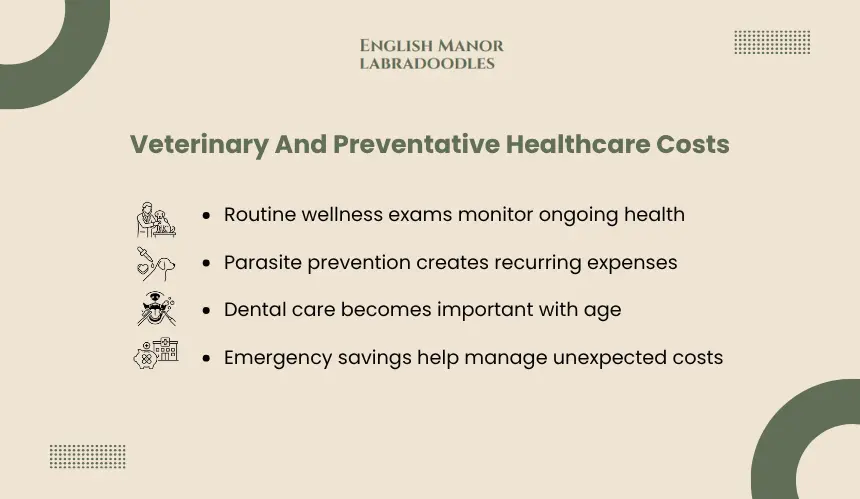
Veterinary care remains one of the most important ongoing financial responsibilities after buying a Labradoodle puppy. Even healthy adult dogs require routine wellness monitoring, preventative medications, dental care, and occasional diagnostic testing throughout life. Many long-term ownership expenses become more manageable when preventative healthcare is prioritized consistently rather than delayed until medical problems appear.
Routine Wellness Exams
Routine veterinary visits help monitor body condition, mobility, weight management, skin health, dental condition, and early signs of illness before complications become more severe. Adult Labradoodles typically require at least annual wellness exams, although senior dogs or dogs with chronic health concerns may need more frequent monitoring.
These visits commonly involve physical examinations, vaccination updates, bloodwork recommendations, and preventative care planning. Veterinary pricing can vary significantly depending on region, clinic type, and whether additional testing becomes necessary during appointments.
Did You Know?
Veterinarians often identify obesity as one of the most preventable long-term health risks in dogs because excess weight can contribute to joint stress, mobility decline, and chronic disease progression.
Flea, Tick, And Heartworm Prevention
Preventative parasite management becomes a recurring monthly or seasonal expense for most Labradoodle owners. Fleas, ticks, intestinal parasites, and heartworms can create serious health complications if preventative treatment becomes inconsistent.
Many veterinarians recommend year-round prevention because parasite exposure may still occur outside peak seasonal periods. Medication costs often depend on dog size, regional parasite risk, and the specific products recommended by the veterinary clinic.
Skipping preventative treatment may eventually lead to significantly higher medical costs if infections or infestations develop.
Dental Cleaning And Long-Term Health Maintenance
Dental care is another commonly overlooked ownership expense that becomes increasingly important as Labradoodles age. Plaque buildup, gum disease, and tooth infections may eventually require professional cleanings or dental procedures if oral hygiene is neglected over time.
Long-term dental maintenance often includes routine brushing, dental chews, oral rinses, and periodic veterinary cleanings performed under anesthesia. Dogs with chronic dental problems may eventually require tooth extractions or more advanced treatment, increasing ownership costs later in life.
Did You Know?
Veterinary dental organizations report that many adult dogs show signs of periodontal disease by middle age, even when symptoms are not immediately visible to owners.
Emergency Veterinary Savings Planning
Unexpected medical emergencies can occur even in well-cared-for Labradoodles, which is why many owners maintain dedicated emergency savings funds alongside routine healthcare budgeting. Accidents, digestive blockages, allergic reactions, injuries, or sudden illnesses can create major financial pressure without preparation.
Emergency treatment expenses may involve diagnostic imaging, overnight hospitalization, surgery, medication, or specialist care. Because emergency veterinary pricing can rise quickly, long-term financial planning often includes either pet insurance coverage or a reserved emergency healthcare fund specifically for unexpected medical situations.
Training, Daycare, And Behavioral Management Costs
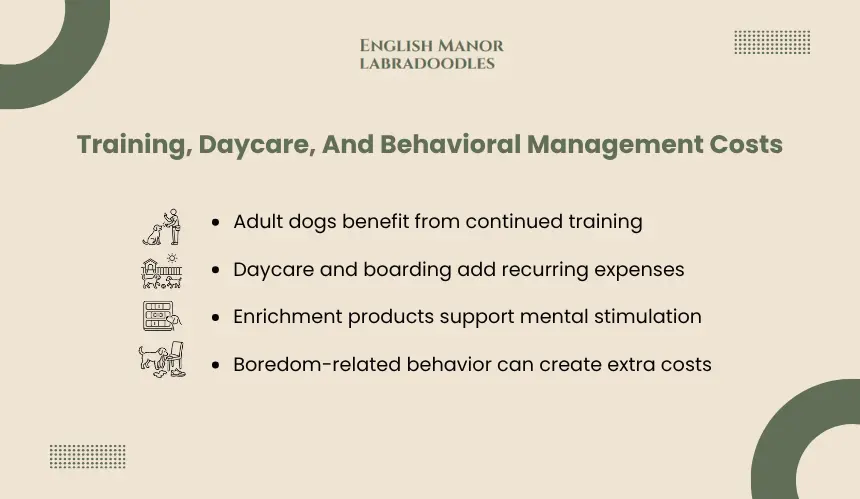
Training and behavioral management expenses often continue long after the puppy stage because Labradoodles are intelligent, energetic, and highly social dogs that benefit from ongoing structure and mental stimulation. Without consistent engagement, some Labradoodles may develop boredom-related habits that create additional financial and behavioral challenges over time.
Ongoing Obedience Reinforcement
Basic puppy training is usually only the beginning of long-term behavioral development. Many Labradoodle owners continue reinforcing leash manners, recall reliability, impulse control, and social behavior throughout adulthood to maintain consistency in different environments.
Some owners invest in advanced obedience classes, agility activities, or private behavioral sessions as dogs mature, especially when dealing with excessive barking, hyperactivity, or poor social behavior. Continued training often improves long-term manageability while reducing the likelihood of destructive or anxiety-driven habits.
Did You Know?
Canine trainers frequently note that intelligent breeds often require continued mental engagement throughout adulthood because repetitive boredom can contribute to behavioral regression over time.
Dog Daycare And Boarding Expenses
Highly social Labradoodles may struggle with long periods of isolation, particularly in households where owners work extended hours or travel frequently. Because of this, many owners eventually rely on daycare facilities, dog walkers, or overnight boarding programs for supervision and activity.
Recurring daycare and boarding expenses often vary based on location, facility quality, activity programs, and length of stay. Some Labradoodles also require facilities that provide structured exercise and social interaction rather than minimal supervision alone.
Travel planning may also involve additional costs such as pre-boarding grooming, vaccination updates, or temperament evaluations required by daycare providers.
Mental Stimulation and Enrichment Products
Labradoodles typically require more than physical exercise alone because highly intelligent dogs often benefit from cognitive stimulation and problem-solving activities. Owners commonly purchase enrichment products to help reduce boredom, improve focus, and maintain emotional balance indoors.
Interactive toys, puzzle feeders, scent-based games, and treat-dispensing products are frequently replaced over time because active Labradoodles may wear through enrichment items quickly. Although these purchases may seem minor individually, they often become consistent long-term ownership expenses.
Costs Linked To Boredom-Related Behavior
Behavioral issues caused by under-stimulation can create unexpected financial costs throughout adulthood. Labradoodles lacking exercise, structure, or mental engagement may develop destructive chewing habits, excessive barking, digging behavior, or anxiety-related stress responses.
Long-term costs may increase through damaged household items, replacement furniture, additional training sessions, or behavioral consultations. Owners who prioritize routine exercise, enrichment, and structured interaction often reduce these expenses significantly by preventing boredom-driven habits before they become deeply established behavioral patterns.
Pet Insurance and Long-Term Financial Planning
Long-term financial planning becomes important for Labradoodle owners because healthcare expenses can become unpredictable as dogs age. Emergency treatment, chronic allergies, orthopedic issues, and diagnostic testing may create significant costs over time, which is why many owners rely on pet insurance or dedicated emergency savings funds.
Monthly Insurance Premium Ranges
Pet insurance pricing usually depends on dog size, age, coverage level, deductible structure, and geographic location. Younger Labradoodles often qualify for lower premiums, while broader policies with illness and emergency coverage generally cost more monthly.
Coverage may include:
- Accidents and injuries
- Illness treatment
- Diagnostic testing
- Surgery and hospitalization
- Prescription medication
Did You Know?
Pet insurance usage has increased rapidly in recent years as veterinary treatment and emergency care costs continue rising.
Deductibles and Emergency Coverage
Many insurance plans still require deductibles, reimbursement percentages, and out-of-pocket costs before coverage applies fully. Owners should carefully review policy exclusions and annual coverage limits before choosing a plan.
Emergency veterinary expenses may involve:
- Diagnostic imaging
- Surgical procedures
- Overnight hospitalization
- Specialist care
- Rehabilitation treatment
When Insurance May Reduce Financial Risk
Pet insurance may help reduce financial pressure during sudden emergencies that involve expensive treatment or long-term medical management. Active Labradoodles may occasionally face injuries, digestive blockages, allergy treatment, or mobility-related healthcare needs throughout adulthood.
Some owners prefer insurance coverage, while others choose independent savings funds for emergency veterinary care.
Building a Pet Emergency Fund
Many Labradoodle owners maintain dedicated emergency savings because unexpected healthcare costs can appear even in healthy dogs. Emergency funds commonly help cover surgeries, medication, specialist consultations, or sudden illness treatment without disrupting routine monthly budgeting.
Consistent financial preparation often makes long-term Labradoodle ownership more manageable and less stressful during unexpected situations.
Hidden Labradoodle Ownership Costs Many Owners Forget
Many Labradoodle owners budget for food, grooming, and veterinary care but still overlook smaller recurring expenses that gradually increase long-term ownership costs. Travel needs, coat maintenance, behavioral management, and aging-related care can all add unexpected financial pressure over time.
Replacing Damaged Household Items
High-energy Labradoodles may occasionally damage household items through chewing, boredom, or teething behavior. Shoes, bedding, rugs, furniture corners, and charging cables are commonly replaced during younger stages.
Travel And Pet-Sitting Expenses
Owners who travel frequently may eventually rely on boarding facilities, daycare programs, or pet sitters for supervision and care. Additional costs may also include grooming and vaccination updates required by boarding facilities.
Did You Know?
Many dog boarding facilities now require behavioral evaluations and updated vaccination records before accepting dogs into group-care environments.
Seasonal Grooming And Shedding Management
Seasonal coat changes, outdoor activity, and dense fur growth can increase grooming needs throughout the year. Some Labradoodles require extra brushing, detangling treatments, or more frequent grooming appointments during heavy coat-growth periods.
Joint Care And Aging-Related Costs
As Labradoodles age, owners may eventually spend more on joint supplements, orthopedic bedding, mobility support, prescription medication, and additional veterinary monitoring, especially for larger or highly active dogs.
Frequently Asked Questions
Are Labradoodles considered expensive dogs to maintain?
Labradoodles are often considered moderately to highly expensive dogs to maintain because of recurring grooming, healthcare, nutrition, and training-related expenses. Their coat maintenance alone can become a significant long-term financial commitment compared to many lower-maintenance breeds.
What is usually the biggest ongoing Labradoodle expense?
Professional grooming is commonly one of the largest recurring expenses because most Labradoodles require grooming appointments every 6–8 weeks throughout their lives. Veterinary care and high-quality food also become major long-term ownership costs over time.
How much should owners budget monthly for a Labradoodle?
Many owners realistically budget between $200 and $600+ per month depending on dog size, food quality, grooming frequency, insurance coverage, daycare usage, and healthcare needs. Unexpected medical or emergency expenses can increase costs further.
Do Labradoodles require professional grooming forever?
Most Labradoodles require lifelong professional grooming because curly and fleece-style coats continue growing and can mat easily without trimming and maintenance. Regular brushing at home usually helps reduce severe tangling and additional grooming charges.
Is pet insurance helpful for Labradoodle owners?
Pet insurance may help reduce financial stress during emergencies involving surgery, injuries, allergies, digestive issues, or hospitalization. However, coverage benefits depend heavily on deductibles, reimbursement rates, exclusions, and the type of policy selected.
Why do Labradoodle ownership costs increase over time?
Long-term ownership expenses often increase because aging dogs may require additional veterinary monitoring, joint support, specialized diets, dental care, prescription medication, and mobility-related products as health needs change throughout adulthood and senior years.