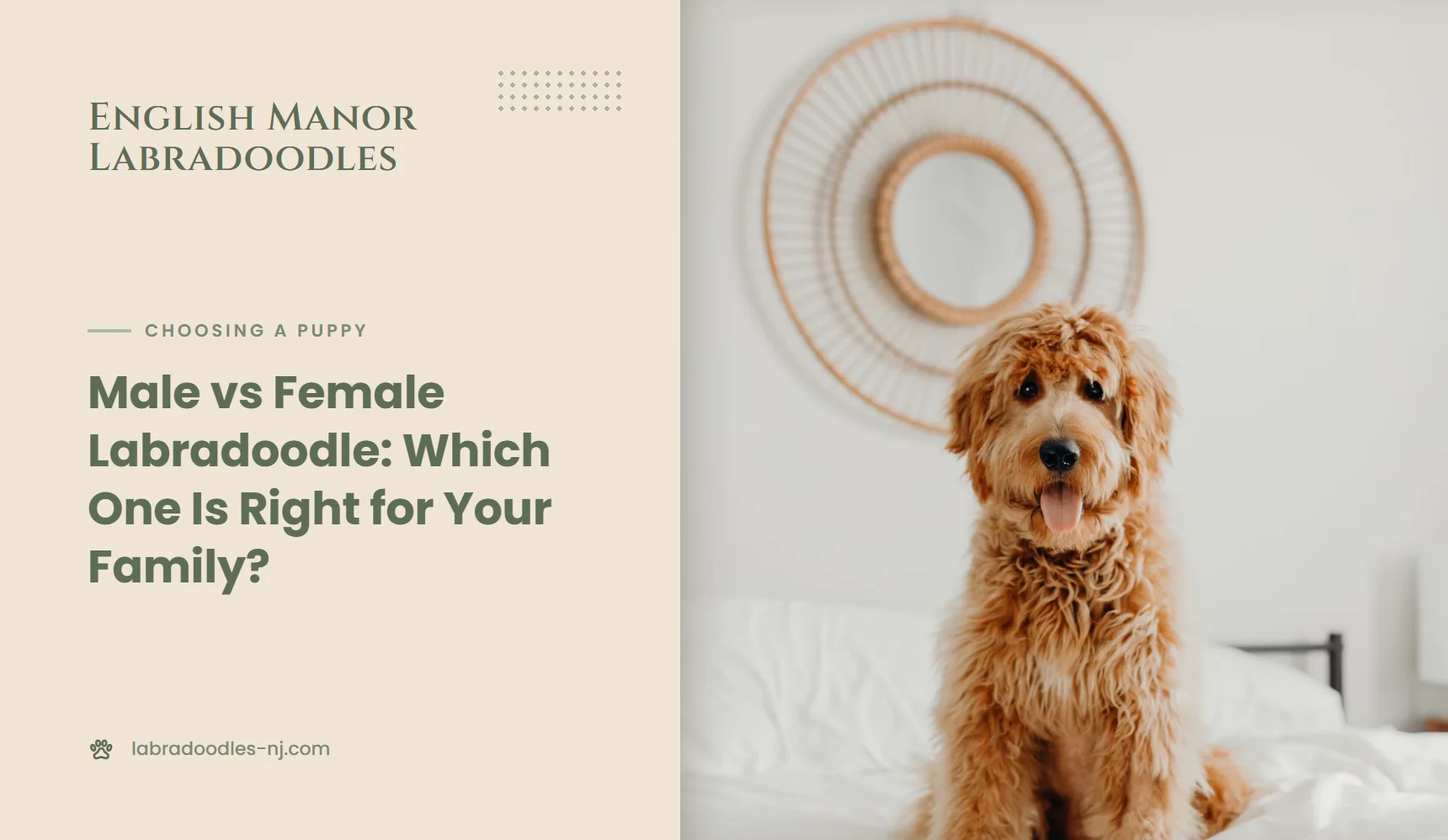
Male vs Female Labradoodle: Which One Is Right for Your Family?
- English Manor Labradoodle
One of the most common questions prospective Labradoodle owners ask is whether they should choose a male or female puppy. It is an understandable concern because bringing a dog into the family is a long-term commitment, and many people want to make the best possible choice from the start. Friends, breeders, online forums, and social media discussions often offer strong opinions about which gender is friendlier, easier to train, calmer, more affectionate, or better suited for family life. However, the reality is often much more nuanced than these simple comparisons suggest.
Both male and female Labradoodles can make wonderful companions. They share many of the same qualities that have made the breed so popular, including intelligence, sociability, trainability, and a strong desire to be part of family activities. While some general differences in behavior, maturity, and social tendencies may exist between males and females, these tendencies are not guarantees. A dog's upbringing, training, socialization, genetics, and individual personality often play a much larger role in shaping behavior than gender alone.
Choosing between a male and female Labradoodle is less about determining which gender is better and more about identifying which dog is the best fit for a particular household. Understanding the potential differences between males and females can help families make a more informed decision, but it is equally important to recognize that every Labradoodle is unique. The best match is often the dog whose temperament, energy level, and personality align most closely with the family's lifestyle and expectations.
Many experienced breeders report that personality differences within the same gender can be greater than the differences between males and females. This is one reason why temperament evaluations are often considered just as important as gender when selecting a puppy.
When comparing a Male vs Female Labradoodle, there is no universally better choice for every family. Both males and females can be intelligent, affectionate, friendly, and highly trainable companions. While male Labradoodles are often described as slightly more playful, outgoing, and people-focused, female Labradoodles are frequently viewed as somewhat more independent and quicker to mature. However, individual personality, socialization, training, and lifestyle compatibility usually have a greater impact on a dog's behavior than gender alone.
Male Labradoodle vs Female Labradoodle: Quick Comparison
| Trait | Male Labradoodle | Female Labradoodle |
|---|---|---|
| Personality | Often playful and outgoing | Often mature and independent |
| Affection | Frequently very people-oriented | Often affectionate but may be slightly less clingy |
| Maturity | May mature more slowly | Often mature earlier |
| Trainability | Highly trainable | Highly trainable |
| Energy Level | Often playful for longer periods | Often slightly more focused as they mature |
| Family Interaction | Usually enjoys constant social interaction | Often balances affection with independence |
| Size | Typically slightly larger | Usually slightly smaller |
What Matters Most When Choosing?
Rather than focusing exclusively on gender, future owners should consider:
- Individual temperament.
- Energy level.
- Household lifestyle.
- Experience with dogs.
- Presence of children or other pets.
- Training commitment.
- Personality compatibility.
A calm male Labradoodle may be a better fit than a highly energetic female, and vice versa. Every puppy develops its own unique personality regardless of gender.
Two Labradoodles of the same gender can often have more personality differences than a male and female from the same litter. This is why many experienced breeders place greater emphasis on temperament and family compatibility than gender alone.
For most families, the best Labradoodle is not necessarily male or female. It is the dog whose personality, activity level, and temperament align most closely with the family's lifestyle and expectations.
Does Gender Really Matter in Labradoodles?
When comparing male and female Labradoodles, many people assume gender will be the most important factor in determining personality, behavior, and compatibility. While gender can influence certain tendencies, it is only one piece of a much larger picture. Factors such as genetics, socialization, training, environment, and individual temperament often have a greater impact on how a Labradoodle behaves throughout its life.
For this reason, experienced owners and breeders typically encourage families to look beyond gender alone when choosing a puppy.
The Role of Genetics and Personality
Every Labradoodle inherits a unique combination of traits from its parents. These inherited characteristics can influence confidence, sociability, energy level, trainability, and overall temperament. Even puppies from the same litter can display noticeably different personalities despite sharing the same parents and environment.
Some puppies may naturally be:
- More outgoing and social.
- More independent and observant.
- Highly energetic and playful.
- Calm and easygoing.
- Curious and adventurous.
Because personality develops through a combination of genetics and life experiences, gender alone cannot accurately predict how a particular Labradoodle will behave.
Why Training and Socialization Matter More
A well-socialized and properly trained Labradoodle is often easier to live with than an untrained dog of either gender. Early experiences help shape confidence, behavior, and adaptability, which is why socialization and training play such important roles in long-term development.
Positive training and socialization help influence:
- Interactions with people.
- Responses to new environments.
- Confidence levels.
- Household manners.
- Overall behavior and reliability.
These factors often have a greater effect on daily life than the dog's sex.
Two Labradoodles raised in different environments may develop very different personalities even if they share similar genetics and are the same gender.
Looking Beyond Common Stereotypes
Many stereotypes suggest that male dogs are always more affectionate or that females are always calmer and easier to manage. While some dogs may display these tendencies, such assumptions do not apply universally.
For example:
- Some male Labradoodles are calm and reserved.
- Some female Labradoodles are extremely playful and outgoing.
- Some males mature quickly.
- Some females remain highly energetic well into adulthood.
These variations highlight why individual evaluation is often more valuable than relying on broad gender-based assumptions.
Two Labradoodles of the same gender can often have more personality differences than a male and female from the same litter. This is why many breeders focus on temperament assessments when helping families select a puppy.
Male Labradoodle Traits
Male Labradoodles are often described as social, affectionate, and enthusiastic companions. While every dog develops its own personality, many owners and breeders observe certain tendencies that are more common in males. These characteristics can make male Labradoodles an excellent fit for families seeking a highly interactive and people-oriented dog.
It is important to remember, however, that these are general tendencies rather than guarantees. Individual temperament always plays a significant role in how a dog behaves.
Typical Personality Characteristics
Many male Labradoodles are known for their outgoing and playful nature. They often enjoy interacting with family members and may actively seek attention and companionship throughout the day.
Common traits frequently associated with male Labradoodles include:
- Friendly and sociable behavior.
- Strong interest in human interaction.
- Playful personalities.
- Enthusiasm for activities and games.
- Eagerness to participate in family routines.
Because Labradoodles are already highly social dogs, these characteristics can sometimes be especially noticeable in males.
Social and Family Interactions
Male Labradoodles often thrive in environments where they can spend significant time with their families. Many enjoy being involved in household activities and may actively seek opportunities to engage with both adults and children.
Their social nature often contributes to:
- Strong family bonds.
- Enjoyment of group activities.
- Positive interactions with visitors.
- Enthusiasm for play and companionship.
Many families appreciate the affectionate and interactive nature that male Labradoodles frequently display.
Some owners describe male Labradoodles as "people-focused" because they tend to seek attention and stay close to family members during daily activities.
Energy Levels and Playfulness
Although energy levels vary from dog to dog, male Labradoodles are often described as maintaining puppy-like enthusiasm for longer periods. Many remain highly playful well into adolescence and adulthood.
This playful nature can make them excellent companions for:
- Active families.
- Outdoor adventures.
- Interactive games.
- Households with children.
- Owners who enjoy frequent engagement with their dog.
Their enthusiasm often contributes to the fun-loving personality that many people associate with the breed.
Potential Challenges Owners Should Know
The same qualities that make male Labradoodles appealing can sometimes present challenges. Their playful and social nature may occasionally lead to overexcitement, particularly during adolescence or when greeting others.
Some owners may observe:
- Longer periods of immature behavior.
- Increased excitement around visitors.
- Greater tendency to seek constant attention.
- Higher activity levels during certain developmental stages.
These behaviors are often manageable through consistent training, socialization, and clear household expectations.
Male Labradoodles often mature more slowly than females, so their playful, energetic behavior may continue longer into adolescence before they fully settle into adult routines.
Female Labradoodle Traits
Female Labradoodles are often described as intelligent, attentive, and somewhat more independent than their male counterparts. While every dog has a unique personality, many owners and breeders observe certain behavioral tendencies that appear more frequently among females. These traits can make female Labradoodles an excellent choice for families looking for a dog that balances affection with a degree of independence.
As with males, these characteristics should be viewed as general observations rather than guarantees. Individual temperament remains one of the most important factors when evaluating any puppy.
Typical Personality Characteristics
Many female Labradoodles are known for their confidence, awareness, and ability to adapt to different situations. They are often affectionate with their families while also demonstrating a greater willingness to entertain themselves when necessary.
Common traits frequently associated with female Labradoodles include:
- Intelligent and observant behavior.
- Strong awareness of their surroundings.
- Affection balanced with independence.
- Confidence in new situations.
- Focused and attentive personalities.
These qualities can make females appealing to owners who appreciate a dog that is both loving and self-assured.
Independence and Maturity
One of the most commonly discussed differences between male and female Labradoodles is the rate at which they mature. Many females are often perceived as reaching emotional maturity sooner than males, although individual development can vary significantly.
Earlier maturity may sometimes be reflected in:
- Improved focus during training.
- Reduced puppy-like behavior at an earlier age.
- Greater consistency in routines.
- More measured responses to new situations.
Because of these tendencies, some owners describe female Labradoodles as slightly easier to manage during certain developmental stages.
Many breeders report that female Labradoodles often display mature behavior earlier than males do, although personality and upbringing can still significantly influence development.
Social Behavior and Family Relationships
Female Labradoodles are typically very social and affectionate dogs, but some may express affection differently than males do. Rather than constantly seeking attention, they may choose when and how they interact with family members.
Many females enjoy:
- Spending time near family members.
- Participating in household activities.
- Forming strong bonds with their owners.
- Maintaining a balance between companionship and independence.
This balance often appeals to families who want a dog that is affectionate without always demanding attention.
Potential Challenges Owners Should Know
While female Labradoodles offer many desirable qualities, they can present certain challenges just like any other dog. Some females may be more independent, which can occasionally be mistaken for stubbornness when compared to highly people-focused dogs.
Owners may occasionally notice:
- Greater independence during training.
- More selective social interactions.
- A preference for personal space at times.
- Strong confidence that requires consistent guidance.
These traits are not inherently negative and often become strengths when paired with proper training and socialization.
Many female Labradoodles are described as highly intelligent problem-solvers who enjoy learning and working with their owners, but they may sometimes approach situations with a little more independence than males.
Male vs Female Labradoodle: Key Differences at a Glance
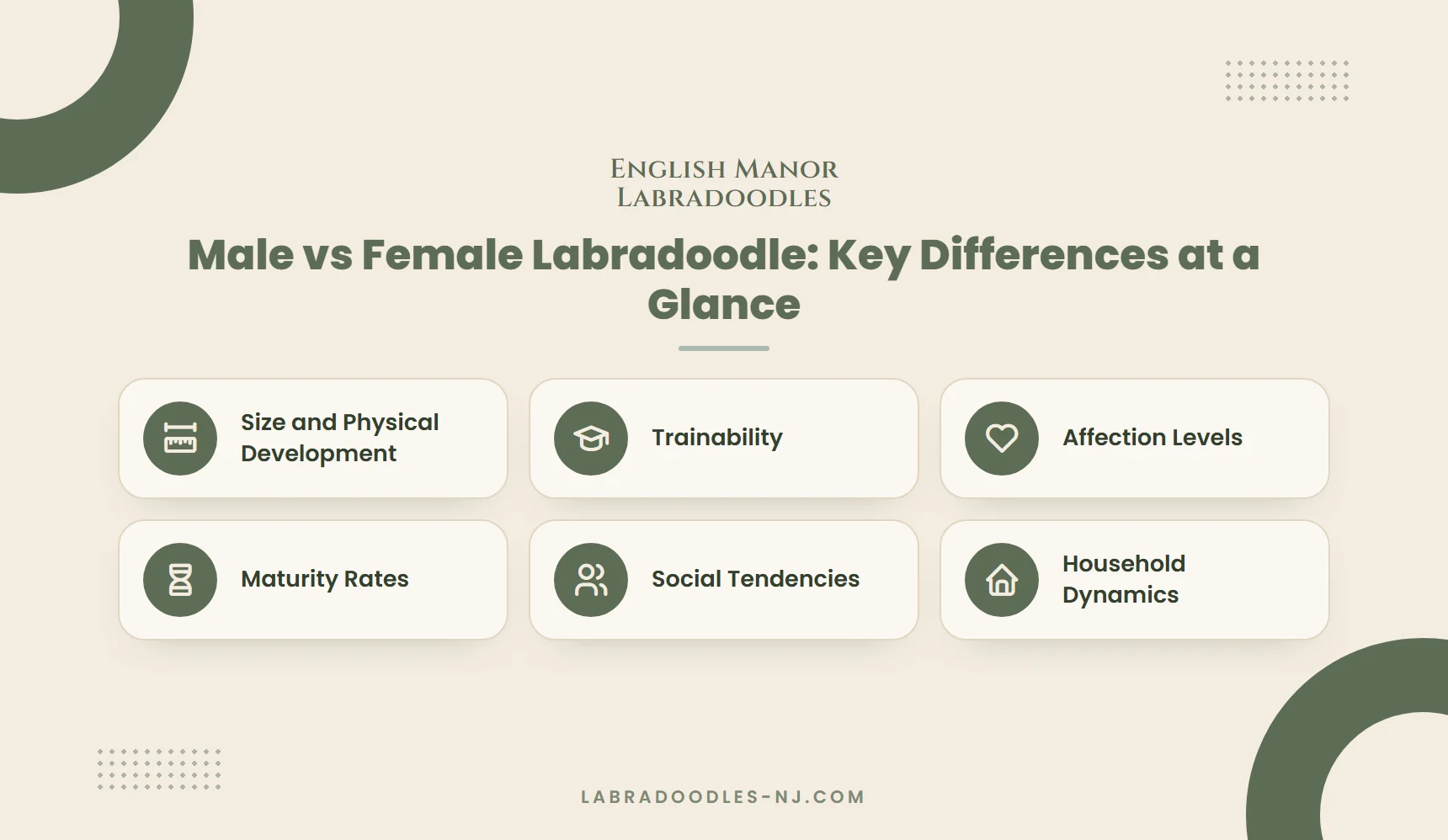
When comparing a male and female Labradoodle, it is important to remember that the differences are often tendencies rather than rules. Individual personality, upbringing, socialization, and training frequently influence behavior more than gender alone. However, understanding some common distinctions can help prospective owners determine which characteristics best align with their household and lifestyle.
Size and Physical Development
Male Labradoodles are often slightly larger and heavier than females once fully grown. While the difference is not usually dramatic, males may have a broader build and greater overall body mass.
Females are typically:
- Slightly smaller in stature.
- Lighter in weight.
- More refined in physical appearance.
These differences vary by genetics, generation, and size (miniature, medium, or standard).
Trainability
Both male and female Labradoodles are generally considered highly trainable due to their intelligence and eagerness to learn. Neither gender has a clear advantage in overall training potential.
Some owners report that:
- Females may appear more focused at an earlier age.
- Males may remain playful for longer periods.
- Both respond well to positive reinforcement and consistency.
In most cases, training success depends far more on the owner's commitment and the dog's individual temperament than gender.
Many professional trainers believe consistency and socialization have a greater impact on training outcomes than whether a Labradoodle is male or female.
Affection Levels
Both genders can be extremely affectionate family companions. The difference often lies in how that affection is expressed.
Male Labradoodles are frequently described as:
- Highly people-oriented.
- Eager for attention.
- Constantly involved in family activities.
Female Labradoodles are often described as:
- Affectionate but slightly more independent.
- Comfortable spending time near their family without always seeking interaction.
- Balanced in their approach to companionship.
Neither style is better; it simply depends on what a family prefers.
Maturity Rates
One of the most commonly observed differences involves maturity. Female Labradoodles often appear to mature emotionally somewhat earlier than males.
This may result in:
- Improved focus during adolescence.
- Earlier development of calm behavior.
- More consistent responses to routines.
Males often maintain their playful, puppy-like personality for longer, which many families find charming and entertaining.
Social Tendencies
Labradoodles are naturally social dogs regardless of gender. However, males are often viewed as slightly more outgoing and eager to interact with people, while females may be somewhat more selective in how they approach social situations.
Again, these tendencies vary widely among individual dogs, and socialization experiences often influence behavior more than gender does.
Household Dynamics
Both males and females can thrive in a wide variety of family environments. The best fit often depends on the dog's individual personality rather than gender alone.
When evaluating a puppy, families should consider:
- Activity level.
- Temperament.
- Confidence.
- Trainability.
- Compatibility with children and other pets.
- Overall lifestyle fit.
Many experienced breeders place puppies based on personality and energy level rather than gender because these traits often have a greater impact on long-term family compatibility.
Which Is Better for Families With Children?
For many prospective owners, one of the most important considerations is how a Labradoodle will fit into a family environment. Because Labradoodles are generally known for being friendly, intelligent, and people-oriented, both males and females can make excellent companions for households with children. However, some subtle differences in behavior and temperament may influence which dog feels like the better match for a particular family.
The key is to focus on temperament, training, and socialization rather than assuming one gender is automatically better with children.
Male Labradoodles and Children
Many families appreciate the playful and enthusiastic nature often associated with male Labradoodles. Their energetic personalities can make them eager participants in games, outdoor activities, and family adventures.
Male Labradoodles are often described as:
- Highly interactive with family members.
- Playful and energetic.
- Eager to engage in activities.
- Strongly people-oriented.
These qualities can make them appealing companions for active households with children who enjoy spending time with their dog.
Female Labradoodles and Children
Female Labradoodles can also thrive in family settings and are often praised for their attentiveness and adaptability. Some owners describe females as slightly more measured in their interactions, particularly as they mature.
Many female Labradoodles display:
- Strong family bonds.
- Affectionate behavior.
- Good awareness of their surroundings.
- A balance between playfulness and calmness.
Families who appreciate a dog that combines companionship with a degree of independence may find these characteristics especially appealing.
Some families notice that female Labradoodles appear to settle into household routines more quickly, although individual personality remains a much stronger predictor of behavior than gender alone.
Why Temperament Matters More Than Gender
When it comes to children, temperament is usually far more important than whether a Labradoodle is male or female. A well-socialized, properly trained dog with a calm and friendly disposition is often a better fit than a dog chosen solely because of its gender.
Important factors to consider include:
- Confidence level.
- Energy level.
- Social behavior.
- Adaptability.
- Comfort around children.
- Responsiveness to training.
Families often achieve the best results when they select a puppy whose personality matches their lifestyle and then continue reinforcing positive behavior through training and socialization.
A well-socialized Labradoodle's behavior around children is often influenced more by training and experiences than by gender alone. Early positive interactions and consistent guidance typically play a major role in shaping family-friendly behavior.
Which Is Better for First-Time Dog Owners?
Many first-time dog owners wonder whether a male or female Labradoodle will be easier to manage. While certain personality tendencies may exist between genders, there is no clear winner when it comes to suitability for beginners. Both male and female Labradoodles can be excellent choices for new owners because of their intelligence, trainability, and desire to interact with people.
The decision often comes down to matching the dog's temperament and energy level with the owner's expectations, lifestyle, and willingness to invest time in training and socialization.
What New Owners Should Consider
First-time owners frequently focus on gender because it feels like a straightforward way to narrow their options. However, there are several factors that often have a much greater influence on the ownership experience.
Important considerations include:
- The dog's personality.
- Activity and exercise requirements.
- Grooming needs.
- Confidence level.
- Adaptability to new environments.
- Compatibility with the household's lifestyle.
A calm and adaptable puppy is often easier for a first-time owner than a highly energetic puppy, regardless of gender.
The Importance of Training Commitment
Labradoodles are highly intelligent dogs, but intelligence alone does not guarantee good behavior. Consistent training, socialization, and structure are important for both males and females.
First-time owners should be prepared to:
- Establish clear household rules.
- Practice consistent training.
- Provide regular exercise.
- Continue socialization throughout development.
- Reinforce positive behaviors.
Owners who commit to these responsibilities often find both male and female Labradoodles highly rewarding companions.
Many behavior challenges that owners attribute to gender are actually related to inconsistent training, lack of socialization, or unmet physical and mental stimulation needs.
Matching Personality to Lifestyle
The best Labradoodle for a first-time owner is usually the one whose personality aligns with the family's daily routine and expectations. Some owners enjoy an energetic, highly interactive dog that wants to participate in every activity, while others prefer a companion that is slightly more independent and relaxed.
Questions new owners may consider include:
- How active is the household?
- How much time is available for training and exercise?
- Are young children present?
- Is the family looking for a highly social dog or a more independent companion?
- What type of temperament feels like the best fit?
Answering these questions often provides more useful guidance than focusing on gender alone.
Many experienced breeders and trainers recommend selecting a puppy based on temperament and energy level rather than gender because personality traits tend to have a greater impact on everyday life and long-term satisfaction.
Male or Female Labradoodle in Multi-Pet Homes
For families that already have pets, introducing a new Labradoodle often involves additional considerations beyond personality and training. Many prospective owners wonder whether a male or female Labradoodle will integrate more easily into a home with existing dogs, cats, or other animals. While gender can sometimes influence social dynamics, successful introductions are typically shaped more by temperament, socialization history, and proper management than by whether the dog is male or female.
Both male and female Labradoodles can thrive in multi-pet households when introductions are handled thoughtfully, and expectations are realistic.
Introducing a New Dog to Existing Pets
The way a new Labradoodle is introduced to resident pets often has a greater impact than gender alone. Gradual introductions, supervised interactions, and positive experiences help establish healthy relationships from the beginning.
Successful introductions often involve:
- Allowing pets to meet at a comfortable pace.
- Supervising early interactions.
- Providing separate spaces when needed.
- Monitoring body language and behavior.
- Reinforcing calm and positive interactions.
Patience during the adjustment period can help reduce stress and encourage positive long-term relationships.
Social Compatibility Considerations
Every dog has its own social preferences and personality. Some Labradoodles are highly outgoing and eager to interact with other animals, while others may be more reserved or selective in their social relationships.
Factors that often influence compatibility include:
- Individual temperament.
- Confidence level.
- Previous social experiences.
- Age and maturity.
- Activity level.
These characteristics frequently have a greater influence on multi-pet success than gender alone.
Two dogs with compatible personalities often adjust more successfully than two dogs chosen primarily because of their genders. Temperament matching is frequently one of the most important factors in long-term harmony.
Managing Household Dynamics
When adding a Labradoodle to a multi-pet household, maintaining structure and consistency can help ease the transition. Existing pets may need time to adjust to changes in routines, attention, and living arrangements.
Helpful strategies often include:
- Maintaining established routines.
- Providing individual attention to each pet.
- Monitoring resource sharing around food and toys.
- Creating opportunities for positive interactions.
- Allowing pets time to build relationships naturally.
Most successful multi-pet households develop through gradual adjustment rather than immediate friendship.
Many Labradoodles are naturally social dogs and often enjoy the companionship of other animals. However, individual personality, proper introductions, and ongoing management are usually stronger predictors of success than gender alone.
Frequently Asked Questions
Are male or female Labradoodles easier to train?
Both male and female Labradoodles are generally highly trainable. While females may sometimes mature earlier and show focus sooner, training success is usually influenced more by consistency, socialization, and individual temperament than gender.
Which Labradoodle is more affectionate?
Both genders can be extremely affectionate. Male Labradoodles are often described as highly people-oriented and attention-seeking, while females may show affection in a slightly more independent and selective manner.
Are female Labradoodles calmer?
Some female Labradoodles are perceived as calmer because they often mature earlier than males. However, activity level and temperament vary significantly between individual dogs, making personality a better predictor than gender.
Are male Labradoodles more playful?
Male Labradoodles are often described as maintaining playful, puppy-like behavior for longer periods. However, many female Labradoodles are equally energetic and enjoy active play throughout their lives.
Which gender is better for families?
Neither gender is universally better for families. Both male and female Labradoodles can be excellent family companions when they receive proper training, socialization, exercise, and ongoing care.
Should I choose based on gender or personality?
Personality is generally more important than gender when selecting a Labradoodle. Temperament, energy level, confidence, and compatibility with the household often have a greater impact on long-term satisfaction and success.
- 01Does Gender Really Matter in Labradoodles?
- 02Male Labradoodle Traits
- 03Female Labradoodle Traits
- 04Male vs Female Labradoodle: Key Differences at a Glance
- 05Which Is Better for Families With Children?
- 06Which Is Better for First-Time Dog Owners?
- 07Male or Female Labradoodle in Multi-Pet Homes
- 08Frequently Asked Questions