- englishmanor
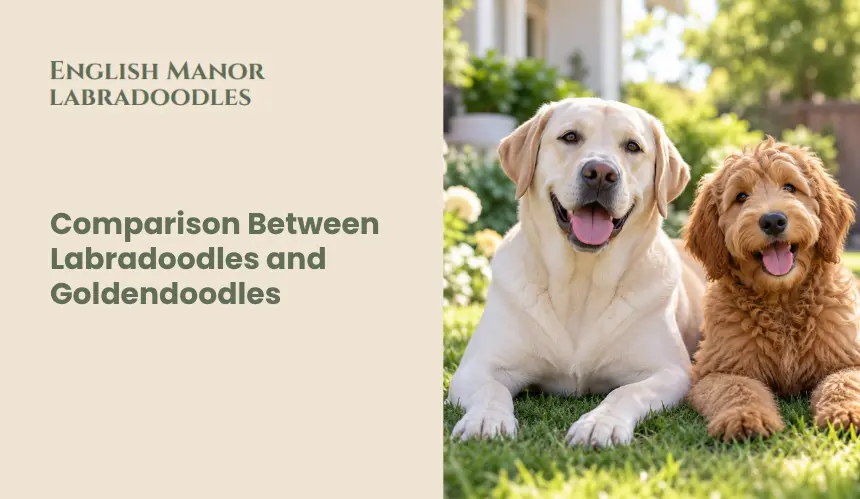
Comparison Between Labradoodles and Goldendoodles
Quick Overview: Labradoodles and Goldendoodles are both intelligent, family-friendly doodle breeds, but they differ in temperament, energy levels, grooming demands, and social behavior. While both breeds inherit desirable traits from Poodles, their Labrador Retriever and Golden Retriever genetics create noticeable personality and lifestyle differences.
The better breed usually depends on the owner’s lifestyle, activity level, grooming expectations, and preference for either a highly social companion or a more energetic and independent dog. |
Choosing between a Labradoodle and a Goldendoodle often becomes more confusing than many first-time dog owners expect. Both breeds are intelligent, friendly, low-shedding, and highly popular family companions, which makes the differences harder to identify during the early research stage. Many households initially focus on appearance alone, only to later struggle with unexpected energy levels, grooming responsibilities, separation anxiety, or behavioral differences that do not match their lifestyle.
Some owners may prefer a calm and emotionally attached companion dog but accidentally choose a breed with stronger working-dog energy and higher stimulation needs. Others may underestimate how coat type affects grooming maintenance, shedding control, and allergy management over time. These mismatches can lead to frustration, destructive indoor behavior, excessive barking, or difficulty adapting to apartment living and busy family routines.
Understanding how Labrador Retriever and Golden Retriever genetics influence temperament, trainability, social behavior, exercise needs, and emotional attachment can make the decision far more practical and lifestyle-focused. This comparison between Labradoodles and Goldendoodles breaks down the key differences in personality, grooming, intelligence, health considerations, and long-term ownership expectations to help potential owners choose the breed that fits their daily routine more naturally.
1. Temperament Differences Between Labradoodles and Goldendoodles
Temperament is often the deciding factor for families choosing between Labradoodles and Goldendoodles because daily companionship behavior can vary significantly between the two breeds. While both dogs are intelligent, social, and highly trainable, their emotional patterns, activity responses, and interaction styles frequently reflect the Retriever breed in their genetics. These differences become especially noticeable in homes with children, busy schedules, visitors, or multiple pets.
Which Breed Tends To Be More Social And Affectionate?
Goldendoodles are commonly viewed as the more emotionally expressive breed. Many develop strong attachment behavior and actively seek physical closeness, attention, and interaction throughout the day. They often enjoy staying near family members and may follow owners from room to room, especially in highly social households.
Labradoodles can also be affectionate, but they frequently balance companionship with greater independence. Some may prefer interactive play, outdoor activity, or exploration over constant physical affection. This can make Labradoodles feel slightly more self-directed in certain environments.
Which Doodle Breed Behaves Better Around Children?
Both breeds generally perform well in family environments, but Goldendoodles are often perceived as gentler and more patient around younger children because of their calmer emotional engagement. Their people-oriented personality can help them adapt well to homes with frequent interaction and social activity.
Labradoodles may show higher excitement levels during play, particularly in younger dogs with strong Labrador Retriever energy. Without early training and structured exercise, some may become overly energetic indoors, which can feel overwhelming in households with toddlers or limited space.
Emotional Sensitivity And Attachment Behavior
Goldendoodles frequently display stronger emotional sensitivity and may react more noticeably to changes in routine, owner absence, or household tension. Because of this, some develop separation anxiety more easily if left alone for extended periods without stimulation or companionship.
Labradoodles often maintain slightly better emotional independence, although individual personality still plays a major role. Their higher activity focus can sometimes redirect attention toward toys, movement, or problem-solving activities rather than constant emotional reassurance from owners.
Stranger Interaction And Social Confidence Differences
Goldendoodles are usually highly welcoming toward guests and unfamiliar people, making them naturally social companion dogs. Many display friendly body language quickly and adapt comfortably in social settings, public spaces, or family gatherings.
Labradoodles may appear more alert and observant during first interactions, especially in stimulating environments. While they are rarely aggressive, some take longer to fully settle around unfamiliar individuals. Early socialization helps both breeds develop balanced confidence and controlled behavior around strangers, other pets, and changing environments.
2. Comparing Energy Levels and Daily Activity Needs
Energy level differences between Labradoodles and Goldendoodles can strongly influence how well each breed fits into a household’s routine. Although both breeds are intelligent and active, Labradoodles often inherit the Labrador Retriever’s working-dog stamina, while Goldendoodles commonly display more socially balanced energy with calmer companionship behavior. These differences become important when owners underestimate daily stimulation needs, which can lead to chewing, barking, pacing, restlessness, or destructive indoor behavior.
Which Breed Requires More Exercise?
Labradoodles generally require more structured physical activity throughout the day. Their athletic nature often makes them highly responsive to outdoor movement, advanced obedience work, and mentally challenging activities.
Common activities enjoyed by Labradoodles include:
- Long-distance walks and jogging
- Agility and obstacle exercises
- Retrieval and fetch games
- Hiking and outdoor exploration
- Interactive training routines
Goldendoodles also enjoy daily exercise, but many adapt more comfortably to moderate activity levels combined with social interaction and companionship.
Typical Goldendoodle exercise preferences include:
- Moderate daily walks
- Interactive family play
- Social park visits
- Light obedience sessions
- Companion-focused activities
This often makes Goldendoodles feel slightly easier to manage for households seeking a more relaxed indoor companion.
Indoor Activity and Hyperactivity Tendencies
When physical and mental stimulation becomes inconsistent, Labradoodles are more likely to display visible indoor hyperactivity. Younger dogs especially may struggle to settle indoors without structured exercise and routine-based stimulation.
Common boredom-related behaviors in Labradoodles may include:
- Excessive jumping
- Furniture chewing
- Toy destruction
- Pacing indoors
- Attention-seeking barking
Goldendoodles can also become energetic, but many naturally transition between playfulness and calm companionship more smoothly. After moderate activity, they often prefer relaxing near family members rather than continuously seeking stimulation.
Mental Stimulation and Boredom-Related Behavior
Because both breeds inherit high intelligence from Poodle genetics, mental stimulation plays a critical role in long-term behavioral stability. Physical exercise alone is often insufficient for preventing boredom-related habits.
Effective mental enrichment activities for both breeds include:
- Puzzle feeders
- Scent-detection games
- Obedience training
- Interactive toys
- Social engagement routines
- Structured learning exercises
Labradoodles frequently respond well to task-oriented challenges requiring focus and movement, while Goldendoodles often thrive in emotionally interactive activities involving praise, companionship, and human engagement.
Which Breed Adapts Better To Apartment Living?
Goldendoodles generally adapt better to apartment environments because many display calmer indoor behavior once their social and exercise needs are met. Their emotionally connected temperament can help them settle more comfortably in smaller living spaces when routines remain consistent.
Labradoodles can also succeed in apartments, but they often require:
- More outdoor activity
- Longer exercise sessions
- Greater mental stimulation
- Consistent movement routines
- Structured daily schedules
Without these outlets, high energy accumulation may increase indoor frustration and behavioral instability, particularly in compact urban environments.
3. Labradoodle Vs Goldendoodle Grooming And Shedding Comparison

Grooming is one of the most misunderstood aspects of doodle ownership because coat appearance alone does not always predict shedding levels, matting risk, or maintenance difficulty. Both Labradoodles and Goldendoodles inherit coat traits from Poodles, but their Retriever genetics can still influence texture, density, oil production, and undercoat behavior. As a result, grooming responsibilities often become more demanding than many first-time owners initially expect.
Coat Maintenance Differences Between The Two Breeds
Labradoodles frequently develop denser and slightly coarser coats, especially when Labrador Retriever traits remain more dominant. Some coats may resist dirt well outdoors, but thicker textures can trap debris, loose hair, and moisture close to the skin if brushing routines become inconsistent.
Goldendoodles commonly develop softer and fluffier coats that require frequent detangling because fine hair strands can knot easily around the ears, legs, collar area, and tail. Their coat texture often creates a fuller appearance, but regular grooming becomes necessary to prevent matting and skin irritation.
Important grooming responsibilities for both breeds include:
- Daily or routine brushing
- Professional grooming appointments
- Ear cleaning and moisture control
- Nail trimming
- Coat trimming around paws and eyes
- Skin monitoring beneath dense fur
Without consistent maintenance, both breeds may develop painful matting that restricts airflow near the skin and traps moisture or bacteria.
Which Breed Sheds Less?
Neither breed can be considered completely non-shedding because shedding levels depend heavily on genetics, coat type, and breeding consistency. However, dogs with curlier Poodle-dominant coats usually shed less visibly because loose hair becomes trapped within the curls instead of falling onto furniture or flooring.
Goldendoodles with fleece or curly coats are often perceived as lower-shedding companions, particularly in indoor family environments. Labradoodles can also develop low-shedding coats, but some inherit more Labrador Retriever coat influence, which may increase seasonal shedding and undercoat release.
Factors that influence shedding include:
- Coat genetics
- Curl density
- Brushing frequency
- Seasonal weather changes
- Skin health
- Nutrition quality
Because hybrid coat outcomes remain unpredictable, even puppies from the same litter may develop very different shedding patterns as adults.
Curly, Wavy, and Fleece Coat Variations Explained
Doodle coat types generally fall into three main categories, each affecting grooming complexity differently.
Common coat variations include:
- Curly coats: Dense, tight curls with lower visible shedding but higher matting risk
- Wavy coats: Looser texture with balanced softness and moderate maintenance needs
- Fleece coats: Soft, fluffy texture commonly associated with teddy-bear appearance
Curly coats often require the most consistent brushing because trapped hair knots easily beneath the surface layer. Wavy coats may appear easier to maintain initially but can develop hidden tangles if brushing becomes irregular. Fleece coats are visually attractive but frequently demand professional grooming to maintain cleanliness and coat shape.
Which Doodle Breed Is More Allergy-Friendly?
Both Labradoodles and Goldendoodles are often marketed as hypoallergenic dogs, but no breed is entirely allergy-free. Allergic reactions are usually triggered by dander, saliva proteins, and skin particles rather than fur alone.
Dogs with curlier coats may release fewer airborne allergens because loose hair and dander remain trapped more effectively within the coat structure. However, allergy sensitivity varies greatly between individuals, making direct exposure and testing important before selecting either breed.
For allergy-sensitive households, important considerations include:
- Coat curl density
- Grooming frequency
- Indoor air quality
- Vacuuming and cleaning routines
- Bathing consistency
- Skin and dander management
Goldendoodles with highly Poodle-dominant coats are often perceived as slightly more allergy-friendly, although well-maintained Labradoodles can also perform well in allergy-conscious environments depending on their coat genetics.
4. Training And Intelligence Differences Between Labradoodles And Goldendoodles
Both Labradoodles and Goldendoodles rank among the most trainable doodle breeds because they inherit intelligence, responsiveness, and learning ability from Poodles and Retriever bloodlines. However, the way each breed processes commands, reacts to reinforcement, and handles emotional pressure can differ noticeably in daily training environments. These differences often influence obedience consistency, social behavior, and long-term behavioral management.
Which Breed Is Easier To Train?
Goldendoodles are often considered slightly easier for first-time owners because many naturally seek approval and respond quickly to praise-based reinforcement. Their social attachment to owners can increase training engagement during obedience exercises, leash work, and household routines.
Labradoodles are also highly intelligent, but many display stronger independence and higher environmental curiosity. This can sometimes make them more distractible during training sessions if routines lack structure or stimulation.
Training methods that work well for both breeds include:
- Positive reinforcement
- Reward-based obedience
- Short repetitive sessions
- Social exposure training
- Consistent command language
- Interactive mental exercises
Did You Know?
A 2024 canine cognition study published in Applied Animal Behaviour Science found that dogs trained with reward-based reinforcement retained behavioral consistency more effectively than dogs exposed to punishment-based correction systems.
Attention Span And Obedience Responsiveness
Goldendoodles often maintain stronger eye contact and emotional focus during training, especially in socially interactive environments. Their people-oriented temperament can improve responsiveness to verbal praise, routine repetition, and family-centered training.
Labradoodles frequently excel in advanced skill-based activities requiring movement, coordination, and problem-solving. Many perform exceptionally well in:
- Agility training
- Retrieval exercises
- Scent-detection activities
- Advanced obedience work
- Outdoor task-based learning
Because of their higher activity drive, Labradoodles may require more structured focus-building exercises during early training stages.
Separation Anxiety And Emotional Dependency
Goldendoodles commonly develop stronger emotional dependency because of their highly social temperament. In homes where dogs remain alone for long hours, this attachment behavior may increase the risk of separation anxiety symptoms such as whining, pacing, barking, or destructive chewing.
Labradoodles may show slightly greater independence, although exercise deprivation can still contribute to anxiety-related behavior. Structured routines, crate familiarity, and gradual alone-time exposure help both breeds develop emotional stability.
Warning signs of separation-related stress may include:
- Excessive barking
- Scratching doors or windows
- Destructive chewing
- Restlessness before owner departure
- Indoor accidents despite training
Did You Know?
Veterinary behavior specialists increasingly identify under-stimulation and inconsistent routines as major contributors to anxiety-related behavior in intelligent hybrid breeds like doodles.
Barking Tendencies And Behavioral Management Differences
Neither breed is naturally considered excessive barkers, but behavioral triggers can increase vocalization if stimulation and socialization become inconsistent.
Goldendoodles may bark more during emotional excitement, greeting behavior, or separation stress. Labradoodles often bark reactively in response to movement, environmental stimulation, or boredom-driven frustration.
Behavioral management improves significantly when owners prioritize:
- Early socialization
- Daily exercise routines
- Mental enrichment
- Controlled exposure to new environments
- Consistent behavioral boundaries
Did You Know?
Canine trainers often note that mentally exhausted dogs typically settle faster indoors than dogs that receive only physical exercise without cognitive stimulation.
5. Health, Lifespan, And Long-Term Ownership Comparison
Although Labradoodles and Goldendoodles are often viewed as healthier hybrid dogs, both breeds can still inherit genetic conditions from their Retriever and Poodle bloodlines. Long-term ownership costs are influenced not only by veterinary care, but also by grooming frequency, activity needs, dietary quality, and preventative health management. Understanding these factors helps owners prepare for the physical, emotional, and financial commitment associated with doodle breeds.
Common Health Concerns In Both Breeds
Because both breeds share Poodle genetics, some inherited health risks overlap. However, Labrador Retriever and Golden Retriever bloodlines can introduce additional breed-specific concerns that affect mobility, skin condition, eye health, and long-term joint stability.
Health conditions sometimes seen in both breeds include:
- Hip dysplasia
- Elbow dysplasia
- Ear infections
- Progressive retinal atrophy
- Skin allergies
- Obesity-related joint stress
Goldendoodles may show slightly higher sensitivity to skin irritation and ear moisture buildup because dense, floppy ears can trap humidity and reduce airflow. Labradoodles, particularly highly active ones, may place greater repetitive stress on joints if exercise intensity becomes excessive during early growth stages.
Did You Know?
According to the Orthopedic Foundation for Animals, hip dysplasia remains one of the most frequently screened inherited conditions in Retriever and Poodle-related breeds.
Lifespan Expectations And Aging Patterns
Both breeds generally have similar life expectancy ranges, although health quality often depends more on breeding practices, nutrition, exercise balance, and preventative care than breed label alone.
Average lifespan estimates commonly include:
- Labradoodle: 12–15 years
- Goldendoodle: 10–15 years
Smaller doodle variations sometimes live longer because large dogs typically experience faster physical aging and increased joint strain over time. Maintaining healthy body weight becomes especially important since excess weight can accelerate mobility decline in aging dogs.
Common aging-related concerns may include:
- Reduced joint flexibility
- Vision decline
- Lower stamina
- Dental health deterioration
- Increased sensitivity to heat and exercise
Grooming And Maintenance Costs Over Time
Long-term grooming expenses can become substantial because both breeds require regular coat maintenance throughout life. Owners who delay brushing or grooming appointments may eventually face expensive matting removal procedures or skin treatment costs.
Typical recurring ownership expenses may include:
- Professional grooming visits
- High-quality dog food
- Veterinary wellness exams
- Flea and tick prevention
- Dental care
- Training programs
- Interactive toys and enrichment tools
Goldendoodles with dense fleece coats may require more frequent professional trimming to maintain coat manageability. Labradoodles with highly active lifestyles may generate additional maintenance costs related to outdoor wear, exercise equipment, and mobility care.
Did You Know?
Professional doodle grooming appointments in many U.S. cities now commonly range between $80 and $150 per visit depending on coat condition, dog size, and grooming complexity.
Which Breed Is Better For First-Time Dog Owners?
Goldendoodles are often considered more beginner-friendly because many display calmer emotional engagement, stronger people-oriented behavior, and smoother indoor adaptability. Their eagerness to interact socially can simplify obedience training and routine integration for inexperienced owners.
Labradoodles can also be excellent companions for first-time owners, but higher activity demands may feel overwhelming for households unprepared for structured exercise and mental stimulation requirements.
First-time owners should realistically evaluate:
- Daily activity availability
- Grooming commitment
- Training consistency
- Living space size
- Allergy concerns
- Time spent at home
The better choice usually depends less on breed popularity and more on whether the owner’s lifestyle naturally matches the dog’s physical and emotional needs.
Side-By-Side Labradoodle Vs Goldendoodle Comparison Table
Choosing between Labradoodles and Goldendoodles becomes easier when major ownership traits are compared side by side. While both breeds share intelligence, social behavior, and low-shedding coat potential, their daily care needs and personality tendencies can differ in practical ways that affect long-term compatibility.
Feature | Labradoodle | Goldendoodle |
Parent Breeds | Labrador Retriever + Poodle | Golden Retriever + Poodle |
Temperament | Energetic, curious, independent | Affectionate, social, emotionally connected |
Energy Level | Higher physical stamina and activity drive | Moderate-to-high energy with calmer indoor behavior |
Exercise Needs | Requires structured physical activity | Enjoys regular activity and companionship |
Trainability | Highly intelligent but sometimes distractible | Very responsive to praise-based training |
Emotional Attachment | Slightly more independent | Stronger family-oriented attachment |
Grooming Needs | Dense coats may require heavy brushing | Soft coats often mat easily without maintenance |
Shedding Potential | Varies depending on coat genetics | Usually low shedding with curly coats |
Apartment Adaptability | Better with frequent outdoor activity | Often adapts more comfortably indoors |
Social Behavior | Alert and playful around strangers | Typically very friendly and welcoming |
Mental Stimulation Needs | High problem-solving and activity demands | High social interaction and engagement needs |
Separation Anxiety Risk | Moderate | Slightly higher in highly attached dogs |
Best For | Active individuals and outdoor lifestyles | Families seeking affectionate companionship |
Did You Know?
The American Kennel Club reports that Poodles consistently rank among the world’s most intelligent dog breeds, which is one reason both Labradoodles and Goldendoodles respond strongly to advanced obedience and interactive learning exercises.
Although comparison charts simplify decision-making, individual temperament can still vary depending on breeding quality, socialization, training consistency, and environmental exposure during early development stages.
Which Breed Is Better For Different Types Of Owners?
Choosing between a Labradoodle and a Goldendoodle often depends on lifestyle compatibility rather than appearance alone. While both breeds are intelligent and family-friendly, their energy levels, emotional behavior, and daily care needs can suit different types of owners more naturally.
Better Choice For Active Lifestyles
Labradoodles are usually better suited for highly active owners because they often inherit stronger working-dog energy and endurance.
They commonly enjoy:
- Hiking and running
- Outdoor adventures
- Agility exercises
- Retrieval games
- Structured activity routines
Goldendoodles also enjoy exercise but are often slightly calmer indoors.
Better Choice For Families With Children
Goldendoodles are frequently preferred for family environments because many display gentle social behavior and strong emotional connection with people.
Family-friendly traits often include:
- Patient interaction
- Affectionate companionship
- Strong social engagement
- Adaptability in busy households
Labradoodles also do well with children but may require more behavioral structure during younger stages.
Better Choice For Allergy-Sensitive Households
Both breeds can develop low-shedding coats, although no dog is completely hypoallergenic. Curlier coats usually trap loose hair and dander more effectively.
Important factors include:
- Coat genetics
- Grooming frequency
- Indoor cleaning routines
- Air quality management
Goldendoodles with curly Poodle-dominant coats are often considered slightly more allergy-friendly.
Better Choice For Apartment Living
Goldendoodles generally adapt better to apartment living because many settle more comfortably indoors after moderate exercise and social interaction.
Labradoodles can also adapt well, but they usually require:
- More physical activity
- Consistent mental stimulation
- Structured daily routines
Better Choice For First-Time Dog Owners
Goldendoodles are often viewed as easier for first-time owners because of their people-oriented temperament and responsiveness to praise-based training.
Labradoodles may fit better with owners prepared for:
- Higher activity levels
- More structured exercise
- Greater mental stimulation needs
Did You Know?
Dog trainers often note that breed compatibility with lifestyle is one of the biggest factors influencing long-term behavioral success and owner satisfaction.
Frequently Asked Questions
Do Labradoodles and Goldendoodles have different barking habits?
Yes, behavioral triggers can differ slightly between the two breeds. Labradoodles may bark more in response to stimulation, boredom, or movement, while Goldendoodles often vocalize during excitement, separation stress, or social interaction. Training consistency and mental stimulation strongly influence barking behavior in both breeds.
Which breed usually gets along better with other pets?
Goldendoodles are often viewed as slightly more socially adaptable with other household pets because of their highly people-oriented and gentle temperament. Labradoodles can also coexist well with pets, especially when early socialization and controlled introductions are prioritized during puppy stages.
Are Labradoodles or Goldendoodles better therapy dogs?
Both breeds are commonly used as therapy and emotional support dogs because of their intelligence and trainability. Goldendoodles are often favored for therapy environments due to their affectionate and emotionally responsive personality, while Labradoodles may perform well in active assistance and task-focused roles.
Which doodle breed handles cold weather better?
Coat density, curl pattern, and body size influence cold-weather tolerance more than breed label alone. Dogs with thicker curly coats generally retain heat more effectively, although both breeds may require additional protection during extreme winter conditions or prolonged outdoor exposure.
Do Labradoodles and Goldendoodles mature at the same rate?
Goldendoodles often appear emotionally mature slightly earlier because of their calmer social temperament. Labradoodles may maintain puppy-like energy and high activity behavior for longer periods, especially during adolescence and early adulthood.
Which breed is more suitable for busy households?
Goldendoodles often adapt more naturally to highly social and busy home environments because they usually seek constant interaction and companionship. Labradoodles can also thrive in active homes, although they may require more structured outlets for physical and mental stimulation.