- englishmanor
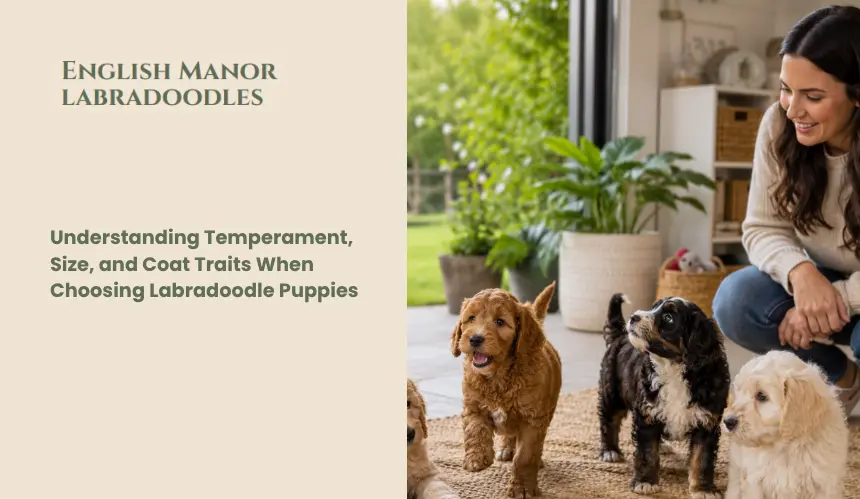
Understanding Temperament, Size, and Coat Traits When Choosing Labradoodle Puppies
Choosing a Labradoodle puppy is often framed as a simple preference decision, but the best match typically depends on how temperament, size, and coat traits align with daily life. People who plan to buy Labradoodle Puppies in NJ often first compare photos and color patterns, yet long-term experience is shaped more by behavior, adult size, and grooming requirements.
A practical selection approach considers how these traits interact over time, influencing training success, household comfort, activity requirements, and overall compatibility as the puppy matures into an adult dog.
Why These Three Traits Matter More Than Appearance
Temperament, size, and coat type are not cosmetic details; they directly influence routines, costs, and how smoothly a puppy integrates into a household. Understanding these traits early helps buyers set realistic expectations, avoid mismatches, and select a puppy based on sustainability rather than short-term excitement.
How Trait Mismatches Create Long-Term Challenges
Many common frustrations with Doodle ownership often stem from selection mismatches rather than “bad behavior” or “unexpected shedding.” A high-energy puppy placed in a low-activity household may develop boredom-related behaviors, such as chewing or constant pacing. At the same time, a larger adult size can overwhelm small spaces and make leash handling difficult. Coat traits can also become a hidden source of strain when matting, grooming costs, or allergy expectations are misunderstood. Matching the puppy to lifestyle reduces preventable problems and supports a calmer adjustment period.
Temperament as the Day-to-Day Compatibility Factor
Temperament refers to a puppy’s behavioral tendencies, including confidence, sociability, sensitivity, and energy level. While training shapes behavior, temperament influences how quickly a puppy learns, how it reacts to stress, and what environment it thrives in. Labradoodles can range from outgoing and highly social to calm and observant, even within the same litter. Evaluating temperament carefully helps buyers choose a puppy whose natural disposition aligns with household noise levels, work schedules, and the type of companionship expected from the dog.
Confidence, Sensitivity, and Adaptability
A confident puppy may explore new rooms quickly, approach unfamiliar sounds with curiosity, and recover faster from surprises. Adaptability matters because adult life includes changes such as visitors, travel, grooming appointments, and routine shifts. Matching confidence and sensitivity to household reality supports a more stable emotional experience and reduces the likelihood of fear-based behaviors developing later.
Energy Level and Behavioral “Drive”
Energy is not only about exercise needs; it also affects attention span, impulse control, and the amount of daily engagement required. Lower-drive puppies may suit calmer households, but they still need structure to prevent boredom and build confidence.
Note: Energy level is often mistaken for “hyperactivity,” yet many high-energy puppies settle well when exercise is paired with mental enrichment and predictable routines.
Understanding Size and Growth Expectations
Size affects daily handling, housing fit, travel ease, and long-term physical management, especially as the puppy reaches adulthood. Labradoodle sizes are often described in broad categories, but adult size can still vary based on genetics, feeding patterns, and growth pace. Buyers who plan around a small puppy body without considering adult proportions may underestimate leash control requirements, crate sizing, exercise volume, and long-term joint support needs. Practical size planning helps buyers anticipate the real lifestyle impact of a full-grown dog.
How Adult Size Influences Lifestyle and Space
Larger Labradoodles generally require more space to move comfortably indoors, more controlled leash handling, and more physical conditioning to maintain joint health. A realistic view of adult size supports better preparation, especially for first-time owners or households with children.
Growth Patterns and Timing of Maturity
Puppies grow rapidly in the first year, but behavioral maturity often develops more gradually. A puppy may reach near-adult height before emotional regulation fully stabilizes, which can surprise owners who expected “adult calm” earlier. A well-planned approach anticipates adolescence, builds habits early, and supports a smoother transition to adult behavior.
Additional information: Joint-friendly exercise during growth matters because repetitive high-impact activity during rapid development can affect long-term mobility, even in otherwise healthy dogs.
Coat Traits and the Real Cost of Maintenance
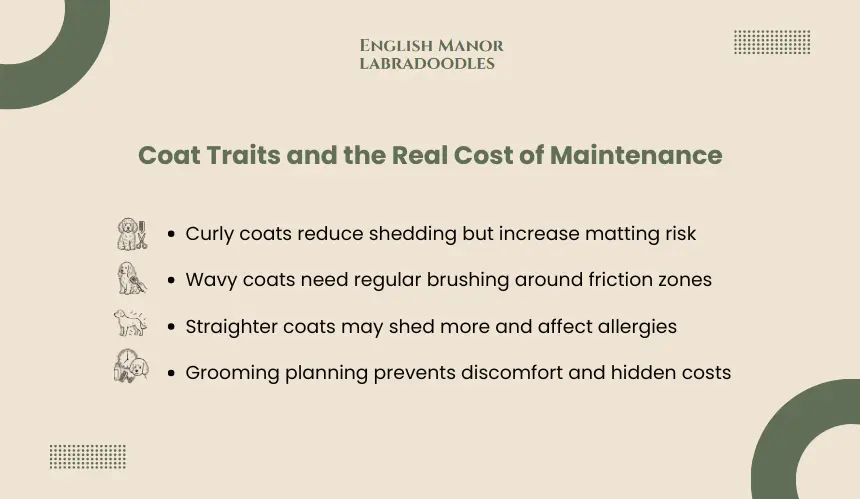
Coat type is one of the most misunderstood areas for Labradoodle buyers because it affects daily upkeep, grooming scheduling, allergy expectations, and overall coat health. Labradoodle coats can range from straighter and more shedding-prone to curly and denser with lower shedding tendencies, but even low-shedding coats require consistent maintenance. A coat that looks manageable as a puppy may change texture as the adult coat comes in, making long-term grooming planning essential for a realistic ownership experience.
Curly, Wavy, and Straighter Coat Variations
Curly coats often trap loose hair rather than shedding it freely, which can reduce visible shedding but increases the risk of matting if brushing is inconsistent. Wavy coats are often perceived as “easier,” but they can mat around friction points such as collars and armpits without proper care. Straighter coats may shed more predictably and may require less detangling, but they can increase allergen exposure in the home. Understanding coat variation supports better budgeting and reduces frustration when coat texture changes over time.
Grooming Frequency, Matting Risk, and Comfort
Grooming is not optional maintenance; it directly affects the dog’s comfort, skin health, and hygiene. Mats can pull on the skin, trap moisture, and create irritation that leads to scratching or hotspots. Regular brushing routines, scheduled professional grooming, and proper coat length decisions help prevent matting and keep the dog comfortable in different seasons. When buyers plan grooming realistically, they tend to maintain healthier coats and experience fewer stress points around upkeep.
Pro tip: Many grooming challenges start around friction zones, so regular brushing behind the ears, under the collar, and around the legs often prevents matting before it becomes painful or requires shaving.
How Temperament, Size, and Coat Traits Interact Over Time
These traits do not operate independently; they often influence one another in daily practice. A high-energy puppy with a large adult size and a high-maintenance coat typically requires more time, structure, and grooming investment than a calmer puppy with a moderate size and simpler coat. Buyers benefit from evaluating the whole package rather than selecting based on a single preferred trait. A balanced match usually reflects what the household can sustain consistently, not what seems appealing in the moment.
Balancing Activity Needs With Maintenance Requirements
A puppy with higher energy often benefits from more outdoor time, which increases coat exposure to dirt, moisture, and tangling. This means grooming needs can increase alongside exercise routines, especially during wet seasons or in households with frequent outdoor play. When buyers plan for both movement and coat upkeep, they avoid being surprised by the combined time requirement. Matching energy to lifestyle also helps prevent behavior issues that develop when a puppy’s needs are underestimated.
Supporting Long-Term Compatibility and Training Success
Temperament influences training responsiveness, size influences physical control needs, and coat traits influence maintenance routines that shape daily handling. When these traits align with household capability, owners tend to maintain a consistent structure, which supports better training outcomes and reduced stress. Compatibility is often less about “perfect traits” and more about selecting a puppy whose needs align with the household’s routine stability, patience, and consistent time investment.
Common Misalignment Issues Buyers Encounter
Many challenges arise when expectations are shaped by assumptions rather than careful evaluation. Buyers may assume all Labradoodles behave similarly, remain a predictable size, or have the same grooming needs, but individual variation is real. These misconceptions often lead to mismatches that create avoidable strain after the puppy is already home. Identifying the most common misalignment patterns helps buyers make more grounded decisions and reduces the likelihood of regret, rehoming stress, or long-term dissatisfaction.
Choosing Based on Appearance Alone
Appearance-based selection often prioritizes coat color, face shape, or puppy photos without considering long-term maintenance and behavior. A better selection approach treats appearance as secondary to the fit with a sustainable lifestyle.
Underestimating Growth and Daily Engagement Needs
Some buyers underestimate how quickly Labradoodles grow or how much daily engagement they require to remain calm and responsive. Planning for adult size and daily interaction creates a more predictable experience and supports healthier behavioral development.
Preparing for an Informed Puppy Selection
Successful puppy selection begins with education and thoughtful evaluation, not urgency. This approach reduces surprises and encourages responsible ownership, ensuring the puppy is placed in a household that can meet its needs consistently over time.
Asking the Right Questions Before Selection
Buyers can make better decisions when they ask about parent temperament, observed puppy behavior patterns, projected adult size, and coat development tendencies. Questions about early socialization practices, handling routines, and exposure to household sounds also help predict adjustment success. When buyers gather this information upfront, they reduce reliance on assumptions and make decisions based on evidence and suitability rather than emotion-driven selection.
Aligning Expectations With Long-Term Responsibility
Frequently Asked Questions
Why do Labradoodle temperaments vary so much within the same litter?
Temperament is influenced by genetics and early development, so puppies can exhibit different levels of confidence, energy, and sensitivity even when raised in the same environment. Observing individual behavior patterns and matching them to household lifestyle usually provides more insight than relying on breed-specific assumptions.
Can a puppy’s adult coat type be predicted with certainty?
Does a smaller Labradoodle always require less exercise?
Are low-shedding coats truly allergy-friendly?
Lower-shedding coats may reduce visible hair but do not eliminate allergens, as allergens can also come from dander and saliva. Grooming consistency, home cleaning routines, and individual sensitivity levels influence allergy experiences more than coat type alone.
What causes matting most often in Labradoodle coats?
Matting usually develops from friction and moisture in high-contact areas such as behind the ears, under collars, and around the legs. Skipping brushing routines, delaying professional grooming, or allowing coats to grow too long without maintenance increases the risk of matting and can cause discomfort or skin irritation.
Making a Thoughtful Choice That Fits Real Life
Choosing a Labradoodle puppy becomes much easier when temperament, adult size expectations, and coat-maintenance realities are evaluated together rather than separately. A well-matched puppy typically reflects the household’s time, space, patience, and grooming commitment, which supports stable routines and healthier long-term behavior.
Buyers seeking structured guidance during the selection process often explore resources and breeding transparency practices offered by providers such as English Manor Labradoodle, especially when the goal is long-term compatibility rather than impulse-driven selection.