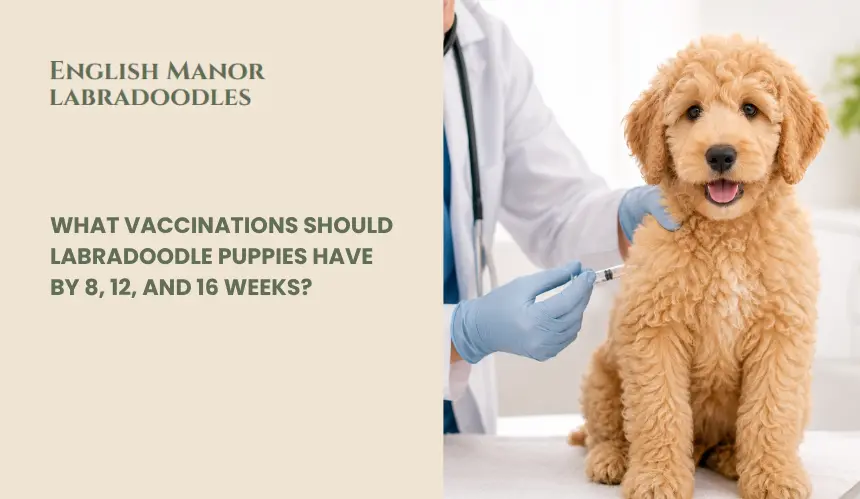
- englishmanor
What Vaccinations Should Labradoodle Puppies Have By 8, 12, And 16 Weeks?
Quick Overview: Labradoodle puppies should follow a structured vaccination schedule at 8, 12, and 16 weeks to build immunity against serious diseases. Core vaccines include DHPP (distemper, hepatitis, parvovirus, parainfluenza) and rabies, with additional non-core vaccines based on lifestyle and risk factors.
These vaccinations help protect puppies during their most vulnerable early stages of development. |
Labradoodle puppies are especially vulnerable to infections during their early weeks because their immune systems are still developing. Without proper protection, they are at risk of serious diseases such as parvovirus, distemper, and rabies, which can lead to severe health complications or even be life-threatening. This is why a structured vaccination schedule is essential during the first few months of life.
Vaccinations are not given all at once. Instead, they are administered in stages at 8, 12, and 16 weeks to gradually build immunity as maternal antibodies decline. Each stage plays a critical role in strengthening the puppy’s defense against common infectious diseases while ensuring long-term health.
- Puppies rely on early vaccines to build active immunity
- Timely boosters are necessary for full protection
- Delayed or missed doses can leave gaps in immunity
Did you know:
- Parvovirus, one of the most serious puppy diseases, can have a mortality rate of up to 90% in untreated cases, making early vaccination critical.
Understanding which vaccines are required at each stage helps ensure that Labradoodle puppies develop strong immunity and remain protected during their most sensitive growth period.
Why Are Vaccinations Important For Labradoodle Puppies?
Vaccinations play a critical role in protecting Labradoodle puppies during the early stages of life when their immune systems are not fully developed. Since puppies are exposed to various environmental risks, timely vaccination helps build immunity and reduces the likelihood of severe infections. This protection is especially important in the first few months, when puppies are most vulnerable.
How Does The Puppy's Immune System Develop?
At birth, puppies receive temporary immunity from their mother through antibodies. However, this protection gradually weakens over time, leaving them susceptible to infections. Vaccinations are timed strategically to support the immune system as these maternal antibodies decline.
From a biological perspective, vaccines stimulate the puppy’s immune system to recognize and fight specific pathogens, building long-term protection.
Did you know: Maternal antibodies can interfere with early vaccinations, which is why multiple doses are required to ensure full immunity.
What Diseases Do Vaccinations Protect Against?
Vaccines protect Labradoodle puppies from highly contagious and potentially fatal diseases such as distemper, parvovirus, hepatitis, and rabies. These diseases can spread quickly, especially in environments where puppies interact with other animals.
Vaccination significantly reduces the risk of infection and helps control the spread of these diseases.
Did you know: Canine distemper affects multiple body systems and has a high fatality rate in unvaccinated puppies.
Why Is Timing Critical In Puppy Vaccination?
The vaccination schedule is carefully designed to provide continuous protection during the puppy’s early development. Each dose builds on the previous one, strengthening immunity and ensuring no gaps remain as maternal protection fades.
Missing or delaying vaccines can leave puppies unprotected during critical stages.
Did you know:
- Puppies are most at risk of infection between 6 and 16 weeks, making this vaccination window essential for protection.
How Do Vaccinations Support Long-Term Health?
Early vaccinations not only protect against immediate risks but also contribute to long-term health by establishing a strong immune foundation. This reduces the likelihood of serious illness later in life and supports overall well-being.
Did you know:
- Proper vaccination schedules significantly reduce the incidence of preventable diseases in dogs, improving overall survival and health outcomes.
What Core Vaccines Do Labradoodle Puppies Need?
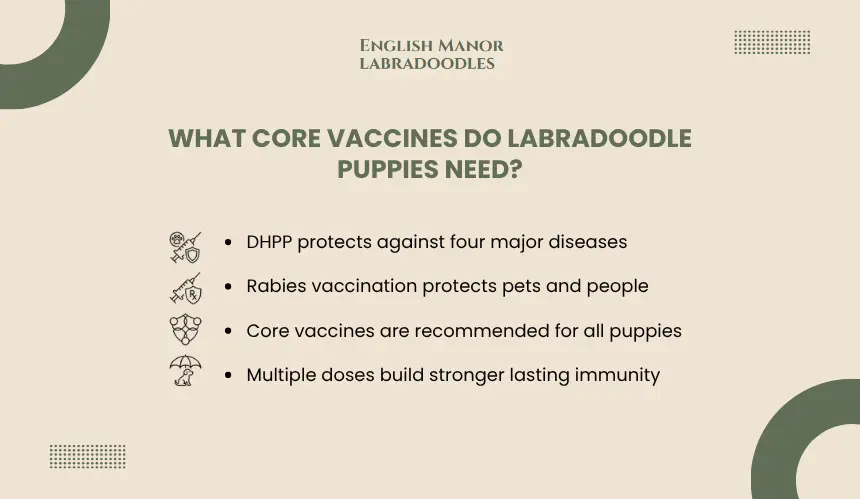
Core vaccines are those considered essential for all puppies, regardless of breed or environment. For Labradoodle puppies, these vaccines protect against highly contagious and potentially life-threatening diseases. They form the foundation of the vaccination schedule given at 8, 12, and 16 weeks.
What Is The DHPP Vaccine And What Does It Protect Against?
The DHPP vaccine is a combination vaccine that protects against four major diseases: canine distemper, hepatitis (adenovirus), parvovirus, and parainfluenza. These diseases can spread rapidly and cause severe health complications in young puppies.
From a medical perspective, combination vaccines like DHPP reduce the number of injections while providing broad protection.
Did you know: Parvovirus can survive in the environment for months, making it highly contagious and difficult to eliminate without vaccination.
Why Is The Rabies Vaccine Required?
The rabies vaccine is a core vaccine typically administered at around 16 weeks of age. Rabies is a fatal viral disease that affects the nervous system and can be transmitted to humans, making vaccination both a health and legal requirement in many regions.
Vaccination ensures protection and compliance with public health regulations.
Did you know: Rabies has a nearly 100% fatality rate once symptoms appear, which is why vaccination is strictly enforced worldwide.
What Makes A Vaccine “Core”?
A vaccine is classified as core when it protects against diseases that are widespread, highly contagious, or pose a significant risk to both animals and humans. These vaccines are recommended for all puppies regardless of lifestyle.
Core vaccines are prioritized because they provide essential protection during early development.
Did you know: Core vaccines are recommended by veterinary health organizations due to their proven effectiveness in preventing serious diseases.
How Do Core Vaccines Work In Puppies?
Core vaccines work by stimulating the immune system to recognize and respond to specific pathogens. This process builds immunity without causing the disease itself, allowing the puppy to develop protection safely.
Multiple doses are required to ensure a strong, long-lasting immune response.
Did you know: Booster vaccinations are necessary because a single dose may not provide full immunity in young puppies.
What Vaccinations Should Labradoodle Puppies Have By 8 Weeks?
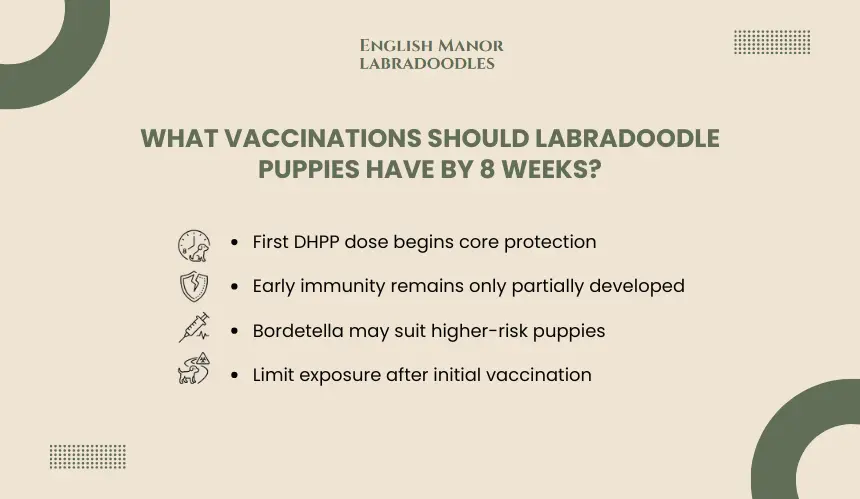
At 8 weeks of age, Labradoodle puppies begin their core vaccination schedule. This stage is critical because maternal antibodies are starting to decline, making puppies more vulnerable to infections. The goal at this point is to introduce the first level of protection while preparing the immune system for future booster doses.
What Is Given In The First DHPP Dose?
The first DHPP vaccine is typically administered at 6–8 weeks and protects against distemper, hepatitis, parvovirus, and parainfluenza. This initial dose introduces the puppy’s immune system to these pathogens, allowing it to begin building a defensive response.
From a medical standpoint, this dose alone does not provide full immunity, which is why follow-up boosters are required.
Did you know:
Early DHPP vaccination significantly reduces the risk of parvovirus, which is highly contagious in young puppies.
Are Non-Core Vaccines Recommended At 8 Weeks?
Depending on the puppy’s environment and exposure risk, certain non-core vaccines may be introduced at this stage. For example, the Bordetella vaccine (commonly associated with kennel cough) may be recommended if the puppy will be around other dogs.
These decisions are usually based on lifestyle factors such as socialization, boarding, or daycare exposure.
Did you know:
Bordetella spreads easily in group settings, making early vaccination important for puppies at higher exposure risk.
What Level Of Protection Does An 8-Week Vaccination Provide?
At this stage, the protection is partial. The immune system has been exposed to key pathogens, but it requires additional booster shots to build strong, lasting immunity. This is why maintaining the vaccination schedule is essential.
Did you know:
Puppies remain vulnerable to infections until the full vaccination series is completed, even after the first dose.
What Care Should Be Taken After The First Vaccination?
After the first vaccination, puppies should be monitored for mild reactions such as slight lethargy or soreness. Exposure to high-risk environments should still be limited until the vaccination series is complete.
Did you know:
Most vaccine reactions in puppies are mild and temporary, but monitoring ensures early detection of any unusual response.
What Vaccinations Should Labradoodle Puppies Have By 12 Weeks?
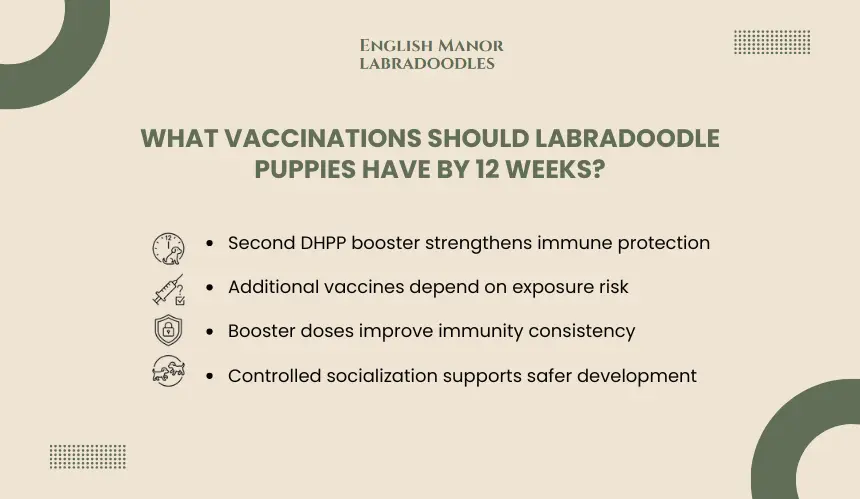
By 12 weeks, Labradoodle puppies require booster vaccinations to strengthen and extend the protection initiated at 8 weeks. At this stage, maternal antibodies have declined further, allowing the immune system to respond more effectively to vaccines. The focus is on reinforcing immunity and expanding protection based on exposure risk.
What Is Included In The Second DHPP Booster?
The second DHPP dose is administered at 10–12 weeks and builds on the initial protection provided. This booster strengthens the immune response against distemper, hepatitis, parvovirus, and parainfluenza, improving the puppy’s ability to resist infection.
From a medical perspective, booster doses are essential because they ensure a more reliable and lasting immune response.
Did you know: Booster vaccinations significantly increase the effectiveness of immunity compared to a single initial dose.
Are Additional Vaccines Recommended At 12 Weeks?
At this stage, veterinarians may recommend additional non-core vaccines depending on the puppy’s environment. These may include Bordetella, leptospirosis, or other region-specific vaccines.
The decision is typically based on factors such as exposure to other animals, outdoor environments, or potential disease risks.
Did you know: Leptospirosis is a bacterial disease that can spread through contaminated water and soil, making it a concern in certain environments.
How Does Immunity Improve After The 12-Week Vaccination?
The immune system becomes more responsive with booster doses. By 12 weeks, the puppy begins to develop stronger and more consistent protection, although full immunity is not yet complete.
This stage is critical for reducing vulnerability to common infectious diseases.
Did you know:
Puppies begin to develop more stable immunity after booster doses as maternal antibody interference decreases.
What Precautions Should Be Taken At This Stage?
Even with improved immunity, puppies should still avoid high-risk environments until the full vaccination series is complete. Controlled socialization is recommended to balance exposure and safety.
Did you know:
Controlled exposure to safe environments helps puppies develop social behavior while minimizing health risks.
What Vaccinations Should Labradoodle Puppies Have By 16 Weeks?
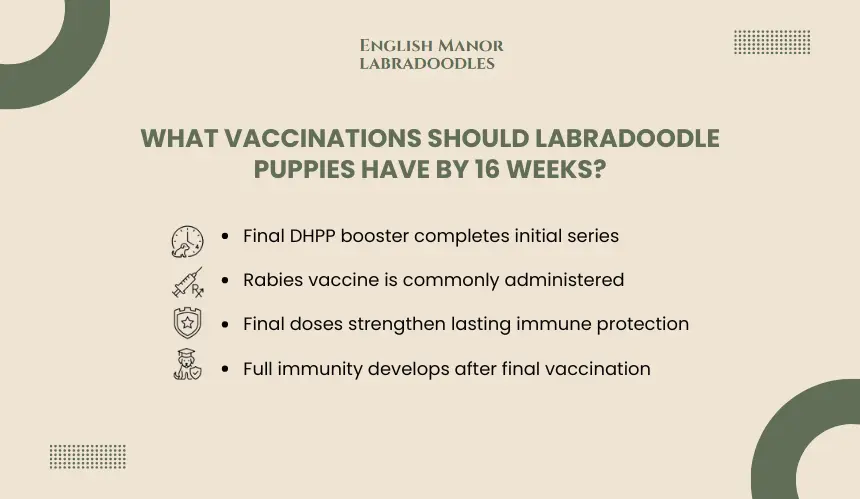
By 16 weeks of age, Labradoodle puppies receive their final core vaccinations in the initial series. This stage is critical because it completes the primary immunity cycle, ensuring the puppy develops strong, long-lasting protection against major diseases. After this point, the risk of serious infections is significantly reduced when the schedule is properly followed.
What Is Included In The Final DHPP Booster?
The final DHPP dose is administered around 14–16 weeks and reinforces immunity against distemper, hepatitis, parvovirus, and parainfluenza. This booster ensures the immune system has developed a consistent, reliable defense against these diseases.
From a medical standpoint, this final dose is essential to overcome any residual interference from maternal antibodies.
Did you know: The final booster plays a key role in ensuring long-term immunity, as earlier doses alone may not provide complete protection.
When Is The Rabies Vaccine Given?
The rabies vaccine is typically administered at 16 weeks, depending on local regulations. This vaccine protects against a fatal viral disease that affects the nervous system and can be transmitted to humans.
Vaccination at this stage ensures both health protection and compliance with legal requirements.
Did you know: Rabies has a nearly 100% fatality rate once symptoms appear, making vaccination essential for both pets and public safety.
How Does The 16-Week Vaccination Strengthen Immunity?
At this stage, the immune system is more mature and can develop strong, lasting protection. The final booster ensures that the puppy’s immunity is stable and effective against common infectious diseases.
Did you know: By completing the vaccination series, puppies achieve significantly greater protection than with partial schedules.
When Is A Puppy Considered Fully Vaccinated?
Puppies are generally considered fully vaccinated about one to two weeks after the final dose at 16 weeks. This allows enough time for the immune system to respond fully and build protective antibodies.
Did you know: Full immunity develops shortly after the final vaccination, making this stage a major milestone in a puppy’s health.
What Are Non-Core Vaccines And When Are They Needed?
Non-core vaccines are optional vaccines recommended based on a puppy’s environment, lifestyle, and exposure risk, rather than being required for all dogs. While core vaccines protect against widespread and highly dangerous diseases, non-core vaccines target specific infections that may be more common in certain conditions or locations.
For Labradoodle puppies, these vaccines are considered when there is a higher likelihood of exposure, such as frequent interaction with other dogs, outdoor activities, or specific environmental risks. A veterinarian typically evaluates these factors before recommending additional vaccinations.
What Is The Bordetella Vaccine And When Is It Needed?
The Bordetella vaccine protects against kennel cough, a highly contagious respiratory infection that spreads easily in places where dogs gather, such as parks, grooming facilities, boarding kennels, or training classes.
Puppies that are likely to be socialized early or exposed to group environments are often recommended to receive this vaccine.
Did you know:
Kennel cough spreads rapidly through airborne droplets, making it one of the most common infections in group settings.
What Is The Leptospirosis Vaccine And Who Needs It?
The leptospirosis vaccine protects against a bacterial infection that spreads through contaminated water, soil, or contact with infected animals. This disease can affect both dogs and humans, making it a concern in certain environments.
Puppies that spend time outdoors, especially in areas with standing water or wildlife exposure, may be recommended for this vaccine.
Did you know:
Leptospirosis can be transmitted to humans, which makes vaccination important in high-risk areas.
What Is The Lyme Disease Vaccine And When Is It Recommended?
The Lyme disease vaccine protects against a tick-borne illness that can cause joint pain, fever, and long-term health issues in dogs. It is typically recommended in regions where ticks are prevalent.
Puppies that spend time in wooded, grassy, or outdoor environments are at higher risk and may benefit from this vaccine.
Did you know:
Tick exposure is the primary cause of Lyme disease, and prevention is especially important in outdoor environments.
How Are Non-Core Vaccines Decided For Each Puppy?
The need for non-core vaccines depends on several factors, including the puppy’s environment, level of social interaction, geographic location, and daily activities. Unlike core vaccines, these are not automatically administered; they are recommended based on a risk assessment.
Veterinarians evaluate:
- exposure to other animals
- time spent outdoors
- regional disease prevalence
- lifestyle and activity level
Did you know:
Personalized vaccination plans provide better protection by addressing specific risks rather than using a one-size-fits-all approach.
Why Are Non-Core Vaccines Important In Certain Situations?
While not required for all puppies, non-core vaccines provide targeted protection against specific risks. In environments where exposure is likely, these vaccines help prevent infections that could otherwise impact the puppy’s health.
Did you know:
Non-core vaccines play a critical role in preventing region-specific and environment-related diseases in dogs.
What Are Common Signs Of Vaccine Reactions In Puppies?
Vaccines are generally safe and essential for protecting Labradoodle puppies, but like any medical intervention, mild reactions can occur as the immune system responds. Most reactions are temporary and resolve on their own, but recognizing the signs helps ensure timely care if needed.
What Mild Reactions Are Normal After Vaccination?
After receiving vaccines, puppies may experience mild, short-term symptoms as their immune systems build protection. These reactions are typically not serious and usually resolve within 24–48 hours.
Common mild signs include:
- Slight lethargy or reduced activity
- Mild swelling at the injection site
- Temporary loss of appetite
- Low-grade fever
These responses indicate that the immune system is actively reacting to the vaccine.
Did you know: Mild vaccine reactions are common and usually indicate that the puppy’s immune system is responding appropriately.
What Signs Indicate A Moderate Reaction?
In some cases, puppies may show more noticeable symptoms that require monitoring. These reactions are less common but should not be ignored.
Signs may include:
- Persistent vomiting or diarrhea
- Noticeable swelling beyond the injection site
- Increased discomfort or restlessness
If these symptoms continue beyond a short period, further evaluation may be needed.
Did you know: Most moderate reactions occur within a few hours after vaccination, making early observation important.
What Are Serious Vaccine Reactions To Watch For?
Severe reactions are rare but require immediate attention. These reactions can indicate an allergic response and may escalate quickly.
Warning signs include:
- Difficulty breathing
- Facial swelling or hives
- Sudden weakness or collapse
These symptoms require urgent care to prevent complications.
Did you know: Severe allergic reactions to vaccines are rare but can occur within minutes to hours after administration.
When Should Veterinary Care Be Sought?
Veterinary attention should be sought if symptoms are severe, persist longer than expected, or worsen over time. Monitoring the puppy closely after vaccination helps identify any unusual reactions early.
From a practical standpoint, early intervention ensures that any complications are managed effectively.
Did you know: Most vaccine-related issues are manageable when identified early, emphasizing the importance of post-vaccination monitoring.
How Can Vaccine Reactions Be Minimized?
Following proper vaccination schedules and ensuring the puppy is healthy at the time of vaccination helps reduce the risk of adverse reactions. Veterinarians may also adjust vaccination timing or combinations based on the puppy’s condition.
Did you know: Healthy puppies with properly timed vaccinations are less likely to experience complications.
How Should Puppy Vaccination Schedules Be Managed?
Managing a Labradoodle puppy’s vaccination schedule requires consistency, timing, and proper tracking. Since immunity develops in stages, each vaccine must be given at the correct interval to ensure continuous protection. Missing or delaying doses can create gaps in immunity, leaving the puppy vulnerable during critical growth periods.
Why Is Following The Vaccination Timeline Important?
Vaccination schedules are carefully designed to align with the development of the puppy’s immune system. Each dose builds upon the previous one, strengthening the body’s ability to fight infections. Skipping or delaying a dose can weaken this progression and reduce overall effectiveness.
Did you know:
- Inconsistent vaccination timing can reduce immunity, making puppies more susceptible to preventable diseases.
How Should Vaccination Records Be Maintained?
Keeping accurate vaccination records is essential for tracking progress and ensuring no doses are missed. These records typically include the type of vaccine, date of administration, and next scheduled dose.
Maintaining proper documentation also helps with future veterinary care, travel requirements, and compliance with local regulations.
Did you know: Organized vaccination records help ensure continuity of care and prevent missed or duplicate vaccinations.
What Happens If A Vaccination Is Missed?
If a scheduled vaccine is missed, it is important to consult a veterinarian as soon as possible. In some cases, the schedule may need to be adjusted or restarted to ensure full immunity.
Delays can create periods where the puppy is not fully protected, increasing the risk of infection.
Did you know: Gaps between vaccine doses can reduce their effectiveness, which is why timely administration is critical.
How Can Puppies Be Safely Socialized During Vaccination Periods?
Socialization is important for development, but it must be balanced with safety. Puppies should avoid high-risk environments such as dog parks or public areas until their vaccination series is complete.
Controlled environments with vaccinated and healthy dogs are safer options during this period.
Did you know: Early socialization is important for behavior, but exposure should be managed carefully until full immunity is developed.
How Do Veterinarians Customize Vaccination Plans?
Veterinarians may adjust vaccination schedules based on factors such as health status, environment, and exposure risk. This ensures that the puppy receives appropriate protection tailored to its specific needs.
Did you know: Customized vaccination plans provide more effective protection by addressing individual risk factors.
Frequently Asked Questions
Can Labradoodle Puppies Be Taken Outside Before Completing Vaccinations?
Puppies can go outside in controlled environments, but exposure to public areas should be limited until the vaccination schedule is complete. High-risk locations, such as dog parks or areas with unknown animals, should be avoided to reduce the risk of infection.
How Long Does It Take For Vaccines To Become Effective?
Vaccines do not provide immediate protection. It typically takes several days to weeks for the immune system to build a response after each dose, with full immunity developing about one to two weeks after the final vaccination.
Are All Labradoodle Puppies Given The Same Vaccination Schedule?
While core vaccines follow a standard timeline, additional vaccines may vary depending on the puppy’s environment, lifestyle, and exposure risk. Veterinarians adjust recommendations to ensure each puppy receives appropriate protection.
Can Vaccinations Be Delayed If A Puppy Is Unwell?
Vaccinations are usually postponed if a puppy is unwell, as the immune system needs to be in good condition to respond effectively. A veterinarian will determine the appropriate timing based on the puppy’s health status.
How Many Total Vaccinations Does A Puppy Need In The First Months?
Puppies typically receive a series of vaccinations over multiple visits, including several DHPP doses and a rabies vaccine. The exact number depends on the schedule and any additional non-core vaccines recommended.
Do Puppies Need Vaccines After 16 Weeks?
After completing the initial series, puppies require booster vaccinations later in life to maintain immunity. These boosters are usually given annually or as recommended to ensure continued protection.