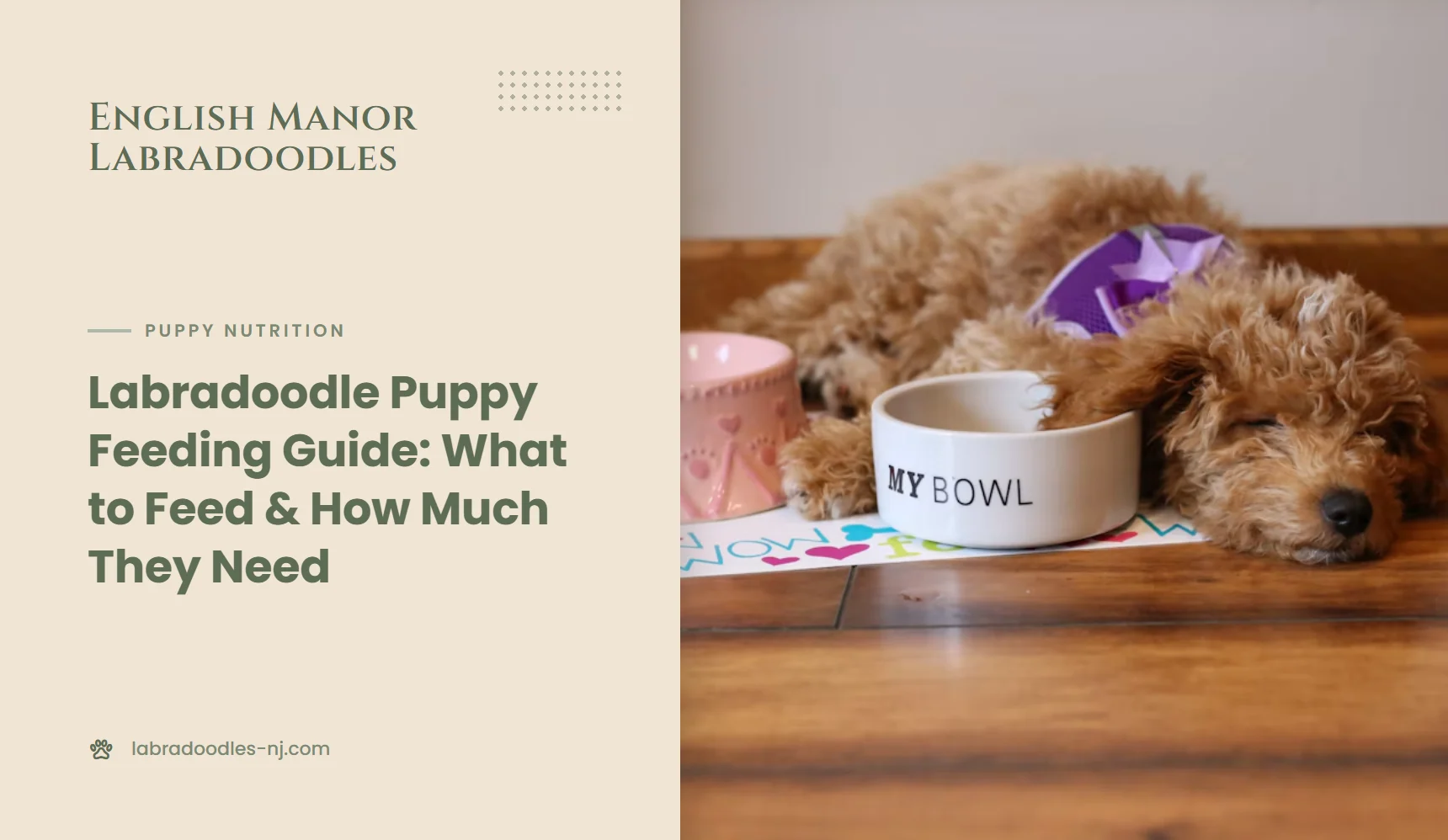
Labradoodle Puppy Feeding Guide: What to Feed & How Much They Need
- English Manor Labradoodle
Bringing home a Labradoodle puppy is exciting, but few responsibilities are more important than proper nutrition. During the first year of life, a puppy's body develops rapidly, building strong bones, lean muscle, a healthy immune system, and the foundation for long-term wellness. The food a Labradoodle puppy receives during this critical growth period can influence everything from energy levels and digestion to coat quality and overall development.
Many new owners quickly discover that feeding a puppy is not as simple as filling a bowl. Questions often arise about the best type of food, appropriate portion sizes, feeding schedules, treats, and when to transition to adult food. Since Labradoodles come in different sizes and activity levels, feeding requirements can vary significantly from one puppy to another.
This Labradoodle puppy feeding guide explains what to feed, how much to feed, and how often to feed at each stage of growth. It also covers common feeding mistakes, healthy treat choices, and practical strategies that can help owners establish lifelong healthy eating habits.
Consistency is one of the most overlooked aspects of puppy nutrition. Feeding meals at the same times each day can support digestion, improve house training routines, and help puppies develop healthy eating behaviors.
- Labradoodle puppies require a balanced puppy diet rich in protein, healthy fats, vitamins, and minerals to support rapid growth and development.
- Feeding amounts vary based on age, weight, activity level, and whether the puppy is a Mini, Medium, or Standard Labradoodle.
- Most Labradoodle puppies need three to four meals per day during early growth stages, with feeding frequency gradually decreasing as they mature.
- High-quality puppy food formulated for growth provides the nutrients needed for healthy bones, muscles, brain development, and immune function.
- Treats should be given in moderation, while toxic foods such as chocolate, grapes, raisins, onions, and xylitol should always be avoided.
- Monitoring body condition, energy levels, and growth patterns helps ensure a Labradoodle puppy receives the right amount of food throughout puppyhood.
Understanding a Labradoodle Puppy’s Nutritional Needs
A Labradoodle puppy's nutritional needs are significantly different from those of an adult dog. During the first year of life, puppies undergo rapid physical and mental development, requiring a carefully balanced diet to support healthy growth. Every meal contributes to building strong bones, developing lean muscle, strengthening the immune system, and supporting proper organ function. Because Labradoodles are energetic, intelligent dogs that can vary in size from Mini to Standard, providing the right nutrition during puppyhood lays the foundation for lifelong health.
Many new owners focus primarily on how much food their puppy should eat, but nutritional quality is equally important. A puppy may consume enough calories yet still miss essential nutrients needed for proper development. Feeding a complete and balanced puppy diet helps ensure healthy growth while supporting digestion, energy levels, and overall well-being.
Why Nutrition Is Critical During Puppyhood
Puppyhood represents the most important developmental stage in a Labradoodle's life. During this period, the body is constantly building new tissues, strengthening bones, developing the brain, and establishing the immune system. These processes require a steady supply of nutrients that work together to support healthy growth.
Protein plays a central role in muscle development and tissue repair, while healthy fats provide energy and support cognitive function. Vitamins and minerals help regulate countless biological processes, from bone formation to immune response. When nutritional needs are met consistently, puppies are better equipped to maintain healthy growth and activity levels.
A Labradoodle puppy can reach nearly half of its adult weight within the first few months of life. This rapid growth is one reason puppy-specific nutrition is so important during the early stages of development.
Nutrition also influences behavior and trainability. Growing puppies rely on adequate energy and brain-supporting nutrients to learn new commands, interact socially, and explore their environment confidently. Since Labradoodles are known for their intelligence, providing proper nutrition during this learning phase can support healthy mental development.
Another often-overlooked benefit of proper feeding is digestive health. A consistent, balanced diet helps the digestive system function efficiently and can reduce the likelihood of unnecessary stomach upset caused by frequent dietary changes.
Essential Nutrients Every Labradoodle Puppy Needs
Labradoodle puppies require a combination of macronutrients and micronutrients to support healthy development. Each nutrient serves a specific purpose and contributes to overall growth.
Protein is one of the most important nutrients for growing puppies. It supplies essential amino acids that support muscle growth, tissue repair, and healthy body development. High-quality animal protein sources are often easier for puppies to digest and utilize efficiently.
Healthy fats provide concentrated energy and support the development of healthy skin and a shiny coat. They also help the body absorb certain vitamins and contribute to normal brain function.
DHA and omega-3 fatty acids are especially important during puppyhood. These nutrients support brain and vision development, making them valuable components of many high-quality puppy foods.
DHA is naturally found in a mother's milk and plays a crucial role in early neurological development. Many premium puppy formulas include DHA to continue supporting brain development after weaning.
Calcium and phosphorus work together to build strong bones and teeth. Proper balance between these minerals is essential because both deficiencies and excesses can affect skeletal development. This is particularly important for larger Labradoodle puppies that experience extended growth periods.
Vitamins and minerals support immune function, metabolism, cellular repair, and overall health. Nutrients such as vitamin A, vitamin E, zinc, and iron all contribute to healthy puppy development.
Water is equally important and should never be overlooked. Fresh, clean water supports digestion, nutrient transport, circulation, and temperature regulation. Even mild dehydration can affect a puppy's energy levels and overall well-being.
Do Labradoodles Have Unique Feeding Requirements?
While Labradoodles share many nutritional needs with other puppies, several breed-related factors can influence feeding decisions. One of the most important considerations is size variation. Labradoodles may be Mini, Medium, or Standard, and each size category follows a slightly different growth timeline.
Mini Labradoodles often mature faster and may transition to adult food sooner than larger varieties. Standard Labradoodles, however, typically remain in their growth phase longer and may benefit from puppy-specific nutrition for an extended period. Understanding a puppy's expected adult size can help owners make more informed feeding decisions throughout each stage of development.
Activity level is another major factor. Labradoodles are generally energetic dogs that enjoy exercise, training sessions, interactive play, and outdoor activities. More active puppies often burn calories faster and may require greater energy intake than less active puppies of the same age.
Labradoodles inherit traits from both Labrador Retrievers and Poodles, two breeds known for their intelligence and active lifestyles. This combination often results in puppies with above-average energy requirements compared to more sedentary breeds.
Genetics can also influence metabolism and body condition. Some puppies naturally stay lean despite healthy appetites, while others may gain weight more easily. For this reason, feeding recommendations should always be viewed as guidelines rather than strict rules.
Monitoring body condition is often more helpful than focusing solely on the number displayed on a scale. A healthy Labradoodle puppy should have a visible waist when viewed from above and ribs that are easily felt without excessive pressure. Regular observation allows owners to make gradual feeding adjustments as growth and activity levels change.
Understanding these nutritional fundamentals provides the foundation for making informed feeding decisions. The next step is choosing the right type of food and understanding which options best support a Labradoodle puppy's growth and development.
What Should You Feed a Labradoodle Puppy?
Choosing the right food is one of the most important decisions a Labradoodle owner will make during puppyhood. The ideal diet should provide complete and balanced nutrition that supports healthy growth, muscle development, brain function, immune health, and sustained energy levels. Because puppies have different nutritional requirements than adult dogs, foods specifically formulated for growth stages are generally the most appropriate choice.
With countless feeding options available, many owners find themselves comparing dry kibble, wet food, fresh diets, and homemade meals. Understanding the advantages and limitations of each option can make it easier to select a diet that meets a Labradoodle puppy's unique needs.
Choosing a High-Quality Puppy Food
Not all puppy foods are created equal. A quality puppy formula is designed to provide the nutrients needed during periods of rapid growth while maintaining the proper balance of protein, fats, vitamins, and minerals.
When evaluating puppy food, owners should look for:
- A named animal protein source as a primary ingredient
- Complete and balanced nutrition for growth
- DHA and omega-3 fatty acids for brain development
- Appropriate calcium and phosphorus levels
- High-quality, digestible ingredients
- Feeding guidelines suitable for the puppy's size and age
A food's ingredient list can provide valuable insight into its nutritional profile. While ingredients alone do not determine quality, foods that prioritize high-quality protein sources often provide the amino acids needed for healthy development.
Puppies require significantly more protein and calories per pound of body weight than adult dogs because their bodies are actively building new muscle, bone, and tissue every day.
Owners should also avoid making frequent changes to a puppy's diet simply because the puppy appears bored with its meals. Consistency often supports better digestion and helps puppies adapt to a regular feeding routine.
Dry Food, Wet Food, or Mixed Feeding?
One of the most common questions new Labradoodle owners ask is whether dry food or wet food is the better choice. The truth is that both options can provide proper nutrition when formulated specifically for puppies.
Dry kibble remains one of the most popular choices because it is convenient, cost-effective, and easy to store. Many puppy kibble formulas are designed to provide complete nutrition while encouraging chewing.
Benefits of dry food include:
- Convenient storage and serving
- Consistent nutrient content
- Easy portion measurement
- Generally, lower cost per serving
- Longer shelf life after opening
Wet food contains a higher moisture content and often has a stronger aroma and flavor profile. Some puppies find wet food more appealing, especially during transitions or periods of reduced appetite.
Benefits of wet food include:
- Increased moisture intake
- Enhanced palatability
- Softer texture for some puppies
- Easier mixing with dry food
Many owners choose a mixed feeding approach, combining dry and wet food to provide variety while maintaining balanced nutrition.
Dogs experience food primarily through scent rather than taste. The stronger aroma of wet food is one reason many puppies find it especially appealing.
Regardless of the feeding method selected, consistency and proper portion control remain essential for maintaining healthy growth.
Are Fresh and Homemade Diets Appropriate?
Fresh food diets have gained popularity among dog owners, leading many Labradoodle owners to wonder whether these options are suitable for growing puppies. While fresh diets can be nutritious, they must be carefully formulated to provide all nutrients required for growth.
A growing puppy has very specific nutritional requirements that can be difficult to meet through homemade recipes alone. Nutrient deficiencies or imbalances may affect bone development, muscle growth, and overall health.
Fresh feeding approaches may offer benefits such as:
- Highly palatable meals
- Fresh ingredients
- Greater control over ingredient selection
- Flexible feeding options
However, owners should consider potential challenges:
- Nutritional balancing requirements
- Increased preparation time
- Storage considerations
- Higher feeding costs
- Risk of nutrient deficiencies if improperly formulated
Because Labradoodles can vary greatly in size and growth rates, nutritional precision becomes especially important during puppyhood.
Large and medium-sized puppies are particularly sensitive to calcium and phosphorus imbalances during growth, which is why balanced puppy nutrition is so important.
Owners interested in fresh or homemade diets should ensure the feeding plan provides complete and balanced nutrition suitable for growing puppies rather than relying solely on general online recipes.
Foods That Support Healthy Growth
A healthy Labradoodle puppy diet typically includes ingredients that provide quality protein, healthy fats, complex carbohydrates, vitamins, and minerals. Together, these nutrients support every aspect of growth and development.
Common ingredients often found in quality puppy foods include:
- Chicken
- Turkey
- Salmon
- Lamb
- Beef
- Brown rice
- Oats
- Sweet potatoes
- Peas
- Fish oil
Protein-rich ingredients support muscle development, while healthy fats provide energy and contribute to skin, coat, and brain health. Complex carbohydrates can offer a steady energy source for active puppies, helping them maintain healthy activity levels throughout the day.
Another important consideration is digestibility. Puppies benefit from foods that their digestive systems can process efficiently, allowing nutrients to be absorbed and utilized for growth.
As a Labradoodle puppy grows, nutritional needs continue to evolve. Understanding how much food to offer at each stage is just as important as choosing the right food itself, which is why portion sizes and feeding amounts deserve careful attention.
Labradoodle Puppy Feeding Schedule by Age
Providing the right amount of food is important, but feeding it at the right times is equally essential. A Labradoodle puppy's digestive system, energy requirements, and growth rate change significantly throughout the first year of life. As a result, feeding schedules should evolve as puppies mature.
Young puppies have small stomachs and high energy demands, making multiple smaller meals more effective than one or two large meals. As growth slows and digestive capacity improves, meal frequency can gradually decrease while portion sizes increase. Following an age-appropriate feeding schedule helps support stable energy levels, healthy digestion, and consistent growth.
Feeding an 8–12 Week Old Labradoodle Puppy
The first few weeks after bringing a puppy home are a major adjustment period. During this stage, puppies are transitioning from the breeder's environment and adapting to a new routine. Consistency is especially important to help minimize stress and digestive upset.
Most Labradoodle puppies between 8 and 12 weeks of age benefit from:
- 4 meals per day
- Evenly spaced feeding times
- Consistent portion sizes
- Continuous access to fresh water
A typical feeding schedule may look like:
| Time | Meal |
|---|---|
| Morning | Breakfast |
| Late Morning | Midday Meal |
| Afternoon | Afternoon Meal |
| Evening | Dinner |
Because puppies grow rapidly during this period, they require nutrient-dense food that provides adequate calories for development.
An 8-week-old puppy's stomach is still relatively small, which is why several smaller meals are often easier to digest than a few large portions.
If a puppy has recently arrived from a breeder, it is usually best to continue feeding the same food initially before making any dietary changes. Sudden food transitions can sometimes cause digestive disturbances.
Feeding a 3–6 Month Old Labradoodle Puppy
Between three and six months, Labradoodle puppies enter a period of significant growth. Bones lengthen, muscle mass increases, and energy levels often rise considerably. Many owners notice their puppy becoming more active, curious, and eager to explore.
Most puppies in this stage can transition to:
- 3 meals per day
- Larger portion sizes
- More structured feeding routines
A common schedule includes:
| Time | Meal |
|---|---|
| Morning | Breakfast |
| Midday | Lunch |
| Evening | Dinner |
This feeding frequency continues to provide steady energy while helping puppies adapt to fewer meals as they mature.
Growth spurts are common during this stage. Owners may notice temporary increases in appetite, followed by periods where eating habits appear more normal. Monitoring body condition is often more helpful than reacting immediately to short-term appetite fluctuations.
Puppies rarely grow at a perfectly steady pace. Most experience growth spurts followed by slower developmental periods throughout the first year.
Training activity often increases during this stage as well. Since treats are commonly used for positive reinforcement, owners should remember to account for those calories within the puppy's overall daily intake.
Feeding a 6–12 Month Old Labradoodle Puppy
As Labradoodle puppies approach adolescence, growth begins to slow compared to the earlier months. However, nutritional needs remain important because the body is still developing muscle, bone density, and overall structure.
Most puppies between six and twelve months can be fed:
- 2–3 meals per day
- Larger individual portions
- Consistent daily feeding times
A common schedule may include:
| Time | Meal |
|---|---|
| Morning | Breakfast |
| Evening | Dinner |
Some larger or highly active puppies may continue to benefit from a midday meal during parts of this growth stage.
While puppies may appear nearly full-grown by this point, internal development often continues for several months. Maintaining puppy-specific nutrition remains important until the puppy reaches physical maturity.
Standard Labradoodles may continue to develop long after they reach their adult height, especially in muscle mass and skeletal maturity.
This is also a stage where owners should pay close attention to body condition. Excess weight gained during adolescence can place unnecessary stress on developing joints and bones.
Feeding After 12 Months
The transition to adulthood does not happen overnight. The appropriate time to switch from puppy food to adult food depends largely on the Labradoodle's size and maturity.
In general:
- Mini Labradoodles often mature sooner.
- Medium Labradoodles mature at a moderate pace.
- Standard Labradoodles usually mature later and may remain on puppy food longer.
Once the transition is complete, most adult Labradoodles thrive on:
- 2 meals per day
- Consistent feeding times
- Portion sizes adjusted for activity level and body condition
Adult feeding schedules help maintain stable energy levels while supporting healthy weight management throughout life.
Many owners transition to adult food based solely on age, but physical maturity is often a more important factor than a specific birthday.
Establishing an age-appropriate feeding schedule is one of the most effective ways to support healthy growth. However, understanding exactly how often a Labradoodle puppy should eat and why meal frequency matters can help owners create an even more effective feeding routine.
How Often Should a Labradoodle Puppy Eat?
Feeding frequency is just as important as food quality and portion size. Labradoodle puppies have smaller stomachs and faster metabolisms than adult dogs, which means they cannot consume all their daily nutritional needs in one or two meals. Providing meals at appropriate intervals helps maintain stable energy levels, supports healthy digestion, and ensures a steady supply of nutrients throughout the day.
As puppies grow, their feeding frequency gradually changes. Understanding when and how to adjust meal schedules can help prevent digestive issues while supporting healthy development.
Why Puppies Need Multiple Meals Per Day
Young Labradoodle puppies require frequent meals because their bodies are growing rapidly and using significant amounts of energy. Smaller, more frequent feedings allow puppies to digest food efficiently while maintaining consistent energy throughout the day.
Benefits of multiple daily meals include:
- More stable energy levels
- Improved nutrient absorption
- Reduced digestive stress
- Better support for healthy growth
- Lower risk of overeating during individual meals
Young puppies that go too long between meals may become overly hungry, which can sometimes lead to rapid eating and digestive discomfort. Spreading food intake throughout the day helps create a more balanced feeding routine.
Puppies use calories at a much faster rate than adult dogs because they are supporting both normal activity and continuous growth at the same time.
Frequent meals can also help maintain a predictable daily routine, which is beneficial for both feeding management and house training.
When to Reduce Feeding Frequency
As Labradoodle puppies mature, their digestive systems become more capable of handling larger meals. Gradually reducing meal frequency allows owners to transition toward an adult feeding schedule without causing unnecessary stress.
A general progression often looks like this:
- 8–12 weeks: 4 meals daily
- 3–6 months: 3 meals daily
- 6–12 months: 2–3 meals daily
- Adult stage: 2 meals daily
The transition should occur gradually rather than abruptly. Removing one feeding while slightly increasing the remaining meal portions often helps puppies adjust comfortably.
Most healthy dogs adapt better to schedule changes when adjustments are made over several days rather than all at once.
Owners should monitor appetite, energy levels, and stool quality during feeding schedule transitions. These indicators often reveal whether a puppy is adapting well to the new routine.
Creating a Consistent Feeding Routine
Consistency is one of the most overlooked aspects of successful puppy feeding. While food quality receives much of the attention, predictable meal times can provide several important benefits.
A consistent feeding routine helps:
- Support healthy digestion
- Establish predictable bathroom habits
- Reduce begging behaviors
- Improve meal acceptance
- Create structure throughout the day
Many owners find success by feeding at approximately the same times every day. While schedules do not need to be exact to the minute, maintaining reasonable consistency helps puppies develop stable eating habits.
For example:
| Meal | Approximate Time |
|---|---|
| Breakfast | 7:00–8:00 AM |
| Lunch (if applicable) | 12:00–1:00 PM |
| Dinner | 6:00–7:00 PM |
Regular feeding schedules can also make it easier to identify potential health concerns. If a puppy that normally eats enthusiastically suddenly loses interest in meals, owners are more likely to notice the change quickly.
Consistent feeding times often contribute to more predictable elimination schedules, which can make house training easier for many puppies.
Another important part of a feeding routine is limiting free feeding. Leaving food available all day can make it difficult to monitor appetite, portion sizes, and overall nutritional intake. Scheduled meals generally provide better control and allow owners to evaluate eating habits more accurately.
Once a feeding schedule is established, many owners begin introducing treats for training and rewards. Understanding which treats are appropriate and how they fit into a Labradoodle puppy's overall diet is essential for maintaining balanced nutrition.
What Treats Can Labradoodle Puppies Eat?
Treats play an important role in a Labradoodle puppy's life. They can support training, reinforce positive behaviors, and help strengthen the bond between puppies and their owners. However, treats should complement a balanced diet rather than replace nutritious meals. Choosing appropriate treats and offering them in moderation helps ensure that puppies receive rewards without disrupting their nutritional balance.
Because Labradoodles are highly intelligent and often respond well to positive reinforcement training, treats are commonly used throughout puppyhood. Understanding which treats are beneficial and how much is appropriate can help owners avoid common feeding mistakes.
Healthy Treat Options for Labradoodle Puppies
The best treats are those that provide enjoyment without adding excessive calories, unhealthy ingredients, or unnecessary fillers. Many puppy-specific treats are formulated to be easily digestible while supporting training and development.
Healthy treat options may include:
- Puppy training treats
- Small pieces of cooked chicken
- Plain cooked turkey
- Small pieces of carrot
- Blueberries
- Pumpkin (plain, unsweetened)
- Commercial puppy treats formulated for growth
When selecting treats, ingredient quality matters just as much as it does with regular meals. Simpler ingredient lists are often easier to evaluate and may reduce the likelihood of digestive sensitivities.
Labradoodles are typically highly food-motivated, which often makes treat-based training especially effective during puppyhood.
Treat size is also important. For training sessions, very small rewards are often sufficient because the puppy responds to the reward itself rather than to the quantity of food received.
How Many Treats Are Too Many?
While treats can be useful training tools, excessive treat consumption can quickly lead to nutritional imbalances and unwanted weight gain. Many owners underestimate how quickly calories accumulate throughout the day.
A useful guideline is that treats should generally make up no more than about 10% of a puppy's total daily calorie intake. The remaining calories should come from complete and balanced puppy food.
Potential consequences of excessive treats include:
- Weight gain
- Reduced appetite at mealtime
- Nutritional imbalance
- Poor feeding habits
- Increased begging behavior
A handful of treats may seem insignificant, but for a small puppy, those extra calories can represent a surprisingly large percentage of daily energy needs.
If treats are used frequently during training sessions, slightly reducing meal portions may help maintain overall calorie balance.
Using Treats During Training
Training is one of the most common reasons Labradoodle owners use treats. Because Labradoodles are eager learners, rewards can help reinforce desired behaviors and encourage consistent progress.
Treats are often used for:
- House training
- Crate training
- Basic obedience commands
- Leash training
- Socialization exercises
- Recall training
Timing is important when using treats as rewards. Offering the treat immediately after the desired behavior helps the puppy understand which action is being reinforced.
For longer training sessions, many owners use tiny pieces of treats rather than full-sized rewards. This approach helps maintain motivation without adding excessive calories.
Most puppies are just as motivated by several small rewards as they are by one large treat, making portion control easier during training.
Low-Calorie Treat Alternatives
Not every reward needs to come from a traditional dog treat. In many situations, low-calorie alternatives can provide variety while helping owners manage calorie intake.
Some alternatives include:
- Small carrot pieces
- Green beans
- Cucumber slices
- Tiny apple pieces (without seeds)
- Blueberries
- Pieces of the puppy's regular kibble
Many trainers even reserve a portion of the puppy's daily kibble allowance for training. This allows owners to reward behaviors without increasing total daily calorie intake.
Using a variety of rewards can also keep training sessions engaging while reducing reliance on highly processed treats. The goal is to reinforce positive behavior while maintaining a healthy, balanced diet.
While many foods make excellent treats, some human foods can be dangerous for puppies. Understanding which foods should never be offered is a critical part of keeping a Labradoodle puppy healthy and safe.
Foods Labradoodle Puppies Should Never Eat
While many human foods are safe in small amounts, others can be harmful or even toxic to Labradoodle puppies. Puppies are naturally curious and often eager to sample whatever their owners are eating, which is why understanding food safety is an essential part of responsible puppy care.
A puppy's digestive system is still developing, making it more sensitive than that of an adult dog. Some foods can cause mild digestive upset, while others may lead to serious health complications that require immediate veterinary attention. Establishing good feeding habits early can help prevent accidental exposure to unsafe foods.
Toxic Human Foods
Certain foods should never be offered to a Labradoodle puppy under any circumstances because they contain substances that dogs cannot safely process.
Common toxic foods include:
- Chocolate
- Grapes
- Raisins
- Onions
- Garlic
- Xylitol (found in sugar-free products)
- Macadamia nuts
- Alcohol
- Caffeinated beverages
- Raw bread dough
Chocolate contains compounds called theobromine and caffeine, both of which can be toxic to dogs. Even small amounts may cause symptoms ranging from digestive upset to more serious complications, depending on the type and quantity consumed.
Dark chocolate generally contains higher concentrations of theobromine than milk chocolate, making it particularly dangerous for dogs.
Xylitol is another major concern because it is commonly found in sugar-free gum, candies, baked goods, and some peanut butter products. Even small amounts can cause a dangerous drop in blood sugar levels.
Owners should always check ingredient labels before sharing any human food with their puppy.
Foods That May Cause Digestive Problems
Not every problematic food is toxic, but many foods can still upset a puppy's digestive system and lead to discomfort.
Foods that commonly trigger digestive issues include:
- Fatty table scraps
- Fried foods
- Highly seasoned foods
- Spicy foods
- Excessive dairy products
- Rich sauces and gravies
- Processed snacks
Puppies that consume these foods may experience:
- Vomiting
- Diarrhea
- Gas
- Stomach discomfort
- Reduced appetite
Because puppies have sensitive digestive systems, even foods that seem harmless to humans can create unnecessary digestive stress.
Sudden dietary changes are one of the most common causes of temporary digestive upset in growing puppies.
For this reason, introducing new foods gradually is generally safer than making abrupt changes.
Why Table Scraps Can Create Long-Term Feeding Issues
Many owners enjoy sharing food with their pets, but regularly feeding table scraps can create problems that extend beyond nutrition.
Frequent table feeding may encourage:
- Begging behaviors
- Selective eating habits
- Meal refusal
- Excess calorie consumption
- Nutritional imbalances
When puppies learn that human food is consistently available, they may become less interested in their balanced puppy meals. Over time, this can make maintaining proper nutrition more challenging.
Additionally, table scraps often contain ingredients that are higher in fat, sodium, or calories than puppies require. Even if individual foods are not toxic, excessive amounts can contribute to unhealthy weight gain and poor dietary balance.
Dogs quickly learn behavioral patterns. If a puppy repeatedly receives food from the table, it often begins to associate mealtimes with opportunities for rewards and may develop persistent begging habits.
The safest approach is to keep human meals separate from puppy feeding routines and provide rewards through healthy treats or approved training snacks instead.
Understanding which foods to avoid is only one part of proper nutrition. Many feeding problems actually result from everyday mistakes made with otherwise healthy foods. Learning how to recognize and avoid these common feeding errors can help support healthy growth and long-term wellness.
Common Labradoodle Puppy Feeding Mistakes
Even when owners choose high-quality puppy food, feeding mistakes can still occur. Many of these errors are unintentional and often result from misinformation, inconsistent routines, or misunderstanding a puppy's nutritional needs. While occasional mistakes are unlikely to cause serious harm, repeated feeding errors can affect growth, body condition, digestion, and overall health.
Understanding these common pitfalls can help owners make better feeding decisions and support healthy development throughout puppyhood.
Overfeeding and Excess Weight Gain
Overfeeding is one of the most common nutritional mistakes made during puppyhood. Many owners assume that a growing puppy should eat as much as possible, but excessive calorie intake can lead to unhealthy weight gain.
Extra body weight places additional stress on developing:
- Bones
- Joints
- Ligaments
- Muscles
This can be particularly important for larger Labradoodles that continue growing for an extended period.
Signs a puppy may be receiving too much food include:
- Loss of a visible waistline
- Difficulty feeling the ribs
- Excessive weight gain
- Reduced stamina during activity
Rapid growth caused by excessive calorie intake does not necessarily mean healthier growth. Controlled, steady development is generally considered healthier for growing puppies.
Regularly monitoring body condition is often more reliable than relying solely on feeding charts.
Underfeeding During Growth Stages
While overfeeding receives significant attention, underfeeding can also create problems during puppyhood. Growing Labradoodles require sufficient calories and nutrients to support development, and inadequate intake may affect growth and energy levels.
Potential signs of underfeeding include:
- Visible ribs and hip bones
- Low energy levels
- Slow or inconsistent growth
- Poor muscle development
- Persistent hunger
Because puppies experience growth spurts, their appetite may naturally fluctuate. However, consistently inadequate food intake should not be ignored.
Puppies often need nutritional adjustments several times throughout their first year because growth rates can change rapidly from one stage to the next.
Regular weight checks and body condition assessments can help identify potential issues before they become more significant.
Giving Too Many Treats
Treats are valuable training tools, but they can become problematic when they contribute a large percentage of daily calorie intake.
Common issues associated with excessive treats include:
- Weight gain
- Reduced interest in meals
- Nutritional imbalance
- Selective eating habits
Many owners do not realize how quickly calories accumulate during training sessions. Even healthy treats should be included in the puppy's overall daily calorie intake.
A useful strategy is to reserve part of the puppy's regular food allowance for training rewards. This approach helps reinforce positive behavior while maintaining nutritional balance.
Some puppies receive more calories from treats during training sessions than from an entire scheduled meal.
Switching Foods Too Quickly
Changing puppy food abruptly is another common mistake. While owners often switch foods with good intentions, sudden dietary changes can disrupt the digestive system and lead to unnecessary discomfort.
Potential consequences include:
- Diarrhea
- Vomiting
- Gas
- Reduced appetite
- Digestive upset
When transitioning to a new food, gradual changes are generally recommended. Slowly mixing increasing amounts of the new food with the current diet allows the digestive system time to adapt.
Many puppies transition successfully over a period of seven to ten days rather than switching overnight.
Feeding Adult Dog Food Too Soon
Adult dog food is formulated for maintenance rather than growth. Puppies have different nutritional requirements, including higher levels of certain nutrients needed to support development.
Switching too early may reduce the availability of nutrients that contribute to:
- Bone growth
- Muscle development
- Brain development
- Immune system function
Standard Labradoodles may continue growing well beyond their first birthday, which is why some require puppy nutrition longer than smaller varieties.
Owners should consider size, maturity, and overall development when determining the appropriate time to transition to adult food.
Free Feeding Instead of Scheduled Meals
Free feeding involves leaving food available throughout the day rather than offering meals at designated times. While this approach may seem convenient, it can create challenges during puppyhood.
Potential drawbacks include:
- Difficulty monitoring appetite
- Increased risk of overeating
- Less predictable bathroom habits
- Greater difficulty in identifying health changes
- Reduced feeding structure
Scheduled feeding allows owners to track food intake more accurately and establish consistent daily routines. It also makes it easier to notice changes in appetite, which can sometimes serve as an early indicator of health concerns.
One of the first signs of illness in many dogs is a noticeable change in appetite. Scheduled meals make these changes easier to detect.
Avoiding these common feeding mistakes can support healthy growth, but owners should also know how to assess whether their Labradoodle puppy is receiving the right amount of food. Recognizing the signs of proper nutrition can provide valuable reassurance throughout each stage of development.
Frequently Asked Questions
How much should an 8-week-old Labradoodle puppy eat?
Most 8-week-old Labradoodle puppies require four small meals per day. The exact amount depends on their weight, activity level, and the calorie content of the puppy food being fed.
What is the best food for a Labradoodle puppy?
The best food is a complete and balanced puppy formula that contains high-quality protein, healthy fats, essential vitamins, minerals, and DHA to support growth and development.
How many times a day should a Labradoodle puppy be fed?
Most Labradoodle puppies should eat four meals daily at 8–12 weeks, three meals daily from 3–6 months, and two to three meals daily as they approach adulthood.
Can Labradoodle puppies eat grain-free food?
Grain-free food may be suitable in certain situations, but it is not necessary for most puppies. A balanced puppy diet should always meet nutritional requirements regardless of grain content.
Is wet food or dry food better for Labradoodle puppies?
Both wet and dry puppy foods can provide proper nutrition. The best choice depends on the puppy's preferences, nutritional needs, and the owner's feeding approach.
When should a Labradoodle switch to adult dog food?
Mini Labradoodles often transition sooner than Standard Labradoodles. Most puppies switch when they approach physical maturity, typically between 12 and 18 months of age.
What foods are toxic to Labradoodle puppies?
Chocolate, grapes, raisins, onions, garlic, xylitol, alcohol, caffeine, macadamia nuts, and raw bread dough are among the foods that should never be given to Labradoodle puppies.
- 01Understanding a Labradoodle Puppy’s Nutritional Needs
- 02What Should You Feed a Labradoodle Puppy?
- 03Labradoodle Puppy Feeding Schedule by Age
- 04How Often Should a Labradoodle Puppy Eat?
- 05What Treats Can Labradoodle Puppies Eat?
- 06Foods Labradoodle Puppies Should Never Eat
- 07Common Labradoodle Puppy Feeding Mistakes
- 08Frequently Asked Questions