
- englishmanor
Understanding Health Testing and Standards Used by Reputable Labradoodle Breeders
Health testing plays a defining role in responsible dog breeding, particularly for hybrid breeds like Labradoodles that inherit traits from multiple parent lines. Without proper screening and standards, genetic risks can pass silently from one generation to the next.
Prospective owners researching Labradoodle breeders in NJ often encounter vague claims about “healthy puppies” without clear explanations of the testing involved. This article explains the health evaluations, breeding standards, and verification practices that reputable breeders use to protect long-term canine health and temperament.
Why Health Testing Is Essential in Labradoodle Breeding

Health testing is not a marketing feature; it is a preventive measure that reduces the likelihood of inherited disorders and long-term medical complications. Labradoodles inherit genetic traits from both Labrador Retrievers and Poodles, so responsible breeding requires an understanding of the risks associated with both lineages. Reputable breeders use testing to identify potential issues before pairing dogs, ensuring puppies are not predisposed to avoidable health challenges later in life.
Reducing Inherited Genetic Conditions
Genetic screening helps detect conditions that may not present visible symptoms in parent dogs. Without testing, breeders may unknowingly pass on genes associated with joint disorders, eye disease, or metabolic conditions. Responsible testing reduces these risks and supports healthier litters with stronger long-term outcomes.
Supporting Predictable Health Outcomes
Testing allows breeders to make informed pairing decisions rather than relying on appearance or temperament alone. Predictability matters because it helps families understand potential long-term care needs rather than facing unexpected medical challenges years later.
Core Genetic Screening Practices Used by Reputable Breeders

Genetic testing focuses on identifying inherited conditions common to Labradoodle parent breeds. These screenings are typically conducted through veterinary laboratories using DNA analysis.
DNA Testing for Breed-Specific Conditions
Reputable breeders test for inherited disorders, including progressive retinal atrophy, exercise-induced collapse, and other breed-associated genetic conditions. DNA testing confirms whether a dog is clear, a carrier, or affected, allowing breeders to avoid risky pairings.
Interpreting Results Responsibly
Testing alone is not enough; results must be interpreted correctly. Ethical breeders understand that carriers are not automatically excluded but must be paired carefully to prevent affected offspring. This balanced approach preserves genetic diversity while protecting puppy health.
Orthopedic and Structural Health Evaluations
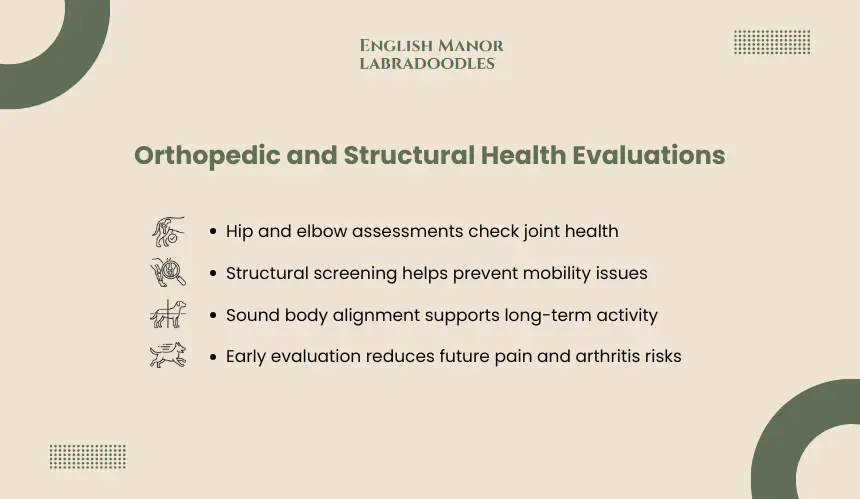
Beyond genetic screening, physical structure plays a critical role in a Labradoodle’s long-term mobility, comfort, and activity level. Orthopedic and structural health evaluations focus on how joints, bones, and overall body alignment function together over time. These assessments help identify underlying weaknesses that may not be outwardly visible but could affect movement, endurance, and quality of life as the dog matures into adulthood.
Hip and Elbow Assessments
Hip and elbow dysplasia are common concerns in medium- and large-breed dogs, including Labradoodles. Reputable breeders screen breeding dogs through recognized orthopedic evaluation programs to identify joint irregularities, misalignment, or early degeneration. These assessments help prevent the transmission of structural weaknesses to puppies, reducing the risk of chronic pain, limited mobility, or early-onset arthritis later in life.
Why Structural Soundness Matters
Structural issues are often subtle during puppyhood and may not present obvious symptoms until the dog reaches maturity. Poor joint structure can gradually lead to discomfort, reduced stamina, and long-term mobility limitations. By screening breeding dogs in advance, responsible breeders help ensure puppies are physically equipped to remain active, comfortable, and able to maintain healthy movement patterns throughout their lifespans.
Eye, Cardiac, and General Health Examinations
Comprehensive breeding standards extend beyond genetics and skeletal structure to include organ function and sensory health. Eye, cardiac, and general veterinary examinations help identify conditions that could compromise quality of life or shorten lifespan. These evaluations ensure that breeding dogs are not carrying hidden health risks that may only emerge with age, stress, or increased physical demand.
Vision and Eye Health Testing
Vision and eye health testing are essential for identifying inherited ocular conditions that may develop gradually rather than appearing early in life. Regular eye exams help detect issues such as progressive vision loss or structural abnormalities. Early identification supports responsible breeding decisions that protect sensory function and reduce the risk of avoidable vision impairment in future generations.
Cardiac and General Veterinary Oversight
Heart evaluations and routine veterinary examinations help ensure breeding dogs are free from undiagnosed cardiac or systemic conditions. These assessments review heart rhythm, circulation, and overall physical wellness. Consistent veterinary oversight improves breeding outcomes by reducing the risk of passing on conditions that could affect endurance, longevity, or overall physiological stability in offspring.
Temperament Evaluation as a Breeding Standard
Health-focused breeding considers mental and behavioral stability essential to overall well-being. Temperament influences how dogs adapt to family life, training, and environmental changes. Reputable breeders recognize that emotional balance and behavioral predictability are just as important as physical health when determining breeding suitability and long-term quality of life.
Assessing Behavioral Traits
Temperament assessments help identify behavioral traits such as adaptability, confidence, sociability, and stress response. Reputable breeders evaluate these traits to reduce the likelihood of anxiety, aggression, or instability in offspring. Calm, balanced temperaments support smoother integration into family environments and contribute to long-term behavioral health that aligns with the breed’s intended role as a companion.
Early Development and Social Exposure
Puppy development is strongly influenced by early environmental exposure. Ethical breeders incorporate structured interaction with people, sounds, surfaces, and handling to support neurological development. Early social exposure helps puppies build confidence, resilience, and adaptability, reducing fear-based behaviors and supporting smoother transitions into new homes and everyday life experiences.
Documentation, Transparency, and Buyer Verification

Health testing only builds trust when results are clearly documented and accessible to prospective owners. Transparency demonstrates accountability and allows buyers to make informed decisions based on verified information rather than assumptions. Responsible breeders understand that open documentation is a cornerstone of ethical breeding and long-term buyer confidence.
Providing Verifiable Health Records
Reputable breeders maintain organized records of genetic tests, orthopedic evaluations, eye exams, and routine veterinary assessments. Providing verifiable documentation allows buyers to confirm that health claims are supported by evidence. Clear records also demonstrate that breeding decisions are guided by objective standards rather than convenience or marketing language.
Avoiding Vague or Unsubstantiated Claims
Statements such as “health guaranteed” offer little protection without supporting documentation. Vague claims can obscure essential details about testing scope and limitations. Clear, specific health records demonstrate ethical intent, reduce misunderstandings, and help buyers understand exactly what evaluations were performed and why they matter.
Long-Term Benefits of Health-Focused Breeding Standards
Responsible breeding practices create benefits that extend far beyond the early puppy stage. Health-focused standards influence physical comfort, behavioral stability, and long-term medical outcomes. When breeders prioritize preventative screening and ethical evaluation, puppies are better positioned for healthier, more predictable lives as adult dogs.
Reduced Lifetime Medical Costs
Dogs bred with comprehensive health testing are statistically less likely to require extensive treatment for preventable inherited conditions. Early prevention reduces the emotional stress associated with chronic illness and helps owners avoid unexpected veterinary expenses. Health-focused breeding shifts costs from long-term correction to early risk reduction.
Improved Quality of Life
Health-focused breeding supports mobility, comfort, and longevity by reducing inherited risk factors. Dogs with sound structure, stable temperament, and healthy organ function are more likely to remain active companions well into adulthood. These outcomes contribute to stronger human–animal bonds and a consistently higher quality of life over time.
Frequently Asked Questions
Does health testing guarantee a puppy will never get sick?
No. Testing reduces inherited risk but cannot eliminate all health issues.
Are genetic tests the same as veterinary exams?
No. Genetic testing identifies inherited risk, while exams assess current health.
Should buyers ask to see health records?
Yes. Transparency is a key indicator of responsible breeding.
Are health-tested puppies more expensive?
Testing adds cost, but it often reduces long-term medical expenses.
Do all Labradoodle breeders follow these standards?
No. Standards vary widely, making buyer education essential.
Choosing Breeders Who Prioritize Long-Term Health
Understanding health testing and breeding standards empowers buyers to make informed decisions that protect both their emotional investment and their dogs’ long-term well-being. Reputable breeders prioritize transparency, preventative screening, and ethical pairing practices to support healthier outcomes. In the tri-state region, providers such as English Manor Labradoodle apply structured health testing and responsible standards to support the development of Labradoodles bred for long-term wellness and stability.