- englishmanor
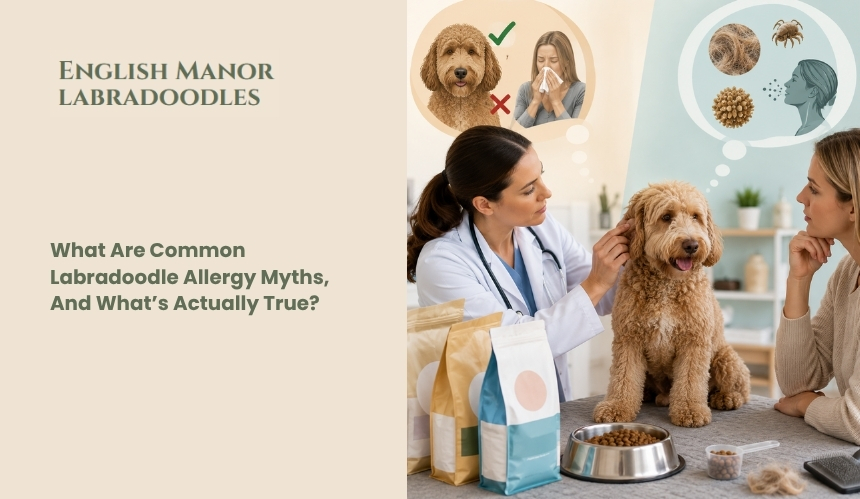
What Are Common Labradoodle Allergy Myths, And What’s Actually True?
Quick Overview: Labradoodles are often called hypoallergenic, but no dog is completely allergy-free. Allergies are caused by proteins in dander and saliva, not just shedding. Coat type and individual sensitivity matter, so Labradoodles may reduce—but not eliminate—allergy reactions.
|
Labradoodles are often promoted as “hypoallergenic” dogs, making them a popular choice for people with allergies. However, this label has led to widespread confusion about what hypoallergenic actually means and whether these dogs are truly suitable for allergy sufferers. Many owners expect a completely allergy-free experience, only to discover that symptoms can still occur.
The misunderstanding largely comes from the assumption that shedding is the main cause of allergies. In reality, allergens are produced by proteins found in a dog’s dander, saliva, and skin cells. While Labradoodles may shed less than some breeds, this does not eliminate the presence of allergens. Their mixed genetics also mean that coat type and allergen levels can vary significantly from one dog to another.
- Allergies are caused by proteins, not just shedding
- Labradoodles can vary widely in coat type and allergen levels
- “Hypoallergenic” does not mean completely allergy-free
Did you know: Pet allergies affect a significant percentage of people, and dog-related allergens are among the most common indoor triggers.
Understanding the difference between myths and facts is essential for making informed decisions. This guide breaks down common misconceptions about Labradoodle allergies and explains what is actually true based on how allergies work.
Are Labradoodles Truly Hypoallergenic?
The term “hypoallergenic” is often misunderstood when applied to dogs. Labradoodles are frequently labeled as hypoallergenic, but this does not mean they are completely free of allergens. Instead, it suggests they may produce fewer allergens than some other breeds, depending on their coat type and genetics.
What Does “Hypoallergenic” Actually Mean?
“Hypoallergenic” refers to a reduced likelihood of causing allergic reactions, not the complete absence of allergens. All dogs produce allergen proteins, primarily found in dander, saliva, and skin cells. Labradoodles may shed less, but they still produce these proteins.
Did you know:
- There is no scientifically recognized dog breed that is completely hypoallergenic.
Why No Dog Is Completely Allergen-Free
Allergic reactions are triggered by specific proteins, not by hair alone. These proteins are present in every dog, regardless of breed or coat type. Even dogs that shed minimally still release dander into the environment.
From a biological perspective, allergens are constantly produced as part of normal skin and saliva functions.
Did you know:
- Allergen proteins can remain in the environment for extended periods, even after a dog is no longer present.
Why Do Labradoodles Vary In Allergen Levels?
Labradoodles are a crossbreed, which means their coat type and shedding patterns can vary widely. Some may inherit low-shedding coats similar to Poodles, while others may have coats closer to Labradors, which shed more.
This variation directly affects how allergens are distributed in the environment.
Did you know:
- First-generation Labradoodles can have unpredictable coat types, making allergen levels less consistent than those of established breeds.
Does Lower Shedding Mean Fewer Allergies?
Lower shedding can reduce the spread of dander in the environment, but it does not eliminate allergens entirely. While this may help some individuals experience fewer symptoms, it is not a guarantee of being allergy-free.
Did you know:
- Reduced shedding can lower the spread of allergens, but sensitivity levels vary from person to person.
What Are The Most Common Labradoodle Allergy Myths?
Many misconceptions about Labradoodle allergies come from marketing claims and general misunderstandings about how pet allergies work. These myths can lead to unrealistic expectations, especially for individuals who are sensitive to allergens. Understanding what is true and what is not helps in making informed decisions.
Myth 1: Labradoodles Don’t Cause Allergies
This is one of the most common myths. Labradoodles, like all dogs, produce allergen proteins in their skin, saliva, and dander. While some may produce fewer allergens, they are not completely allergy-free.
Did you know: Allergies are triggered by proteins, not by the presence or absence of fur alone.
Myth 2: All Labradoodles Have The Same Coat
Many people assume that all Labradoodles have a low-shedding, hypoallergenic coat. In reality, their coat type can vary widely depending on genetics, especially in early generations.
Some may have curly, low-shedding coats, while others may shed more.
Did you know: Coat variation in Labradoodles makes allergen levels inconsistent from one dog to another.
Myth 3: Shedding Determines Allergy Risk Completely
Shedding can influence how allergens spread, but it is not the sole factor. Even dogs that shed very little still produce dander and saliva proteins that trigger allergic reactions.
Did you know: Low-shedding dogs can still cause allergic reactions due to the presence of allergen proteins.
Myth 4: Grooming Eliminates Allergens
Regular grooming can help reduce loose hair and dander, but it does not eliminate allergens entirely. Allergens are continuously produced, so grooming only helps manage, not remove them.
Did you know: Even after grooming, allergen proteins remain present on the dog and in the environment.
Myth 5: First-Generation Labradoodles Are Always Hypoallergenic
First-generation Labradoodles (a mix of Labrador and Poodle) are often believed to be hypoallergenic. However, their genetic variation makes coat type and shedding unpredictable.
Did you know: Later-generation Labradoodles are often bred for more consistent coat traits compared to first-generation mixes.
What Actually Causes Dog Allergies?
To understand why Labradoodles can still trigger allergies, it is important to focus on the real cause of allergic reactions. Dog allergies are not caused by fur itself but by specific proteins produced by the dog’s body. These proteins are microscopic and easily spread throughout the environment.
What Role Does Dander Play In Allergies?
Dander consists of tiny flakes of skin that dogs naturally shed. These particles carry allergen proteins and can remain suspended in the air or settle on surfaces such as furniture, clothing, and carpets.
Because dander is lightweight, it spreads easily and can accumulate in indoor environments.
Did you know: Dander can remain in the air for long periods, increasing exposure even without direct contact with the dog.
How Do Saliva And Skin Proteins Trigger Reactions?
Allergen proteins are also present in a dog’s saliva and skin oils. When dogs groom themselves, these proteins are transferred to their fur and eventually released into the environment.
From a biological perspective, these proteins are the primary triggers of allergic reactions in sensitive individuals.
Did you know: Proteins found in dog saliva are among the most common triggers of pet-related allergies.
How Do Allergens Spread Inside The Home?
Allergens are easily carried through the air and can attach to various surfaces. Activities such as petting, movement, or even airflow can spread these particles throughout the home.
This means allergens can be present even in areas where the dog spends little time.
Did you know: Pet allergens can remain in a home environment for extended periods, even after the pet is no longer present.
Why Do Some People React More Than Others?
Allergic reactions vary based on individual sensitivity. Some people may experience mild symptoms, while others may have stronger reactions even with minimal exposure.
Did you know: Sensitivity to allergens differs from person to person, which is why reactions to the same dog can vary widely.
Why Is Shedding Often Misunderstood?
Shedding is often blamed as the main cause of allergies, but it only affects how allergens are distributed. More shedding can spread dander more widely, but even low-shedding dogs still produce allergen proteins.
Did you know: The amount of allergen a dog produces is more important than how much it sheds.
How Do Labradoodle Coats Affect Allergies?
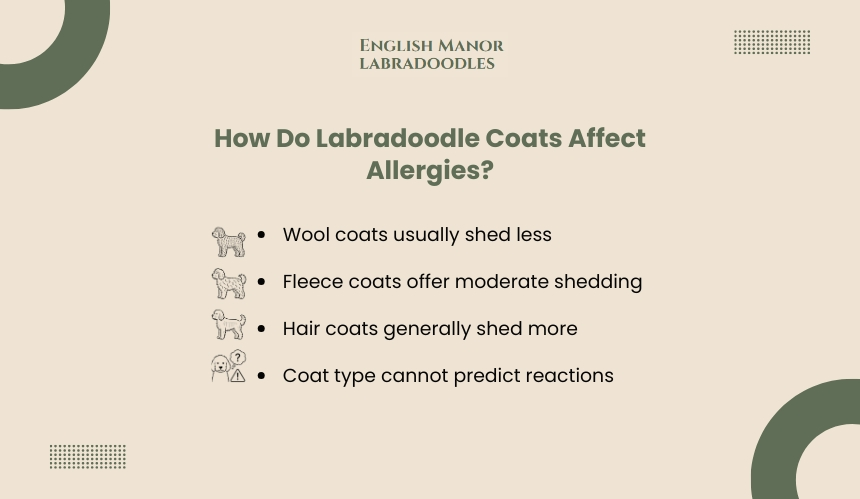
Labradoodle coat type plays a significant role in how allergens are distributed, but it does not eliminate them. Since Labradoodles are a mixed breed, their coats can vary widely, and this variation directly influences shedding levels and allergen spread. Understanding these differences helps set realistic expectations for allergy management.
What Are The Different Labradoodle Coat Types?
Labradoodles typically have three main coat types: wool, fleece, and hair.
- Wool coat: Tight, curly texture similar to Poodles, usually low shedding
- Fleece coat: Soft, wavy texture, moderate to low shedding
- Hair coat: Straighter coat, similar to Labradors, higher shedding
Each type affects the amount of hair and dander released into the environment.
Did you know:
- Coat type is influenced by genetics, which is why Labradoodles can vary significantly even within the same litter.
How Does Shedding Influence Allergen Spread?
Shedding affects how allergens move through the environment. Dogs that shed more tend to release more dander into the air and onto surfaces, increasing exposure.
However, even low-shedding coats still carry allergen proteins, which can spread through contact and movement.
Did you know:
- Reduced shedding may limit allergen spread, but does not eliminate the source of allergens.
Why Does Coat Type Matter For Allergy Sufferers?
Certain coat types, particularly wool or fleece, may trap dander more effectively, reducing the amount released into the environment. This can make them more manageable for some allergy sufferers.
However, effectiveness varies with individual sensitivity and grooming practices.
Did you know:
- Some allergy sufferers tolerate specific coat types better, but results are not guaranteed.
Can Coat Type Predict Allergy Reactions?
While coat type can influence allergen distribution, it cannot reliably predict whether someone will have an allergic reaction. Personal sensitivity plays a major role in the body’s response to allergens.
Did you know:
- Two people can have completely different reactions to the same dog, regardless of coat type.
How Does Grooming Interact With Coat Type?
Different coat types require different grooming routines, which can impact how allergens are managed. Regular grooming can help remove loose hair and reduce dander buildup, especially in thicker coats.
Did you know:
- Proper grooming helps control allergen levels but does not completely remove them.
Can Labradoodles Be A Better Choice For Allergy Sufferers?
Labradoodles are often considered a better option for people with allergies, but this depends on several factors rather than a guaranteed outcome. While some individuals may experience fewer symptoms, others may still react. The key difference lies in how allergens are distributed and in a person’s sensitivity to them.
Do Labradoodles Produce Fewer Allergens?
Labradoodles do not produce fewer allergen proteins than other dogs. However, certain coat types may trap dander more effectively, reducing the amount released into the environment.
From a practical standpoint, this can result in lower exposure levels for some individuals, but not complete elimination.
Did you know:
- All dogs produce allergen proteins, regardless of breed or coat type.
Why Do Some People Tolerate Labradoodles Better?
Individual sensitivity plays a major role in allergic reactions. Some people may react less to certain dogs due to lower allergen exposure or differences in immune response.
This variability explains why one person may have no symptoms while another experiences noticeable reactions.
Did you know:
- Allergy responses vary widely, making personal interaction the best way to assess compatibility.
Does Lower Shedding Make A Practical Difference?
Lower shedding can reduce the amount of dander that spreads throughout the home. This may help limit allergen accumulation on surfaces such as furniture, carpets, and clothing.
However, because allergens remain present, shedding alone does not determine whether a dog is suitable for allergy sufferers.
Did you know:
- Reduced shedding can improve indoor allergen control, but does not eliminate allergy triggers.
Why Is Interaction Testing Important Before Adoption?
Spending time with a Labradoodle before adoption helps determine how an individual reacts. Short-term exposure can provide insight into potential allergy symptoms and overall compatibility.
Did you know:
- Direct interaction is one of the most reliable ways to assess whether a specific dog will trigger allergies.
What Expectations Should Allergy Sufferers Have?
Allergy sufferers should expect reduced symptoms in some cases, but not complete relief. Managing expectations is important to avoid disappointment and ensure proper preparation.
Did you know:
- No dog breed can guarantee a completely allergy-free experience.
How Can Allergy Symptoms Be Managed Around Labradoodles?
While Labradoodles may reduce the spread of allergens in some cases, managing allergy symptoms requires consistent environmental control and hygiene practices. Since allergens are continuously produced, the focus should be on minimizing exposure rather than eliminating it completely.
How Does Regular Grooming Help Reduce Allergens?
Frequent grooming helps remove loose hair, dander, and debris from the coat before they spread into the environment. Brushing and bathing reduce the buildup of allergen-carrying particles on the dog’s body.
From a practical perspective, grooming is more effective when done consistently rather than occasionally.
Did you know: Regular grooming can significantly reduce the amount of dander released into the home environment.
What Role Does Home Cleaning Play In Allergen Control?
Cleaning the home regularly helps remove allergens that settle on surfaces such as floors, furniture, and fabrics. Vacuuming with high-efficiency filters and wiping surfaces can reduce allergen accumulation.
Did you know: Pet allergens can settle into carpets and upholstery, making routine cleaning essential for managing exposure.
How Can Air Filtration Improve Indoor Air Quality?
Air filtration systems, especially those with HEPA filters, help capture airborne allergens and improve indoor air quality. This reduces the amount of dander circulating in the air.
Did you know: Air filtration can significantly reduce airborne allergen particles, improving comfort for allergy sufferers.
Should Certain Areas Be Restricted For The Dog?
Limiting access to specific areas, such as bedrooms, can help reduce allergen exposure in spaces where prolonged contact occurs. Creating designated zones helps manage overall allergen levels.
Did you know: Keeping pets out of sleeping areas can reduce nighttime allergen exposure and improve symptom management.
How Does Personal Hygiene Help Reduce Reactions?
Washing hands after contact and avoiding touching the face can reduce the transfer of allergens. Changing clothes after extended interaction may also help limit exposure.
Did you know: Simple hygiene practices can significantly reduce direct allergen contact and improve symptom control.
What Signs Indicate A Dog Allergy Reaction?
Recognizing the signs of a dog allergy is essential for understanding how the body responds to exposure. Symptoms can vary in intensity and may appear immediately or develop over time. Identifying these reactions early helps manage exposure and take appropriate steps to reduce discomfort.
What Respiratory Symptoms Are Common?
Respiratory symptoms are among the most common signs of dog allergies. These occur when allergen particles are inhaled and affect the airways.
Common signs include:
- Sneezing and nasal congestion
- Runny nose or post-nasal drip
- Coughing or mild breathing difficulty
Did you know:
- Airborne allergens such as dander can trigger respiratory symptoms even without direct contact with the dog.
What Skin Reactions Can Occur?
Skin-related symptoms often develop after direct contact with the dog or allergen-contaminated surfaces. These reactions can vary from mild irritation to more noticeable discomfort.
Common signs include:
- Itching or redness
- Hives or small bumps on the skin
- Irritation after petting the dog
Did you know:
- Skin reactions are often linked to direct exposure to allergen proteins found in saliva or dander.
What Eye And Sinus Symptoms Are Linked To Allergies?
Allergens can irritate the eyes and sinuses, leading to noticeable discomfort.
Common signs include:
- Watery or itchy eyes
- Redness or swelling around the eyes
- Sinus pressure or headaches
Did you know:
- Eye irritation is a common allergic response due to airborne allergens settling on sensitive tissues.
How Do Symptoms Vary Between Individuals?
Allergy symptoms vary by individual sensitivity. Some people may experience mild irritation, while others may have more persistent or severe reactions.
Did you know:
- The severity of allergic reactions depends on both allergen exposure and individual immune response.
When Should Allergy Symptoms Be Taken Seriously?
Symptoms that persist, worsen over time, or interfere with daily activities should be addressed. Monitoring patterns helps determine whether the reaction is linked to the dog or other environmental factors.
Did you know:
- Early recognition of symptoms helps manage exposure and prevent more severe reactions.
Did You Know? Dog Allergy Facts
Understanding key facts about dog allergies helps separate common misconceptions from reality. These insights explain how allergens behave and why reactions vary among individuals.
- Pet allergies affect a significant portion of the population, with millions of people experiencing reactions to dogs and cats
- Dog allergies are triggered by proteins such as Can f 1 and Can f 2, found in dander, saliva, and skin cells
- Allergen particles are extremely small and can remain airborne for long periods, increasing exposure
- Pet allergens can stay in a home environment for weeks or even months, even after the pet is removed
- Shedding does not determine allergen production; low-shedding dogs still produce allergen proteins
- Regular grooming can reduce allergen spread, but does not eliminate the source of allergens
- Individual sensitivity varies, meaning two people can react differently to the same dog
- Airborne allergens can settle on furniture, clothing, and carpets, contributing to continued exposure
- Controlled environments and cleaning can significantly reduce allergen levels indoors
- No dog breed is completely hypoallergenic, despite common claims
These facts reinforce that dog allergies are driven by biological factors rather than breed labels alone. Understanding how allergens work helps manage expectations and make informed decisions about living with a Labradoodle.
Frequently Asked Questions
Are Labradoodles Completely Hypoallergenic?
Labradoodles are not completely hypoallergenic. While some may shed less and spread fewer allergens, all dogs produce allergen proteins in dander and saliva, which can still trigger reactions in sensitive individuals.
Which Labradoodle Coat Type Is Best For Allergies?
Wool and fleece coats are generally considered better for allergy management because they tend to shed less. However, individual reactions vary, and no coat type guarantees a completely allergy-free experience.
Can Grooming Make A Labradoodle Allergy-Free?
Grooming can reduce the amount of loose hair and dander, but it does not eliminate allergens entirely. Regular grooming helps manage exposure, but cannot remove the underlying allergen proteins.
How Can You Test If You Are Allergic To A Labradoodle?
Spending time around a Labradoodle before adoption is one of the most effective ways to assess allergic reactions. Short-term exposure can help determine sensitivity and compatibility.
Do Labradoodles Cause Fewer Allergies Than Other Dogs?
Some Labradoodles may cause fewer allergy symptoms due to lower shedding, but this is not guaranteed. Allergen production is similar across breeds, and individual sensitivity plays a major role.
Can Allergies Develop After Living With A Dog?
Yes, allergies can develop over time with repeated exposure. Even if symptoms are not present initially, sensitivity can increase, leading to reactions later.