- englishmanor
How Do You Introduce a Labradoodle Puppy to Kids the Right Way?
Quick Overview: To introduce a Labradoodle puppy to kids the right way, create a calm, controlled environment, and guide both the puppy and the child through safe interaction. The process works by:
By combining supervision, gentle interaction, and gradual exposure, you help build a safe, positive, and long-term bond between the Labradoodle puppy and children. |
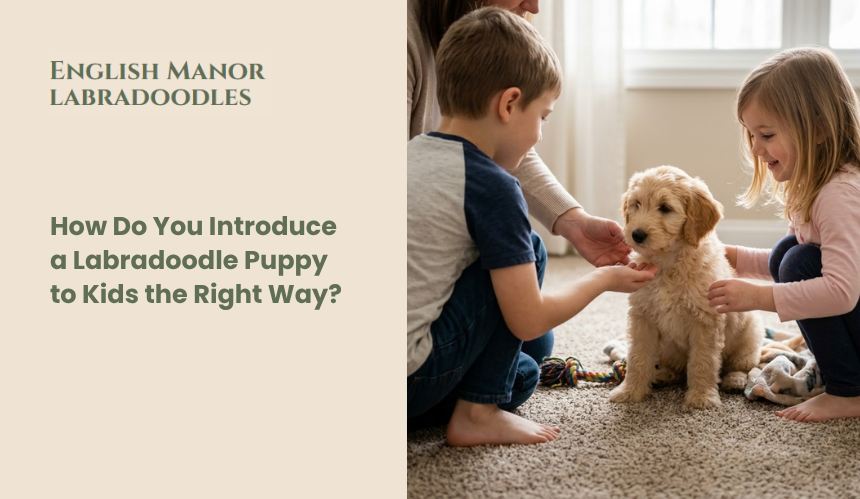
Introducing a Labradoodle puppy to kids might seem simple, but the first interaction can shape how both the puppy and the child behave around each other for years. A rushed or uncontrolled introduction can lead to fear, overstimulation, or even defensive behavior, while a structured approach builds trust and safety from the beginning.
Did you know? Early interactions between puppies and children directly influence a dog’s long-term temperament, especially how it responds to sudden movement, noise, and touch.
The challenge lies in the difference between how puppies and children behave. Puppies explore with their mouths and react quickly to stimulation, while children may move unpredictably, speak loudly, or try to hug and grab. Without guidance, this mismatch can create confusion or stress for the puppy.
At the same time, children often do not understand boundaries, and puppies cannot communicate discomfort in ways kids easily recognize. This makes supervision and education essential during the first introduction.
Did you know? Most negative dog-child interactions happen not because of aggression, but because early warning signs of discomfort were missed or misunderstood.
A proper introduction is not just about letting them meet; it is about controlling the environment, guiding behavior, and building a positive association on both sides. This guide explains how to do that step by step, ensuring the interaction is safe, calm, and beneficial for long-term bonding.
Why Is Proper Introduction Important for Puppies and Children?
The first night is difficult because the puppy experiences a sudden transition from a familiar, social environment to complete isolation in an unfamiliar space. This change affects both emotional security and behavior, which is why crying and restlessness are common.
How Do First Interactions Shape Behavior?
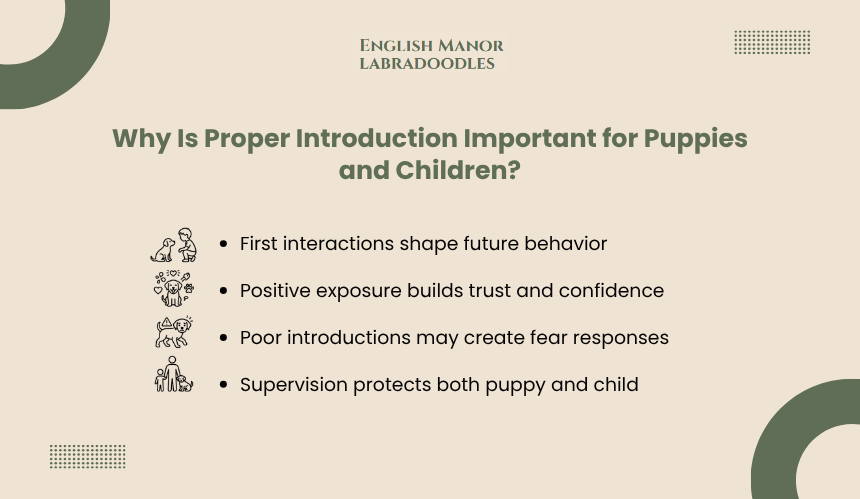
Puppies form associations quickly. If the first interaction is calm and positive, the puppy begins to associate children with safety and comfort. If the interaction is overwhelming or confusing, the puppy may associate children with stress.
Did you know? Early experiences create lasting behavioral patterns in puppies, especially during the socialization stage.
Why Can Poor Introductions Lead to Fear or Aggression?
When a puppy feels threatened or overstimulated, it may respond by withdrawing, barking, or using defensive behaviors like nipping. These reactions are not aggression in the traditional sense; they are responses to discomfort or fear.
How Does Early Socialization Affect Long-Term Temperament?
Socialization teaches the puppy how to respond to different people, movements, and environments. Positive exposure to children helps the puppy become more adaptable, confident, and relaxed in similar situations later in life.
How Do Children Influence Puppy Behavior?
Children often move quickly, speak loudly, and interact physically. These behaviors can either help the puppy become comfortable with stimulation or overwhelm it if not managed properly.
Did you know? Puppies are highly sensitive to tone, movement, and energy levels, which is why controlled interactions are essential during early exposure.
Why Is Supervision Critical During Early Interactions?
Supervision ensures that both the puppy and the child behave appropriately. It allows immediate correction if boundaries are crossed and prevents situations that could lead to fear or injury.
What Should You Do Before the First Interaction?
Preparation is essential because both the Labradoodle puppy and the child need to enter the interaction in a calm and controlled state. Without preparation, the meeting can quickly become overwhelming, leading to confusion or stress for the puppy and unpredictable behavior from the child.
How Do You Prepare the Puppy Emotionally?
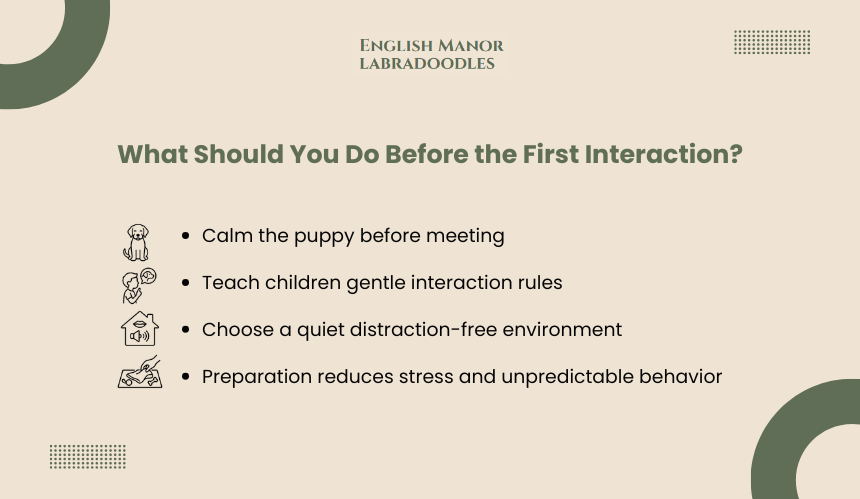
Before the interaction, the puppy should be relaxed rather than overly excited or tired. A short play session or walk can help release excess energy, making the puppy calmer and more responsive. When the puppy is balanced, it is more likely to approach the situation with curiosity rather than overstimulation.
Did you know? Puppies are more likely to respond positively to new experiences when their energy levels are regulated, as excessive excitement can quickly turn into stress.
How Should You Educate Kids Before Meeting the Puppy?
Children need clear guidance before the interaction begins. They should understand that the puppy is not a toy but a living animal that requires gentle and predictable behavior. Explaining simple rules, such as moving slowly and speaking softly, helps reduce sudden actions that could startle the puppy.
Why Is a Calm Environment Critical?
The environment should be quiet and free from distractions. Loud noises, multiple people, or chaotic movement can overwhelm the puppy, making it harder to process the interaction. A calm setting allows both the puppy and the child to focus on each other without external stress.
How Does Preparation Reduce Risk During the First Meeting?
When both the puppy and the child are prepared, the interaction becomes more predictable. This reduces the likelihood of fear-based reactions, sudden movements, or miscommunication between the two.
Did you know? Controlled environments significantly increase the likelihood of successful first interactions by limiting unexpected stimuli that can trigger stress responses.
How Should the First Meeting Be Structured?
The first meeting should be calm, controlled, and guided step-by-step. Instead of allowing spontaneous interaction, structure ensures that both the Labradoodle puppy and the child feel safe and understand how to behave.
Why Should the Puppy Approach First?
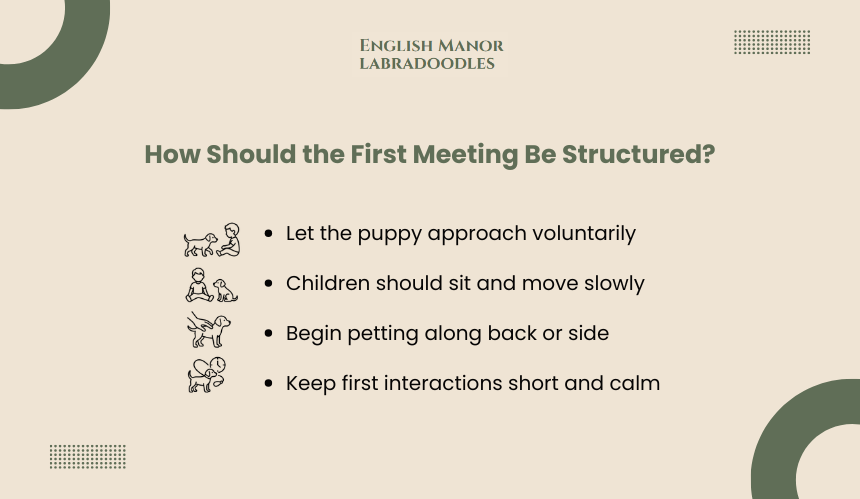
Allowing the puppy to approach gives it a sense of control over the situation. When the puppy chooses to move closer, it is acting out of curiosity rather than reacting to pressure. This reduces fear and helps build trust from the beginning.
Did you know? Giving animals control in new situations lowers stress and leads to more positive interactions.
How Should Kids Position Themselves?
Children should remain still or move slowly, ideally sitting or kneeling at the puppy’s level. Standing over the puppy or making sudden movements can feel intimidating, especially during the first interaction.
What Is the Correct Way to Pet a Puppy?
Petting should begin gently in safe areas, such as the back or side, rather than the head or face. Slow, consistent movements help the puppy stay relaxed and prevent overstimulation.
How Do You Control the Pace of Interaction?
The interaction should be short and gradual. If the puppy becomes too excited or the child becomes overly active, it is important to pause and reset rather than continue.
How Do You Know the Interaction Is Going Well?
A positive interaction is calm and balanced. The puppy remains relaxed and curious, and the child follows instructions without sudden or rough behavior.
Did you know? Short, positive interactions are more effective than long ones, as they prevent overstimulation and help build trust over time.
How Do You Teach Kids to Interact Safely with a Puppy?
Teaching children how to interact with a Labradoodle puppy is just as important as training the puppy itself. Without guidance, children may unintentionally behave in ways that confuse or stress the puppy. Proper education ensures that interactions remain safe, respectful, and positive for both.
What Behaviors Should Kids Avoid?
Children often express excitement through fast movement, loud voices, or physical contact like hugging and grabbing. While natural for kids, these actions can overwhelm a puppy that is still learning how to interpret human behavior.
Sudden movements can trigger a puppy’s instinct to react, either by jumping, nipping, or retreating. Loud sounds can increase anxiety, while rough handling may make the puppy feel threatened. Teaching children to move slowly, speak softly, and avoid direct face-to-face contact helps reduce these risks.
Did you know? Puppies interpret rapid hand movements as play signals or threats, which is why uncontrolled actions can lead to nipping.
Why Is Gentle Handling Important?
A puppy’s body is still developing, and rough handling can cause discomfort or fear. Gentle touch helps the puppy associate human interaction with safety rather than unpredictability.
Children should be taught to use slow, light strokes and avoid pulling ears, tails, or fur. Consistent gentle handling not only protects the puppy physically but also builds trust, making future interactions smoother and more relaxed.
How Do You Explain Puppy Boundaries to Children?
Children need to understand that puppies, like people, have limits. Explaining that the puppy may need space when eating, sleeping, or resting helps prevent unwanted interaction during sensitive moments.
It is important to teach kids to recognize when to stop. If the puppy moves away, turns its head, or becomes still, these are signs that it needs a break. Respecting these signals prevents stress and teaches children to interact responsibly.
Did you know? Teaching children to respect a dog’s space early significantly reduces the risk of negative interactions later in life.
How Does Consistency Improve Safe Interaction?
When children follow the same rules every time, the puppy learns what to expect. This predictability reduces confusion and helps the puppy remain calm during interactions.
Consistency also helps children develop good habits. Over time, safe behavior becomes natural, reducing the need for constant correction or supervision.
How Does Teaching Kids Benefit Long-Term Behavior?
Educating children fosters a balanced relationship in which both the puppy and the child understand each other’s behavior. This reduces the likelihood of fear-based reactions, accidental harm, or miscommunication.
How Do You Recognize Puppy Stress or Discomfort Signals?
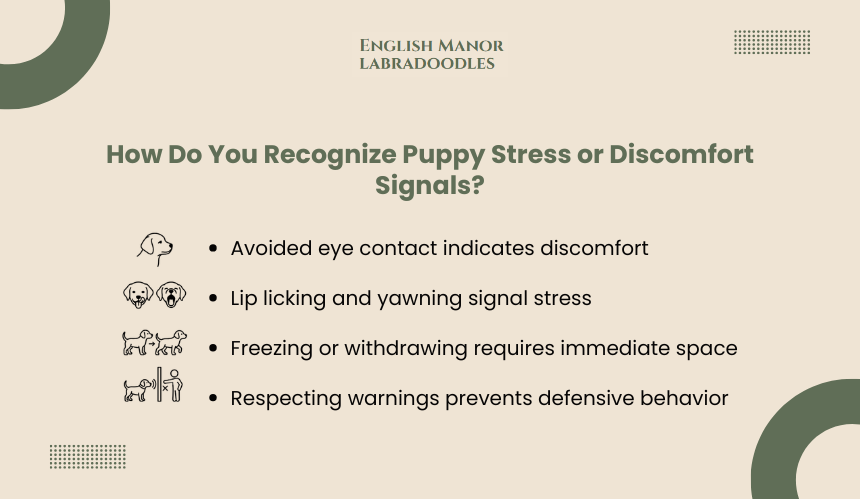
Understanding a puppy’s body language is critical because puppies communicate discomfort long before reacting with behaviors like nipping or barking. Recognizing these early signals allows you to intervene immediately and prevent negative interactions.
Common Signs of Stress in Puppies
A Labradoodle puppy will show subtle behavioral changes when it feels overwhelmed. These signals are often missed because they are quiet and gradual rather than obvious.
Common indicators include avoiding eye contact, turning the head away, repeatedly licking lips, yawning when not tired, freezing in place, or slowly moving away. These behaviors indicate that the puppy is trying to create distance or reduce stimulation.
Did you know? Many stress signals are calming behaviors, meaning the puppy is attempting to de-escalate the situation rather than react aggressively.
How Do You Respond to These Signals?
When a stress signal appears, the interaction should pause immediately. Giving the puppy space allows it to reset and return to a calm state. Continuing the interaction despite these signs can increase discomfort and lead to defensive reactions.
The response should always be calm and controlled. Redirecting the child’s attention and allowing the puppy to relax prevents escalation without creating fear.
Why Does Ignoring Signals Lead to Problems?
If early warning signs are ignored, the puppy may feel the need to escalate its response. This can lead to behaviors such as barking, snapping, or nipping, not because of aggression, but because the puppy’s attempts to communicate were not understood.
How Do Stress Signals Help Prevent Negative Behavior?
These signals act as an early warning system. When recognized and respected, they allow you to adjust the situation before the puppy feels overwhelmed. This keeps interactions safe and positive.
Did you know? Most defensive behaviors in dogs occur only after multiple earlier signals were missed or ignored.
How Do You Teach Kids to Recognize These Signals?
Children should be taught simple cues, such as when the puppy walks away or becomes still, it means “stop.” Keeping explanations simple helps children respond correctly without confusion.
How Do You Prevent Overstimulation During Interaction?
Overstimulation is one of the most common causes of negative interactions between puppies and children. Labradoodle puppies are naturally energetic and responsive, but too much excitement, noise, or physical contact can quickly overwhelm them. When overstimulated, puppies lose control of their behavior, which can lead to jumping, nipping, or sudden withdrawal.
Why Do Puppies Get Overstimulated Easily?
Puppies are still learning how to regulate their energy and emotions. Unlike adult dogs, they do not yet have the ability to calm themselves quickly when excitement builds. When multiple stimuli, such as movement, sound, and touch, happen at once, the puppy’s response can escalate rapidly.
Did you know? Overstimulation often looks like excitement at first, but it can quickly turn into stress if not managed early.
How Do You Keep Interactions Short and Controlled?
Limiting the duration of the interaction helps prevent energy levels from becoming too high. Short, calm sessions allow the puppy to process the experience without becoming overwhelmed.
It is important to end the interaction while the puppy is still calm, rather than waiting until it becomes too excited. This reinforces positive behavior and keeps the experience balanced.
How Does Energy Matching Improve Outcomes?
Children and puppies often mirror each other’s energy. If a child becomes loud or overly active, the puppy is likely to respond in the same way. Keeping the child’s behavior calm and controlled helps the puppy remain relaxed.
How Do You Recognize Early Signs of Overstimulation?
Before behavior escalates, the puppy may begin to move faster, jump more frequently, or lose focus. These signs indicate that the interaction should pause before it becomes unmanageable.
How Do You Reset the Interaction Safely?
When signs of overstimulation appear, creating a brief break allows the puppy to calm down. Giving space and reducing stimulation helps bring energy levels back to a manageable state.
Did you know? Managing stimulation levels is more effective than correcting behavior after it escalates, as prevention reduces the need for intervention.
How Do You Build a Positive Relationship Over Time?
A successful introduction is only the beginning. The long-term relationship between a Labradoodle puppy and a child is built through repeated, positive interactions that reinforce trust, safety, and understanding. Consistency over time is what transforms a controlled introduction into a natural bond.
How Does Consistency Improve Trust?
When interactions follow the same rules each time, the puppy learns what to expect from the child. Predictable behavior reduces uncertainty, which helps the puppy stay calm and relaxed during interactions.
For example, if the child consistently approaches slowly and uses gentle touch, the puppy begins to associate that behavior with safety. Over time, this builds confidence and reduces hesitation.
Did you know? Trust in dogs develops through repeated positive experiences, not single interactions.
Why Do Positive Experiences Matter Most?
Puppies remember how interactions feel more than what exactly happens. If most interactions are calm and rewarding, the puppy will naturally seek out the child and respond positively.
On the other hand, even a few negative experiences, such as rough handling or overstimulation, can create hesitation or avoidance. This is why maintaining positive experiences consistently is essential.
How Do Routines Strengthen Bonding?
Involving the child in simple, structured activities like feeding, supervised play, or calm interaction helps build a connection. These repeated activities create familiarity and reinforce the relationship.
How Does Guidance Shape Long-Term Behavior?
Both the puppy and the child continue learning from each interaction. Ongoing guidance ensures that good habits are reinforced and that boundaries remain clear as the puppy grows.
How Does a Strong Relationship Improve Safety?
A puppy that trusts a child is less likely to react defensively, and a child who understands the puppy’s behavior is less likely to trigger stress. This mutual understanding creates a safer environment for both.
Did you know? Long-term positive relationships between dogs and children are built through consistent supervision and reinforcement, not just initial introductions.
What Mistakes Should You Avoid When Introducing Puppies to Kids?
Mistakes during early introductions often come from rushing the process or misunderstanding how puppies and children behave. These errors can create stress, confusion, or unsafe situations, even when intentions are good. Avoiding them is essential for building a safe and positive relationship.
Why Is Forcing Interaction Too Quickly a Problem?
Forcing a puppy to interact before it feels comfortable removes its sense of control. When a puppy cannot approach at its own pace, it may become anxious or defensive. This can lead to avoidance behavior or reactive responses.
Did you know? Allowing a puppy to approach voluntarily reduces stress and leads to more confident social behavior.
How Does Allowing Rough Play Create Issues?
Rough play may seem harmless, but it teaches the puppy that high energy and physical contact are acceptable during interaction. This can quickly escalate into jumping, nipping, or uncontrolled behavior.
Children often do not recognize when play becomes too intense, which is why boundaries must be clearly set and consistently enforced.
Why Is Lack of Supervision Risky?
Leaving a puppy and a child unsupervised increases the chance of miscommunication. Both may act unpredictably, and without guidance, small issues can escalate quickly.
Supervision ensures:
- Immediate correction of unsafe behavior
- Protection for both the child and the puppy
- Reinforcement of proper interaction habits
How Does Inconsistent Guidance Confuse the Puppy?
If rules change from one interaction to another, the puppy cannot form clear expectations. For example, allowing certain behaviors sometimes but correcting them at other times creates confusion and slows learning.
Why Should You Avoid Ignoring Early Warning Signs?
Overlooking signs of stress or discomfort can lead to escalation. Puppies communicate gradually, and ignoring these signals removes the opportunity to intervene early.
Did you know? Most negative interactions can be prevented by recognizing and responding to early warning signs rather than reacting to the final behavior.