- englishmanor
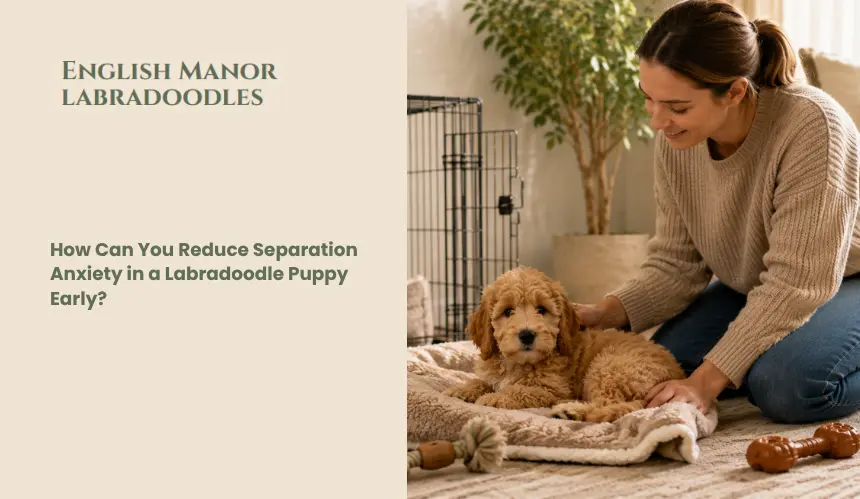
How Can You Reduce Separation Anxiety in a Labradoodle Puppy Early?
Quick Overview: Reducing separation anxiety in a Labradoodle puppy early requires gradual independence training, consistent routines, mental stimulation, and positive reinforcement. By slowly teaching the puppy that short periods alone are safe and temporary, owners can help build confidence and prevent anxious behaviors from developing. Effective early prevention strategies typically include:
When these habits are introduced during the early months of development, most Labradoodle puppies learn to remain relaxed during brief separations and develop healthy independence as they grow. |
Labradoodles are known for their affectionate personalities and strong attachment to their owners. While this loyal nature makes them excellent companion dogs, it can also increase the risk of separation anxiety if puppies become overly dependent during their early development. When left alone, anxious puppies may bark continuously, chew furniture, scratch doors, or pace around the house in distress.
Separation anxiety often develops when puppies are not gradually taught how to remain calm and confident without constant human presence. During the first few months of life, Labradoodle puppies are still learning how to adapt to new environments, routines, and independence. If they are always surrounded by people and never experience short periods alone, even brief separations can feel stressful.
Preventing separation anxiety early is far easier than correcting it later. By introducing structured routines, gradual independence training, and positive experiences during short absences, puppies learn that being alone is safe and temporary.
Did You Know: Canine behavior specialists often observe that many separation-related behaviors appear within the first 30 minutes after an owner leaves, which is why gradual separation training is an important part of early puppy development.
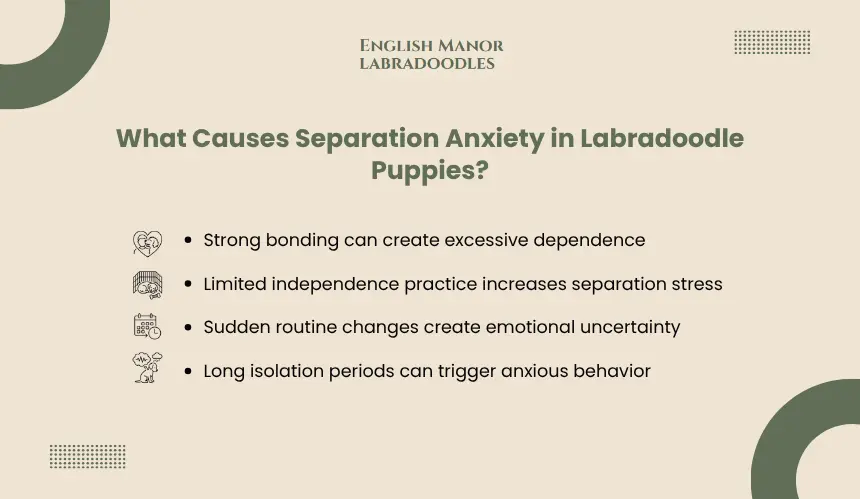
What Causes Separation Anxiety in Labradoodle Puppies?
Understanding the underlying causes of separation anxiety helps owners address the issue before it becomes a persistent behavioral challenge. Labradoodle puppies are naturally social animals that thrive on interaction, but certain developmental factors can make them more vulnerable to anxiety when left alone. Identifying these triggers allows owners to introduce training methods that promote independence and emotional stability.
Did You Know: Veterinary behaviorists note that separation-related behaviors are among the most commonly reported behavioral concerns in companion dogs, particularly in breeds that are highly people-oriented.
Strong Attachment to Owners and Companion Breed Traits
Labradoodles inherit affectionate and social traits from both Labrador Retrievers and Poodles. These breeds were historically developed to work closely with humans, which means Labradoodles naturally seek companionship and interaction.
Because of this strong bonding tendency, puppies may become overly dependent if they are constantly surrounded by people and rarely experience time alone.
Lack of Early Independence Training
Puppies that are never taught how to remain calm on their own may struggle when separation eventually occurs. When owners provide constant attention without gradually introducing independence, the puppy may interpret any absence as a stressful event.
Early independence training helps puppies learn that:
- Being alone for short periods is normal
- Owners will return after leaving
- Quiet resting time is part of daily routines
Gradual exposure to short separations helps build emotional resilience.
Sudden Changes in Environment or Routine
Major changes in a puppy’s environment can also trigger anxiety-related behaviors. Moving to a new home, changes in the owner’s schedule, or unfamiliar surroundings may create uncertainty.
Common stress triggers include:
- Transitioning from the breeder’s home to a new household
- Changes in daily schedules or family routines
- Long periods of isolation without gradual adjustment
Introducing consistent routines and predictable daily patterns helps puppies adapt more comfortably to these changes.
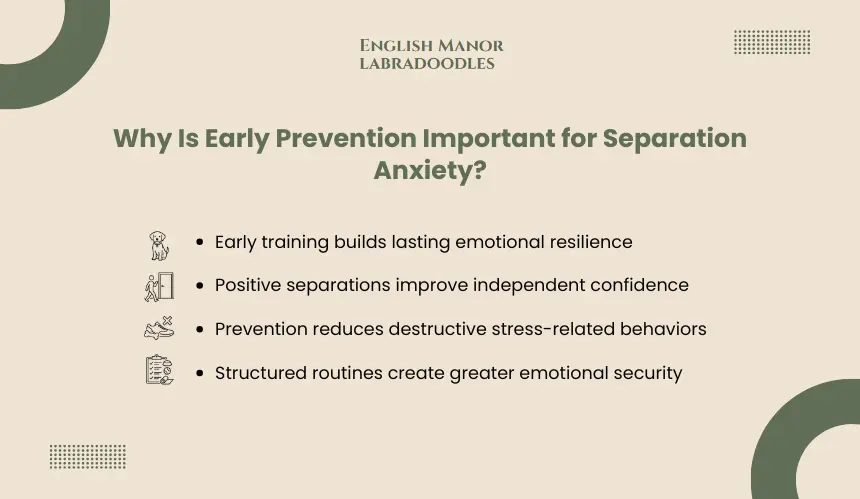
Why Is Early Prevention Important for Separation Anxiety?
Preventing separation anxiety during the early stages of a Labradoodle puppy’s development is significantly easier than correcting the behavior once it becomes established. Puppies are highly adaptable during their first months of life, and this developmental period is when they learn how to respond to new environments, routines, and short periods of independence.
When puppies are gradually taught that temporary separation is safe, they are more likely to develop emotional resilience and confidence. Without early prevention strategies, however, anxiety-related behaviors can become repetitive habits that are harder to modify later.
Did You Know: Canine behavioral research identifies the early socialization period between approximately 3 and 14 weeks of age as one of the most important stages for shaping a puppy’s long-term responses to new experiences and environments.
How Early Training Builds Emotional Resilience
Early independence training helps puppies develop the ability to remain calm without constant human interaction. When puppies experience short, positive periods of separation, they begin to understand that their owner’s absence is temporary.
Gradual exposure to short separations helps puppies learn to:
- Relax independently during quiet periods
- Adapt to brief changes in their environment
- Develop confidence when resting alone
These experiences build emotional resilience that supports long-term behavioral stability.
How Prevention Reduces Stress-Related Behaviors
Separation anxiety often manifests through stress behaviors such as barking, whining, chewing, or pacing. Introducing preventive training early helps reduce the likelihood that these behaviors will develop as coping mechanisms.
When puppies learn healthy independence habits early, they are less likely to display:
- Excessive vocalization
- Destructive chewing
- Attempts to escape confined spaces
- Restlessness during owner absences
Reducing these behaviors early helps maintain a calmer home environment.
How Structured Routines Improve Emotional Security
Puppies thrive in predictable environments where daily activities occur at consistent times. Feeding schedules, training sessions, exercise, and rest periods help create a stable routine that reduces uncertainty.
Structured routines provide several benefits, including:
- Helping puppies anticipate daily events
- Regulating energy levels throughout the day
- Encouraging calm rest periods
- Reducing stress during brief separations
When Labradoodle puppies understand their daily schedule, they often become more relaxed and adaptable when their owners leave the house.
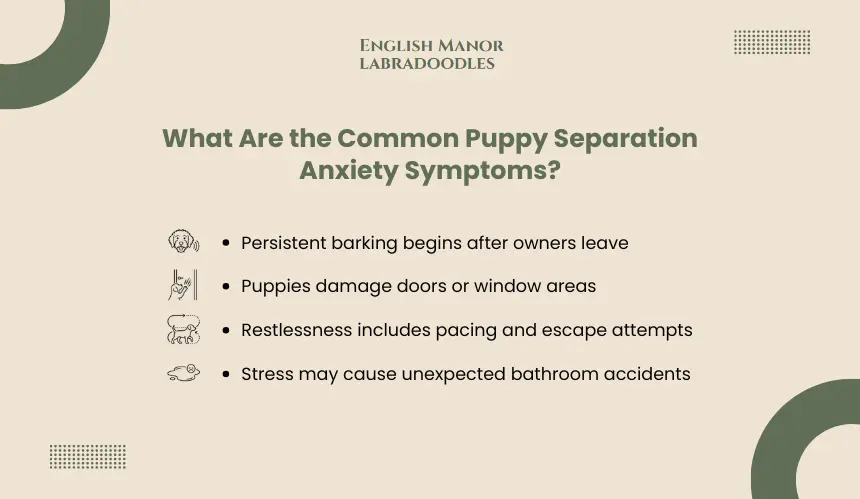
What Are the Common Puppy Separation Anxiety Symptoms?
Recognizing separation anxiety symptoms early allows owners to intervene before the behavior becomes a long-term habit. Puppies may display several emotional and behavioral responses when they feel distressed after their owner leaves. These symptoms typically appear shortly after separation and often occur when the puppy is alone or confined.
Understanding these warning signs helps owners determine whether the puppy is simply adjusting to a new environment or experiencing early anxiety-related stress.
Did You Know: Studies of canine behavior show that many anxiety-related behaviors begin within the first 20–30 minutes after an owner leaves, which is why monitoring a puppy during early separation training is important.
Excessive Barking or Whining When Left Alone
One of the most noticeable symptoms of separation anxiety is persistent vocalization. Puppies may bark, howl, or whine repeatedly after their owner leaves the house.
This vocal behavior often occurs because the puppy is attempting to call its owner back or express distress. If this pattern continues regularly, it may indicate that the puppy is struggling to cope with separation.
Destructive Behavior Near Doors or Windows
Anxious puppies sometimes direct destructive behavior toward areas associated with their owner’s departure. Doors, window frames, and nearby furniture may become targets for chewing or scratching.
This behavior is often driven by the puppy’s attempt to follow the owner or escape the environment where it feels isolated.
Restlessness, Pacing, or Escape Attempts
Some puppies respond to separation anxiety through physical agitation. Instead of settling down, they may pace around the house, circle repeatedly, or attempt to escape from crates or confined areas.
Restlessness is a common stress response and may occur alongside other anxiety behaviors.
Bathroom Accidents Despite House Training
In certain cases, puppies experiencing anxiety may lose bladder or bowel control when left alone, even if they are normally house trained. These accidents are typically stress-related rather than a training failure.
When these symptoms appear consistently during owner absences, they may indicate that the puppy is experiencing early separation anxiety and may benefit from gradual independence training.
How Can Gradual Independence Training Help Reduce Anxiety?
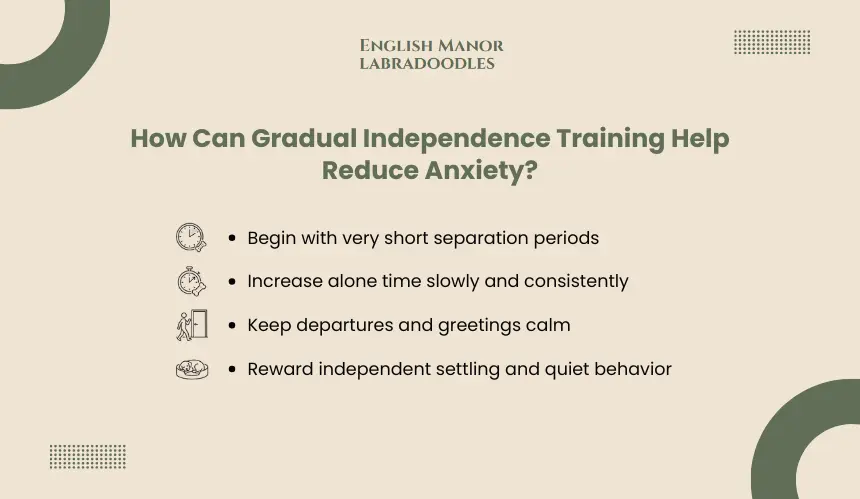
Gradual independence training is one of the most effective ways to prevent separation anxiety in Labradoodle puppies. Instead of suddenly leaving the puppy alone for long periods, this approach introduces separation in small, manageable steps. Over time, the puppy learns that being alone is safe and temporary.
This method works because puppies develop confidence through repeated positive experiences. When short absences occur regularly and without stress, the puppy begins to understand that the owner will always return.
Did You Know:
Many dog trainers recommend beginning independence training within the first few weeks after bringing a puppy home, as early exposure helps prevent attachment-related anxiety from forming.
Practicing Short Separation Periods
The training process should begin with very brief separations. Owners can step into another room or leave the puppy alone for a few minutes before gradually increasing the duration.
Gradual practice helps puppies learn that:
- Their owner’s absence is temporary
- Qiet time alone is normal
- Relaxing independently is safe
As the puppy becomes more comfortable, the separation period can slowly be extended.
Avoiding Dramatic Departures and Greetings
Emotional departures or overly enthusiastic greetings can unintentionally reinforce dependency. When owners make leaving the house a dramatic event, the puppy may become more anxious about separation.
A calmer approach helps maintain emotional balance. Quietly leaving and returning without excessive excitement encourages the puppy to treat departures as routine events.
Teaching the Puppy to Self-Settle
Learning how to relax independently is an important life skill for puppies. Labradoodles are energetic dogs, but they also need to develop the ability to rest calmly when no activity is occurring.
Owners can encourage this behavior by:
- Allowing quiet time after play sessions
- Rewarding calm resting behavior
- Providing a comfortable resting space such as a crate or bed
When puppies learn to settle on their own, they become more comfortable spending short periods alone without becoming anxious.
How Do Crate Training and Safe Spaces Support Emotional Security?
Crate training and designated resting areas can play an important role in reducing separation anxiety. When puppies have a familiar space where they regularly rest and relax, that environment becomes associated with safety and comfort. Instead of feeling uncertain when left alone, the puppy recognizes the space as a predictable part of daily routines.
For Labradoodle puppies, a safe resting area can function as a calm retreat during periods of separation. The key is ensuring that this space is introduced gradually and always associated with positive experiences.
Did You Know:
Dogs naturally seek small, den-like spaces for rest because their ancestors used dens for protection and comfort. A well-introduced crate often satisfies this natural instinct.
Using Crate Training as a Secure Resting Area
A crate can provide structure and emotional stability when used appropriately. When the crate is part of everyday routines, such as nap time or nighttime sleep, the puppy begins to view it as a familiar resting place.
Regular crate use helps puppies:
- Develop predictable rest patterns
- Feel secure during quiet periods
- Adjust more easily when the owner leaves the house
When the crate is consistently linked with rest and comfort, it becomes a reliable environment that supports emotional stability.
Creating a Comfortable Calm Zone
Some owners prefer to create a designated resting area instead of using a crate. This space may include a dog bed, soft bedding, and a few safe toys where the puppy can relax.
A calm zone typically includes:
- A quiet location away from heavy household activity
- Comfortable bedding for resting
- Familiar toys or chew items
- Limited distractions that encourage relaxation
Providing a consistent resting area helps the puppy associate that location with calm behavior.
Building Positive Associations With the Space
Regardless of whether a crate or resting area is used, the puppy should develop positive associations with the space. Feeding meals nearby, offering treats, or placing favorite toys inside can help reinforce comfort.
When puppies repeatedly experience relaxation and rewards in the same location, they begin to view that area as a secure and predictable environment. This familiarity can significantly reduce anxiety during short periods of separation.
What Role Do Exercise and Mental Stimulation Play?
Physical activity and mental engagement play a major role in preventing separation anxiety. Labradoodles are an active and intelligent breed, and puppies that do not receive enough stimulation may become restless or anxious when left alone. When their physical and mental needs are met, puppies are more likely to rest calmly during periods of separation.
Regular exercise helps release excess energy, while mental stimulation keeps the puppy’s mind engaged. Together, these activities help reduce boredom, which is often a major trigger for anxiety-related behaviors.
Did You Know:
Canine enrichment studies suggest that dogs given regular mental stimulation through training or puzzle toys often display significantly fewer boredom-related behaviors, including destructive chewing and excessive vocalization.
Daily Physical Exercise for Energy Release
Even young puppies benefit from short periods of controlled physical activity. Play sessions, supervised exploration, and short walks help release energy that might otherwise turn into restless or anxious behavior.
Appropriate exercise helps puppies:
- Reduce excess energy before rest periods
- Develop healthy physical coordination
- Improve sleep quality after activity
For Labradoodle puppies, gentle exercise combined with playtime is usually sufficient during early development.
Puzzle Toys and Enrichment Activities
Mental stimulation is just as important as physical activity. Interactive toys and enrichment activities encourage problem-solving and help keep puppies occupied when they are alone.
Examples of enrichment activities include:
- Puzzle toys that dispense treats
- Food-filled rubber toys
- Snuffle mats or scent-based games
These activities encourage independent play while keeping the puppy mentally engaged.
Confidence-Building Training Sessions
Training sessions provide both mental stimulation and opportunities for skill development. Labradoodles respond well to positive reinforcement training, and short daily sessions can improve focus and confidence.
Basic obedience training helps puppies:
- Learn new commands and behaviors
- Strengthen communication with their owners
- Build confidence through successful learning experiences
When puppies receive regular physical activity, mental enrichment, and training, they are more likely to remain calm and relaxed during short periods of separation.
How Do Structured Daily Routines Help Reduce Anxiety?
Structured daily routines play a critical role in reducing separation anxiety because puppies feel more secure when their environment is predictable. Labradoodle puppies quickly learn patterns related to feeding, exercise, play, and rest. When these activities occur at consistent times each day, the puppy begins to anticipate what will happen next, which reduces uncertainty and stress.
Predictable schedules also help regulate a puppy’s energy levels. When periods of activity and rest follow a consistent rhythm, puppies are more likely to settle calmly when their owner leaves.
Did You Know:
Animal behavior specialists often emphasize that dogs rely heavily on routine. Predictable daily schedules can significantly reduce stress responses in young dogs adjusting to new environments.
Regular Feeding and Potty Schedules
Consistent feeding times help regulate digestion and establish predictable bathroom routines. When puppies eat at the same times each day, potty breaks can also follow a regular schedule, making house training more effective.
A stable feeding routine helps puppies:
- Anticipate meal times
- Develop predictable potty patterns
- Maintain stable energy levels throughout the day
This predictability helps reduce anxiety related to uncertainty.
Scheduled Rest and Nap Periods
Young puppies require a significant amount of sleep for healthy development. Scheduled nap periods allow the puppy to recover after play sessions and prevent overstimulation.
When rest periods occur regularly, puppies learn that quiet time is a normal part of their daily routine. These calm periods also prepare the puppy to remain relaxed during short separations.
Balanced Activity and Quiet Time
A well-structured routine balances physical activity, training sessions, playtime, and rest. Labradoodle puppies that receive adequate stimulation during the day are more likely to relax when alone.
A balanced daily schedule typically includes:
- Exercise or play sessions
- Short training activities
- Rest periods or naps
- Calm interaction with family members
Maintaining this balance helps puppies develop healthy behavioral patterns and reduces the likelihood of anxiety-driven behaviors.
What Tips Help Prevent Puppy Separation Anxiety?
Preventing separation anxiety in Labradoodle puppies often depends on establishing healthy habits early. Small daily training practices can gradually build a puppy’s confidence and reduce dependency on constant human interaction. When these habits are introduced consistently, puppies learn to remain calm and comfortable during short periods alone.
These preventive strategies focus on encouraging independence while maintaining a supportive and structured environment.
Did You Know:
Behavior specialists often note that puppies exposed to gradual independence training during their early months are significantly less likely to develop separation-related anxiety later in life.
Encouraging Independent Play
Allowing puppies to spend time playing alone helps them develop self-reliance. Labradoodle puppies enjoy interactive toys that keep them engaged without constant supervision.
Providing safe toys and chew items encourages the puppy to entertain itself and reduces the need for continuous attention.
Practicing Calm Departures and Returns
Owners sometimes unintentionally reinforce anxiety by making departures or greetings overly emotional. When leaving or returning home becomes an exciting event, puppies may become more sensitive to these moments.
Keeping departures and arrivals calm and routine helps the puppy view them as normal daily events rather than stressful changes.
Gradually Increasing Alone Time
Introducing separation slowly allows puppies to build confidence over time. Starting with very short absences and gradually increasing the duration helps the puppy adjust without becoming overwhelmed.
Consistent repetition helps the puppy understand that:
- Being alone is temporary
- Owners will return
- Quiet time is a normal part of daily life
Providing Enrichment During Absences
Leaving safe enrichment items with the puppy during short absences can help occupy their attention. Chew toys or treat-dispensing toys encourage positive activities while the owner is away.
These enrichment tools can:
- Reduce boredom
- Encourage calm independent behavior
- Create positive associations with alone time
When used regularly, these simple strategies help Labradoodle puppies develop emotional stability and confidence during early stages of independence training.
What Common Mistakes Can Increase Separation Anxiety?
While many owners focus on preventing separation anxiety, certain everyday habits can unintentionally increase a puppy’s dependence and stress levels. Labradoodle puppies are highly social, and without proper boundaries they may become overly attached to constant human presence. Avoiding common training mistakes helps puppies develop healthier independence and emotional balance.
Understanding these mistakes allows owners to adjust their training approach before anxiety behaviors become established.
Did You Know:
Behavior experts often note that unintentional reinforcement of clingy behavior during early puppyhood is one of the most common contributors to separation-related anxiety later in life.
Constant Attention Without Encouraging Independence
New puppy owners often spend large amounts of time interacting with their puppy, which is natural during the early bonding stage. However, if puppies never experience quiet time alone, they may struggle to cope when separation eventually occurs.
Allowing the puppy to spend short periods resting or playing independently helps them learn that constant attention is not always necessary.
Punishing Anxiety-Related Behaviors
Punishing a puppy for barking, whining, or destructive behavior caused by anxiety can worsen the problem. These behaviors are usually signs of emotional distress rather than deliberate disobedience.
Instead of punishment, it is more effective to focus on:
- Gradual independence training
- Positive reinforcement for calm behavior
- Creating predictable routines that reduce stress
A supportive training approach helps the puppy develop confidence rather than fear.
Leaving Puppies Alone for Long Periods Too Soon
Another common mistake is leaving a young puppy alone for extended periods before they are ready. Labradoodle puppies require gradual exposure to separation so they can adjust comfortably.
Introducing separation slowly helps the puppy build tolerance over time. Starting with brief absences and gradually extending them allows the puppy to adapt without experiencing overwhelming stress.
By avoiding these common mistakes and maintaining a consistent training approach, owners can significantly reduce the likelihood of separation anxiety developing during a Labradoodle puppy’s early months.
Frequently Asked Questions
At what age can separation anxiety begin in Labradoodle puppies?
Separation anxiety can begin developing during the early months of puppyhood, particularly between 3 and 8 months of age. This is when puppies form strong attachments and begin adjusting to household routines. Early independence training during this period helps prevent anxiety-related behaviors from forming.
How long can a Labradoodle puppy be left alone?
Young Labradoodle puppies should only be left alone for short periods that match their age and bladder control. Very young puppies may tolerate 30–60 minutes initially, while older puppies can gradually handle longer separations as they develop confidence and routine.
Can crate training help prevent separation anxiety?
Crate training can support emotional stability when introduced properly. A crate provides a familiar resting space where the puppy feels safe during short separations. When the crate is associated with rest, toys, and positive experiences, it can help puppies remain calm when owners leave.
Why does my Labradoodle puppy bark when I leave the house?
Barking after the owner leaves can occur because the puppy is adjusting to separation or trying to call the owner back. If the behavior happens consistently, it may indicate anxiety. Gradual independence training and calm departure routines often help reduce this response.
Do Labradoodles grow out of separation anxiety?
Some mild separation behaviors improve as puppies mature and become more confident. However, true separation anxiety usually requires training and behavioral management. Early prevention strategies and structured routines greatly reduce the likelihood of the problem persisting into adulthood.