
- englishmanor
How Do You Choose a Reputable Labradoodle Breeder in Your Area?
Quick Answer: A reputable Labradoodle breeder prioritizes ethical breeding, health testing, and early socialization. First-time buyers should review documentation for hip, elbow, and eye screenings, observe the puppy and its parents’ behavior, and ask detailed questions about care. Visiting the breeder in person, as someone in West Milford might do, allows verification of hygiene, environment, and transparency, reducing the risk of purchasing an unhealthy or poorly socialized puppy. |
Buying a Labradoodle for the first time can be exciting, but it comes with responsibilities that first-time buyers often underestimate. Not all breeders follow ethical practices, and poorly sourced puppies can have health, temperament, or socialization issues. Understanding what to look for in a reputable breeder helps ensure you bring home a healthy, well-adjusted puppy.
For example, a first-time buyer in West Milford, NJ might visit a local breeder without proper health documentation. Without knowing which tests to request or what to observe, they could end up with a puppy prone to genetic conditions or behavioral issues. Knowing how to evaluate breeders before purchase prevents these problems and sets the foundation for a healthy lifelong companion.
Why Choosing the Right Breeder Matters
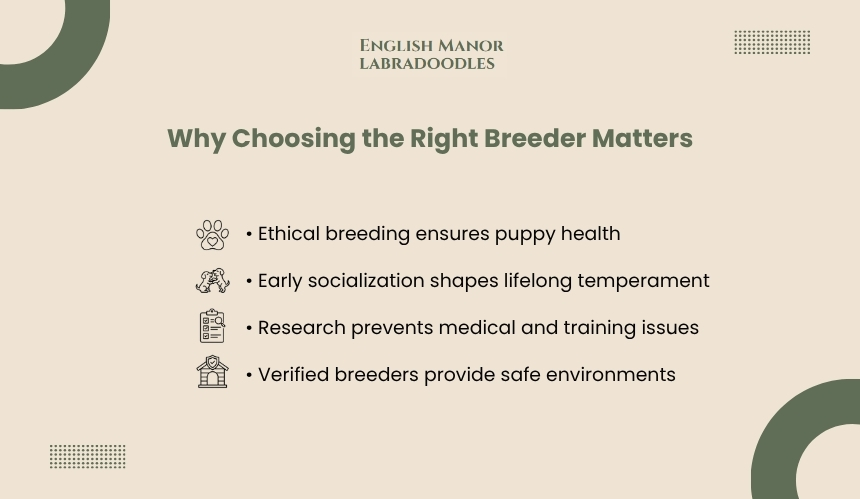
Choosing the right Labradoodle breeder is crucial for the health, temperament, and long-term well-being of your puppy. First-time buyers often underestimate how much the breeder’s practices influence the puppy’s behavior and future care needs. A reputable breeder ensures puppies are socialized, healthy, and raised in a safe, nurturing environment.
For instance, a family in West Milford, NJ, might be tempted by a nearby breeder offering lower prices or immediate availability. Without proper vetting, they could encounter puppies with untreated health issues or inadequate early socialization. By knowing what to look for, buyers can avoid costly medical problems, training challenges, and emotional stress later on.
Key Takeaways:
- Ethical breeding practices influence both health and behavior.
- Early socialization and exposure to positive environments shape lifelong temperament.
- First-time buyers benefit from research and verification before committing.
1. Traits of a Reputable Labradoodle Breeder

Choosing the right breeder is crucial for first-time buyers to ensure their Labradoodle puppy is healthy, well-socialized, and a good fit for their lifestyle. A breeder’s practices directly influence health, behavior, and long-term well-being, making careful evaluation essential.
What Health Tests Should Buyers Expect From a Responsible Breeder?
Health testing is non-negotiable. Essential screenings include:
- Hip and elbow evaluations to prevent dysplasia
- Eye exams for conditions like PRA (Progressive Retinal Atrophy)
- Genetic testing for inherited disorders
Fact: Puppies from parents with documented health screenings have a lower risk of serious genetic or medical issues.
Why Does Multigenerational Breeding Matter?
Understanding whether a breeder produces F1, F1B, or multigenerational Labradoodles helps predict coat type, shedding, and temperament:
- F1: First-generation cross; coat and temperament are less predictable
- F1B: Often curlier coats, reduced shedding
- Multigen: Greater consistency in coat, personality, and predictability
Important Note: Even multigen Labradoodles are not guaranteed to be hypoallergenic or to have uniform behavior.
What Puppy Raising Practices Indicate Quality?
Reputable breeders prioritize socialization and clean, safe environments. Puppies exposed to gentle handling, household noises, and littermate interaction adapt better to new homes. Observing the temperament of parent dogs can reveal whether the breeder values social and emotional development.
Did You Know: Puppies socialized for 3–4 weeks before leaving the breeder are less likely to develop fear-based behaviors as adults.
How to Ensure Proper Documentation
Buyers should request all health records, pedigrees, and screenings for both parents and the puppy. Written documentation protects against undisclosed genetic or health problems and ensures transparency.
Tip: Ethical breeders provide complete documentation without hesitation and encourage buyers to verify it.
Why Visiting the Kennel Matters
An in-person visit lets buyers observe living conditions, hygiene, and puppy interactions. Seeing how puppies are handled and how the environment is maintained helps first-time buyers evaluate the breeder’s professionalism and commitment to welfare.
Fact: Puppies raised in overcrowded or unsanitary conditions are at higher risk of illness and behavioral issues, even if they appear healthy in photos.
How to Get Recommendations
Request references from previous buyers or local dog clubs. Speaking with owners who have purchased puppies from the breeder offers insight into temperament, health, and the breeder’s overall reliability. Recommendations can reveal hidden issues that aren’t apparent during a single visit.
Important Note: Combining documentation review, kennel visits, and trusted recommendations drastically reduces the risk of buying from unethical breeders.
2. Health Testing and Genetic Screening Every Buyer Should Ask About
Health testing and genetic screening are essential for ensuring a Labradoodle puppy grows up healthy. First-time buyers must verify that the breeder has performed proper evaluations on both parents, as this directly reduces the risk of inherited conditions.
What Health Tests Are Essential for Labradoodles?
Responsible breeders screen for:
- Hip and elbow dysplasia to prevent joint problems
- Eye exams for cataracts, PRA (Progressive Retinal Atrophy), or other hereditary vision issues
- Genetic tests relevant to both Labrador and Poodle lines, reducing the chance of passing on serious conditions
Important Note: Puppies from parents with documented screenings are less likely to develop costly or chronic health issues.
Why Multigenerational Breeding Can Impact Predictability
Breeders often produce F1, F1B, or multigenerational Labradoodles. Multigen breeding can offer more consistency in coat type, shedding, and temperament, though no hybrid is entirely predictable. Buyers should understand how generations influence both physical traits and potential health risks.
Did You Know: Even within the same litter, puppies can differ significantly in coat texture, shedding, and energy level due to genetics.
How to Verify Health Documentation
First-time buyers should request written proof of all parent health screenings. Legitimate breeders in and around areas like West Milford, NJ, will happily provide full documentation for inspection. Lack of transparency or vague answers are major red flags.
Tip: Cross-check health certificates and ask for references from previous puppy buyers to ensure the breeder’s claims are accurate.
Why This Matters for First-Time Buyers
Understanding and verifying health testing protects buyers from unexpected veterinary costs, behavioral issues, and ethical concerns. A well-documented puppy from a responsible breeder is far more likely to thrive in its new home.
3. Evaluating Puppies and Their Environment
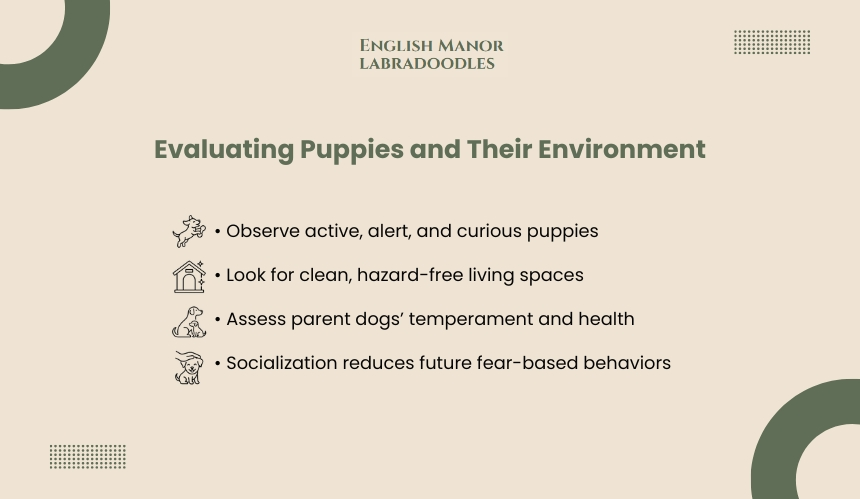
Observing the puppies and their living environment is one of the most effective ways to determine whether a breeder is reputable. First-time buyers should focus on cleanliness, safety, and socialization practices rather than appearance alone.
Signs of a Healthy, Well-Socialized Puppy
- Puppies should be active, alert, and curious
- They should interact positively with littermates and humans
- Calm, confident behavior often reflects good early socialization
Tip: Spend time observing interactions; shy or overly fearful puppies may indicate inadequate handling.
What to Look for in the Breeding Environment
- Clean, well-ventilated spaces free of hazards
- Separate areas for food, play, and rest
- Visible attention from the breeder in caring for the puppies and parent dogs
Did You Know: Puppies raised in safe, stimulating environments are less likely to develop anxiety or behavioral problems later in life.
Observing Parent Dogs
Parent dogs provide insight into temperament and health:
- Calm, friendly behavior in parents often predicts stable puppies
- Healthy coats and clear eyes indicate good overall care
Example: A buyer from West Milford, NJ, visited a breeder and noticed well-behaved parent dogs interacting gently with the litter. This observation gave confidence in the breeder’s practices and the puppies’ likely temperament.
Important Note: A visually appealing puppy alone does not guarantee a healthy or well-adjusted adult dog. Always assess the environment and parents.
4. Key Questions First-Time Buyers Should Ask Breeders
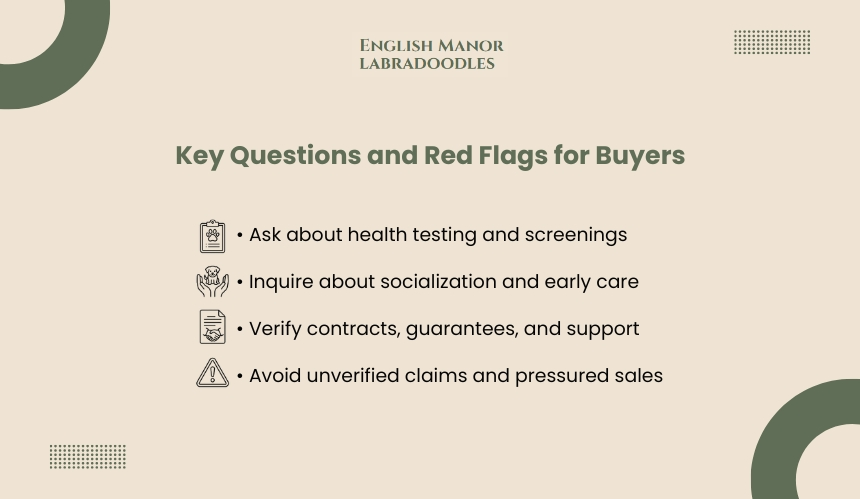
Asking the right questions helps first-time buyers evaluate a Labradoodle breeder’s ethics, practices, and transparency. Clear answers reveal whether the breeder prioritizes puppy health, socialization, and long-term well-being.
What to Ask About Health and Testing
- Have the parents undergone hip, elbow, and eye screenings?
- Are genetic tests for PRA or other hereditary conditions documented?
- Can you provide written proof of all health tests?
Important Note: A reputable breeder will provide full documentation and explain the results clearly.
What to Ask About Puppy Care and Socialization
- How are puppies raised and socialized before going home?
- What experiences have puppies had with handling, household sounds, and other animals?
- Are parents available for observation?
Did You Know: Puppies exposed to proper socialization for at least 3–4 weeks are less likely to develop fear-based behaviors as adults.
What to Ask About Grooming, Coat, and Temperament
- What is the expected coat type and shedding level?
- How often will the puppy need professional grooming?
- What guidance is provided for training and behavioral development?
Tip: Ethical breeders will not only answer questions but also ask about your lifestyle to ensure a good match.
What to Ask About Contracts and Guarantees
- Are there health or temperament guarantees?
- What is the return policy if the puppy cannot stay in your home?
- Are there follow-up resources or support for first-time owners?
Fact: Breeders who offer clear contracts and post-sale support are more likely to prioritize puppy welfare over quick sales.
Identifying Red Flags When Choosing a Breeder
Even experienced buyers can be misled by appearances or promises. Recognizing red flags helps first-time buyers avoid unethical breeders and ensures a healthier, well-adjusted puppy.
Unverified Health Claims
- Lack of written proof for parent health screenings
- Vague or evasive answers about genetic testing
- Overemphasis on appearance or coat type rather than health
Important Note: A breeder who cannot provide documentation is a major warning sign.
Hidden or Unsanitary Breeding Practices
- Overcrowded kennels or unclean living areas
- Puppies kept in cages without proper enrichment
- Limited interaction with humans or littermates
Did You Know: Puppies raised in unsanitary conditions are more prone to infections and behavioral issues, even if they appear healthy in photos.
Pressured or Hasty Sales
- Encouraging immediate purchase without questions
- Discouraging in-person visits or inspections
- Offering unusually low prices to close a quick sale
Tip: Ethical breeders welcome questions and take time to match puppies to suitable homes. High-pressure tactics often indicate prioritization of profit over puppy welfare.
Making the Final Decision Before Bringing a Puppy Home
Choosing a Labradoodle puppy is a long-term commitment, and first-time buyers must carefully evaluate all factors before making a decision. The goal is to select a healthy, well-socialized puppy that fits both your lifestyle and expectations.
When finalizing your choice, consider:
- Puppy temperament: Observe how the puppy interacts with humans and littermates. Confident, playful behavior often indicates good early socialization.
- Breeder transparency: A reputable breeder provides health documentation, answers questions clearly, and allows visits to the facility.
- Long-term commitment: Labradoodles live 15–20 years, requiring consistent grooming, training, and healthcare throughout their lives.
Important Note: Even if a puppy appears healthy and well-behaved, ensure the breeder meets ethical standards and that you are fully prepared for the responsibilities ahead. Taking the time to verify these factors reduces the risk of future problems and sets the foundation for a happy, healthy lifelong companion.
Frequently Asked Questions
How do I find a reputable Labradoodle breeder?
Look for breeders who provide health documentation, transparent answers, and in-person visits. Verify parent health screenings and observe the puppies’ environment. Ethical breeders prioritize well-being over quick sales and encourage questions from first-time buyers.
What health tests should Labradoodle puppies have?
Essential screenings include hip and elbow evaluations, eye exams, and genetic testing for conditions like PRA (Progressive Retinal Atrophy). Written proof should always be provided to ensure the puppy comes from healthy, screened parents.
What questions should first-time buyers ask breeders?
Ask about parent health, socialization practices, coat type, grooming needs, training guidance, and return policies. Reputable breeders also inquire about your lifestyle to ensure a good match.
How can I avoid puppy mills?
Avoid breeders who pressure for quick sales, cannot provide health records, or keep puppies in unsanitary, overcrowded conditions. Verify references, visit the kennel if possible, and look for transparent, ethical practices.
How do I evaluate a puppy’s early socialization?
Healthy puppies should be curious, active, and comfortable with gentle handling. Observe litter interactions, parent behavior, and exposure to household noises. Proper early socialization reduces fear-based behaviors in adulthood.