
- englishmanor
What’s a Realistic Budget for the First Year With a Labradoodle Puppy?
Quick Overview: A realistic first-year budget for a Labradoodle puppy typically ranges from $3,500 to $8,000+, depending on breeder pricing, grooming frequency, veterinary care, food quality, training, and unexpected medical expenses. Many first-time owners focus mainly on the puppy purchase price, but recurring costs often become the larger long-term financial commitment. Major first-year expenses commonly include:
Labradoodles are often more expensive than some breeds because their coats require regular maintenance and their high intelligence usually benefits from structured training, enrichment activities, and consistent preventative healthcare. Did You Know? Many doodle owners underestimate grooming expenses alone, even though professional grooming every 6–8 weeks can become one of the largest recurring costs during adulthood. |
Many people preparing for a Labradoodle puppy focus almost entirely on the initial purchase price, only to discover that the first year includes far more ongoing expenses than expected. Veterinary visits, vaccinations, grooming appointments, food upgrades, training classes, preventative medications, and emergency costs can accumulate quickly, especially during the puppy stage when development, socialization, and healthcare needs are at their highest.
One of the biggest financial surprises for new owners is how frequently recurring costs appear. Professional grooming alone may become a routine expense every few weeks, while rapidly growing puppies often require repeated spending on larger crates, stronger chew toys, upgraded bedding, and higher food intake. Unexpected behavioral issues, destructive chewing, or emergency vet visits can also increase ownership costs beyond the original budget.
Labradoodles are intelligent, energetic, and highly social dogs, which means their care requirements usually extend beyond basic feeding and routine veterinary care. Proper training, mental stimulation, coat maintenance, and preventative healthcare all play major roles in long-term wellbeing and financial planning.
This guide breaks down a realistic first-year budget for a Labradoodle puppy, including upfront costs, recurring monthly expenses, hidden ownership costs, and the areas many first-time dog owners underestimate most.
Initial Purchase and Setup Costs For a Labradoodle Puppy

The first major expenses usually begin before the puppy even arrives home. Many new owners budget only for the breeder or adoption fee, but startup costs can expand quickly once veterinary care, supplies, safety preparation, and basic equipment are included. The first few months are often the most financially intensive stage because puppies require multiple one-time purchases alongside recurring care expenses.
Labradoodle Puppy Purchase Price Ranges
Labradoodle pricing varies widely depending on breeder reputation, bloodline quality, coat genetics, size category, health testing, and geographic demand. Puppies from breeders who perform genetic screening, temperament testing, and early socialization often cost significantly more than puppies sold without documented health practices.
Typical pricing ranges may include:
- Standard Labradoodle puppies: $1,500–$3,500+
- Multigenerational or specialty coat Labradoodles: $3,000–$5,000+
- Adoption or rescue fees: $200–$800
Did You Know?
Ethical breeders often invest heavily in hip testing, eye screening, genetic disease evaluation, vaccinations, and early puppy socialization before puppies are placed with owners.
Essential Startup Supplies
Basic puppy supplies become necessary immediately after bringing a Labradoodle home. Because Labradoodles are active and intelligent dogs, owners often spend more on durable toys, enrichment products, and training-related supplies during the first year.
Common startup purchases include:
- Food and water bowls
- Puppy food
- Collar and leash
- ID tags
- Training treats
- Interactive toys
- Grooming brushes
- Cleaning supplies
- Puppy gates
Estimated startup supply costs commonly range between $250 and $800 depending on product quality and puppy size.
Crate, Bedding, And Puppy-Proofing Expenses
Crate training is commonly recommended for Labradoodle puppies because it helps establish structure, supports house training, and reduces destructive behavior during unsupervised periods. However, rapidly growing puppies may outgrow early equipment faster than expected.
Additional setup costs may include:
- Adjustable training crate
- Orthopedic or washable bedding
- Playpens or barriers
- Furniture protection products
- Cord and hazard covers
- Replacement chew-resistant items
Labradoodles with strong chewing behavior may damage bedding, toys, or household items during teething stages, increasing replacement expenses throughout the first year.
Initial Veterinary And Vaccination Costs
The first year usually includes the highest concentration of veterinary appointments because puppies require repeated wellness exams, vaccinations, parasite prevention, and developmental monitoring.
Common early veterinary expenses include:
- Initial wellness exams
- Core vaccinations
- Deworming treatments
- Microchipping
- Flea and tick prevention
- Heartworm medication
- Fecal testing
Typical first-year veterinary costs before emergencies often range between $500 and $1,500 depending on location, clinic pricing, and preventative care plans.
Did You Know?
The American Veterinary Medical Association emphasizes that preventative healthcare during a puppy’s first year can significantly reduce the risk of costly medical complications later in life.
Monthly Food And Daily Care Expenses
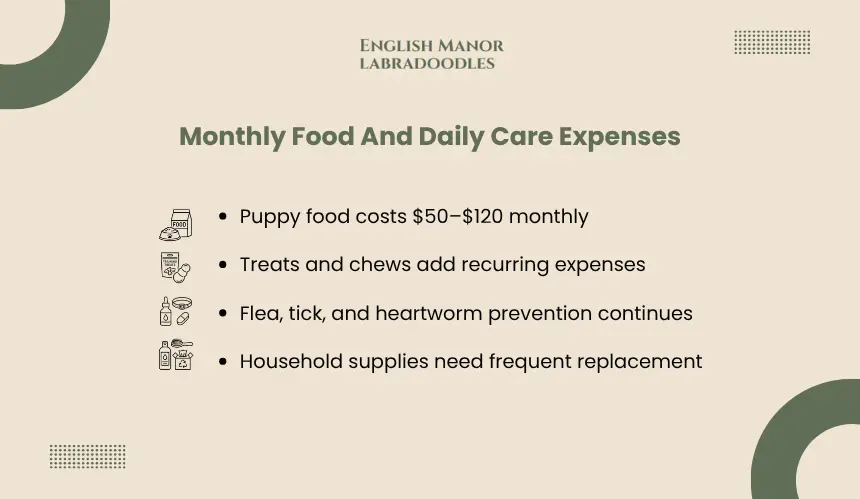
After the initial setup stage, recurring monthly expenses become the largest ongoing financial responsibility for many Labradoodle owners. Food quality, preventative healthcare, chewing behavior, and growth-related needs can all influence how much owners spend each month. Because Labradoodles are active dogs with fast-growing puppy bodies, consistent nutrition and daily care products are usually necessary throughout the first year.
Puppy Food Costs And Nutritional Quality
High-quality puppy food is one of the most important recurring expenses because nutrition directly affects growth, coat condition, digestion, joint development, and long-term health. Larger Labradoodles generally consume more food than smaller doodle variations, especially during rapid growth phases.
Monthly puppy food costs often range between $50 and $120 depending on:
- Brand quality
- Protein sources
- Puppy size
- Feeding frequency
- Specialized dietary needs
Many owners eventually transition toward premium formulas containing higher protein levels, omega fatty acids, and joint-support ingredients to support coat health and mobility development.
Did You Know?
Veterinary nutrition specialists increasingly recommend large-breed puppy formulas for bigger Labradoodles because controlled calcium and calorie balance may help reduce excessive joint stress during growth stages.
Treats, Supplements, And Chew Products
Training treats, dental chews, enrichment toys, and supplements can quietly become consistent monthly expenses during the first year. Labradoodles are highly intelligent dogs that usually benefit from reward-based training and mental stimulation activities, increasing demand for treats and interactive products.
Common recurring purchases may include:
- Training treats
- Teething chews
- Dental sticks
- Joint supplements
- Puzzle toys
- Replacement chew toys
Teething stages can be especially expensive because puppies often destroy toys faster than expected while developing adult teeth.
Flea, Tick, And Heartworm Prevention
Preventative medications are often overlooked during early budgeting, even though parasite protection becomes a recurring monthly or seasonal cost throughout the dog’s life. Veterinarians commonly recommend year-round heartworm prevention along with flea and tick management, especially in warmer or heavily wooded regions.
Monthly preventative care costs typically depend on:
- Puppy weight
- Medication brand
- Regional parasite risk
- Veterinary recommendations
Skipping preventative treatment may eventually create much larger veterinary expenses if infections or infestations develop.
Recurring Household Supply Expenses
Many everyday puppy-care products require frequent replacement during the first year because Labradoodles grow quickly and remain highly active. Cleaning products, waste bags, grooming wipes, and upgraded accessories often become part of the regular ownership budget.
Frequently replaced household items may include:
- Shampoo and grooming products
- Waste bags
- Stain and odor removers
- Bedding replacements
- Food storage containers
- Larger collars and harnesses
Although individual purchases may seem small, these recurring expenses can gradually add hundreds of dollars to the overall first-year budget.
Labradoodle Grooming and Coat Maintenance Costs
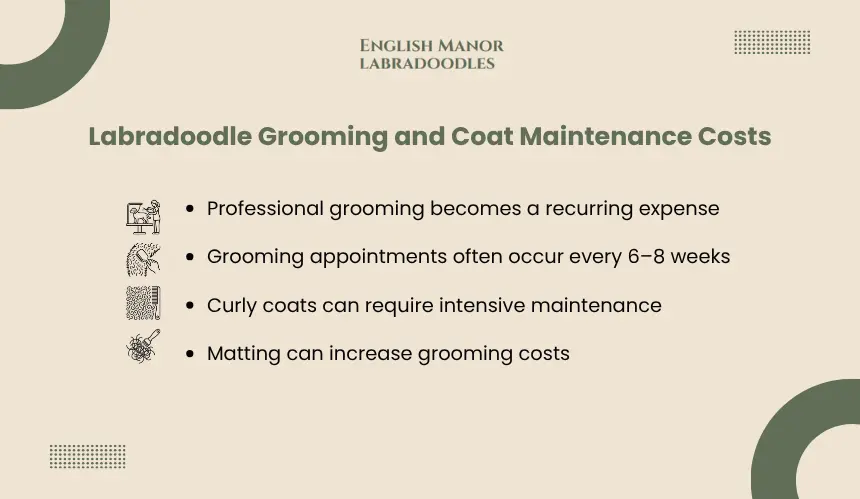
Grooming is one of the most underestimated expenses during the first year with a Labradoodle puppy. Many owners expect occasional brushing to be enough, but Labradoodle coats often require consistent maintenance to prevent matting, trapped moisture, skin irritation, and excessive tangling. Coat type, curl density, activity level, and outdoor exposure can all affect how frequently grooming becomes necessary.
Professional Grooming Appointment Expenses
Professional grooming quickly becomes a recurring cost because most Labradoodles require trimming, brushing, bathing, nail care, and ear cleaning on a regular schedule. Puppies are also commonly introduced to early “puppy grooms” to help them become comfortable with handling and grooming equipment.
Typical professional grooming services may include:
- Full coat trimming
- Bathing and drying
- Nail trimming
- Ear cleaning
- Sanitary trimming
- Coat detangling
Many Labradoodle owners schedule grooming appointments every 6–8 weeks, although highly curly coats may require more frequent maintenance.
Did You Know?
Professional doodle grooming prices in many U.S. cities commonly range between $80 and $150 per appointment depending on coat condition, dog size, and grooming complexity.
At-Home Grooming Tools And Supplies
Even with professional grooming, most Labradoodles still require regular brushing at home to control tangles and reduce matting between appointments. Owners who skip routine brushing often face additional grooming charges because severely matted coats require more labor-intensive trimming.
Common at-home grooming purchases include:
- Slicker brushes
- Metal combs
- Detangling sprays
- Dog-safe shampoos
- Nail grinders
- Grooming wipes
Higher-quality grooming tools may cost more initially, but they often reduce long-term coat maintenance difficulties.
How Coat Type Affects Maintenance Costs
Labradoodle coat types vary significantly because of hybrid genetics, and maintenance difficulty often changes depending on whether the puppy develops a curly, wavy, or fleece coat.
Generally:
- Curly coats trap loose hair effectively but mat easily
- Wavy coats require consistent detangling
- Fleece coats often need professional shaping and trimming
Puppies with dense curly coats may require longer grooming appointments and more intensive brushing routines, increasing annual maintenance costs over time.
Why Doodle Grooming Is Often Underestimated
Many first-time owners underestimate how quickly doodle coats become difficult to manage without routine care. Active Labradoodles frequently collect dirt, moisture, debris, and loose material within dense fur, especially around the legs, ears, paws, and undercoat areas.
Common grooming-related issues that increase costs include:
- Severe matting
- Ear moisture buildup
- Skin irritation beneath tangled fur
- Extra detangling fees
- Emergency shave-down appointments
Consistent brushing and early grooming routines usually help reduce both discomfort and long-term maintenance expenses.
Veterinary, Insurance, and Health-Related Expenses
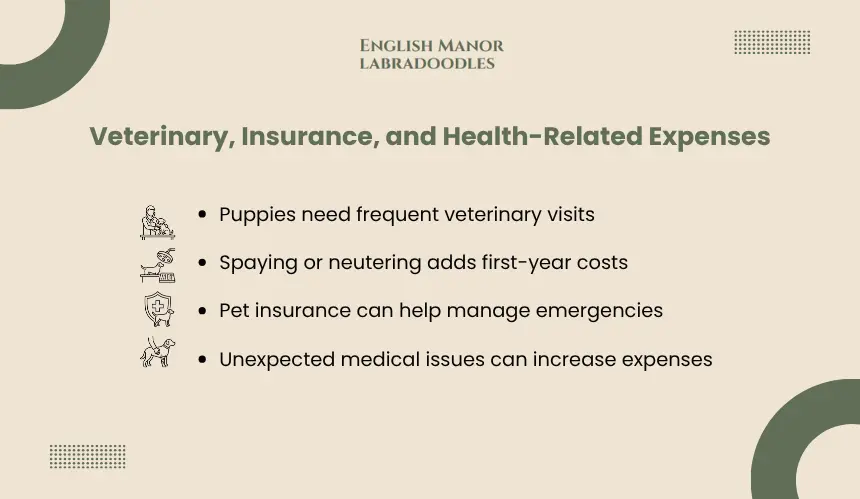
Healthcare expenses often become one of the largest financial responsibilities during a Labradoodle puppy’s first year. Routine veterinary care alone can involve multiple appointments, vaccinations, preventative medications, and developmental monitoring visits. Unexpected illnesses, injuries, or digestive issues may increase costs further, which is why many owners consider pet insurance or emergency savings essential during the puppy stage.
Routine Wellness Exams and Vaccinations
Puppies require frequent veterinary visits during the first year because their immune systems are still developing. These appointments help monitor growth, administer vaccinations, detect parasites, and identify early health concerns before they become more serious.
Common first-year veterinary services include:
- Wellness exams
- Core vaccination series
- Rabies vaccination
- Deworming treatments
- Fecal testing
- Growth monitoring
Veterinary pricing varies by location and clinic type, but routine puppy healthcare often costs several hundred dollars before emergencies or specialty treatment are included.
Did You Know?
The American Animal Hospital Association recommends multiple veterinary visits during the first year because early preventative care helps reduce long-term disease risks and untreated developmental problems.
Spaying Or Neutering Costs
Spaying or neutering is another major first-year expense many owners forget to include in their budget. Pricing often depends on the dog’s size, age, geographic region, and whether additional monitoring or bloodwork is performed before surgery.
Associated costs may include:
- Surgical procedure fees
- Pre-operative exams
- Pain medication
- Recovery equipment
- Post-surgery follow-up visits
Larger Labradoodles may face slightly higher procedure costs because anesthesia dosage and surgical complexity often increase with body size.
Pet Insurance And Emergency Savings
Pet insurance has become increasingly popular among doodle owners because emergency veterinary care can become expensive very quickly. Accidents, intestinal blockages, allergic reactions, infections, or sudden injuries may result in unexpected treatment costs during the first year.
Monthly pet insurance costs typically vary based on:
- Puppy age
- Coverage type
- Deductible level
- Breed size
- Geographic location
Some owners prefer maintaining an emergency veterinary savings fund instead of paying monthly insurance premiums, although severe emergencies can still exceed several thousand dollars.
Did You Know?
North American pet insurance enrollment has increased rapidly in recent years as veterinary inflation and emergency treatment costs continue rising across many regions.
Common Unexpected Medical Expenses
Even healthy Labradoodle puppies may experience sudden medical issues during their first year because puppies naturally explore environments by chewing, swallowing objects, or interacting with unfamiliar materials.
Unexpected veterinary expenses may involve:
- Ear infections
- Allergic reactions
- Digestive problems
- Foreign object ingestion
- Skin irritation
- Minor injuries
Highly energetic Labradoodles may also experience activity-related injuries if exercise intensity becomes excessive during early growth stages. Building flexibility into the first-year budget helps reduce financial stress when unexpected healthcare situations occur.
Training, Socialization, And Behavioral Costs
Training and behavioral development expenses are often overlooked during early budgeting, even though Labradoodles typically require consistent mental stimulation, social exposure, and structured learning during puppyhood. Because they are intelligent and energetic dogs, behavioral problems can develop quickly when training routines become inconsistent or stimulation levels remain too low.
Puppy Obedience Classes
Many Labradoodle owners invest in professional obedience classes during the first year to improve leash behavior, social confidence, impulse control, and household manners. Early training also helps reduce long-term behavioral issues that may become more expensive and difficult to correct later.
Typical puppy training programs may include:
- Basic obedience classes
- Group socialization sessions
- Leash training
- Recall training
- Crate-training guidance
Training costs vary widely, but structured puppy programs commonly range from moderate group-class pricing to far more expensive private behavioral coaching.
Did You Know?
Canine behavior specialists often emphasize that early obedience training is easier and less costly than correcting established behavioral habits during adolescence or adulthood.
Socialization and Daycare Expenses
Labradoodles generally benefit from controlled socialization because exposure to new people, environments, sounds, and other animals helps develop emotional stability and confidence. Some owners also use puppy daycare programs for exercise, supervision, and social interaction during work hours.
Potential socialization-related expenses may include:
- Puppy daycare
- Dog park memberships
- Social training classes
- Pet-sitting services
- Boarding evaluations
Highly social Labradoodles left alone for extended periods without stimulation may become more vulnerable to boredom-related anxiety and destructive behavior.
Destructive Behavior aReplacement Costs
The teething stage alone can create unexpected household expenses because Labradoodle puppies commonly chew furniture, shoes, bedding, cords, rugs, and household objects while exploring their environment.
Common replacement costs may involve:
- Destroyed toys
- Damaged bedding
- Chewed furniture corners
- Replaced charging cables
- Torn household fabrics
Puppies with high energy and insufficient mental stimulation may continue destructive habits longer if training routines remain inconsistent.
Mental Stimulation and Enrichment Spending
Labradoodles usually require more than physical exercise alone because highly intelligent dogs often become frustrated without cognitive engagement. Mental enrichment products help reduce boredom while encouraging problem-solving and controlled energy release.
Popular enrichment purchases often include:
- Puzzle feeders
- Snuffle mats
- Interactive toys
- Treat-dispensing games
- Advanced obedience activities
Did You Know?
Animal behavior studies increasingly suggest that mental stimulation can reduce stress-related behaviors in intelligent dog breeds as effectively as certain forms of physical exercise.
Hidden Costs Many Labradoodle Owners Forget To Budget For
Many first-time owners prepare for food, grooming, and veterinary care but still underestimate the smaller recurring expenses and unexpected situations that appear throughout the first year. Labradoodles are active, intelligent, and fast-growing dogs, which means unplanned costs can accumulate quickly when behavioral issues, travel needs, or emergency situations arise.
Emergency Veterinary Visits
Even healthy puppies may require emergency medical care during the first year because Labradoodles naturally explore environments through chewing, running, jumping, and investigating unfamiliar objects. Sudden illnesses or injuries can create major financial stress when owners rely only on routine healthcare budgeting.
Emergency situations may include:
- Foreign object ingestion
- Allergic reactions
- Stomach issues
- Paw injuries
- Ear infections
- Accidental falls or sprains
Emergency veterinary treatment costs can rise quickly depending on diagnostic testing, overnight monitoring, or surgical procedures.
Boarding And Travel-Related Costs
Travel planning often becomes more expensive after bringing home a Labradoodle puppy. Owners who travel for work, vacations, or family events may eventually need boarding facilities, pet sitters, daycare services, or transportation accommodations.
Common travel-related expenses may include:
- Overnight boarding
- Dog daycare
- Pet-sitting fees
- Airline pet policies
- Travel crates
- Grooming before boarding
Highly social Labradoodles may also require facilities that provide regular interaction and supervised activity rather than minimal overnight care alone.
Did You Know?
Many boarding facilities now require updated vaccination records and behavioral evaluations before accepting young dogs into daycare or overnight programs.
Replacing Damaged Household Items
Teething and high-energy behavior frequently create replacement costs many owners do not anticipate during budgeting. Labradoodle puppies often chew objects while exploring textures, relieving discomfort, or responding to boredom.
Frequently damaged items may include:
- Shoes and clothing
- Furniture edges
- Rugs and pillows
- Charging cables
- Remote controls
- Bedding materials
Puppies lacking structured enrichment and supervision may continue destructive chewing patterns longer than expected.
Increased Grooming Frequency During Coat Changes
As Labradoodle puppies transition from puppy coat to adult coat, grooming complexity often increases. Coat texture changes can create additional matting, tangling, and shedding management challenges during development stages.
This transition period may lead to:
- More frequent brushing
- Extra grooming appointments
- Detangling charges
- Coat conditioning treatments
- Shorter grooming intervals
Owners who delay maintenance during coat transitions may eventually face expensive shave-down appointments or skin-related grooming complications.
Frequently Asked Questions
Is the first year with a Labradoodle puppy more expensive than later years?
The first year is usually the most expensive because owners pay for startup supplies, vaccinations, spaying or neutering, training, grooming tools, and repeated veterinary visits. Later years often involve more stable recurring expenses, although emergency medical care and long-term grooming still remain significant financial commitments.
How much should owners save for Labradoodle emergencies?
Many veterinarians and financial planners recommend maintaining at least $1,000–$3,000 in emergency pet savings because unexpected surgeries, injuries, intestinal blockages, or overnight hospital stays can become expensive very quickly, especially in larger cities with higher emergency veterinary pricing.
Are Labradoodles more expensive to groom than other dogs?
Labradoodles are often more expensive to groom because dense curly or fleece coats require specialized brushing, detangling, trimming, and drying techniques. Severely matted coats can also increase grooming time and labor costs, especially when maintenance routines are inconsistent between appointments.
Does pet insurance reduce long-term Labradoodle ownership costs?
Pet insurance may reduce financial stress during emergencies by helping cover unexpected veterinary expenses such as surgeries, hospitalization, diagnostic imaging, or injury treatment. However, monthly premiums, deductibles, and reimbursement limitations vary depending on coverage plans and provider policies.
Why do Labradoodle puppy expenses increase so quickly?
Labradoodle puppies grow rapidly during the first year, which often creates repeated spending on larger crates, upgraded harnesses, increased food intake, grooming maintenance, replacement toys, and preventative healthcare. High intelligence and activity levels can also increase training and enrichment-related expenses.
Is professional training necessary for Labradoodle puppies?
Professional training is not always mandatory, but many owners benefit from structured obedience classes because Labradoodles are energetic and highly intelligent dogs. Early training often improves leash behavior, impulse control, socialization, and long-term household behavior consistency.