
- englishmanor
What Should First-Time Buyers Know Before Buying a Labradoodle Puppy?
Quick Answer: First-time buyers should understand that Labradoodles vary widely in coat type, shedding, temperament, and health. They require regular grooming, consistent training, ethical breeding sources, and long-term commitment. Labradoodles are not guaranteed hypoallergenic and may not suit every lifestyle. |
Labradoodles are often marketed as friendly, low-shedding, family-perfect dogs, which makes them especially appealing to first-time buyers. However, Labradoodles are not a standardized breed, and their size, coat, temperament, and long-term needs can vary widely from one puppy to another. Many first-time owners are unprepared for the grooming demands, energy levels, training requirements, and lifelong responsibility involved.
Before bringing a Labradoodle puppy home, buyers need to understand what they are actually committing to. This includes realistic expectations about shedding and coat care, ethical breeding practices, health risks, lifestyle compatibility, and the fact that a Labradoodle can be part of your life for up to two decades.
Why Labradoodles Are Popular With First-Time Dog Owners

Labradoodles have become one of the most sought-after dogs among first-time buyers, largely due to their reputation as friendly, intelligent, and adaptable companions. While these traits can make them a great fit for many households, understanding why they are appealing helps separate realistic expectations from marketing-driven assumptions.
Temperament Traits That Attract Families
Labradoodles are often described as social, affectionate, and people-oriented. They tend to bond closely with their families and are generally tolerant of children when properly socialized. Their friendly nature makes them appealing to first-time owners who want a dog that integrates easily into family life rather than one with strong guarding or independent instincts.
Intelligence and Trainability
Common Misconceptions About the Breed
Many first-time buyers assume all Labradoodles are low-shedding, calm, and easy to maintain. In reality, shedding levels, energy, and grooming needs vary significantly depending on genetics, coat type, and upbringing. Labradoodles are not a guaranteed “easy” dog, and mismatched expectations are a common source of frustration for new owners.
Labradoodles Are Not a Standardized Breed, Why That Matters

One of the most important things first-time buyers need to understand is that Labradoodles are not a recognized, standardized breed. This lack of standardization directly affects predictability in size, coat type, shedding, temperament, and even long-term health.
What a Hybrid Dog Means for Predictability
Labradoodles are a hybrid mix of Labrador Retrievers and Poodles. Unlike established breeds with consistent traits, hybrids inherit traits unevenly from both parents. This means there is no guarantee that a Labradoodle puppy will resemble its parents in coat, energy level, or behavior as it matures.
For first-time buyers, this unpredictability can be challenging when expectations are based solely on appearance.
Understanding Labradoodle Generations (F1, F1B, Multigen)
Breeders often use generation labels to describe Labradoodle lineage:
- F1 Labradoodles are first-generation crosses between a Labrador and a Poodle.
- F1B Labradoodles are bred back to a Poodle, often to increase curly coats or reduce shedding.
- Multigen Labradoodles are bred from Labradoodle parents over multiple generations.
While later generations may offer slightly more consistency, no generation guarantees coat type, shedding level, or temperament.
Why Puppies From the Same Litter Can Differ
Even puppies from the same litter can develop dramatically different traits. One may grow into a curly-coated, low-shedding adult, while another develops a straighter coat with noticeable shedding. Energy levels, trainability, and size can also vary.
Did You Know: Two Labradoodle puppies raised in the same environment can mature into dogs with completely different grooming needs and activity levels due to genetic variation.
Sizes of Labradoodles and What First-Time Buyers Should Expect
Size is one of the most misunderstood aspects of buying a Labradoodle, especially for first-time owners. Because Labradoodles are a hybrid breed rather than a standardized breed, adult size can vary even within the same generation. Understanding size categories helps buyers choose a puppy that fits their space, activity level, and long-term expectations.
Standard Labradoodles
Standard Labradoodles are the largest size category and are best suited for active households with adequate space.
- Maximum weight: 65 pounds
- Maximum height: 24 inches
These dogs typically require daily exercise, structured training, and room to move comfortably. Their size also affects food costs, grooming expenses, and travel considerations.
Medium Labradoodles
Medium Labradoodles are often chosen by families looking for a balance between size and manageability.
- Maximum weight: 20 pounds
- Maximum height: 20 inches
Despite the “medium” label, size can still vary depending on genetics. Buyers should confirm parent sizes rather than relying on category names alone.
Miniature Labradoodles
Miniature Labradoodles appeal to buyers living in apartments or smaller homes, but they still retain high energy and intelligence.
- Maximum weight: 25 pounds
- Maximum height: 16 inches
A smaller size does not mean lower activity needs. Miniature Labradoodles still require daily exercise, training, and mental stimulation.
How Labradoodle Size Affects Lifestyle and Costs
A dog’s size influences far more than appearance. Larger Labradoodles generally require more food, higher grooming costs, and greater space, while smaller Labradoodles may be easier to transport but still demand time and attention.
First-time buyers should choose size based on lifestyle compatibility, not puppy photos or breeder descriptions.
Labradoodle Lifespan and Long-Term Commitment
One of the most overlooked considerations for first-time buyers is how long a Labradoodle will be in their lives. Labradoodles are not a short-term commitment, and understanding their lifespan is essential before bringing a puppy home.
Average Lifespan of a Labradoodle
Labradoodles typically live 15–20 years, particularly when they are responsibly bred, well cared for, and receive regular veterinary attention. This lifespan is longer than many first-time buyers expect and places Labradoodles closer to a multi-decade responsibility than a temporary phase of life.
Longevity is influenced by factors such as genetics, diet, exercise, preventive healthcare, and whether the dog comes from health-tested parents.
What a 15–20 Year Commitment Really Means
A Labradoodle puppy will likely be with you through major life changes, including career shifts, moves, family growth, and aging. First-time buyers should consider whether they can realistically provide consistent care, time, and financial support across these transitions.
Long-term ownership includes:
- Ongoing grooming and healthcare costs
- Daily exercise and mental stimulation
- Training reinforcement throughout adulthood
- Senior care as the dog ages
Important Note: Buying a Labradoodle is not just a lifestyle choice for today—it is a commitment that can span two decades. Buyers who plan with this timeframe in mind are far more likely to provide a stable, healthy home.
What to Know About Labradoodle Coat Types and Shedding

Coat type is one of the most important and most misunderstood factors for first-time Labradoodle buyers. Many people choose Labradoodles because they believe they are hypoallergenic or non-shedding, but coat traits vary widely and are not guaranteed.
Curly, Wavy, and Straight Coats Explained
Labradoodles can develop three primary coat types, each with different care needs:
- Curly coats resemble Poodle coats and tend to shed less, but they mat easily and require frequent grooming.
- Wavy coats fall between curly and straight, often called fleece coats. These may shed lightly and still require regular brushing and professional grooming.
- Straight coats resemble Labrador coats and are the most likely to shed, sometimes significantly.
Coat type cannot be predicted with certainty in young puppies, even when breeders provide estimates.
Shedding Reality vs Hypoallergenic Claims
No dog is truly hypoallergenic. While some Labradoodles shed less than others, shedding levels depend on genetics, coat type, and grooming habits. Even low-shedding Labradoodles produce dander, which is the primary trigger for allergies.
First-time buyers with allergies should spend time around adult Labradoodles with similar coats before committing.
Did You Know: Puppies with curlier coats as adults may still shed lightly during seasonal changes or coat transitions.
Grooming Frequency and Cost Expectations
Labradoodles require consistent grooming regardless of coat type. Curly and wavy coats often need professional grooming every 6–8 weeks, along with frequent at-home brushing to prevent matting. Grooming costs are a long-term expense many first-time owners underestimate.
Important Note: Neglecting grooming can lead to painful matting, skin irritation, and expensive corrective grooming sessions.
Health Considerations: First-Time Buyers Must Understand
Health is one of the most important, and often overlooked, factors when buying a Labradoodle puppy. Because Labradoodles are a hybrid, they can inherit health conditions from either parent breed. First-time buyers should understand common risks and why responsible breeding matters more than appearance.
Common Health Issues in Labradoodles
Labradoodles may be prone to certain inherited conditions seen in Labradors and Poodles. These can include hip and elbow dysplasia, eye disorders, ear infections related to floppy ears, and skin sensitivities. While not every Labradoodle will experience these issues, the risk increases when breeding practices are careless.
Regular veterinary care, proper nutrition, and maintaining a healthy weight all play significant roles in reducing long-term health complications.
Why Health Testing Matters More Than Appearance
Reputable breeders perform health screenings on parent dogs to reduce the likelihood of passing on genetic conditions. These tests often include hip and elbow evaluations, eye exams, and genetic screenings relevant to both parent breeds.
First-time buyers should prioritize documented health testing over coat color, size promises, or marketing claims. A visually appealing puppy without health-tested parents may face costly medical issues later in life.
Important Note: Health testing does not guarantee a problem-free dog, but it significantly lowers the risk of preventable hereditary conditions.
Vet Care and Preventive Costs
Owning a Labradoodle involves ongoing preventive care, including vaccinations, parasite prevention, dental care, and routine checkups. First-time buyers should also plan for unexpected medical expenses, especially as the dog ages.
Preventive care is typically far less expensive than treating advanced health issues, making early investment in veterinary care essential for long-term well-being.
Choosing an Ethical Breeder vs Avoiding Puppy Mills
For first-time buyers, choosing where a Labradoodle puppy comes from is just as important as choosing the puppy itself. Ethical breeding directly affects a dog’s health, temperament, and long-term quality of life, while irresponsible breeding often leads to preventable medical and behavioral problems.
Red Flags of Irresponsible Breeders
Puppy mills and unethical breeders often prioritize profit over the well-being of the dogs. Common warning signs include a lack of health testing, vague answers about parent dogs, pressure to buy quickly, and limited or no access to see where puppies are raised. Puppies sold at unusually low prices or shipped without proper screening are also strong red flags.
Ethical breeders are transparent, patient, and selective about where their puppies go.
Questions Every Buyer Should Ask
First-time buyers should be prepared to ask detailed questions before committing. Important topics include health testing of both parents, socialization practices, early training exposure, and what support the breeder offers after the puppy goes home. Clear, confident answers usually indicate responsible breeding practices.
A reputable breeder will also ask buyers questions to ensure the puppy is a good fit, rather than immediately selling to anyone.
Why Cheap Puppies Often Cost More Long-Term
Puppies from irresponsible breeders may appear affordable initially, but untreated health conditions, behavioral issues, and poor early socialization often lead to high veterinary and training expenses later. Ethical breeders invest in health testing, proper care, and early development, thereby reducing long-term risks for owners.
Important Note: A well-bred Labradoodle is an investment in health, stability, and long-term companionship, not a shortcut purchase.
Labradoodles vs Other Popular Doodle Breeds
First-time buyers often compare Labradoodles with other doodle breeds to determine which dog best fits their household. While Labradoodles are widely popular, understanding how they differ from similar crosses helps buyers make a more informed and realistic choice.
Mini Bernedoodles and Goldendoodles Explained
Mini Bernedoodles and Goldendoodles are commonly considered alternatives to Labradoodles. Both typically weigh under 50 pounds, making them more manageable for some households.
- Mini Bernedoodles are often described as calmer and more reserved, making them appealing to families seeking a lower-energy companion.
- Goldendoodles tend to share many traits with Labradoodles, including friendliness and intelligence, but may show slightly more consistency in coat type depending on breeding.
Size, temperament, and grooming needs can still vary within each type, especially because these dogs are also hybrids.
Hybrid Vigor and Health Considerations
Hybrid dogs may benefit from hybrid vigor, which can reduce the likelihood of certain inherited conditions when breeding is done responsibly. However, hybrid vigor is not guaranteed and does not replace the need for health testing.
Regardless of breed choice, ethical breeding practices remain the most important factor in reducing health and behavioral risks.
Important Note: No doodle breed is universally easier or healthier. The best choice depends on lifestyle compatibility, breeder quality, and realistic expectations.
Training, Socialization, and Mental Stimulation Needs
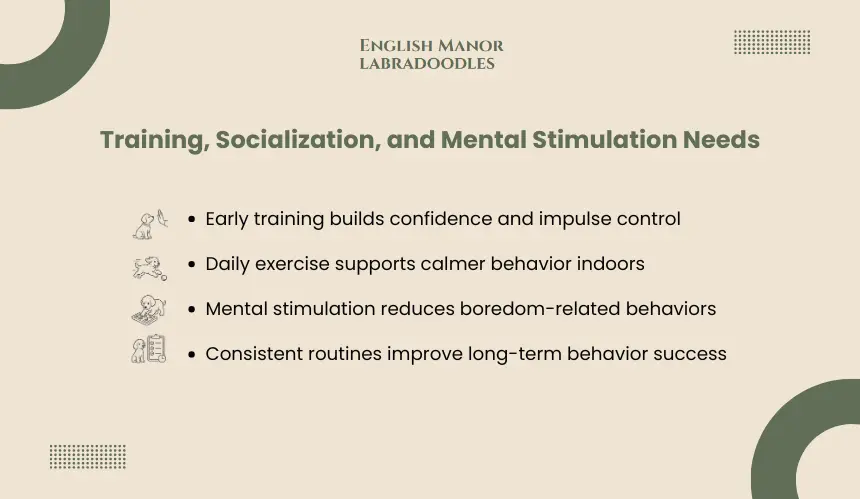
Labradoodles are highly intelligent and social, which makes training and mental stimulation essential, especially for first-time owners. Without proper guidance and stimulation, their intelligence can quickly turn into unwanted behaviors rather than positive traits.
Why Labradoodles Need Early Training
Early training helps Labradoodles develop confidence, impulse control, and clear communication with their owners. Because they learn quickly, inconsistent rules or delayed training can lead to difficult-to-correct habits, such as jumping, pulling on the leash, or ignoring commands.
Positive reinforcement methods work particularly well, as Labradoodles respond best to structure combined with encouragement rather than harsh correction.
Energy Levels and Daily Exercise Requirements
Labradoodles typically have moderate to high energy levels inherited from both parent breeds. Daily exercise is necessary not just for physical health but also for mental balance.
Regular needs often include:
- Daily walks or play sessions
- Interactive games or training exercises
- Opportunities for off-leash activity in safe environments
Insufficient exercise can result in restlessness, destructive chewing, or excessive barking.
Behavioral Issues That Arise Without Stimulation
Mental stimulation is just as important as physical activity. Labradoodles that lack enrichment may develop boredom-related behaviors such as digging, chewing furniture, or seeking constant attention.
Did You Know: Mental fatigue from training or puzzle activities can be more effective at calming a Labradoodle than physical exercise alone.
Is a Labradoodle the Right Fit for Your Lifestyle?
Labradoodles can be a great match for many first-time buyers, but they are not suitable for everyone. Evaluating lifestyle compatibility before buying helps prevent long-term challenges for both the dog and the owner.
Apartment vs House Living
Labradoodles can adapt to apartment living if they receive daily exercise and mental stimulation. Larger sizes generally require more space and structured activity, while smaller Labradoodles may adjust more easily to limited living areas.
Time Commitment for First-Time Owners
Labradoodles need consistent training, grooming, exercise, and social interaction. First-time buyers should be prepared to dedicate daily time, especially during the first year, when habits and routines are established.
Families, Children, and Other Pets
With proper socialization, Labradoodles usually do well with children and other pets. However, supervision, training, and clear boundaries are essential to ensure safe and positive interactions.
The Real Cost of Owning a Labradoodle Puppy
The cost of owning a Labradoodle goes far beyond the initial purchase price. First-time buyers should understand both upfront and long-term expenses to avoid financial strain over the dog’s lifetime.
Upfront Purchase Costs
Labradoodle puppies from ethical breeders typically cost more due to health testing, proper care, and early socialization. Lower-priced puppies often come from irresponsible sources and may lead to higher medical or training costs later.
Ongoing Expenses
Recurring costs include quality food, routine veterinary care, grooming every 6–8 weeks, training, and parasite prevention. Grooming alone can become a significant annual expense, especially for curly or wavy coats.
Long-Term Financial Planning (15–20 Years)
With a lifespan of 15–20 years, costs accumulate over time. Buyers should plan for senior care, potential medical treatments, and lifestyle changes that affect pet care.
Important Note:
Responsible ownership means budgeting for the entire lifespan, not just the puppy phase.
Frequently Asked Questions
Are Labradoodles Really Hypoallergenic?
Labradoodles are not guaranteed to be hypoallergenic. Some shed less than others, but shedding and dander levels depend on coat type and genetics. Even low-shedding Labradoodles can trigger allergies, so spending time around adult dogs with similar coats is strongly recommended before buying.
Is a Labradoodle a Good First Dog?
Labradoodles can be a good first dog for buyers who are prepared for regular grooming, daily exercise, and consistent training. Their intelligence and sociable nature make them trainable, but they are not low-maintenance and require time, structure, and long-term commitment.
How Big Will My Labradoodle Puppy Get?
Adult size depends on genetics and breeding, not just labels. Standard Labradoodles can reach up to 65 pounds, medium sizes vary widely, and miniatures stay smaller but remain energetic. First-time buyers should always ask about the size of both parent dogs.
How Much Grooming Does a Labradoodle Need?
Most Labradoodles require professional grooming every 6–8 weeks, along with frequent home brushing to prevent matting. Curly and wavy coats need the most maintenance. Grooming is a lifelong expense that should be factored in before buying.
What Should I Ask a Labradoodle Breeder Before Buying?
Buyers should ask about health testing for both parents, puppy socialization practices, generation type, coat expectations, and ongoing breeder support. Ethical breeders are transparent, welcome questions, and prioritize placing puppies in suitable homes rather than quick sales.