- englishmanor
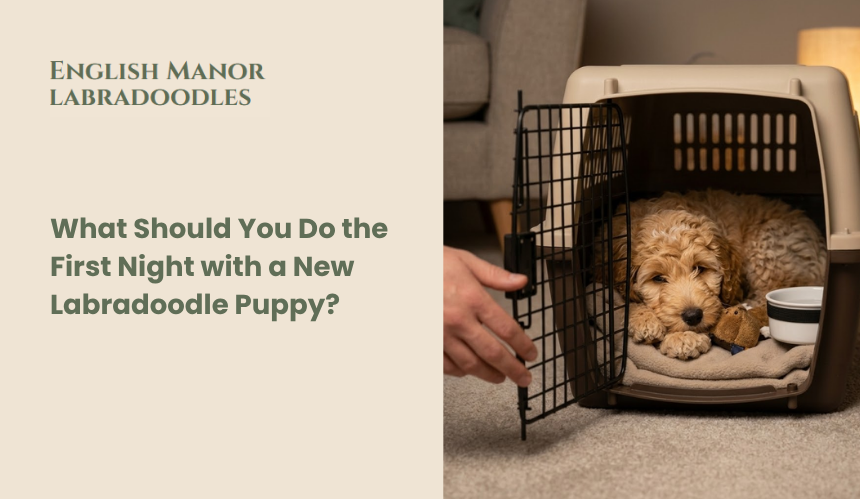
What Should You Do the First Night with a New Labradoodle Puppy?
Quick Overview: The first night with a Labradoodle puppy should focus on comfort, routine, and controlled training to reduce stress and build good habits. You should:
By balancing comfort with structure, you help your Labradoodle puppy settle in while starting good sleep and training habits from the very first night. |
The first night with a new Labradoodle puppy is often the most overwhelming, for both the puppy and the owner. Just hours earlier, the puppy was surrounded by littermates and familiar scents. Now, it is in a completely new environment, alone, and unsure of what to expect. This sudden change is why the first night is usually filled with whining, restlessness, and interrupted sleep.
Did you know? A puppy’s first night away from its litter is one of the highest-stress moments in early development, often triggering separation anxiety and vocal behavior.
Many new owners make the mistake of either over-comforting or completely ignoring the puppy. Both extremes can slow down adjustment. Too much attention can reinforce crying, while too little support can increase anxiety and make the puppy feel unsafe.
The key is balance, providing enough comfort to help the puppy feel secure, while also introducing structure that builds long-term habits. The first night is not just about getting through it; it sets the foundation for sleep routines, crate training, and overall behavior.
Did you know? Puppies adjust faster when they experience a predictable routine from the very first night, as it helps them understand what to expect in a new environment.
This guide explains exactly how to manage that first night, showing how to reduce stress, handle crying correctly, and create a routine that supports both comfort and early training.
Why Is the First Night So Challenging for a Labradoodle Puppy?
The first night is difficult because the puppy experiences a sudden transition from a familiar, social environment to complete isolation in an unfamiliar space. This change affects both emotional security and behavior, which is why crying and restlessness are common.
How Does Separation from Litter Cause Stress?
Labradoodle puppies are used to constant contact with their mother and littermates. This environment provides warmth, security, and continuous social interaction. When that support is removed, the puppy experiences separation stress, which triggers vocalization and anxiety.
Did you know? Puppies rely heavily on physical closeness during early development, so sudden isolation can feel threatening rather than simply uncomfortable.
Why Do Puppies Cry or Whine at Night?
Crying is a natural response to discomfort and uncertainty. It is not just attention-seeking behavior—it is a way for the puppy to signal distress and attempt to reconnect with a sense of safety.
This behavior is driven by:
- Anxiety from a new environment
- Lack of familiar scents and sounds
- Disruption of normal sleep patterns
How Does a New Environment Affect Behavior?
Everything in the new home, smells, sounds, lighting, and layout, is unfamiliar. This sensory overload makes it harder for the puppy to relax and settle, especially at night when there is less activity to distract it.
Why Is Nighttime More Difficult Than Daytime?
During the day, the puppy is distracted by movement, interaction, and exploration. At night, these distractions disappear, making the absence of familiar comfort more noticeable. This is when anxiety and vocal behavior tend to peak.
Did you know? Puppies often settle faster during the day because environmental activity provides reassurance, while quiet nights can amplify feelings of isolation.
How Should You Prepare Before Bringing Your Puppy Home?
Preparation determines how smoothly the first night goes. A Labradoodle puppy adjusts faster when the environment is structured, predictable, and ready to meet its basic needs from the moment it arrives.
What Supplies Should Be Ready?
Having the right items prepared in advance reduces confusion and allows you to focus on guiding the puppy rather than reacting to problems.
You should have:
- A properly sized crate for sleeping and training
- Soft bedding to provide comfort and warmth
- A leash for controlled outdoor potty trips
- Small training treats for reinforcement
- An enzymatic cleaner for any accidents
Did you know? Puppies settle faster when their basic needs, sleep, safety, and routine are immediately met without delays or changes.
How Do You Set Up a Sleeping Area?
The sleeping area should be quiet, secure, and close enough for the puppy to feel your presence. Placing the crate near your bed helps reduce anxiety while still maintaining structure.
The setup should:
- Limit space to prevent wandering
- Keep the crate comfortable but not overly spacious
- Provide a consistent place for rest from the first night
Why Is a Routine Important from Night One?
Puppies learn through repetition. Starting a routine on the first night helps them understand when to eat, sleep, and go outside. Without structure, the puppy may become confused and take longer to adjust.
How Does Preparation Reduce First-Night Stress?
A prepared environment removes uncertainty. When the puppy arrives in a space that already supports its needs, it can focus on adjusting rather than reacting to new challenges.
Did you know? Predictability is one of the most important factors in reducing anxiety, especially during a puppy’s first transition to a new home.
Where Should Your Labradoodle Puppy Sleep the First Night?
Choosing the right sleeping location is critical because it directly affects how secure your puppy feels and how well it adapts to the new environment. The goal is to create a space that provides comfort while also supporting training and routine.
Should You Use a Crate or Bed?
A crate is the best option for the first night because it creates a defined, secure space that mimics the enclosed feeling of being with littermates. Unlike an open bed, a crate limits movement and helps the puppy settle more quickly.
Did you know? Enclosed spaces help puppies feel safer because they resemble the close, protected environment they are used to.
Why Place the Crate Near Your Bed?
Keeping the crate close allows the puppy to sense your presence through sound and movement. This reduces feelings of isolation without encouraging dependency.
Being nearby helps:
- Calm anxiety during the night
- Allow quick response to genuine needs like potty breaks
- Prevent excessive distress
How Does Proximity Reduce Anxiety?
Puppies rely on proximity for reassurance. Hearing or sensing someone nearby signals that they are not alone, which lowers stress levels and reduces crying.
Should You Let the Puppy Sleep in Your Bed?
Allowing the puppy to sleep in your bed may provide temporary comfort, but it can lead to long-term dependence and make future training more difficult. Establishing boundaries from the first night helps build consistent habits.
Did you know? Habits formed on the first night can be difficult to change later, which is why early structure is important.
How Does a Consistent Sleeping Location Improve Training?
Using the same sleeping space every night helps the puppy associate that area with rest and security. This consistency supports both sleep training and crate training.
How Do You Handle Crying and Whining at Night?
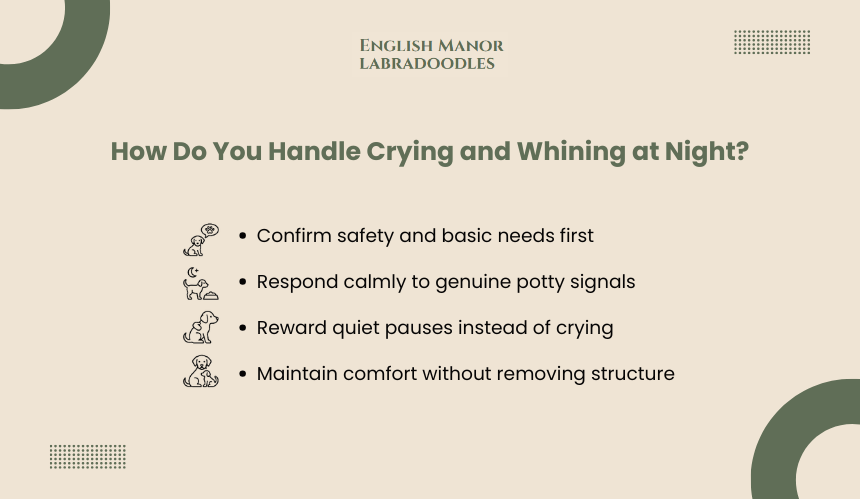
Crying on the first night is normal, but how you respond determines whether the behavior improves or becomes a habit. The goal is to comfort the puppy without teaching it that crying always leads to attention.
When Should You Respond vs Ignore?
Not all crying is the same. If the puppy has just been taken out, is fed, and is safe, brief whining is usually adjustment-related and can be ignored. However, if the crying is sudden, persistent, or follows a long interval, it may indicate a need for a potty break.
Did you know? Most first-night crying happens because of anxiety, not because the puppy needs something specific.
How Do You Avoid Reinforcing Crying?
Responding immediately every time the puppy cries can teach it that vocalizing brings attention. Instead, wait for a brief pause in crying before offering reassurance. This teaches the puppy that calm behavior, not noise, gets a response.
What Comfort Techniques Work Without Creating Dependency?
Comfort should be subtle and consistent, not excessive. A calm voice, a nearby presence, or a slight reassurance can help without encouraging reliance.
Effective approaches include:
- Speaking softly without picking the puppy up
- Keeping your hand near the crate for brief reassurance
- Maintaining a calm, quiet environment
How Do You Balance Comfort and Training?
Too much comfort can delay independence, while too little can increase stress. The balance comes from acknowledging the puppy’s presence without changing the routine or removing structure.
How Long Does First-Night Crying Usually Last?
Crying often decreases within the first few nights as the puppy becomes familiar with the environment and routine. Consistent responses help speed up this adjustment.
Did you know? Puppies adapt faster when responses are predictable, as it reduces confusion about what behavior leads to attention.
How Do You Manage Night-Time Potty Breaks?
Night-time potty breaks are essential because young Labradoodle puppies have limited bladder control and cannot hold it through the entire night. Managing these breaks correctly prevents accidents while maintaining a calm sleep routine.
How Often Should You Take the Puppy Out?
Most puppies need to go out every 2–3 hours during the night, depending on their age and size. Waiting too long increases the likelihood of accidents and slows down potty training progress.
Did you know? A puppy’s ability to hold its bladder is directly linked to age, which is why frequent night breaks are necessary in the early stages.
What Is the Best Night Potty Routine?
The process should be simple and consistent each time. When the puppy wakes or begins to stir, take it outside immediately without delay. Keep the routine predictable so the puppy learns that nighttime trips are for potty only.
How Do You Keep It Calm and Quiet?
Night-time potty trips should be low stimulation. Avoid play, excitement, or extended interaction, as this can signal that it is time to stay awake rather than return to sleep.
How Do You Transition Back to Sleep Quickly?
After the puppy finishes, return it to the crate without additional activity. This helps reinforce the idea that nighttime is for sleeping, not play or attention.
How Do Night Potty Breaks Support Training?
Taking the puppy out at the right times prevents indoor accidents and strengthens the association between elimination and the outdoor location. This consistency is key to faster learning.
Did you know? Preventing accidents is one of the fastest ways to reinforce correct potty habits, especially during the first few nights.
What Comfort Techniques Help a Puppy Sleep Better?
Comfort techniques help reduce first-night anxiety by recreating elements of the puppy’s previous environment while maintaining structure. The goal is to calm the puppy without overstimulating it or creating dependency.
How Do Familiar Scents Reduce Stress?
Scent is one of the strongest sources of comfort for puppies. Items that carry familiar smells, such as a blanket from the breeder or even a lightly worn piece of clothing, can help the puppy feel more secure in a new space.
Did you know? Puppies rely heavily on scent for recognition and reassurance, which is why familiar smells can significantly reduce anxiety.
Why Does Warmth Improve Comfort?
Puppies are used to sleeping close to their littermates, where body heat provides warmth and security. Replicating this warmth with soft bedding or a safe heat source can help the puppy settle more easily.
How Do Sounds and the Environment Affect Sleep?
A completely silent environment can feel unfamiliar and unsettling. Soft background noise, such as a fan or low-level white noise, can mimic the subtle sounds the puppy is used to and create a more comforting atmosphere.
How Does Physical Setup Influence Relaxation?
A properly arranged crate, comfortable but not overly spacious, helps the puppy feel secure. Too much space can make the area feel less protected, while a snug setup encourages relaxation.
How Do You Provide Comfort Without Reinforcing Dependency?
Comfort should be consistent but not excessive. The goal is to help the puppy feel safe while still encouraging it to settle on its own within the crate.
Did you know? Puppies adjust faster when comfort is combined with routine, as it helps them understand that the environment is both safe and predictable.
What Mistakes Should You Avoid on the First Night?
The first night sets the foundation for your puppy’s future behavior. Small mistakes can quickly become habits, making training more difficult in the days that follow. Avoiding these common errors helps ensure a smoother adjustment and faster progress.
Why Is Letting the Puppy Sleep Anywhere a Problem?
Allowing the puppy to roam or sleep in different places creates inconsistency. Without a fixed sleeping area, the puppy cannot form a clear association between the crate and rest, which can delay crate training and increase nighttime anxiety.
Did you know? Consistency in location helps puppies feel secure because they learn to associate a specific space with safety and sleep.
Why Is Responding to Every Cry Immediately a Mistake?
Responding instantly to every sound can teach the puppy that crying leads to attention. Over time, this can increase vocal behavior rather than reduce it, making nights more disruptive.
How Does Skipping Potty Breaks Cause Setbacks?
Ignoring scheduled potty breaks often leads to accidents inside the crate or sleeping area. This not only slows potty training but can also weaken the puppy’s natural instinct to keep its sleeping space clean.
Why Should You Avoid Overstimulation Before Bed?
Excessive play or excitement right before bedtime can make it harder for the puppy to settle. High energy levels delay sleep and increase restlessness during the night.
How Does Inconsistency Affect First-Night Adjustment?
Changing routines, locations, or responses during the night creates confusion. Puppies rely on predictable patterns, and inconsistency can increase stress and prolong adjustment.
Did you know? Clear and consistent responses help puppies adapt more quickly by reducing uncertainty about what to expect.
Frequently Asked Questions
Should I ignore my Labradoodle puppy crying the first night?
You should not ignore all crying completely. Brief whining during adjustment can be ignored, but if the puppy needs a potty break or reassurance, respond calmly without creating excitement or dependence.
How long will a Labradoodle puppy cry the first night?
Crying can last for several minutes to a few hours in intervals during the first night. Most puppies begin to settle within a few nights as they adjust to the new environment and routine.
Can my Labradoodle puppy sleep through the night on the first day?
Most puppies cannot sleep through the night initially due to limited bladder control and anxiety. Expect at least one or two potty breaks and some restlessness during the first few nights.
Should I keep the crate in my bedroom the first night?
Keeping the crate near your bed helps reduce anxiety and allows you to respond quickly to your puppy’s needs. This setup provides comfort while still maintaining structure and boundaries.
What if my puppy has an accident in the crate at night?
Accidents can happen if potty breaks are missed or timed incorrectly. Clean the crate thoroughly with an enzymatic cleaner and adjust the schedule to prevent future incidents.
How can I help my Labradoodle puppy feel safe the first night?
Providing a consistent routine, familiar scents, warmth, and proximity to you helps the puppy feel secure. A calm environment and predictable structure are key to reducing anxiety.