- English Manor Labradoodle
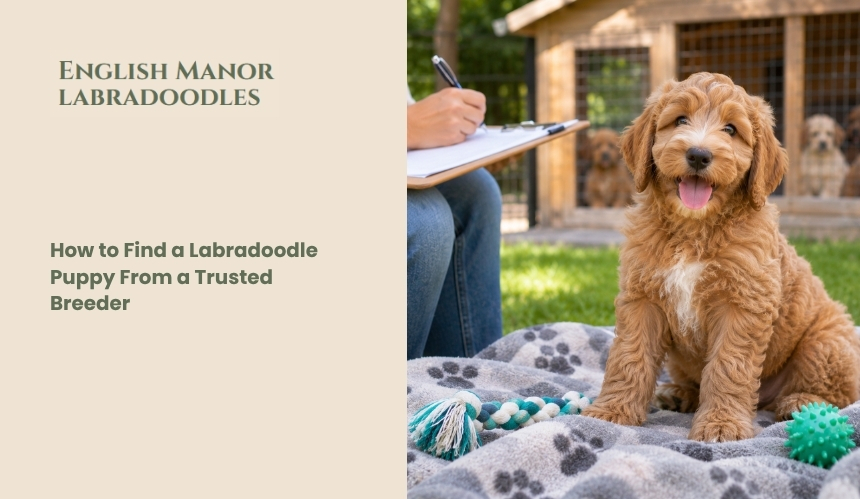
How to Find a Labradoodle Puppy From a Trusted Breeder
Quick Overview: How to find a Labradoodle puppy from a trusted breeder starts with careful research rather than simply searching for available puppies. A trustworthy breeder is transparent about their breeding practices, performs appropriate health testing on parent dogs, prioritizes puppy welfare, supports early socialization, and is willing to answer questions openly. The goal is not just to find a puppy but to find a breeder who is committed to producing healthy, well-adjusted Labradoodles and helping them transition successfully into their new homes. Key Signs of a Trusted Labradoodle Breeder
Warning Signs to Watch For
Did you know? Many important aspects of a puppy’s development occur before it ever goes home. Early socialization, environmental exposure, and interactions with people can all influence a Labradoodle puppy’s future confidence and behavior. Choosing a breeder is one of the most important decisions a future Labradoodle owner can make. A responsible breeder influences not only the puppy’s physical health but also its early experiences, social development, and long-term well-being. Taking the time to evaluate breeders carefully can help owners make a more informed decision and increase the likelihood of bringing home a healthy, well-adjusted puppy. |
Finding a Labradoodle puppy can be exciting, but choosing the right breeder is often far more important than choosing the puppy itself. Many prospective owners spend weeks comparing coat colors, sizes, and availability, yet the breeder behind the puppy can have a lasting impact on health, temperament, socialization, and overall development. A well-bred Labradoodle often benefits from careful planning, responsible breeding practices, early socialization, and a strong foundation established long before the puppy goes home.
The challenge is that not all breeders operate in the same way. Some focus heavily on health testing, puppy welfare, and responsible placement, while others may provide very little information about the puppy’s background, early care, or breeding program. For first-time buyers, it can be difficult to know which questions to ask, what information to look for, and which warning signs to ignore.
Choosing a breeder should be viewed as a research process rather than a purchase decision. A trustworthy breeder is typically transparent, knowledgeable, and willing to discuss everything from health testing and parent dogs to socialization practices and long-term puppy support. Taking the time to evaluate breeders carefully can help future owners make a more informed choice and increase the likelihood of bringing home a healthy, confident, and well-adjusted Labradoodle puppy.
Did you know? Many of the experiences that shape a puppy’s confidence, social skills, and adaptability occur during the first weeks of life while the puppy is still with the breeder. This is one reason why breeder selection plays such an important role in a puppy’s future development.
Why Choosing the Right Breeder Matters
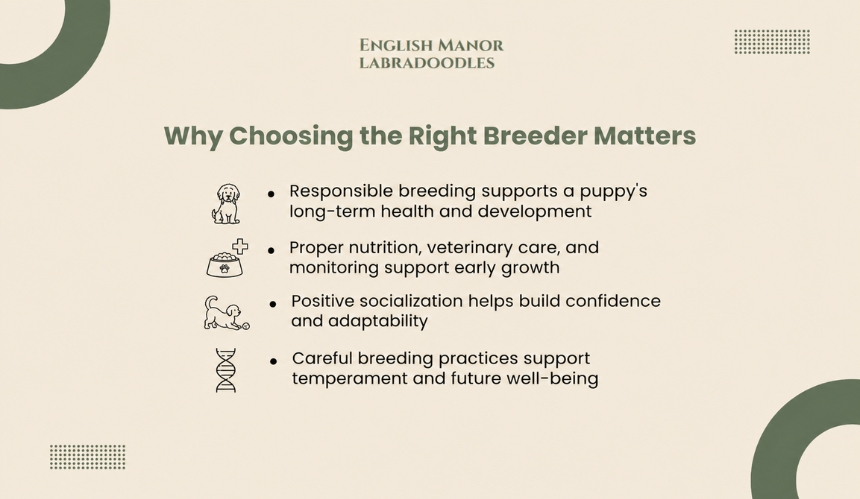
When searching for a Labradoodle puppy, it is easy to focus on factors such as appearance, coat type, size, or availability. However, the breeder’s practices often have a much greater impact on the puppy’s future than any of these characteristics. The environment in which a puppy is raised, the care it receives during its earliest weeks, and the decisions made by the breeder can influence health, temperament, and overall development long before the puppy arrives at its new home.
Choosing the right breeder is therefore not simply about finding a puppy. It is about finding a breeding program that prioritizes the long-term well-being of every dog it produces.
Early Health and Development
The first weeks of a puppy’s life are a critical period of physical development. During this stage, puppies rely on proper nutrition, veterinary care, clean living conditions, and careful monitoring to support healthy growth.
A breeder who prioritizes puppy welfare typically pays close attention to:
- Early developmental milestones.
- General health and physical condition.
- Appropriate veterinary care.
- Nutrition and growth monitoring.
- Overall puppy well-being.
These early experiences help create a stronger foundation as the puppy transitions into its new home.
Temperament and Socialization
Health is only one part of the equation. Temperament and social development are equally important, particularly for a breed known for its intelligence and social nature. Labradoodle puppies begin learning about their environment long before they leave the breeder, making early socialization an important part of development.
Exposure to everyday sounds, human interaction, handling, and positive experiences can help puppies develop confidence and adaptability. The quality of these early experiences often influences how comfortably a puppy adjusts to new environments later in life.
Did you know? Many aspects of a puppy’s early socialization occur before it ever leaves the breeder’s home. Positive experiences during these early weeks can influence confidence, curiosity, and adaptability well into adulthood.
Long-Term Well-Being
The effects of responsible breeding practices often extend far beyond puppyhood. Careful breeding decisions, health screening, thoughtful socialization, and proper puppy care all contribute to the dog’s long-term quality of life.
A breeder’s commitment to responsible practices can influence:
- Overall health.
- Behavioral development.
- Adaptability to family life.
- Future training success.
- General well-being throughout adulthood.
Because of this, evaluating the breeder is often one of the most important steps in finding a Labradoodle puppy. The right breeder helps provide a strong foundation that supports the puppy long after it joins its new family.
What Makes a Labradoodle Breeder Trustworthy?
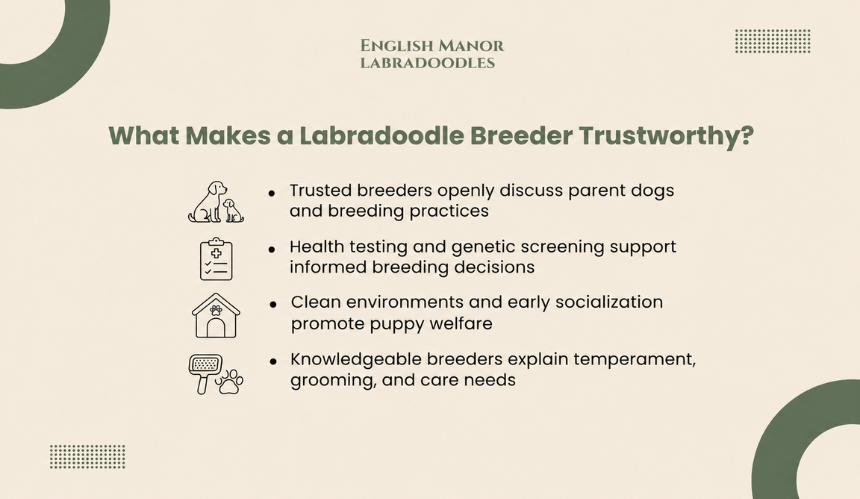
One of the most important parts of finding a Labradoodle puppy is learning how to evaluate the breeder behind the litter. A trustworthy breeder is typically focused on much more than simply producing puppies. They often invest significant time in health planning, early development, socialization, and responsible placement practices designed to support the long-term well-being of their dogs.
While every breeding program is different, several qualities consistently distinguish reputable Labradoodle breeders from less responsible sources.
Transparency and Open Communication
A trustworthy breeder is generally willing to discuss their breeding program openly and answer questions in detail. They understand that prospective owners want information about the puppy’s background and are usually comfortable explaining their practices, goals, and expectations.
Transparency often includes discussing:
- Parent dogs and their backgrounds.
- Breeding goals.
- Puppy development and care.
- Socialization practices.
- Health-related information.
Open communication helps buyers make informed decisions and creates greater confidence throughout the puppy selection process.
Health Testing and Genetic Screening
Health testing is one of the most important indicators of responsible breeding. Labradoodles inherit traits from both Labrador Retrievers and Poodles, making thoughtful health screening an important part of breeding decisions.
Responsible breeders typically place a strong emphasis on evaluating breeding dogs before producing litters. Health testing provides information to support informed breeding choices and promote healthier outcomes for future puppies.
Rather than avoiding discussions about health, trustworthy breeders are generally willing to explain what testing has been performed and why it is important.
Did you know? Responsible breeders often spend years evaluating breeding dogs, pedigrees, and health information before making decisions about future litters.
Focus on Puppy Welfare
A breeder’s priorities are often reflected in how puppies are raised during their earliest weeks. Trustworthy breeders typically place a strong emphasis on providing appropriate care, supervision, socialization, and developmental experiences.
Signs of a welfare-focused approach may include:
- Clean and safe living environments.
- Regular human interaction.
- Age-appropriate enrichment activities.
- Careful monitoring of puppy development.
- Thoughtful transition planning before puppies go home.
These early experiences can play an important role in helping puppies develop into confident and adaptable companions.
Knowledge of the Breed
Experienced Labradoodle breeders generally have a strong understanding of the breed’s characteristics, including temperament, coat types, grooming needs, activity levels, and developmental stages. They are often able to discuss both the advantages and the challenges of owning a Labradoodle.
A knowledgeable breeder can usually provide guidance on:
- Size expectations.
- Coat maintenance.
- Exercise requirements.
- Training considerations.
- Puppy development and adjustment.
This willingness to educate prospective owners is often a sign that the breeder is invested in helping puppies succeed in their future homes.
Did you know? Many reputable breeders spend as much time evaluating potential homes as buyers spend evaluating puppies because successful placements benefit both the puppy and the future owner.
Questions to Ask a Labradoodle Breeder
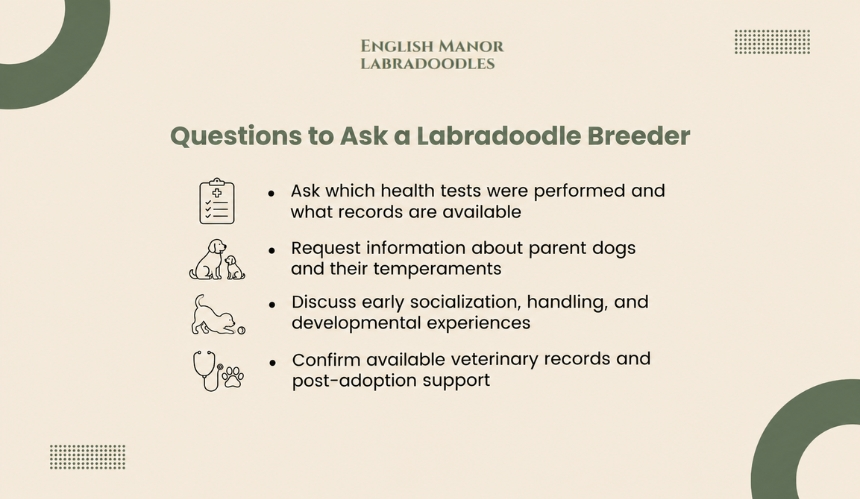
One of the best ways to evaluate a breeder is through thoughtful questions. A responsible breeder should be willing to discuss their breeding practices, puppy care, health protocols, and overall philosophy in detail. These conversations help prospective owners gather important information while also providing insight into the breeder’s level of knowledge, transparency, and commitment to the breed.
The goal is not to conduct an interrogation but to gain a clear understanding of how the puppies are raised and what support is available throughout the process.
What Health Testing Has Been Performed?
Health testing is one of the most important topics to discuss when evaluating a Labradoodle breeder. Asking about health screening provides insight into how breeding decisions are made and whether the breeder prioritizes long-term health considerations.
A breeder should be able to explain:
- What health evaluations have been performed?
- Why is specific testing important?
- How health information is used within the breeding program.
- What documentation may be available?
Clear and confident answers often indicate a breeder who is familiar with responsible breeding practices.
Can You Meet the Parent Dogs?
Meeting one or both parent dogs, when possible, can provide valuable information about temperament, size, appearance, and overall condition. While access may vary depending on the breeding program and circumstances, breeders should generally be willing to discuss the parent dogs and share information about their personalities and backgrounds.
Observing parent dogs can help prospective owners better understand which characteristics their puppies may inherit.
Did you know? A puppy’s future temperament is influenced by both genetics and early experiences, which is why information about the parent dogs can be an important part of the selection process.
How Are Puppies Socialized?
Early socialization plays a major role in helping puppies develop confidence and adaptability. Asking about socialization provides insight into the experiences puppies receive before leaving for their new homes.
Topics worth discussing include:
- Exposure to people.
- Everyday household sounds.
- Handling and interaction.
- Age-appropriate enrichment.
- Early developmental experiences.
The breeder’s approach to socialization can influence how comfortably a puppy adjusts to new environments later in life.
What Support Is Provided After Adoption?
The relationship between breeder and owner often continues after the puppy goes home. Many responsible breeders remain available to answer questions and provide guidance during the adjustment period and beyond.
Support may include information about:
- Feeding and nutrition.
- Training recommendations.
- Grooming guidance.
- Developmental expectations.
- General puppy care.
A breeder who remains invested in the puppy’s success often demonstrates a long-term commitment to responsible placement.
Can You Provide Veterinary Records?
Veterinary records can offer useful information about a puppy’s early care and health history. Asking about available documentation helps prospective owners understand what information will accompany the puppy when it transitions to its new home.
These records may include details related to:
- Health evaluations.
- Vaccination schedules.
- Veterinary visits.
- General health monitoring.
- Developmental milestones.
Did you know? Responsible breeders are often prepared to discuss a puppy’s early development in detail because they closely monitor growth, health, and behavior throughout the first weeks of life.
Signs of Responsible Labradoodle Breeding Practices
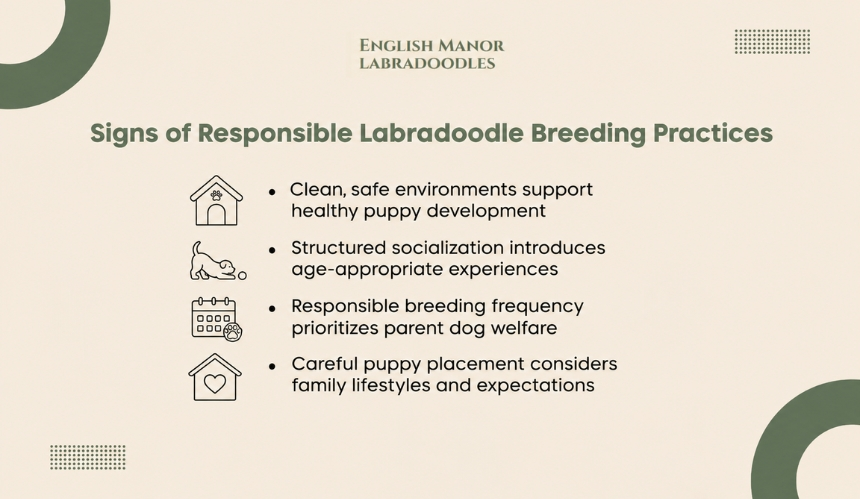
Responsible breeding involves much more than producing puppies. It requires careful planning, attention to health and development, and a commitment to raising puppies in an environment that supports their physical and behavioral growth. While every breeding program operates differently, certain practices are commonly associated with breeders who prioritize the long-term welfare of their dogs.
Recognizing these positive indicators can help prospective owners evaluate breeding programs more confidently.
Clean and Safe Puppy Environments
The environment in which puppies spend their first weeks can influence both their health and development. Responsible breeders generally maintain clean, organized, and well-managed spaces where puppies can grow safely and comfortably.
A well-maintained environment often supports:
- Healthy development.
- Appropriate hygiene.
- Regular human interaction.
- Safe exploration opportunities.
- Reduced stress during early growth stages.
The overall condition of the puppy’s surroundings can provide valuable insight into the breeder’s level of care and attention.
Structured Socialization Programs
Socialization is an important part of puppy development, and responsible breeders often introduce puppies to a variety of age-appropriate experiences before they leave for their new homes. These experiences help puppies become more comfortable with everyday situations and contribute to the development of confidence and adaptability.
Structured socialization may include exposure to:
- Different people.
- Common household sounds.
- Various surfaces and environments.
- Gentle handling.
- New experiences introduced at an appropriate pace.
Early exposure helps puppies begin developing important life skills during a highly influential stage of growth.
Did you know? The socialization experiences puppies receive during their earliest weeks can influence how they respond to new situations long after they leave the breeder’s home.
Appropriate Breeding Frequency
Responsible breeders generally focus on the health and welfare of their breeding dogs rather than maximizing the number of litters produced. Thoughtful breeding programs often emphasize planning, evaluation, and long-term goals rather than continuous availability of puppies.
This approach typically reflects a commitment to:
- Responsible breeding decisions.
- Careful monitoring of parent dogs.
- Long-term breeding objectives.
- Overall puppy welfare.
A breeder’s willingness to discuss their breeding philosophy can often provide insight into their priorities and practices.
Detailed Puppy Placement Processes
Responsible breeders often spend considerable time learning about potential owners before placing puppies. Rather than focusing solely on availability, they frequently seek to understand the lifestyle, expectations, and environment of prospective families.
This process may involve discussions about:
- Household routines.
- Activity levels.
- Previous dog ownership experience.
- Grooming expectations.
- Long-term commitment to puppy care.
The goal is often to help ensure that puppies are placed in homes that are well-suited to their needs and characteristics.
Did you know? Responsible breeders often spend significant time matching puppies with suitable families rather than placing puppies on a first-come, first-served basis. Careful placement decisions can contribute to more successful long-term outcomes for both the puppy and the owner.
Red Flags to Watch For When Choosing a Breeder
Just as there are signs of responsible breeding practices, there are also warning signs that prospective owners should watch for during the search process. While a single concern may not always indicate a problem, multiple red flags can suggest that a breeder is not operating with the same level of transparency, planning, or commitment to puppy welfare that many buyers seek.
Recognizing these warning signs early can help owners make more informed decisions and avoid situations where important information is difficult to obtain.
Lack of Health Information
Health-related discussions are an important part of evaluating a Labradoodle breeder. If a breeder is unable or unwilling to explain health testing, genetic screening, or the health history of their breeding dogs, it may be difficult for buyers to understand how breeding decisions are being made.
A lack of clear information can make it harder to evaluate:
- Breeding practices.
- Health planning.
- Parent dog history.
- Long-term puppy welfare considerations.
Transparency regarding health is often a characteristic of responsible breeding programs.
Limited Communication
Open communication is an important part of the breeder-owner relationship. Breeders who provide vague answers, avoid questions, or are difficult to contact may leave prospective owners with incomplete information about the puppy and the breeding program.
Clear communication often helps buyers:
- Understand the breeder’s practices.
- Learn about puppy development.
- Discuss expectations and responsibilities.
- Make more informed decisions.
When communication is consistently limited, important questions may remain unanswered.
Did you know? Many responsible breeders encourage questions because they view owner education as an important part of the puppy placement process.
Pressure to Buy Quickly
Choosing a puppy is an important decision that deserves careful consideration. Buyers should have sufficient time to evaluate information, ask questions, and determine whether a particular puppy and breeder are the right fit.
Pressure to make immediate decisions may prevent prospective owners from:
- Conducting proper research.
- Reviewing available information.
- Comparing different breeders.
- Asking important follow-up questions.
A thoughtful selection process generally benefits both the puppy and the future owner.
Inability to Answer Questions
Experienced breeders are usually familiar with topics such as Labradoodle temperament, coat types, health considerations, development, and puppy care. If basic questions consistently go unanswered or receive unclear responses, it may be difficult to assess the breeder’s knowledge and breeding practices.
Prospective owners often benefit from working with breeders who are comfortable discussing:
- Breed characteristics.
- Developmental milestones.
- Health-related topics.
- Grooming requirements.
- Lifestyle considerations.
Knowledgeable answers often reflect experience and a deeper understanding of the breed.
Poor Living Conditions
The environment where puppies are raised can provide valuable insight into the level of care they receive. Unsanitary, overcrowded, or poorly maintained living areas may raise concerns about overall puppy welfare and development.
A healthy puppy environment typically supports:
- Proper hygiene.
- Safe exploration.
- Positive social experiences.
- Physical development.
- General well-being.
Did you know? Puppies spend some of the most important developmental weeks of their lives with the breeder. The quality of the environment during this period can influence both physical growth and early behavioral development.
Understanding Health Testing in Labradoodles
Health testing is one of the most important topics to understand when searching for a Labradoodle puppy from a trusted breeder. Because Labradoodles inherit genetic traits from both Labrador Retrievers and Poodles, responsible breeding programs often place significant emphasis on evaluating breeding dogs before producing a litter. While health testing cannot guarantee that every puppy will be free of future health concerns, it can provide valuable information to support more informed breeding decisions.
For prospective owners, understanding the role of health testing can make it easier to evaluate breeders and ask meaningful questions during the selection process.
Why Health Testing Matters
Health testing helps breeders gather information about the health status of potential breeding dogs. This information can be used when making decisions about future pairings and breeding plans.
Responsible health screening contributes to:
- More informed breeding decisions.
- Better understanding of inherited traits.
- Improved long-term planning.
- Greater transparency for prospective owners.
- Ongoing improvement of breeding programs.
Because Labradoodles combine two different breeds, health evaluations are often an important part of responsible breeding practices.
Common Genetic Health Concerns
Like many dog breeds and crossbreeds, Labradoodles may inherit certain health-related traits from either side of their lineage. This is one reason why responsible breeders often pay close attention to the health history of breeding dogs and their families.
Understanding potential hereditary considerations allows breeders to make thoughtful decisions and provide prospective owners with more complete information about the puppies they produce.
Did you know? Responsible breeding programs often evaluate not only individual dogs but also family history and lineage information when making breeding decisions.
Health Documentation and Records
Health documentation can provide valuable insight into a breeder’s approach to transparency and record-keeping. Responsible breeders are often willing to discuss available health information and explain the purpose of the records they maintain.
Documentation may include:
- Health testing information.
- Veterinary records.
- Developmental observations.
- Vaccination schedules.
- General health monitoring data.
These records help prospective owners better understand the puppy’s early care and development.
How Testing Supports Better Breeding Decisions
Health testing is most effective when viewed as part of a broader breeding strategy rather than as a standalone process. Responsible breeders often combine health information with knowledge of temperament, structure, lineage, and overall breeding goals when making decisions.
This comprehensive approach helps support:
- Responsible breeding practices.
- Thoughtful pairing decisions.
- Long-term program development.
- Improved understanding of breeding outcomes.
- Greater focus on puppy welfare.
Did you know? Many reputable breeders continue to track health information throughout the lives of dogs produced by their breeding programs. This long-term data can help guide future breeding decisions and contribute to ongoing program improvement.
Preparing for the Puppy Selection Process
Finding a trusted breeder is only part of the journey. Once a breeder has been identified, prospective owners often enter the puppy selection stage. This process involves more than simply choosing the first available puppy. Careful preparation can help buyers make a more informed decision and increase the likelihood of finding a Labradoodle that is a good fit for their household, lifestyle, and expectations.
Approaching the selection process with patience and realistic expectations often leads to better long-term outcomes for both the puppy and the future owner.
Joining Waiting Lists
Many reputable Labradoodle breeders maintain waiting lists rather than having puppies continuously available. While waiting can be difficult for eager buyers, it often reflects a breeding program that prioritizes planning and responsible placement rather than immediate availability.
Joining a waiting list provides an opportunity to:
- Learn more about the breeder’s process.
- Ask additional questions.
- Prepare the home for a future puppy.
- Better understand upcoming litters and timelines.
Patience during this stage can help buyers focus on finding the right breeder rather than simply finding the fastest available puppy.
Evaluating Individual Puppies
Every Labradoodle puppy is unique. Even within the same litter, puppies may display differences in confidence, energy level, curiosity, and social behavior. Evaluating individual puppies involves looking beyond appearance and considering characteristics that may influence life with the dog in the future.
Observing how puppies interact with people, littermates, and their environment can provide valuable insight into their developing personalities and behavior patterns.
Did you know? Puppies from the same litter often have noticeably different temperaments, which is why personality can be just as important as appearance when selecting a puppy.
Matching Lifestyle and Energy Levels
Labradoodles are known for being intelligent, active, and social companions, but individual puppies can still vary in their activity levels and behavioral tendencies. Selecting a puppy whose temperament aligns with the household’s lifestyle is often an important part of a successful placement.
Factors that prospective owners may consider include:
- Activity level.
- Family dynamics.
- Experience with dogs.
- Grooming expectations.
- Time available for training and exercise.
A good match often depends on compatibility rather than choosing the most outgoing or most energetic puppy in the litter.
Preparing Questions Before Visiting
Visiting a breeder or discussing available puppies becomes more productive when buyers prepare questions in advance. Having a clear list of topics helps ensure important information is not overlooked during conversations about the puppies and breeding program.
Questions may focus on:
- Health information.
- Socialization practices.
- Developmental milestones.
- Temperament observations.
- Transition recommendations.
Preparing these questions ahead of time allows prospective owners to gather information more effectively and compare options with greater confidence.
Did you know? The first available puppy is not always the best match. Temperament, activity level, family lifestyle, and long-term expectations often play a major role in determining which Labradoodle puppy is the most suitable fit for a particular home.
Frequently Asked Questions
How do I know if a Labradoodle breeder is reputable?
A reputable Labradoodle breeder is typically transparent about breeding practices, health testing, puppy care, and socialization. They are usually willing to answer questions, provide information about parent dogs, and discuss their breeding program openly.
What questions should I ask a Labradoodle breeder?
Important questions may include inquiries about health testing, parent dogs, socialization practices, veterinary care, puppy development, and the support provided after the puppy goes home. These discussions can help buyers better understand the breeder’s approach.
Why is health testing important?
Health testing provides information that can support responsible breeding decisions. It helps breeders better understand the health status of breeding dogs and contributes to more informed planning within a breeding program.
Can I meet the puppy's parents?
In many cases, breeders can provide opportunities to meet one or both parent dogs or share information about their temperament, health history, and characteristics. Availability may vary depending on the breeding program and circumstances.
What are common breeder red flags?
Common warning signs include limited communication, lack of health information, pressure to make quick decisions, inability to answer questions, and poor living conditions for puppies. Multiple red flags may warrant additional research.
How long might I wait for a Labradoodle puppy?
Waiting times vary depending on the breeder, litter availability, and demand. Many reputable breeders maintain waiting lists and may require prospective owners to wait several weeks or months for a suitable puppy.