- englishmanor
What Does “Ethical Breeding” Mean When Buying Labradoodle Puppies?
Quick Answer: Ethical breeding, when buying Labradoodle puppies, means that breeding decisions are made to protect long-term health, welfare, and suitability rather than speed, volume, or profit. Responsible breeders follow documented health and genetic testing standards, limit breeding frequency, raise puppies in stable environments, screen buyers carefully, and remain accountable for the dogs they produce throughout their lives. |
The phrase “ethical breeding” is used frequently in Labradoodle listings, yet it rarely comes with a clear explanation. For many buyers, it sounds reassuring but abstract, making it difficult to understand how ethics actually influence a puppy’s health, behavior, and long-term well-being.
In practice, ethical breeding is not a claim, it is a pattern of decisions that can be observed, verified, and evaluated. From how breeding dogs are selected to how puppies are raised and placed, these choices shape outcomes that extend far beyond the first weeks at home. Understanding what ethical breeding truly means helps buyers move past marketing language and make informed, responsible decisions.
Why Is the Term “Ethical Breeding” Often Misunderstood?
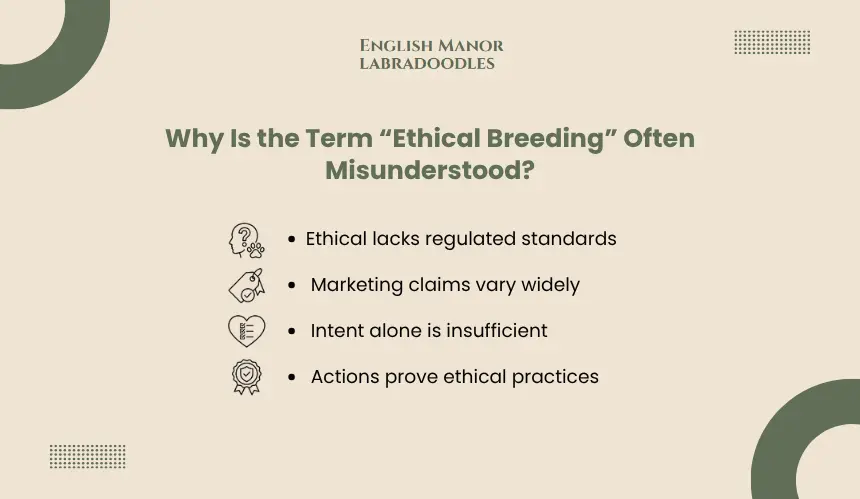
The term “ethical breeding” is widely used but rarely defined in measurable terms. This lack of clarity allows very different breeding practices to appear similar on the surface, even when outcomes for dogs vary significantly. Understanding why the term is misunderstood helps buyers look past labels and focus on evidence.
How Did “Ethical Breeding” Become a Marketing Phrase?
As demand for designer breeds like Labradoodles increased, “ethical” became a reassuring descriptor in listings and websites. However, the word itself is not regulated. Any seller can use it without meeting consistent standards, which blurs the line between responsible programs and convenience-based breeding.
Did you know?
Animal welfare reviews consistently note that unregulated terminology in puppy sales is one of the main reasons buyers struggle to distinguish ethical breeders from commercial operations, especially online.
Why Good Intentions Alone Do Not Define Ethical Breeding
Many breeders care deeply about their dogs, but ethical breeding is not defined by intent alone. Without structured health testing, documented practices, and clear placement policies, even well-meaning breeders can unintentionally pass on preventable health or behavioral risks.
Key insight: Ethics are measured by outcomes and safeguards, not by affection or experience alone.
What Makes Ethics a Practice Rather Than a Claim?
Ethical breeding shows up through repeatable actions: testing before breeding, limiting litters, raising puppies with purpose, and remaining accountable after placement. These practices create consistency over time, which is why ethical standards can be evaluated and compared across breeders.
Important note for buyers: If a breeder cannot explain how their practices protect dogs in the long term, the use of the word “ethical” may be descriptive rather than demonstrable.
What Core Principles Define Ethical Labradoodle Breeding?

Ethical breeding is guided by a small set of foundational principles that shape every decision a breeder makes. These principles are practical, observable, and directly tied to long-term outcomes for both puppies and their future owners.
Why Should Health Come Before Availability?
Ethical breeders plan litters around health readiness, not demand. Breeding only occurs when parent dogs meet established health and genetic standards, even if that means fewer puppies or longer wait times.
Did you know?
Canine health studies show that pre-breeding health screening significantly reduces the incidence of inherited joint and vision disorders, which are among the most common long-term health concerns in Labradoodles.
How Do Planned Breeding Decisions Reflect Ethical Standards?
Responsible breeding is intentional. Ethical breeders select pairings based on compatibility, genetic balance, and temperament rather than convenience or trend-driven demand.
Key distinction: Planned breeding focuses on predictability and stability, while opportunistic breeding prioritizes speed and availability.
Why Is Transparency Considered Non-Negotiable?
Transparency allows buyers to verify claims instead of relying on reassurance. Ethical breeders openly share health records, breeding goals, and limitations of their program, even when answers are not perfect.
Important note: Transparency includes acknowledging variability and uncertainty rather than promising ideal outcomes.
How Does Ethical Breeding Prioritize Puppy Stability Over Speed?
Ethical breeding avoids rushing development or placement. Puppies are given time to mature physically and behaviorally before transitioning to new homes, which supports adaptability and emotional resilience.
Fact:
Research in early canine development shows that puppies separated too early are more likely to experience stress-related behaviors, underscoring the importance of age-appropriate placement.
How Do Ethical Breeders Approach Health and Genetics?

Health and genetics are where ethical breeding becomes measurable. Responsible Labradoodle breeders use preventive strategies to reduce inherited risk rather than reacting to problems after puppies are born. This approach protects not only individual dogs, but the long-term integrity of the breeding program itself.
What Health Testing Should Ethical Labradoodle Breeders Perform?
Ethical breeders conduct breed-relevant health testing on both parent dogs before breeding. Because Labradoodles inherit traits from two breeds, testing must account for conditions associated with both lines.
Common testing areas include:
- Genetic screening for inherited disorders
- Orthopedic evaluations related to joint health
- Eye examinations to detect progressive conditions
Did you know? Veterinary genetic research shows that many inherited conditions remain undetectable in puppies and only emerge later in life, which is why parent testing is critical rather than optional.
How Do Ethical Breeders Manage Genetic Risk Instead of Ignoring It?
Ethical breeding does not aim to eliminate all risk, which is unrealistic. Instead, it focuses on managing risk responsibly. Breeders use test results to guide pairing decisions, avoid doubling up on known risk factors, and prevent the production of affected puppies.
Key insight:
A dog being a genetic carrier is not unethical; breeding without understanding or managing that status is.
When and Why Are Breeding Dogs Retired Responsibly?
Ethical breeders limit the physical and genetic burden placed on breeding dogs. Retirement decisions are based on age, health changes, and overall well-being rather than continued demand.
Fact: Canine welfare guidelines consistently emphasize that limiting the number of litters per dog reduces health complications and supports longer, healthier lives.
What Does Ethical Puppy Raising Look Like in Practice?
Ethical breeding does not end with genetic planning. How puppies are raised in their earliest weeks has a measurable impact on confidence, adaptability, and long-term behavior. Responsible breeders treat this period as a structured developmental stage, not a holding phase before pickup.
How Are Puppies Socialized in Ethical Breeding Programs?
Ethical puppy raising includes intentional, age-appropriate socialization, not accidental exposure. Puppies are gradually introduced to handling, household sounds, surfaces, and routine interactions that prepare them for everyday life.
Did you know?
Canine behavior research indicates that the primary socialization window occurs roughly between 3 and 12 weeks of age, making consistent early exposure critical for emotional stability later on.
Why Does Proper Placement Timing Matter?
Ethical breeders do not rush puppies into new homes. Adequate time with the litter and mother supports bite inhibition, communication skills, and stress regulation.
Key fact: Puppies placed too early are statistically more likely to show fear-based behaviors and difficulty adjusting to new environments, even with good training later on.
How Does Ethical Breeding Avoid Overproduction and Early Separation?
Ethical programs limit litter frequency and size to ensure each puppy receives sufficient attention. Overproduction reduces handling time, observation quality, and individualized care during critical development stages.
Important note for buyers: High availability and constant litters often indicate volume-driven breeding, where early development may be treated as a checklist rather than a priority.
How Do Ethical Breeders Interact With Buyers?

Ethical breeding includes how breeders engage with buyers before, during, and after placement. These interactions reflect whether the breeder views puppies as long-term responsibilities or short-term transactions. Clear communication, education, and mutual evaluation are central to ethical breeder–buyer relationships.
Why Do Ethical Breeders Screen Buyers Carefully?
Ethical breeders recognize that placement decisions affect a puppy’s entire life. Screening helps ensure that a buyer’s lifestyle, experience, and expectations align with the needs of the dog.
Did you know? Canine welfare studies consistently show that mismatched placements are a leading cause of rehoming, even when dogs are physically healthy.
Buyer screening may include discussions about:
- Daily routines and activity levels
- Grooming and training expectations
- Previous dog ownership experience
This process protects both the puppy and the buyer.
What Role Do Contracts and Documentation Play in Ethical Breeding?
Contracts are not control mechanisms, they are clarity tools. Ethical breeders use written agreements to outline responsibilities, health guarantees, and return policies so expectations are understood on both sides.
Key insight: Clear documentation reduces misunderstandings and ensures that welfare-focused decisions are upheld even if circumstances change.
How Are Deposits Used Responsibly by Ethical Breeders?
In ethical programs, deposits confirm intent without creating pressure. Terms are explained upfront, documented in writing, and designed to protect suitability rather than force commitment.
Important note: Deposit policies that allow flexibility when health or fit concerns arise reflect ethical prioritization of welfare over convenience.
Why Is Long-Term Responsibility Central to Ethical Breeding?
Ethical breeding does not end when a puppy goes home. Long-term responsibility reflects whether a breeder stands behind the dogs they produce for life, not just at the point of sale. This commitment reduces rehoming risks, supports buyers through challenges, and reinforces accountability beyond transactions.
What Happens If a Puppy Needs to Be Rehomed?
Ethical breeders plan for unforeseen circumstances. They maintain clear return or rehoming policies that prioritize the dog’s welfare over convenience or cost.
Did you know?
Animal welfare data consistently shows that dogs with breeder-supported return policies are far less likely to enter shelters, even when owners face major life changes.
Key indicators of ethical practice include:
- Written return or rehoming clauses in contracts
- Willingness to take responsibility regardless of the dog’s age
- Active involvement in re-placement when needed
Do Ethical Breeders Provide Ongoing Support After Placement?
Ongoing guidance is a hallmark of ethical breeding. Responsible breeders remain available to answer questions about health, training, grooming, and adjustment as the dog matures.
Key insight:
Post-placement support often prevents minor issues from becoming long-term behavioral problems, especially during the first year.
How Does Accountability Continue Beyond Pickup Day?
Ethical breeders track outcomes over time. They use feedback from buyers to evaluate health trends, temperament consistency, and placement success across litters.
Important note for buyers: Breeders who ask for updates are not being intrusive, they are monitoring the long-term impact of their breeding decisions.
Frequently Asked Questions
How can buyers tell if a Labradoodle breeder is truly ethical?
Ethical breeders demonstrate consistency across health testing, puppy care, buyer screening, and long-term accountability. Clear documentation, transparent communication, and welfare-focused policies matter more than labels or claims used in listings.
Is ethical breeding the same as responsible breeding?
The terms are often used interchangeably, but ethical breeding emphasizes decision-making rooted in long-term welfare, not just meeting minimum standards. Responsible practices become ethical when they are applied consistently and transparently over time.
Can ethical breeders still have waiting lists?
Yes. Waiting lists are common with ethical breeders because litters are planned around health readiness and capacity rather than demand. Limited availability often reflects careful breeding rather than scarcity marketing.
Do ethical breeders ever place puppies without contracts?
Most ethical breeders use written contracts to clarify responsibilities, health guarantees, and return policies. Contracts protect both the buyer and the puppy by setting expectations in advance.
Why do ethical breeders ask buyers so many questions?
Buyer screening helps ensure suitable placement. Ethical breeders evaluate lifestyle, experience, and expectations to reduce the risk of rehoming and behavioral challenges later on.
Is walking away from a breeder sometimes the ethical choice for buyers?
Yes. If transparency is lacking, documentation is unclear, or pressure replaces education, disengaging protects both the buyer and the puppy. Ethical breeding relies on mutual trust and informed decisions.