- englishmanor
What Supplies Do You Actually Need Before Your Labradoodle Arrives?
Quick Overview: Before your Labradoodle arrives, preparing the right supplies ensures a smooth transition into the new home and helps establish early routines for feeding, sleeping, training, and safety. Labradoodles are energetic, intelligent puppies, so having essential items ready in advance prevents unnecessary stress during the first days and allows owners to focus on bonding and early training. The most important supplies typically include:
Preparing these supplies before pickup day allows the Labradoodle puppy to adjust quickly to its new environment while supporting healthy development, early training, and household safety. |
The day you bring a Labradoodle puppy home is exciting, but that moment arrives quickly—and many new owners realize too late that their home is not fully prepared. Labradoodles are curious, energetic, and highly intelligent from the start. The moment they enter a new environment, they begin exploring, chewing, playing, and forming habits. Without the right supplies already in place, those first few days can become chaotic instead of enjoyable.
Preparation plays a major role in how smoothly a puppy adjusts to a new home. Having feeding equipment, sleeping spaces, training tools, grooming supplies, and safety items ready before arrival helps create structure and consistency from day one. It also prevents common early problems such as destructive chewing, house-training accidents, and anxiety during the transition period.
This guide explains the essential supplies every owner should prepare before a Labradoodle arrives, why each item matters, and how the right setup can support healthy development, early training success, and a calmer first week for both the puppy and the household.
Why Preparing Supplies Before Your Labradoodle Arrives Is Important
Preparing your home before a Labradoodle puppy arrives does more than create convenience—it directly influences how quickly the puppy adapts to its new environment. Puppies depend heavily on routine, predictable surroundings, and safe boundaries during their early development. When feeding stations, sleeping areas, and training tools are already in place, the puppy can begin forming positive habits immediately rather than learning through confusion or stress.
Labradoodles are especially intelligent and energetic, which means they quickly interact with their surroundings. Without preparation, puppies may chew furniture, have accidents in random locations, or become anxious during their first nights. Setting up the right supplies beforehand helps create structure that supports early behavioral learning and emotional stability.
Reducing Transition Stress During the First Week
Moving to a new home is a significant change for a young puppy. They leave behind familiar smells, littermates, and routines. Providing ready access to food bowls, a comfortable crate, and sleeping blankets helps recreate a sense of security and consistency. Familiar items also help puppies settle more quickly during the first few nights.
Supporting Early Training and Behavioral Development
Puppies begin learning immediately when they enter a new home. Crates, training treats, and designated potty areas help reinforce consistent behavioral cues. Labradoodles respond particularly well to structured environments and reward-based training, so having these supplies prepared allows owners to begin house training and basic commands right away.
Creating a Safe and Controlled Living Environment
Young puppies explore their surroundings with curiosity and often chew on objects they encounter. Electrical cords, household plants, shoes, and small objects can quickly become hazards. Preparing safety barriers, puppy gates, and protected areas before the puppy arrives reduces the risk of injury while allowing the puppy to explore safely under supervision.
Did You Know:
Veterinary clinics frequently report that accidental ingestion of household items is one of the most common emergencies involving young puppies. Early puppy-proofing, including cord protection and secure trash storage, significantly reduces these preventable risks.
Essential Feeding Supplies for a Labradoodle Puppy
Proper nutrition plays a critical role in a Labradoodle puppy’s early growth, immune system development, and energy levels. Labradoodles grow rapidly during their first year, and their diet must support bone development, muscle formation, and healthy digestion. Preparing feeding supplies before the puppy arrives helps establish a consistent feeding routine and prevents sudden dietary disruptions that could cause digestive upset.
Setting up a designated feeding area with the right equipment also helps reinforce structure. Puppies quickly learn where meals occur, which reduces begging behavior and helps owners monitor appetite and hydration levels more effectively.
Did You Know: Veterinary nutrition research indicates that puppies can require up to twice the daily caloric intake per pound of body weight compared to adult dogs, which is why high-quality puppy food formulated for growth stages is essential during the first 12 months.
High-Quality Puppy Food Designed for Growing Dogs
Selecting the right puppy food is one of the most important decisions owners make before bringing a Labradoodle home. Most breeders recommend continuing the same food the puppy has been eating for the first one to two weeks to avoid digestive upset. Labradoodle puppies benefit from diets that contain balanced protein levels, omega-3 fatty acids for brain development, and controlled calcium-to-phosphorus ratios to support healthy bone growth.
Gradual diet transitions should be introduced over several days if owners plan to switch brands after the puppy settles into the new home.
Nutrition Insight: Studies in canine nutrition show that sudden diet changes can trigger temporary gastrointestinal disturbances such as diarrhea or vomiting, which is why gradual food transitions over 5–7 days are typically recommended.
Durable Food and Water Bowls
Choosing durable bowls is more important than many owners realize. Stainless steel bowls are widely recommended because they resist bacterial buildup, do not retain odors, and are easy to clean. Non-slip bases can also help prevent bowls from sliding across floors during feeding time.
Proper hydration is equally important for young puppies, especially active breeds like Labradoodles. Fresh water should be available at all times, except during structured nighttime routines designed to support house training.
Did You Know: A growing puppy’s body contains a higher percentage of water than adult dogs, which makes consistent hydration especially important for maintaining healthy organ function and digestion.
Treats for Training and Positive Reinforcement
Training treats are essential supplies for reinforcing good behavior from the moment the puppy enters the home. Labradoodles are highly responsive to reward-based learning, and small, soft treats allow owners to quickly reinforce commands such as “sit,” “come,” and “stay.”
Treats should be small and low in calories to prevent overfeeding during frequent training sessions.
Training Fact: Short training sessions with frequent rewards can significantly improve learning speed. Many trainers recommend 5–10 minute sessions several times per day, as puppies have short attention spans but learn quickly through repetition and positive reinforcement.
Sleeping and Comfort Supplies for Your Labradoodle
A comfortable and secure sleeping setup is essential for helping a Labradoodle puppy adjust to its new home. Puppies spend a significant portion of the day sleeping as their bodies grow and develop, and a consistent sleeping environment helps regulate their routine. Preparing sleeping and comfort supplies before the puppy arrives allows them to quickly associate specific spaces with rest and relaxation.
Labradoodle puppies may also experience separation from their littermates for the first time, which can cause temporary anxiety. Providing a quiet sleeping area, comfortable bedding, and familiar textures helps create a calming environment that supports healthy sleep patterns and emotional stability.
Did You Know: Young puppies typically sleep 18–20 hours per day during their early developmental stages. Adequate rest supports brain development, immune system function, and overall growth.
Appropriately Sized Crate for Crate Training
A crate is one of the most useful supplies for establishing structure and safety in a puppy’s routine. Crates provide a secure den-like environment where puppies can rest, sleep, and relax without access to potentially hazardous areas of the home. When used properly, crate training also supports house training because puppies naturally avoid eliminating in their sleeping spaces.
For Labradoodles, choosing a crate with an adjustable divider is often recommended. This allows the crate space to expand as the puppy grows while still maintaining an appropriately sized sleeping area.
Training Insight: Professional trainers often recommend crate training because it aligns with a dog’s natural den instinct. Many puppies quickly begin viewing their crate as a safe resting place when it is introduced gradually and associated with positive experiences.
Supportive Dog Bed for Rest and Recovery
A comfortable dog bed helps create a designated relaxation space for the puppy outside the crate. Beds with washable covers are practical because young puppies may occasionally have accidents or track dirt into their resting areas.
Soft bedding also supports developing joints and muscles. Labradoodles are active dogs that benefit from proper rest between play sessions and training activities.
Interesting Fact: Providing a consistent resting area can help puppies develop predictable sleep patterns. Dogs that sleep in the same location each night often adapt more quickly to household routines.
Comfort Blankets and Familiar Scents
Blankets can provide warmth, comfort, and a sense of familiarity during the puppy’s transition to a new home. Many breeders send puppies home with a small blanket carrying the scent of the littermates or mother, which can help reduce anxiety during the first few nights.
These familiar scents create reassurance and can make nighttime separation easier for young puppies adjusting to a new environment.
Did You Know: Dogs rely heavily on scent for emotional recognition. A puppy’s sense of smell is estimated to be tens of thousands of times more sensitive than a human’s, which is why familiar scents can significantly influence comfort and stress levels.
Walking and Identification Supplies
Even though Labradoodle puppies may not begin regular outdoor walks immediately, especially before completing their vaccination schedule, owners should still prepare walking and identification supplies before the puppy arrives. These items support early leash training, safe transportation, and identification in case the puppy wanders away.
Labradoodles are energetic and curious dogs that quickly become mobile and eager to explore their surroundings. Introducing collars, harnesses, and leashes early allows the puppy to become comfortable wearing them, making future walks and outdoor training much easier.
Did You Know: Veterinary safety organizations estimate that millions of pets are lost each year, and identification tags significantly increase the chances of a pet being safely returned to its owner. Even young puppies should wear proper identification.
Properly Fitted Collar and Identification Tag
A lightweight, adjustable collar is typically the first identification accessory a puppy wears. Labradoodle puppies grow quickly, so collars should allow room for adjustment while still fitting securely. The collar should sit comfortably around the neck with enough space to fit two fingers between the collar and the puppy’s skin.
An ID tag attached to the collar should include the owner’s contact information. This simple identification tool can make a significant difference if the puppy accidentally slips outside or becomes separated from the owner.
Safety Insight: Pet identification tags remain one of the fastest ways for lost pets to be reunited with their families, especially in neighborhoods where neighbors may find wandering pets before shelters or veterinary clinics become involved.
Harness Designed for Puppy Training
Many trainers recommend using a harness rather than relying solely on a collar for leash training. Harnesses distribute pressure across the chest and shoulders rather than concentrating it on the neck, which is especially important for growing puppies.
For Labradoodles, a well-fitted harness can also provide better control during early training sessions while protecting the puppy’s developing neck and spine.
Training Fact: Front-clip harnesses are commonly used during early leash training because they help discourage pulling by gently redirecting the puppy toward the handler.
Durable Leash for Early Walking Practice
A standard leash is an essential training tool that helps establish safe walking habits. Short leashes, typically around four to six feet, provide better control during early training and socialization exercises.
Introducing leash walking indoors or in a secure yard before regular neighborhood walks allows the puppy to learn basic leash behavior in a calm environment.
Interesting Fact: Early leash exposure helps puppies develop confidence during outdoor exploration. Trainers often recommend introducing a leash during the first few weeks at home so the puppy associates it with positive experiences rather than restriction.
What Training and Housebreaking Supplies Do Labradoodle Puppies Need?
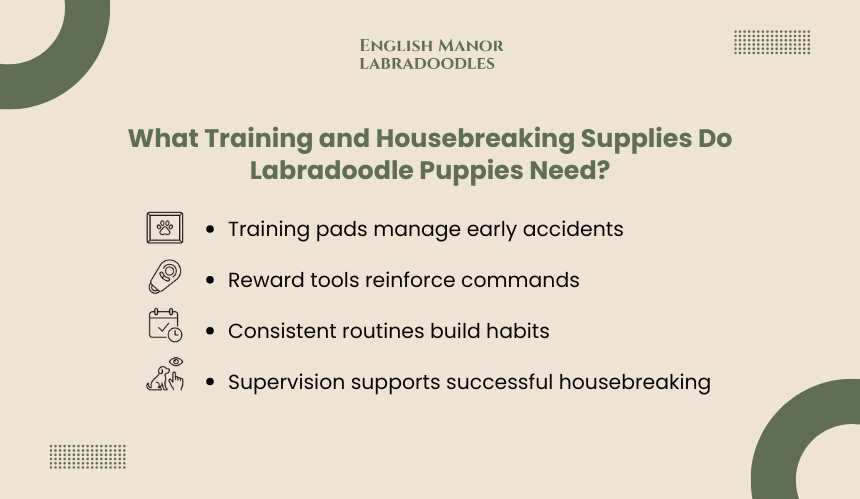
House training is one of the first major milestones for any new puppy owner. Labradoodles are highly intelligent and eager to learn, but successful house training requires consistency, patience, and the right preparation tools. Having proper training supplies ready before the puppy arrives allows owners to establish clear routines immediately.
Structured training environments help puppies understand where they should eliminate, how to behave indoors, and how to respond to commands. Labradoodles respond especially well to positive reinforcement techniques, which rely on rewards and repetition to encourage good behavior.
Did You Know: Professional trainers often note that puppies develop elimination routines quickly when taken to the same potty location regularly. Many puppies begin recognizing designated potty areas within 7–10 days of consistent training.
Why Are Puppy Training Pads Helpful During Early House Training?
Training pads can serve as a temporary indoor potty option during the early stages of house training. They are especially useful in apartments, during extreme weather, or when the puppy cannot yet go outside frequently due to vaccination schedules.
Training pads help prevent accidents from spreading throughout the home while the puppy learns proper bathroom routines.
Benefits of training pads include:
- Providing a designated indoor potty area during early training
- Helping manage bathroom needs when outdoor access is limited
- Protecting flooring and carpets from accidents
- Supporting consistent potty routines while puppies learn bladder control
Over time, many owners gradually transition puppies from indoor pads to outdoor potty areas.
Training Insight:
Young puppies typically need bathroom breaks every 1–2 hours during the day, particularly after eating, drinking, sleeping, or active play sessions.
What Training Tools Help Reinforce Good Behavior?
Positive reinforcement is one of the most effective training methods for Labradoodles. Rewarding desired behaviors encourages puppies to repeat those actions, making training faster and more reliable.
Essential reward-based training tools include:
- Small soft training treats for quick rewards during commands
- A treat pouch that allows immediate access during training sessions
- Clicker training tools that mark the exact moment a correct behavior occurs
- Target sticks or hand signals used in structured obedience training
These tools help establish communication between the owner and the puppy while building trust and confidence.
Training Fact: Short, frequent training sessions are more effective than long sessions. Many trainers recommend 5–10 minute training sessions repeated several times per day to match a puppy’s attention span.
Why Is Consistency Important in Puppy Training?
Consistency is the foundation of successful puppy training. Labradoodles learn patterns quickly, so consistent routines help them understand expectations faster.
Effective training routines often include:
- Taking the puppy to the same potty location each time
- Rewarding successful potty behavior immediately
- Maintaining regular feeding schedules
- Supervising the puppy closely during early indoor exploration
When these patterns remain consistent, Labradoodles can often develop reliable house-training habits within the first few weeks of living in a new home.
Did You Know: Behavior specialists often observe that dogs trained with consistent routines experience fewer behavioral setbacks during their first year compared to puppies raised without structured schedules.
What Toys and Mental Stimulation Supplies Should Labradoodle Puppies Have?
Labradoodles are widely known for their intelligence, curiosity, and high energy levels. Without proper stimulation, puppies may quickly become bored and redirect their energy toward chewing furniture, digging, or other destructive behaviors. Providing appropriate toys and enrichment supplies before the puppy arrives helps channel that energy into safe and productive activities.
Mental stimulation is just as important as physical exercise for Labradoodles. Toys that encourage problem-solving, chewing, and interactive play help support cognitive development and prevent boredom during the puppy’s early months.
Did You Know: Canine behavioral research suggests that mental stimulation activities can reduce destructive behaviors in puppies by up to 30–40%, particularly in intelligent breeds that require regular engagement.
Why Are Chew Toys Important for Teething Puppies?
Puppies go through a natural teething phase as their baby teeth are replaced by adult teeth. This process can cause discomfort and encourages puppies to chew on nearby objects. Providing safe chew toys helps relieve this discomfort while protecting household items.
Benefits of chew toys include:
- Helping soothe teething discomfort and gum irritation
- Preventing puppies from chewing furniture or shoes
- Supporting healthy jaw development
- Encouraging independent play during quiet periods
Durable rubber toys, nylon chew toys, and specially designed teething toys are commonly recommended for young puppies.
Interesting Fact: Most puppies begin losing their baby teeth around 3–4 months of age, and the full set of adult teeth typically develops by about 6 months.
What Role Do Puzzle Toys Play in Puppy Development?
Puzzle toys challenge puppies to solve simple problems in order to access treats or food rewards. These toys encourage mental engagement and can keep Labradoodles occupied for extended periods.
Puzzle toys support several aspects of development:
- Encouraging problem-solving and cognitive stimulation
- Slowing down fast eaters during treat-based activities
- Providing entertainment during periods of limited supervision
- Building confidence through interactive play
Because Labradoodles are highly trainable and mentally active, puzzle toys can become an important part of their enrichment routine.
Training Insight: Many trainers recommend incorporating puzzle toys into daily routines because mental exercise can tire a dog as effectively as moderate physical activity.
Why Are Fetch Toys Helpful for Active Labradoodles?
Labradoodles often inherit strong retrieving instincts from their Labrador Retriever lineage. Fetch toys help satisfy this natural instinct while providing an outlet for physical exercise.
Common fetch toys include:
- Rubber balls designed for dogs
- Soft retrieval toys for indoor play
- Floating toys for water play
- Durable rubber discs or flying toys
Structured play sessions with fetch toys also strengthen the bond between the puppy and the owner.
Did You Know: Short interactive play sessions throughout the day can help puppies release excess energy, which may lead to better focus during training sessions and improved sleep routines.
What Grooming Supplies Do Labradoodles Require?
Labradoodles are known for their distinctive coats, which can range from loose wavy hair to dense curly fur similar to a Poodle. While their coats are often described as low-shedding, they still require regular grooming to prevent matting, maintain skin health, and keep the coat clean. Preparing grooming supplies before the puppy arrives allows owners to begin gentle grooming routines early, which helps puppies become comfortable with handling.
Early grooming also reduces stress during professional grooming visits later in life. When Labradoodles become accustomed to brushing, nail trimming, and ear care from a young age, grooming sessions become easier and safer.
Did You Know: Many Labradoodles require professional grooming every 6–8 weeks, depending on coat type and length. Regular brushing between grooming appointments helps prevent painful matting.
Why Is a Slicker Brush Important for Labradoodle Coats?
A slicker brush is one of the most essential grooming tools for Labradoodles. Its fine, angled bristles help remove loose hair and gently separate tangles that form within curly or wavy coats.
Regular brushing with a slicker brush helps:
- Prevent mat formation in dense fur
- Remove loose hair and debris
- Distribute natural skin oils across the coat
- Keep the coat soft and manageable
Brushing several times per week is typically recommended to maintain coat health.
Grooming Insight: Matting occurs when loose hair becomes trapped within the coat and tangles together. If left untreated, mats can tighten against the skin and cause discomfort or skin irritation.
Why Is a Detangling Comb Necessary for Curly Fur?
While brushes remove surface tangles, a metal grooming comb is useful for reaching deeper layers of the coat. Labradoodle coats often develop hidden tangles close to the skin that may not be visible during casual brushing.
A detangling comb helps:
- Identify hidden mats close to the skin
- Smooth curly or dense sections of fur
- Finish the coat after brushing
- Maintain consistent coat texture
Using both a slicker brush and comb together provides more thorough coat care.
Interesting Fact: Professional groomers often recommend a two-step brushing routine, where a slicker brush loosens tangles and a comb confirms that the coat is fully detangled.
What Bathing Supplies Should Owners Prepare?
Puppy-safe bathing products help maintain skin and coat health while removing dirt and allergens. Labradoodles benefit from gentle shampoos formulated specifically for puppies because their skin is more sensitive than adult dogs.
Useful bathing supplies include:
- Mild puppy shampoo designed for sensitive skin
- Absorbent grooming towels for drying
- Non-slip bath mats to prevent slipping during baths
- Detangling sprays that help manage curly coats
Bathing frequency varies depending on lifestyle and activity level, but most puppies only require occasional baths.
Did You Know: Dogs have a thinner outer skin layer compared to humans, which is why human shampoos can disrupt their natural skin pH balance and should generally be avoided.
Why Are Nail and Ear Care Supplies Important?
Routine nail trimming and ear cleaning are important parts of puppy hygiene. Labradoodles with floppy ears may be more prone to ear moisture buildup, which can lead to irritation if not cleaned regularly.
Basic hygiene supplies include:
- Puppy nail clippers or nail grinders
- Ear cleaning solution designed for dogs
- Cotton pads or soft cloths for gentle cleaning
Starting these grooming routines early helps puppies become comfortable with handling and reduces resistance during future grooming sessions.
Did You Know:
If a dog’s nails grow too long, they can alter the dog’s natural walking posture and place extra strain on joints, which is why regular nail maintenance is recommended.
What Safety and Puppy-Proofing Supplies Should You Prepare?
Before a Labradoodle puppy enters the home, the environment should be prepared to prevent accidents and limit access to potential hazards. Young puppies explore their surroundings with curiosity and often chew or investigate objects they encounter. Without proper safety precautions, everyday household items such as cords, trash containers, and small objects can quickly become risks.
Puppy-proofing supplies help create controlled areas where the puppy can safely explore while reducing the chances of injury or destructive behavior. Preparing these safety tools before the puppy arrives allows owners to focus on supervision and training rather than constantly reacting to hazards.
Did You Know: Veterinary clinics frequently report that accidental ingestion of household items, including socks, plastic, and small toys, is one of the most common emergencies involving young puppies. Proper puppy-proofing significantly reduces these preventable incidents.
Why Are Baby Gates Useful for Managing Puppy Access?
Baby gates allow owners to control which areas of the home a puppy can access during early training. Restricting movement helps prevent accidents and protects areas that contain fragile objects or unsafe materials.
Common uses for baby gates include:
- Blocking staircases or elevated areas
- Limiting access to kitchens or storage rooms
- Creating designated puppy zones for supervised play
- Preventing entry into rooms with electrical equipment or clutter
By gradually expanding access to new areas as the puppy matures, owners can introduce the home environment in a controlled way.
Training Insight: Limiting the puppy’s access to smaller areas during early house training often reduces accidents because puppies are easier to supervise.
How Do Electrical Cord Protectors Improve Home Safety?
Electrical cords are particularly attractive to young puppies that are teething. Chewing on cords can lead to serious injuries, including burns or electrical shock.
Cord protectors and cable management systems help:
- Cover exposed wires that puppies might chew
- Organize cables behind furniture or along walls
- Reduce tripping hazards within play areas
- Protect electronic devices from damage
These protective accessories are simple but important safety measures when preparing a home for a young dog.
Did You Know:
Puppies explore their environment primarily through chewing and mouthing behaviors, which are natural developmental stages but require supervision and safe outlets such as chew toys.
Why Should Trash Containers and Food Storage Be Secured?
Household trash bins often contain food scraps, packaging, and other items that can be harmful if ingested. Labradoodles are curious and may attempt to investigate open trash containers or accessible food supplies.
Safety precautions typically include:
- Using trash bins with locking lids
- Storing food items in sealed containers
- Keeping cleaning products and chemicals in cabinets
- Removing small objects that could become choking hazards
Securing these items helps prevent accidental ingestion and keeps the home environment safer for the puppy.
Interesting Fact: Dogs possess an extremely sensitive sense of smell, estimated to be 10,000 to 100,000 times stronger than a human’s, which explains why even sealed food containers can attract curious puppies.
How Do Puppy-Proofing Supplies Support Training?
Puppy-proofing is not only about safety; it also helps reinforce good habits. When puppies cannot access harmful or tempting objects, they are more likely to engage with appropriate toys and designated play areas.
Effective puppy-proofing strategies often include:
- Creating designated play zones with safe toys
- Removing tempting objects such as shoes or cords
- Supervising the puppy during exploration periods
- Gradually increasing freedom as training improves
These steps help puppies learn appropriate behaviors while reducing opportunities for mistakes.
Did You Know: Behavior experts often emphasize that prevention is one of the most effective training tools, since limiting access to inappropriate items reduces the chances of reinforcing unwanted behaviors.
Frequently Asked Questions
What is the most important supply to prepare before bringing a Labradoodle home?
A properly sized crate is often considered one of the most important supplies because it provides a safe resting space and supports early house training. Crates help puppies develop routine, reduce nighttime accidents, and create a secure place where the puppy can relax during periods of rest or limited supervision.
How large should a Labradoodle crate be for a puppy?
A Labradoodle puppy crate should allow the puppy to stand, turn around, and lie down comfortably without providing excessive space. Many owners use crates with adjustable dividers so the interior space can gradually expand as the puppy grows, helping maintain effective crate training during early development.
Do Labradoodles require special grooming supplies?
Labradoodles benefit from grooming tools designed for curly or wavy coats. A slicker brush and metal comb help prevent matting, while gentle puppy shampoo protects sensitive skin. Regular brushing several times per week helps maintain coat health and reduces tangles as the puppy grows.
How many toys should a Labradoodle puppy have?
A Labradoodle puppy typically benefits from having several toy types available, including chew toys for teething, puzzle toys for mental stimulation, and fetch toys for physical play. Rotating toys periodically can maintain the puppy’s interest and prevent boredom-related chewing behaviors.
What should be prepared in the house before the puppy arrives?
Before the puppy arrives, owners should prepare a designated sleeping area, feeding station, puppy-proofed living space, and training supplies. Removing hazards such as electrical cords and unsecured trash bins also helps create a safe environment where the puppy can explore and learn appropriate behaviors.