- englishmanor
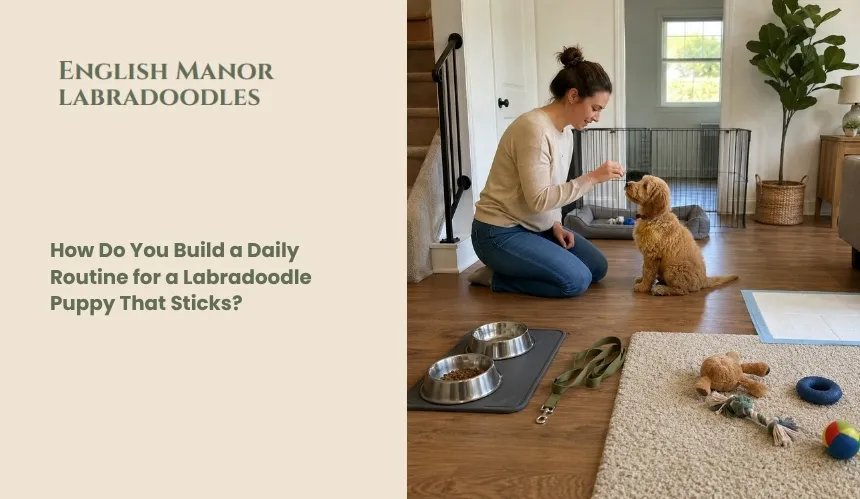
How Do You Build a Daily Routine for a Labradoodle Puppy That Sticks?
Quick Overview: A daily routine for a Labradoodle puppy should follow a predictable schedule that includes feeding times, regular potty breaks, short training sessions, structured play and exercise, and consistent sleep periods. Labradoodles learn quickly through repetition, so maintaining the same timing for daily activities helps puppies develop reliable habits and reduces behavioral confusion. A simple Labradoodle puppy routine typically includes:
Establishing this structure early helps Labradoodle puppies understand what to expect throughout the day, making house training easier, improving behavior, and creating a stable environment where healthy habits can develop. |
The first few weeks with a Labradoodle puppy can feel unpredictable. One moment the puppy is full of energy and ready to play, and the next it is chewing furniture, having accidents indoors, or refusing to settle at night. In many cases, these challenges are not caused by stubborn behavior but by the absence of a clear daily routine. Labradoodles are highly intelligent dogs that learn quickly through patterns, and when those patterns are inconsistent, puppies can struggle to understand what is expected.
Creating a structured daily routine provides the guidance puppies need to adapt to their new environment. Regular feeding times help regulate digestion, predictable potty breaks accelerate house training, and scheduled play sessions help release energy in positive ways. When activities occur at consistent times each day, Labradoodle puppies begin to anticipate those events and respond more calmly.
Did You Know: Canine behavior specialists often note that puppies raised with consistent daily routines adapt to household rules significantly faster than puppies exposed to irregular schedules, particularly during the first few months of development.
Why Do Labradoodle Puppies Need a Structured Daily Routine?

A structured daily routine helps Labradoodle puppies understand when important activities occur throughout the day. Because Labradoodles are intelligent, active dogs, they quickly learn patterns related to feeding, potty breaks, training sessions, and rest periods. When these activities happen at consistent times, puppies begin anticipating them, which improves behavior and reduces confusion.
Without a predictable routine, puppies may experience irregular eating habits, inconsistent potty behavior, excess energy bursts, or difficulty settling at night. A routine creates clear expectations that guide a puppy’s daily behavior and support stable development.
Did You Know: Animal behavior studies suggest that dogs are highly responsive to environmental patterns and time-based cues. Puppies exposed to consistent daily schedules often develop reliable habits several weeks faster than those living in unpredictable environments.
How Routine Helps Labradoodle Puppies Learn Faster
Puppies learn through repetition and association. When meals, potty breaks, and training sessions occur at predictable times, Labradoodles begin linking those activities with specific parts of the day. For example, feeding schedules influence digestion cycles, which naturally guide potty timing.
Routine-based learning also helps reinforce obedience training. Commands practiced during daily activities, such as “sit” before meals or “come” during play, become easier for puppies to understand when those situations occur regularly.
How Structure Reduces Anxiety in Young Dogs
Moving into a new home exposes puppies to unfamiliar sounds, environments, and people. A consistent schedule helps create a stable environment where the puppy knows when food, rest, and activity will occur.
Structured routines provide predictability, which helps puppies feel secure and reduces stress during their early adjustment period.
Interesting Fact: Dogs possess strong internal biological rhythms, similar to human circadian cycles. Consistent routines for feeding, activity, and sleep help regulate these rhythms and support healthier behavioral patterns.
How Routine Supports Successful House Training
House training becomes easier when feeding times and potty breaks occur on a consistent schedule. Predictable digestion patterns allow owners to anticipate when a puppy needs to go outside.
Key routine elements that support house training include:
- Feeding the puppy at the same times each day
- Taking the puppy outside after meals, naps, and play sessions
- Using the same outdoor potty location consistently
- Rewarding successful elimination immediately with praise or treats
When these habits remain consistent, Labradoodle puppies can begin developing reliable bathroom routines within the first few weeks of training.
What Should a Labradoodle Puppy’s Daily Schedule Include?

A well-designed daily routine for a Labradoodle puppy should balance physical activity, mental stimulation, training, feeding, and rest. Because Labradoodles are energetic and highly trainable, their daily schedule should include structured activities that support learning and prevent boredom. Consistency in these activities helps regulate digestion, reinforce house training, and maintain stable energy levels throughout the day.
Did You Know: Young puppies require large amounts of rest for proper development. Veterinary behavior studies show that most puppies sleep 18–20 hours per day, which is why a routine should include scheduled naps alongside play and training periods.
Feeding Times
Scheduled feeding helps regulate digestion and maintain stable energy levels. Most Labradoodle puppies eat three meals per day during the early months of development. Feeding at consistent times also helps predict when the puppy will need bathroom breaks.
A typical feeding routine includes:
- Morning meal shortly after waking
- Midday meal during the early afternoon
- Evening meal several hours before bedtime
Maintaining regular feeding times supports digestive health and helps establish predictable elimination patterns.
Potty Breaks
Frequent potty breaks are essential for house training. Young puppies have limited bladder control and need regular opportunities to eliminate.
Common potty break triggers include:
- Immediately after waking up
- Within 10–30 minutes after meals
- After drinking water
- After play sessions or exercise
- Before bedtime
Taking the puppy to the same outdoor potty location each time helps reinforce consistent bathroom habits.
Training Sessions
Training should be integrated throughout the day rather than confined to a single long session. Labradoodles respond well to positive reinforcement and short training intervals.
Effective training routines often include:
- Practicing basic commands such as sit, stay, and come
- Reward-based training using small treats
- Short sessions lasting 5–10 minutes
- Multiple training periods spread throughout the day
Frequent short sessions match a puppy’s attention span and help reinforce learning.
Play and Exercise
Labradoodles are active dogs that require daily physical activity to maintain balanced behavior. Structured play sessions help burn excess energy and prevent boredom-related behaviors such as chewing or digging.
Healthy activity options include:
- Short games of fetch
- Tug toys and interactive play
- Supervised outdoor exploration
- Gentle leash walking for early training
Exercise Insight: Veterinary experts often recommend moderate exercise for puppies to protect developing joints. Structured play sessions are typically safer than prolonged running.
Rest and Sleep Periods
Rest is an essential part of a puppy’s daily routine. Growth, immune system development, and brain function all depend on adequate sleep.
Important rest habits include:
- Providing a quiet sleeping area such as a crate or dog bed
- Scheduling nap periods between activity sessions
- Maintaining a consistent bedtime routine
- Reducing stimulation before nighttime sleep
When rest periods are included in the daily schedule, Labradoodle puppies are more likely to remain calm, focused, and responsive during training and play activities.
How Often Should Labradoodle Puppies Eat Each Day?
Feeding schedules are one of the most important anchors in a Labradoodle puppy’s daily routine. Consistent meal timing regulates digestion, stabilizes energy levels, and helps owners predict potty breaks more accurately. Labradoodles grow rapidly during their first year, so structured feeding patterns support healthy development while preventing overeating or irregular eating habits.
Most veterinarians recommend feeding puppies multiple smaller meals throughout the day rather than one or two large meals. This approach supports steady metabolism and reduces digestive stress during early growth stages.
Did You Know: Growing puppies can require two times more calories per pound of body weight than adult dogs, which is why properly scheduled puppy meals are essential for maintaining healthy growth.
Recommended Feeding Frequency for Young Puppies
During early development, Labradoodle puppies generally eat three meals per day. This feeding pattern helps maintain stable blood sugar levels and provides consistent energy for learning, play, and growth.
Typical feeding stages include:
- 8–12 weeks: three meals per day
- 3–6 months: two to three meals per day depending on appetite
- 6 months and older: transition toward two meals per day
Gradually adjusting feeding frequency as the puppy grows helps maintain balanced nutrition without encouraging overeating.
Why Consistent Feeding Times Matter
Feeding at the same times each day helps regulate a puppy’s digestive system. Labradoodles quickly learn when to expect meals, which reduces begging behavior and creates a predictable daily rhythm.
Benefits of consistent feeding schedules include:
- Establishing predictable digestion and elimination cycles
- Preventing overeating or irregular appetite patterns
- Supporting stable energy levels throughout the day
- Reinforcing routine-based learning for puppies
Regular feeding times also help puppies associate certain parts of the day with activity, rest, and training sessions.
How Feeding Schedules Support Potty Training
Meal timing plays a direct role in house training success. Once food enters the digestive system, elimination typically follows within a predictable timeframe.
Most puppies need a potty break:
- 10–30 minutes after eating
- Shortly after drinking water
- After waking from naps
- Following active play sessions
By coordinating feeding times with outdoor potty breaks, owners can accelerate house training and reduce indoor accidents.
Interesting Fact: Behavior specialists often note that puppies with consistent feeding schedules develop reliable potty routines much faster than puppies fed at irregular times, making structured meals an important training tool.
How Often Should Labradoodle Puppies Go Outside?

Frequent outdoor potty breaks are one of the most important parts of a Labradoodle puppy’s daily routine. Young puppies have limited bladder and bowel control, so regular opportunities to go outside help prevent accidents and reinforce house-training habits. Establishing consistent potty routines also helps puppies associate specific outdoor areas with elimination.
Because Labradoodles are intelligent and responsive to patterns, taking them outside at predictable times each day helps them quickly learn where and when bathroom breaks should occur.
Did You Know: A common guideline used by trainers suggests that puppies can hold their bladder for approximately one hour per month of age. For example, a three-month-old puppy may only be able to wait around three hours between potty breaks.
Typical Potty Frequency for Young Puppies
Labradoodle puppies require frequent bathroom breaks throughout the day, particularly during the first few months of development.
A typical potty schedule may include:
- Every 1–2 hours during the daytime
- Immediately after waking from sleep
- Shortly after eating or drinking
- After active play sessions
- Right before bedtime
Frequent opportunities to go outside reduce accidents and help puppies develop consistent elimination habits.
What Are the Key Moments Puppies Need Potty Breaks?
Certain activities stimulate digestion and bladder activity in puppies. Recognizing these triggers allows owners to anticipate bathroom needs before accidents occur.
Common potty triggers include:
- After meals when digestion begins
- After naps when the puppy wakes up
- After drinking water
- After energetic play sessions
- Before bedtime to reduce overnight accidents
Taking the puppy outside immediately after these moments significantly improves house-training success.
How Does Using the Same Potty Location Help Training?
Consistency in location is an important training tool. When puppies are taken to the same outdoor spot each time, the scent from previous elimination helps reinforce the behavior.
Benefits of using the same potty area include:
- Helping puppies recognize the designated bathroom spot
- Reinforcing scent cues that encourage elimination
- Reducing confusion during house training
- Speeding up routine development
Many trainers recommend quietly waiting in the same location until the puppy eliminates, then immediately rewarding the behavior with praise or a small treat.
Training Insight: Immediate positive reinforcement, such as praise or treats, helps puppies associate outdoor elimination with rewards, making them more likely to repeat the behavior during future potty breaks.
How Do Training Sessions Fit Into a Labradoodle Puppy’s Daily Routine?
Training is a core part of a Labradoodle puppy’s daily schedule. Because Labradoodles inherit intelligence and trainability from both the Labrador Retriever and the Poodle, they respond extremely well to structured learning and consistent reinforcement. Integrating training into daily routines helps puppies understand household rules while strengthening communication between the dog and the owner.
Rather than relying on long training sessions, short and frequent training moments throughout the day are far more effective. Puppies have limited attention spans, so training should be incorporated into everyday activities such as feeding, playtime, and outdoor walks.
Did You Know: Professional dog trainers often recommend multiple short training sessions each day rather than one long session because puppies learn more effectively through repetition and quick reinforcement.
Why Are Short Training Sessions More Effective?
Young puppies concentrate for only short periods of time. Training sessions that last too long can cause frustration or loss of interest. Short sessions help maintain focus while reinforcing positive behavior.
Effective puppy training sessions typically involve:
- 5–10 minute training periods
- Practicing basic commands such as sit, stay, and come
- Using small reward treats for reinforcement
- Repeating commands several times with positive feedback
Frequent short sessions spread throughout the day improve learning retention and keep training enjoyable for the puppy.
How Can Daily Activities Become Training Opportunities?
Many training opportunities occur naturally during normal daily routines. Using these moments helps reinforce obedience without requiring separate training sessions.
Common daily training opportunities include:
- Asking the puppy to sit before receiving meals
- Practicing come commands during playtime
- Teaching leash behavior during short walks
- Reinforcing calm behavior before entering or leaving rooms
These routine-based training opportunities help Labradoodles associate commands with real-life situations.
Why Is Positive Reinforcement Important for Labradoodles?
Positive reinforcement training focuses on rewarding desired behaviors rather than punishing mistakes. Labradoodles respond particularly well to reward-based training because it encourages cooperation and builds trust.
Positive reinforcement methods often include:
- Training treats for correct responses
- Verbal praise and encouragement
- Gentle petting or play rewards
- Clicker training to mark correct behavior
When rewards immediately follow correct behavior, puppies learn faster and are more motivated to repeat those actions.
Training Fact: Studies in canine behavior show that dogs trained with positive reinforcement methods demonstrate higher learning success and stronger owner bonds compared with dogs trained through punishment-based techniques.
How Much Exercise Do Labradoodle Puppies Need Each Day?
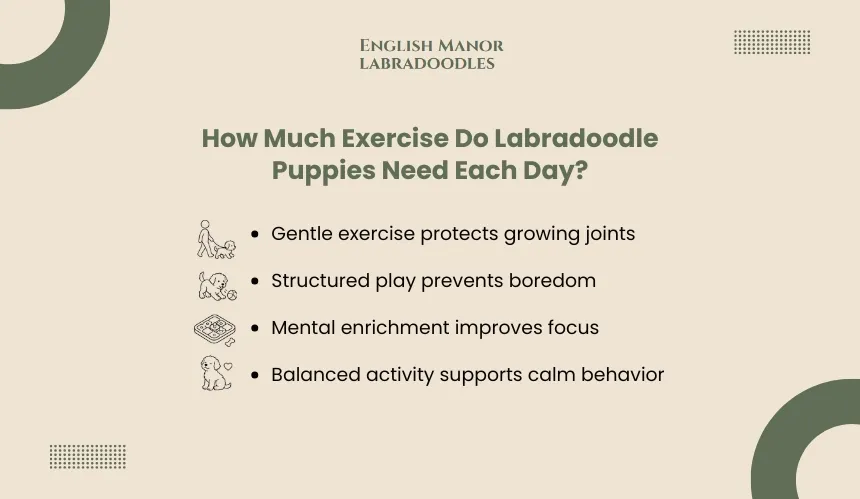
Labradoodles are naturally energetic dogs, but exercise routines for puppies must be carefully balanced to support healthy growth. While physical activity is essential for releasing energy and preventing boredom, excessive exercise can place stress on developing bones and joints. A daily routine should therefore include moderate physical activity combined with mental stimulation.
Exercise also helps Labradoodle puppies regulate their energy levels. Puppies that receive structured activity and playtime are more likely to remain calm during rest periods and focus better during training sessions.
Did You Know: Veterinary orthopedic specialists often recommend a general guideline of about five minutes of structured exercise per month of age, performed up to twice per day, to avoid excessive strain on developing joints.
What Types of Physical Exercise Are Safe for Puppies?
Puppy exercise should be gentle, controlled, and supervised. Activities should focus on movement and exploration rather than prolonged running or intense physical strain.
Safe exercise activities for Labradoodle puppies include:
- Short walks on a leash for early leash training
- Supervised play sessions in a secure yard
- Gentle games of fetch with lightweight toys
- Exploring new environments at a relaxed pace
These activities help puppies develop coordination while allowing them to release excess energy safely.
Why Is Structured Play Important for Labradoodles?
Play sessions provide both physical exercise and opportunities for social interaction. Labradoodles are playful and intelligent, which means structured play helps prevent boredom and encourages healthy engagement with their environment.
Structured play can include:
- Interactive games such as tug or fetch
- Play sessions with safe chew toys
- Supervised play with other vaccinated dogs
- Short backyard exploration periods
Regular play sessions help channel the puppy’s energy into positive activities rather than destructive behaviors.
How Does Mental Exercise Support a Puppy’s Routine?
Mental stimulation is just as important as physical exercise, especially for intelligent breeds like Labradoodles. Activities that challenge the puppy’s brain can help prevent boredom and improve focus during training.
Examples of mental stimulation include:
- Puzzle toys that release treats
- Basic obedience training exercises
- Hide-and-seek games with toys or treats
- Scent-based search games that encourage problem solving
These enrichment activities help develop cognitive skills while keeping the puppy engaged throughout the day.
Interesting Fact: Behavior specialists often note that mental enrichment activities can tire dogs as effectively as moderate physical exercise, making them valuable tools for managing the energy levels of intelligent breeds like Labradoodles.
What Does a Sample Labradoodle Puppy Daily Schedule Look Like?
A sample routine helps illustrate how feeding, potty breaks, training, exercise, and rest fit together throughout the day. Labradoodle puppies benefit from predictable daily patterns because consistent timing reinforces behavioral learning and helps regulate digestion, energy levels, and sleep cycles. While exact schedules may vary depending on the household, maintaining consistent activity blocks helps puppies adapt quickly.
Did You Know: Puppies often begin anticipating routine activities, such as meals or walks, within one to two weeks of consistent scheduling, which makes structured daily patterns especially effective during early training.
Example Morning Routine
Morning routines help establish the day’s structure and give the puppy an opportunity to release energy after nighttime rest.
A typical morning routine may include:
- Early potty break immediately after waking
- Morning meal at a consistent time
- Short walk or supervised outdoor exploration
- Brief training session practicing basic commands
- Calm playtime followed by a scheduled nap
This combination of activity and rest helps regulate energy levels during the early part of the day.
Example Midday Routine
Midday routines usually include feeding, exercise, and additional potty breaks. Puppies require frequent bathroom opportunities and short activity sessions to stay balanced.
A midday routine often includes:
- Midday potty break
- Second meal (for puppies still eating three meals daily)
- Short play session or light exercise
- Brief training session using positive reinforcement
- Rest period or nap in a crate or quiet sleeping area
These structured activities help prevent boredom and reinforce training habits.
Example Evening Routine
Evening routines prepare the puppy for nighttime rest and help maintain consistent sleep patterns.
An evening routine typically includes:
- Dinner at a consistent time
- Potty break shortly after eating
- Light play session or gentle walk
- Short training session reinforcing commands learned earlier
- Final potty break before bedtime
Maintaining calm activities during the late evening helps the puppy settle more easily for nighttime sleep.
Why Consistency Makes the Routine Stick
Consistency is what allows the routine to work effectively. Labradoodles quickly learn daily patterns when activities occur at similar times each day.
Key habits that help maintain a reliable routine include:
- Feeding meals at the same time daily
- Taking the puppy outside on a predictable potty schedule
- Scheduling training sessions consistently
- Maintaining regular sleep and wake times
When these patterns remain stable, Labradoodle puppies begin anticipating daily activities and naturally adapt to the household schedule.
How Do You Keep a Labradoodle Puppy Routine Consistent Long Term?
Creating a routine is only the first step. The real challenge is maintaining that structure consistently as the puppy grows and daily life becomes busier. Labradoodles learn patterns quickly, but inconsistent schedules can confuse them and slow down training progress. A routine becomes effective only when daily activities occur at predictable times and follow clear behavioral expectations.
Consistency also helps reinforce house training, obedience commands, and sleep patterns. When puppies experience the same daily rhythm, they begin anticipating activities such as meals, potty breaks, play sessions, and rest periods.
Did You Know: Canine behavior research shows that dogs rely heavily on environmental patterns and routine cues. Predictable daily schedules help regulate their internal biological clock, improving digestion, sleep cycles, and behavioral stability.
Why Maintaining Consistent Timing Matters
Regular timing is the foundation of any successful puppy routine. Labradoodles quickly associate certain times of the day with specific activities, which helps reinforce learning.
Important timing habits include:
- Feeding meals at the same time every day
- Taking the puppy outside on a predictable potty schedule
- Scheduling playtime and exercise regularly
- Maintaining consistent morning wake-up and bedtime routines
These repeated patterns allow puppies to develop reliable habits that continue into adulthood.
How Should the Routine Change as the Puppy Grows?
As Labradoodle puppies mature, their routine gradually evolves. Older puppies develop better bladder control, longer attention spans, and increased exercise capacity.
Routine adjustments may include:
- Transitioning from three meals per day to two meals
- Reducing the frequency of potty breaks
- Increasing exercise duration and outdoor activity
- Expanding training sessions with new commands and skills
Gradual adjustments ensure the routine continues supporting the puppy’s developmental needs.
What Common Mistakes Can Disrupt a Puppy’s Routine?
Several common habits can unintentionally disrupt a puppy’s schedule and slow training progress.
Routine disruptions often occur when:
- Feeding times vary significantly each day
- Potty breaks are delayed or inconsistent
- Exercise levels change dramatically from day to day
- Bedtime routines become irregular
Avoiding these disruptions helps maintain stability and reinforces predictable daily patterns.
Training Insight: Dogs thrive on repetition and predictability. When routines remain consistent, Labradoodles quickly learn what behaviors are expected, which strengthens obedience and improves long-term behavior management.
Frequently Asked Questions
How long does it take for a Labradoodle puppy to learn a routine?
Most Labradoodle puppies begin recognizing daily patterns within one to two weeks when activities such as feeding, potty breaks, training, and sleep occur at consistent times. Because Labradoodles are intelligent and responsive to repetition, predictable schedules help them quickly associate specific times of day with certain behaviors.
How many times per day should a Labradoodle puppy eat?
Young Labradoodle puppies typically eat three meals per day during the early months of development. As the puppy grows and digestion becomes more stable, many owners gradually transition to two meals per day around six months of age while maintaining consistent feeding times.
How much exercise does a Labradoodle puppy need daily?
Exercise for Labradoodle puppies should focus on moderate activity rather than intense physical strain. Short walks, gentle play sessions, and interactive games help release energy safely. Many veterinarians recommend following the guideline of about five minutes of structured exercise per month of age to protect developing joints.
When should Labradoodle puppies go to sleep at night?
Labradoodle puppies benefit from consistent sleep schedules. Many puppies settle for the night between 9:00 PM and 11:00 PM, depending on the household routine. Establishing a calm bedtime routine with a final potty break helps the puppy relax and develop predictable nighttime sleep patterns.
Can changing routines confuse a Labradoodle puppy?
Puppies rely heavily on predictable patterns to understand their environment. Frequent changes in feeding times, potty schedules, or bedtime routines can slow training progress and create confusion. Maintaining consistent daily rhythms helps Labradoodles adapt quickly and develop reliable habits.