- englishmanor
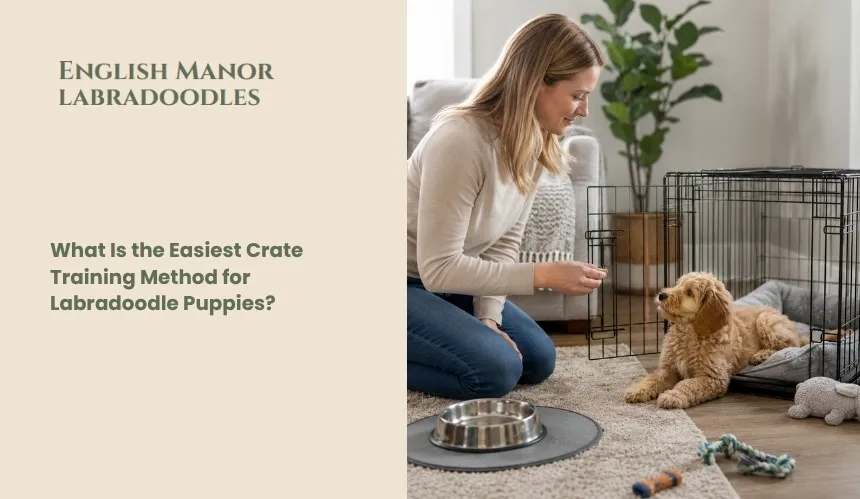
What Is the Easiest Crate Training Method for Labradoodle Puppies?
Quick Overview: The easiest crate training method for Labradoodle puppies is a gradual, reward-based training process that helps the puppy view the crate as a safe and comfortable resting space. By choosing the proper crate size, introducing the crate slowly, and reinforcing calm behavior with treats and praise, puppies learn to enter and relax in the crate willingly rather than resisting it. A simple crate training approach typically includes:
When introduced through a calm and structured training process, most Labradoodle puppies begin accepting the crate as their personal resting space within several days to two weeks. |
Crate training is often one of the first training steps recommended for Labradoodle puppies, yet many new owners feel unsure about how to introduce it properly. When done incorrectly, puppies may resist the crate or become anxious. However, when introduced through a calm and gradual training process, the crate becomes a comfortable resting place where puppies naturally relax and feel secure.
Labradoodles are highly intelligent and respond quickly to structured training routines. A crate can help establish clear boundaries, support house training, and prevent unsafe exploration when the puppy cannot be supervised. The key is ensuring the puppy develops positive associations with the crate from the beginning rather than viewing it as confinement.
Some puppies may already have early exposure to crate-like environments through breeder programs such as Puppy Culture, where gentle conditioning begins around three weeks of age to introduce puppies to structured learning and environmental confidence. Even without early conditioning, Labradoodles can adapt quickly when crate training follows a consistent and reward-based approach.
Why Is Crate Training Beneficial for Labradoodle Puppies?

Crate training provides structure, safety, and predictability during a puppy’s early development. Labradoodle puppies are naturally curious and energetic, which means they often explore their surroundings by chewing or investigating objects. A properly introduced crate offers a controlled environment where the puppy can rest safely while learning household routines.
Crates also support behavioral training because they help establish clear patterns for sleeping, eating, and potty breaks. When used consistently, the crate becomes a familiar resting place rather than a restriction.
Did You Know: Professional dog trainers widely recommend crate training because dogs naturally avoid eliminating where they sleep, which makes crates one of the most effective tools for supporting early house training.
How Crate Training Supports House Training
Crates help reinforce house training by encouraging puppies to hold their bladder until they are taken outside. Since dogs instinctively keep their sleeping area clean, they are less likely to eliminate inside a properly sized crate.
House training benefits of crate use include:
- Helping puppies develop bladder control gradually
- Encouraging elimination during scheduled outdoor potty breaks
- Preventing accidents when the puppy cannot be supervised
- Reinforcing consistent bathroom routines
These patterns allow owners to predict potty needs more accurately and reduce indoor accidents.
How Crates Provide a Secure Resting Environment
When introduced correctly, the crate becomes a comfortable resting area where the puppy can relax. Labradoodles benefit from having a designated space that signals rest time, particularly after play sessions or training.
A crate can provide:
- A quiet environment for naps and nighttime sleep
- A predictable place for relaxation
- A familiar space that reduces overstimulation
- A safe area during busy household activities
Puppies that learn to settle calmly in a crate often develop better sleep routines.
How Crate Training Prevents Unsafe Exploration
Young puppies often chew on objects such as electrical cords, shoes, furniture, or household items. Crates help prevent these risks when the puppy cannot be actively supervised.
Situations where crate use is helpful include:
- When owners leave the house briefly
- During nighttime sleep
- When the puppy needs scheduled rest
- During travel or veterinary visits
Using the crate appropriately protects both the puppy and the household environment while supporting the overall training process.
How Should You Choose the Proper Crate Size for a Labradoodle Puppy?
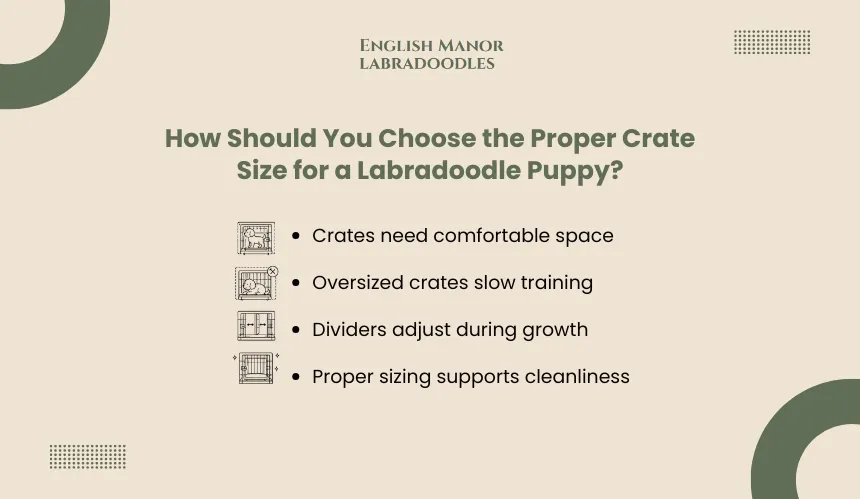
Selecting the proper crate size is one of the most important factors in successful crate training. A crate that is too small will make the puppy uncomfortable, while an oversized crate can slow house training by allowing the puppy to use separate areas for sleeping and elimination. The goal is to create a space that is comfortable for resting but not large enough to encourage accidents.
For Labradoodle puppies, many trainers recommend purchasing an adult-sized crate with an adjustable divider, which allows the crate to expand as the dog grows. Labradoodles can grow quickly during their first year, so this approach helps maintain proper crate sizing throughout development.
Did You Know:
Many Labradoodles reach 40–65 pounds as adults, depending on whether they are miniature, medium, or standard varieties, which is why adjustable crate systems are commonly recommended.
What Defines the Proper Crate Size?
The crate should provide enough room for the puppy to move comfortably while still maintaining a den-like feeling. A properly sized crate typically allows the puppy to:
- Stand upright without hitting the top of the crate
- Turn around comfortably
- Lie down and stretch naturally
- Change sleeping positions without restriction
Maintaining these dimensions ensures the crate remains comfortable while supporting healthy rest periods.
Why Oversized Crates Can Slow House Training
While it may seem convenient to give the puppy extra space, overly large crates can interfere with house training. Puppies may create separate areas inside the crate, one for sleeping and another for elimination, which defeats the natural instinct to keep their sleeping area clean.
Crates that are too large may lead to:
- Increased likelihood of indoor accidents
- Slower development of bladder control
- Reduced effectiveness of crate-based potty training
- Confusion about appropriate bathroom locations
Using a properly sized crate helps reinforce the puppy’s natural desire to keep their resting space clean.
How Crate Dividers Help the Crate Grow With the Puppy
Crate dividers allow owners to adjust the available space inside the crate as the puppy grows. The divider reduces the crate’s interior size during early training stages and can be moved gradually as the Labradoodle becomes larger.
Benefits of crate dividers include:
- Maintaining appropriate crate size for house training
- Preventing unnecessary crate replacements during growth
- Allowing gradual expansion as the puppy matures
- Supporting consistent crate training throughout development
This adjustable setup makes crate training more effective while accommodating the Labradoodle’s rapid growth during the first year.
What Is the Step-by-Step Crate Training Process for Labradoodle Puppies?
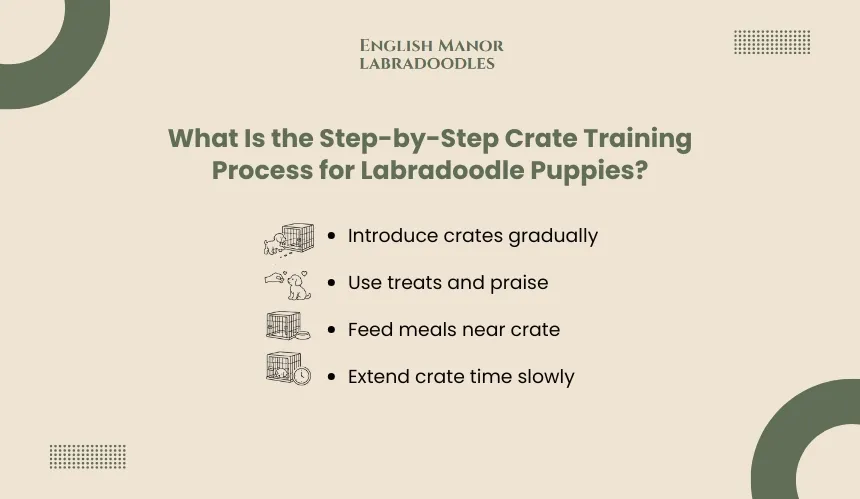
The easiest crate training method follows a gradual training process that helps the puppy develop positive associations with the crate. Labradoodles learn best through reward-based training, repetition, and predictable routines. Instead of forcing the puppy into the crate, the goal is to make the crate a comfortable and rewarding space the puppy willingly enters.
Introducing the crate slowly allows the puppy to become familiar with the environment while building confidence. When the process is gradual and consistent, most Labradoodle puppies begin accepting the crate within several days.
Did You Know:
Behavior specialists often note that puppies form positive or negative associations with new environments very quickly, which is why early crate experiences should always be calm and rewarding.
Step 1: Introduce the Crate as a Safe Environment
Start by placing the crate in a quiet area of the home where the puppy spends time with the family. Leave the door open and allow the puppy to explore it voluntarily.
Helpful introduction strategies include:
- Placing soft bedding or a comfortable crate pad inside
- Leaving the crate door open during exploration
- Allowing the puppy to walk in and out freely
- Using toys or treats to encourage curiosity
This stage helps the puppy view the crate as part of the normal living environment
Step 2: Use Treats and Positive Reinforcement
Positive reinforcement helps create strong associations between the crate and rewards. Each time the puppy enters the crate voluntarily, reward the behavior.
Common reinforcement methods include:
- Offering small training treats when the puppy enters the crate
- Providing verbal praise for calm behavior
- Placing favorite toys inside the crate
- Using short reward-based training sessions
These rewards encourage the puppy to associate the crate with positive experiences.
Step 3: Feed Meals Near or Inside the Crate
Feeding meals near the crate helps build trust and familiarity. Once the puppy becomes comfortable eating near the crate, meals can gradually be moved inside the crate.
This method helps the puppy associate the crate with:
- Comfort and safety
- Daily routines such as feeding time
- Positive experiences and rewards
- Calm resting periods after meals
Many puppies begin entering the crate willingly when food becomes part of the routine.
Step 4: Begin Short Crate Sessions
After the puppy becomes comfortable entering the crate, begin closing the crate door for short periods while the puppy remains calm. Start with very brief sessions and gradually increase the duration.
Early crate sessions should:
- Last only a few minutes at first
- Occur while the puppy is relaxed or tired
- Include treats or toys to maintain comfort
- Be followed by a potty break when the puppy exits
Gradual exposure helps the puppy remain calm while learning that crate time is temporary.
Step 5: Gradually Extend Crate Time
As the puppy becomes more comfortable, the duration of crate sessions can slowly increase. Crate time is often used during naps, quiet time, or when the owner cannot supervise the puppy directly.
Gradually increasing crate time helps the puppy learn to:
- Relax independently
- Rest calmly during quiet periods
- Follow structured daily routines
- Adapt to longer overnight sleep periods
Maintaining patience and consistency during this training process helps Labradoodle puppies develop long-term comfort with their crate.
What Is the 2-1 Rule in Crate Training?
The 2-1 rule is a simple guideline used by many trainers to balance activity and rest for puppies during crate training. Young puppies become overstimulated easily, and scheduled rest periods help them calm down and recharge. The rule suggests that after periods of activity, puppies should spend time resting in a quiet space such as their crate.
This approach prevents excessive excitement, reduces overtired behavior, and encourages puppies to view the crate as a natural place to relax.
Did You Know: Behavior specialists often observe that overtired puppies may display hyperactive behaviors such as excessive biting, zooming around the house, or difficulty settling down.
What Does the 2-1 Rule Mean?
The 2-1 rule generally follows a simple pattern:
- About two hours of normal activity (play, training, feeding, exploration)
- Followed by about one hour of quiet rest in a calm environment such as a crate
This pattern helps regulate the puppy’s energy levels throughout the day.
Typical activity periods may include:
- Training sessions
- Playtime or exercise
- Feeding routines
- Short walks or exploration
After these activities, puppies often benefit from a quiet nap period in the crate.
Why Rest Periods Are Important for Puppies
Rest is essential for a puppy’s physical growth and mental development. Labradoodle puppies use sleep periods to recover from activity and process new learning experiences.
Scheduled rest periods help:
- Prevent overstimulation and excessive biting
- Support brain development and memory formation
- Maintain balanced energy levels throughout the day
- Encourage calm behavior inside the crate
Many puppies settle more easily when rest periods are built into their daily routine.
How the 2-1 Rule Supports Crate Training
Using the crate for scheduled rest periods helps puppies associate the crate with relaxation rather than confinement. When puppies are placed in the crate during natural nap times, they are more likely to settle quickly.
Benefits of using the 2-1 rule during crate training include:
- Helping puppies learn to relax inside the crate
- Creating predictable daily patterns
- Preventing overtired behavioral issues
- Reinforcing calm crate routines
Over time, Labradoodle puppies begin entering the crate voluntarily when they feel tired because they associate the space with rest and comfort.
How Long Can Labradoodle Puppies Stay in a Crate?
Crate duration should always match the puppy’s age, bladder capacity, and stage of training. Labradoodle puppies are still developing bladder control during the early months, so they require regular potty breaks throughout the day. Leaving a puppy crated for too long can lead to accidents, frustration, or negative associations with the crate.
Crates are intended to support rest, safety, and routine, not extended confinement. A balanced routine should include crate rest periods along with regular play, training, feeding, and outdoor bathroom breaks.
Did You Know: A commonly used guideline suggests that puppies can hold their bladder for approximately one hour per month of age, though frequent breaks are still recommended during early house training.
Typical Crate Time Guidelines by Age
Crate duration should increase gradually as the puppy matures and develops better bladder control.
General crate guidelines include:
- 8–10 weeks old: about 1 hour at a time
- 10–12 weeks old: about 2 hours
- 3–4 months old: about 3 hours
- 4–6 months old: about 4 hours
These guidelines help prevent accidents and ensure the puppy remains comfortable during crate periods
Signs the Puppy Needs a Potty Break
Recognizing early signals helps prevent accidents and maintain successful crate training. Puppies often display behavioral cues when they need to go outside.
Common potty signals include:
- Whining or barking inside the crate
- Restless movement or pacing
- Circling behavior
- Scratching at the crate door
When these signals appear, the puppy should be taken outside promptly to reinforce the house-training routine.
Why Crate Time Should Be Balanced With Activity
Healthy puppy development requires a balance of rest, exercise, and mental stimulation. Labradoodle puppies are active dogs that need daily engagement to prevent boredom and frustration.
A balanced routine should include:
- Regular play sessions and exercise
- Short obedience training periods
- Frequent potty breaks
- Scheduled nap times in the crate
When crate time is combined with adequate activity and interaction, Labradoodle puppies are more likely to accept the crate as a normal and comfortable part of their daily routine.
How Do You Help a Labradoodle Puppy Sleep in a Crate at Night?
Nighttime crate training is often one of the biggest adjustments for both puppies and owners. Labradoodle puppies may initially feel unsettled when separated from their littermates and introduced to a new sleeping environment. A calm and predictable nighttime routine helps the puppy associate the crate with rest and security rather than isolation.
Consistency is essential. When bedtime occurs at the same time each night and the crate environment remains comfortable and quiet, most puppies gradually adapt to sleeping through the night.
Did You Know: Most puppies begin adjusting to nighttime crate routines within several nights to one week when bedtime schedules and pre-sleep routines remain consistent.
Why a Predictable Bedtime Routine Helps
A consistent bedtime routine signals to the puppy that it is time to settle down. Just like humans, dogs respond well to predictable nighttime patterns.
A simple bedtime routine may include:
- A final potty break before bedtime
- Calm indoor activity such as quiet play or gentle interaction
- Placing the puppy in the crate at the same time each night
- Turning off lights or reducing stimulation in the sleeping area
Following this routine daily helps the puppy recognize when nighttime rest begins.
Why Placing the Crate Near the Owner Can Reduce Anxiety
During the first few nights, placing the crate in the same room as the owner can help the puppy feel more secure. Familiar sounds such as breathing or movement reassure the puppy that it is not alone.
Benefits of placing the crate nearby include:
- Reducing separation anxiety during early nights
- Helping the owner hear when the puppy needs a potty break
- Allowing the puppy to adjust gradually to nighttime routines
- Providing reassurance during the transition to a new home
As the puppy becomes comfortable, the crate can gradually be moved to its long-term sleeping location if desired.
How Comfort Items and Familiar Scents Help Puppies Settle
Comfort items can make the crate environment feel more familiar and relaxing. Many puppies benefit from objects that carry familiar scents or textures.
Helpful comfort items may include:
- A soft blanket or crate pad for warmth and comfort
- A safe chew toy for quiet entertainment
- A blanket carrying the scent of the breeder or littermates
- A covered crate area that creates a den-like atmosphere
These familiar elements help the puppy relax more easily and encourage longer sleep periods.
How to Respond if the Puppy Cries in the Crate
Some whining during the first nights is normal as the puppy adjusts to the new environment. However, it is important to distinguish between attention-seeking behavior and a genuine need for a potty break.
Helpful responses include:
- Taking the puppy outside calmly if a potty break may be needed
- Avoiding excessive attention that reinforces whining
- Keeping nighttime interactions calm and quiet
- Returning the puppy to the crate immediately after potty breaks
With consistent routines and patience, Labradoodle puppies typically learn to settle comfortably in their crate during nighttime sleep.
What Common Crate Training Mistakes Should Owners Avoid?
Crate training is most effective when the process remains gradual, consistent, and positive. However, certain common mistakes can create negative associations with the crate and slow the training process. Labradoodle puppies are intelligent and sensitive to their environment, so incorrect training approaches may lead to resistance, anxiety, or fear of the crate.
Avoiding these mistakes helps ensure that the crate becomes a safe resting space rather than a source of stress.
Did You Know:
Behavior specialists often emphasize that puppies develop strong emotional associations with new environments during their early weeks, which means negative crate experiences can delay training progress.
Using the Crate as Punishment
One of the most common mistakes is using the crate as a punishment for unwanted behavior. If the puppy is sent to the crate only after doing something wrong, the crate may become associated with stress or isolation.
To maintain positive crate associations:
- Use the crate primarily for rest and relaxation
- Reward the puppy for entering the crate voluntarily
- Avoid placing the puppy in the crate immediately after scolding
- Associate crate time with calm activities and rewards
The crate should always represent a comfortable and safe environment.
Leaving Puppies Crated for Too Long
Young puppies require regular potty breaks, interaction, and exercise. Leaving a puppy crated for extended periods can lead to frustration, anxiety, and house-training setbacks.
Excessive crate time may result in:
- Increased whining or stress behaviors
- Accidents inside the crate
- Reduced tolerance for crate confinement
- Excess energy and hyperactivity after release
Crate time should always be balanced with playtime, training sessions, and outdoor activity.
Introducing the Crate Too Quickly
Some owners attempt to close the crate door immediately or leave the puppy inside for long periods during the first day. This sudden approach can create fear and resistance.
A gradual introduction is far more effective. The crate training process should include:
- Allowing the puppy to explore the crate voluntarily
- Rewarding calm behavior near the crate
- Starting with very short crate sessions
- Increasing crate duration slowly over several days
This step-by-step method helps the puppy develop confidence and comfort inside the crate.
Ignoring the Puppy’s Physical Needs
Crate training should never prevent the puppy from meeting basic needs such as bathroom breaks, exercise, or social interaction.
Owners should ensure the puppy receives:
- Frequent potty breaks throughout the day
- Daily play and exercise sessions
- Mental stimulation through training and toys
- Adequate social interaction with family members
Meeting these needs helps maintain a balanced routine where the crate becomes a natural place for rest rather than a forced confinement.
What Does a Simple Daily Crate Training Routine Look Like?
Integrating the crate into a puppy’s daily routine makes training easier and more effective. Labradoodle puppies respond strongly to predictable patterns, so when the crate becomes part of regular activities such as naps, feeding schedules, and nighttime sleep, the puppy begins to view it as a normal resting space rather than a temporary confinement.
A consistent routine also supports house training, since puppies learn to alternate between activity periods and calm rest periods. This structure helps regulate energy levels while reinforcing healthy habits.
Did You Know:
Puppies that follow predictable daily routines often settle into crate schedules within one to two weeks, as repetition helps them recognize when it is time for rest or activity.
Morning Routine
The day typically begins with a potty break immediately after the puppy wakes. Morning routines often include feeding, short play sessions, and early training exercises. After this activity period, the puppy may be placed in the crate for a scheduled nap.
This sequence helps establish a predictable rhythm: activity followed by rest.
Midday Routine
During midday hours, puppies usually have another potty break, a short training session, and supervised playtime. Once the puppy becomes tired, the crate can be used again for a quiet nap period.
At this stage of the day, many puppies follow the 2-1 rule, where activity is balanced with scheduled rest in the crate.
Evening Routine
Evening routines typically include the final meal, light exercise, and calm interaction with family members. A potty break shortly after dinner helps reinforce house training, followed by a quieter activity period that prepares the puppy for bedtime.
Maintaining calm routines in the evening helps the puppy settle more easily during nighttime crate sleep.
Nighttime Routine
Before bedtime, the puppy should be taken outside for a final bathroom break. Afterward, the puppy is placed in the crate for overnight sleep. Consistent bedtime schedules help regulate sleep cycles and reduce nighttime restlessness.
Over time, Labradoodle puppies learn to associate the crate with predictable rest periods, which strengthens both crate training and overall daily structure.
Frequently Asked Questions
How long does it take to crate train a Labradoodle puppy?
Most Labradoodle puppies begin accepting the crate within several days to two weeks when the training process is gradual and consistent. Positive reinforcement, short crate sessions, and predictable routines help the puppy develop comfort with the crate while avoiding fear or resistance.
Should Labradoodle puppies sleep in a crate at night?
Many trainers recommend nighttime crate sleeping during early puppyhood because it supports house training and provides a secure resting space. A properly sized crate placed near the owner during the first few nights can help the puppy adjust more easily to nighttime routines.
Why does my Labradoodle puppy cry in the crate?
Whining can occur when the puppy is adjusting to a new environment, needs a potty break, or feels temporarily anxious. Calmly checking whether the puppy needs to go outside and maintaining a consistent bedtime routine usually helps reduce crate-related crying within a few nights.
Can crate training help prevent separation anxiety?
Crate training can help puppies learn to relax independently when introduced gradually and used appropriately. When the crate is associated with calm rest, toys, and rewards, puppies become more comfortable spending short periods alone.
When can Labradoodles stop using a crate?
Some Labradoodles continue using their crate as a resting space even as adults, while others gradually transition to sleeping areas outside the crate. Many owners begin allowing supervised crate-free time once the dog demonstrates reliable house training and calm behavior when left alone.