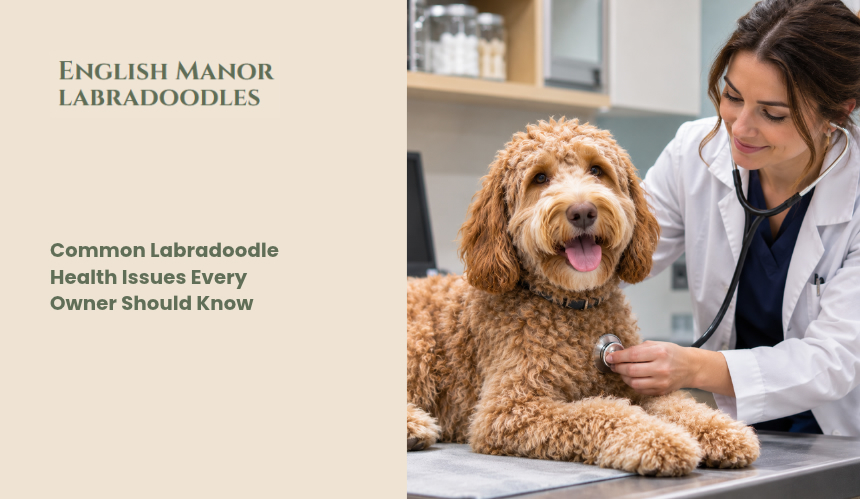
- English Manor Labradoodle
Common Labradoodle Health Issues Every Owner Should Know
Quick Overview: Common Labradoodle health issues can include joint conditions such as hip and elbow dysplasia, ear infections, allergies, skin problems, eye disorders, obesity, and dental disease. While Labradoodles are generally considered healthy dogs, they can inherit certain health risks from both the Labrador Retriever and Poodle sides of their lineage. Regular veterinary care, proper nutrition, routine exercise, and early detection of potential problems play important roles in supporting long-term health and well-being. Most Common Labradoodle Health Concerns
Warning Signs Owners Should Watch For
Did you know? Many health conditions are easier to manage when they are identified early. Routine wellness exams and regular at-home observation can help detect subtle changes before they become more significant concerns. Although Labradoodles may be predisposed to certain inherited and lifestyle-related health issues, many live long, active lives when provided with proper preventative care, balanced nutrition, regular exercise, and consistent veterinary monitoring. Understanding common health concerns helps owners recognize potential warning signs and make informed decisions to support their dog’s lifelong wellness. |
Labradoodles are often praised for their friendly personalities, intelligence, and active lifestyles. Many owners view them as healthy family companions, and in many cases, they are. However, like all dog breeds and crossbreeds, Labradoodles can be susceptible to certain health concerns throughout their lives. Some of these conditions may be inherited, while others can develop due to lifestyle, age, environmental factors, or overall health management. Understanding these potential issues does not mean expecting problems to occur, but it does help owners recognize warning signs and make informed decisions about their dog’s care.
One of the biggest misconceptions among dog owners is that a mixed breed is automatically free from health concerns. While hybrid genetics may offer some advantages in certain situations, no breed is completely immune to inherited conditions or age-related health changes. Labradoodles can still experience joint issues, allergies, ear infections, eye disorders, dental disease, and weight-related concerns that require ongoing attention. The key is awareness rather than worry. Knowing what to watch for allows owners to respond more quickly if changes occur.
The good news is that many common health concerns can be managed more effectively when identified early. Regular veterinary checkups, proper nutrition, routine exercise, preventive care, and consistent wellness monitoring all play important roles in supporting long-term health. By understanding the most common Labradoodle health issues, owners can take a proactive approach to their dogs’ care and help them enjoy healthier, more comfortable lives.
Did you know? Many health conditions develop gradually over time. Small changes in mobility, appetite, energy level, skin condition, or behavior are often among the earliest signs that a dog may benefit from additional health evaluation.
Are Labradoodles Generally Healthy Dogs?
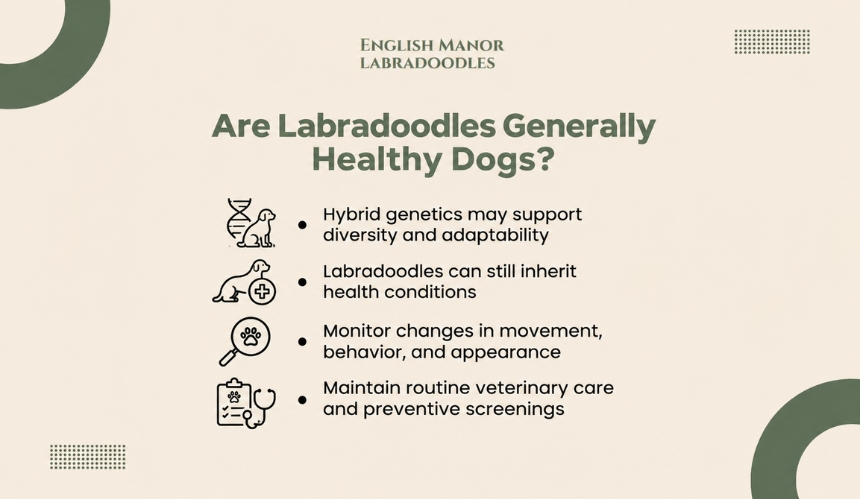
Labradoodles are often considered healthy and active companions, which is one reason they have become such a popular breed. Many Labradoodles enjoy long, energetic lives filled with physical activity, social interaction, and family companionship. However, being generally healthy does not mean they are free from health risks. Like all dogs, Labradoodles can develop inherited conditions, age-related concerns, and lifestyle-related health issues that require attention throughout their lives.
Understanding the balance between overall health and potential risks helps owners take a more informed approach to long-term wellness.
The Benefits of Hybrid Genetics
Because Labradoodles are a cross between the Labrador Retriever and the Poodle, they inherit traits from two different breeds. This genetic diversity is one reason many people associate Labradoodles with strong overall health and adaptability.
In some cases, hybrid genetics may contribute to:
- Genetic diversity within breeding lines.
- A broad range of physical and behavioral traits.
- Strong athletic ability and activity levels.
- Adaptability to different lifestyles and environments.
However, genetic diversity does not eliminate the possibility of inherited health concerns, which is why ongoing health monitoring remains important.
Why No Breed Is Completely Free of Health Risks
A common misconception is that mixed-breed dogs are automatically protected from hereditary health conditions. While some risks may vary between individual dogs, no breed or crossbreed is completely immune to health challenges.
Labradoodles can still inherit health-related traits from either parent breed, including concerns involving:
- Joint development.
- Eye health.
- Skin and allergy sensitivities.
- Ear health.
- Overall wellness and aging.
This is why responsible breeding practices, routine veterinary care, and owner awareness all remain important parts of supporting lifelong health.
Did you know? Many health concerns develop gradually and may show only subtle signs during their early stages. Small changes in behavior, movement, or appearance are often worth monitoring over time.
The Importance of Preventive Care
Preventive care plays a major role in helping Labradoodles maintain good health throughout their lives. Rather than waiting for symptoms to become obvious, proactive care focuses on monitoring health, supporting wellness, and identifying potential concerns early.
Preventive care often includes:
- Routine veterinary examinations.
- Health screenings and wellness evaluations.
- Proper nutrition.
- Regular exercise.
- Dental care and hygiene.
- Ongoing observation of physical and behavioral changes.
Owners who take a proactive approach to wellness are often better positioned to recognize changes and respond appropriately when health concerns arise.
Did you know? Many health conditions are easier to manage when they are identified early through routine wellness monitoring, which is one reason regular veterinary visits remain an important part of lifelong Labradoodle care.
Joint Problems: Hip and Elbow Dysplasia
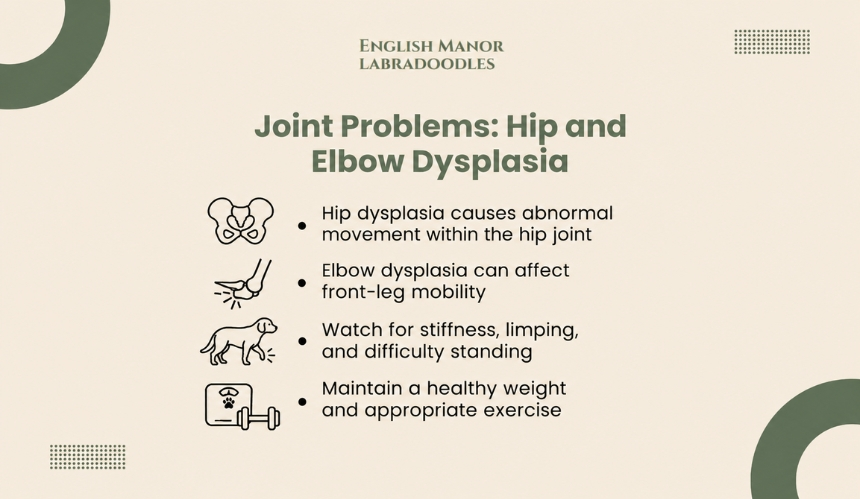
Joint health is one of the most discussed topics when it comes to Labradoodle wellness. Because Labradoodles inherit traits from both Labrador Retrievers and Poodles, they may be predisposed to certain orthopedic conditions that affect mobility and comfort. Among the most common concerns are hip dysplasia and elbow dysplasia, both of which involve abnormal joint development that can impact movement over time.
While not every Labradoodle will experience these conditions, understanding the warning signs and risk factors can help owners monitor their dog’s mobility and overall quality of life.
What Is Hip Dysplasia?
Hip dysplasia is a condition that affects the hip joint, where the ball and socket do not fit together as smoothly as they should. Over time, this abnormal joint movement can contribute to discomfort, reduced mobility, and gradual joint wear.
The condition may develop due to a combination of genetic and environmental factors, including growth patterns, body condition, and overall joint health. Severity can vary significantly from one dog to another, which is why some Labradoodles may show noticeable symptoms while others display only subtle signs.
What Is Elbow Dysplasia?
Elbow dysplasia involves abnormal development within the elbow joint. Like hip dysplasia, it can affect movement and joint function over time. The condition may influence how weight is distributed through the front legs and can contribute to mobility challenges as the dog ages.
Because Labradoodles are active and energetic dogs, changes in movement patterns are sometimes easier to notice during play, exercise, or daily activities.
Did you know? Joint conditions do not always appear during puppyhood. Some dogs may not show noticeable signs until adolescence or adulthood, even if underlying joint changes have been present for years.
Common Signs Owners May Notice
The signs of joint problems can vary depending on the dog’s age, activity level, and the severity of the condition. Many symptoms develop gradually, making them easy to overlook during the early stages.
Owners may notice:
- Stiffness after resting.
- Reluctance to jump or climb stairs.
- Difficulty standing up.
- Changes in gait or movement.
- Reduced interest in physical activity.
- Occasional limping or favoring a leg.
Because these signs can have multiple causes, ongoing observation and veterinary evaluation are important when mobility changes occur.
Supporting Long-Term Joint Health
While genetics can influence joint development, long-term joint health is also affected by lifestyle factors. Maintaining a healthy body condition, providing appropriate exercise, and monitoring mobility throughout life can help support overall orthopedic wellness.
Regular wellness monitoring allows owners to recognize changes early and discuss concerns with their veterinarian before mobility issues worsen. Early awareness is often one of the most valuable tools in supporting a Labradoodle’s long-term comfort and activity level.
Did you know? Excess body weight can place additional stress on joints. Maintaining a healthy weight is often considered one of the most important factors in supporting long-term joint health and mobility.
Ear Infections and Ear Health Concerns
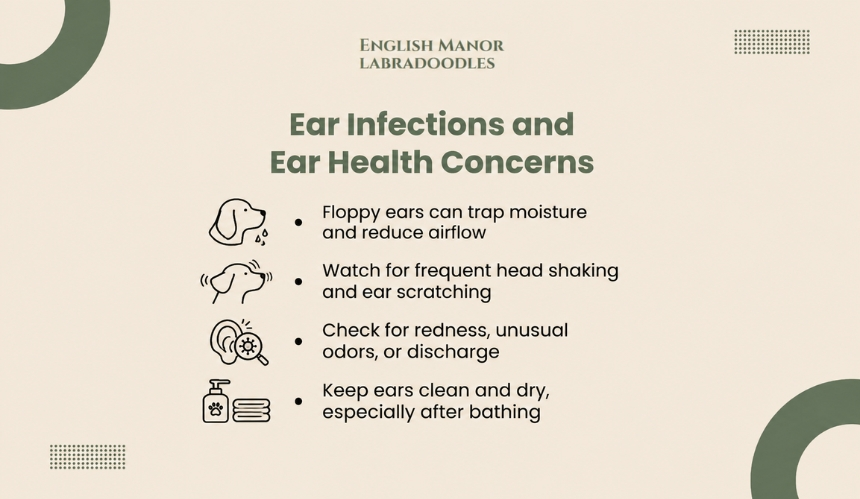
Ear health is another important aspect of Labradoodle wellness. Many Labradoodles have floppy ears that can create a warm environment where moisture and debris may become trapped more easily than in breeds with upright ears. While this characteristic is part of their distinctive appearance, it can also increase the likelihood of ear-related concerns if routine monitoring and care are overlooked.
Because ear problems can develop gradually, owners who understand the early warning signs are often better prepared to recognize potential issues before they become more serious.
Why Labradoodles Are Prone to Ear Problems
A Labradoodle’s ear structure can contribute to reduced airflow within the ear canal. Combined with factors such as swimming, bathing, outdoor activity, and natural wax production, this environment may sometimes encourage irritation or infection.
Additional factors that may contribute to ear concerns include:
- Moisture trapped in the ears.
- Excess hair growth around the ear canal.
- Allergies that affect skin and ear health.
- Accumulation of debris or wax.
These factors do not guarantee that ear problems will occur, but they help explain why routine ear monitoring is often recommended.
Signs of Ear Infections
Ear infections can present in several ways, and symptoms may vary from mild irritation to more noticeable discomfort. Because dogs cannot communicate pain directly, behavioral and physical changes are often the first clues that something may be wrong.
Owners may observe:
- Frequent head shaking.
- Scratching at the ears.
- Redness or irritation.
- Unpleasant odor from the ears.
- Increased sensitivity when the ears are touched.
- Visible discharge or debris.
Changes such as these may indicate that the ears require closer attention and evaluation.
Did you know? Repeated ear infections can sometimes be linked to underlying issues such as allergies or chronic skin sensitivities, which is why recurring ear problems often warrant further investigation.
Preventive Ear Care
Preventive care plays an important role in supporting ear health. Regular observation allows owners to identify changes early and monitor for signs of irritation before they become more significant.
Good ear-care habits often include:
- Checking the ears regularly.
- Keeping the ears as clean and dry as possible.
- Monitoring for unusual odors or discharge.
- Paying attention after swimming or bathing.
- Observing changes in scratching or head-shaking behavior.
Consistent monitoring is often more effective than waiting until obvious symptoms develop.
When Veterinary Attention May Be Needed
Some ear issues can worsen if they are not properly evaluated. Persistent irritation, recurring infections, noticeable discomfort, or significant changes in ear appearance should be discussed with a veterinarian.
Prompt attention may help:
- Identify underlying causes.
- Reduce discomfort.
- Prevent recurring issues.
- Support long-term ear health.
Did you know? Many dogs show subtle signs of ear discomfort long before severe symptoms develop. Frequent head shaking or increased ear scratching may be among the earliest indicators that something is affecting ear health.
Allergies and Skin Conditions
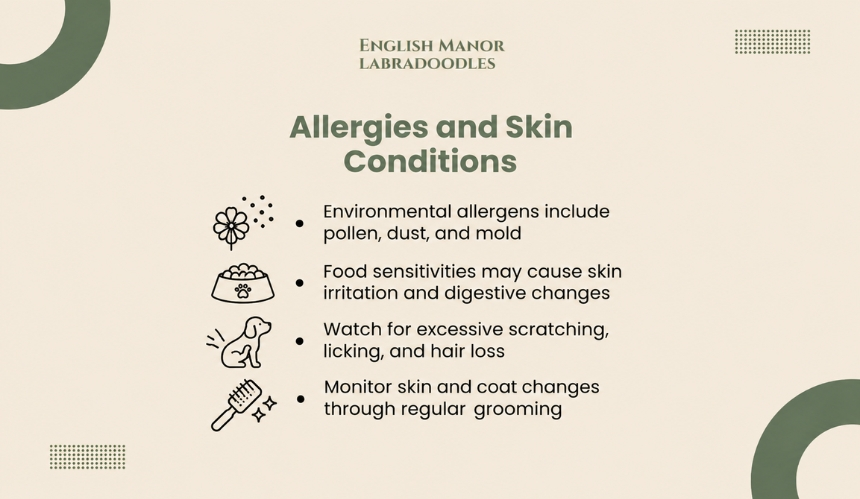
Allergies and skin-related concerns are among the most common health issues seen in Labradoodles. Because their skin and coat can be sensitive to a variety of environmental and dietary factors, some dogs may experience recurring irritation, itching, or discomfort throughout their lives. While occasional scratching is normal, persistent skin issues often deserve closer attention because they can affect a dog’s comfort and overall quality of life.
Understanding the different types of allergies and the signs associated with skin problems can help owners identify changes early and monitor their dog’s health more effectively.
Environmental Allergies
Environmental allergies occur when a dog’s immune system reacts to substances commonly found in its surroundings. These triggers may vary depending on location, season, and individual sensitivity.
Common environmental triggers may include:
- Pollen.
- Grass and weeds.
- Dust and dust mites.
- Mold spores.
- Other airborne particles.
Symptoms often become more noticeable at certain times of the year, although some dogs may experience issues year-round, depending on the trigger.
Food Sensitivities
Some Labradoodles may also develop sensitivities to ingredients found in their diet. Food-related reactions can sometimes resemble environmental allergies, making it difficult to identify the underlying cause without proper evaluation.
Signs associated with food sensitivities may include recurring skin irritation, excessive scratching, digestive changes, or chronic ear issues. Because symptoms can overlap with other conditions, careful observation is often important when monitoring long-term health.
Did you know? Allergies do not always appear during puppyhood. Some dogs may develop sensitivities later in life, even if they previously showed no signs of allergic reactions.
Common Skin Symptoms
Skin conditions can present in many different ways. In some cases, symptoms are mild and intermittent, while others may become more persistent over time.
Owners may notice:
- Frequent scratching.
- Excessive licking or chewing.
- Red or irritated skin.
- Hair thinning or hair loss.
- Dry or flaky skin.
- Recurrent hot spots or skin inflammation.
Because many skin conditions share similar symptoms, changes should be monitored carefully and discussed with a veterinarian when they become persistent or severe.
Monitoring Changes in Skin and Coat Health
A Labradoodle’s coat often provides valuable clues about overall health. Changes in skin condition, coat quality, or grooming habits may sometimes indicate underlying issues that deserve attention.
Regular grooming and wellness monitoring can help owners:
- Identify skin changes early.
- Notice unusual scratching or licking.
- Monitor coat condition.
- Detect recurring irritation.
- Track seasonal patterns in symptoms.
Did you know? Repeated scratching, licking, or skin irritation can sometimes indicate underlying allergies rather than simple grooming issues. Early observation of these behaviors often helps owners recognize potential health concerns before they become more significant.
Eye Health and Vision Concerns
Eye health is an important part of overall wellness for Labradoodles. While many dogs maintain healthy vision throughout their lives, some may be predisposed to inherited or age-related eye conditions that can affect sight over time. Because vision changes often develop gradually, they can be difficult for owners to recognize during the early stages.
Regular observation and routine veterinary examinations can help identify potential concerns before they significantly impact a dog’s daily life.
Progressive Retinal Atrophy (PRA)
Progressive Retinal Atrophy, commonly known as PRA, is one of the most frequently discussed hereditary eye conditions in dogs. It affects the retina, the part of the eye responsible for detecting light and supporting vision.
The condition typically develops gradually, meaning affected dogs may initially appear normal before showing signs of reduced vision. Because progression often occurs slowly, owners may not immediately notice subtle changes in their dog’s behavior.
Other Eye Conditions
In addition to PRA, Labradoodles may experience other eye-related concerns throughout their lives. Some conditions may be inherited, while others can develop due to aging, injury, or other health factors.
Potential eye concerns may involve:
- Changes in vision quality.
- Eye irritation or inflammation.
- Age-related eye changes.
- Structural abnormalities affecting the eye.
While not every Labradoodle will experience these issues, awareness helps owners monitor eye health more effectively.
Did you know? Dogs often adapt remarkably well to gradual vision loss, which can make eye problems difficult to detect during the early stages.
Signs of Vision Changes
Because dogs rely on multiple senses to navigate their environment, changes in vision may not always be obvious. Owners often notice behavioral changes before realizing that eyesight may be affected.
Possible signs include:
- Bumping into objects.
- Hesitation in unfamiliar environments.
- Difficulty navigating in low light.
- Increased caution around stairs or obstacles.
- Changes in confidence during movement.
- Unusual eye appearance or cloudiness.
Observing these changes early can help support timely evaluation and monitoring.
The Importance of Routine Eye Monitoring
Routine observation plays an important role in maintaining eye health. Many eye conditions progress gradually, making ongoing monitoring especially valuable as a Labradoodle ages.
Regular eye monitoring can help owners:
- Notice subtle vision changes.
- Track alterations in eye appearance.
- Identify unusual behaviors related to sight.
- Support early veterinary evaluation when needed.
Did you know? Many eye conditions become easier to manage when detected early. Routine wellness examinations often include eye assessments that can help identify concerns before noticeable vision loss occurs.
Obesity and Weight Management
Maintaining a healthy weight is one of the most important aspects of long-term Labradoodle wellness. Labradoodles are generally active dogs that benefit from regular exercise and balanced nutrition, but like many breeds, they can become overweight if calorie intake consistently exceeds energy expenditure. Excess weight may seem like a minor concern at first, but over time, it can place additional strain on the body and contribute to a variety of health challenges.
Because weight gain often occurs gradually, many owners do not notice changes until they become more significant. Regular monitoring can help identify trends before they begin affecting overall health and mobility.
Why Weight Matters
A healthy body condition supports nearly every aspect of a Labradoodle’s well-being. Proper weight management helps maintain mobility, supports joint function, and allows dogs to participate comfortably in everyday activities.
Maintaining a healthy weight can contribute to:
- Better joint health.
- Improved mobility.
- Greater physical endurance.
- Enhanced overall comfort.
- Long-term wellness and quality of life.
Even modest weight gain can place additional stress on the body, particularly as dogs age.
Common Causes of Weight Gain
Weight gain is often the result of multiple contributing factors rather than a single cause. Changes in lifestyle, activity level, feeding habits, and aging can all influence body condition over time.
Common contributors may include:
- Excess calorie consumption.
- Frequent treats or table scraps.
- Reduced physical activity.
- Aging and slower metabolism.
- Inconsistent portion control.
Understanding these factors can help owners make informed decisions about nutrition and exercise.
Did you know? Many dogs gain weight so gradually that family members may not notice the change until it begins affecting movement, energy levels, or overall body condition.
Health Risks Associated With Excess Weight
Carrying excess body weight can increase physical demands on the body and may contribute to a variety of health concerns. For Labradoodles, additional weight can be especially challenging when combined with existing joint issues or age-related changes.
Potential concerns associated with obesity may include:
- Increased stress on joints.
- Reduced mobility.
- Lower activity tolerance.
- Greater strain on the cardiovascular system.
- Reduced overall comfort during daily activities.
These risks highlight the importance of maintaining a healthy body condition throughout life.
Maintaining a Healthy Body Condition
Healthy weight management is typically achieved through a combination of balanced nutrition, regular exercise, and ongoing monitoring. Labradoodles often thrive when they receive appropriate physical activity and portion-controlled meals that support their individual needs.
Owners can support healthy weight management by:
- Monitor body condition regularly.
- Providing regular exercise.
- Following feeding recommendations.
- Limiting excessive treats.
- Scheduling routine wellness evaluations.
Did you know? Maintaining a healthy body weight is often considered one of the simplest and most effective ways to support a dog’s long-term health, mobility, and overall quality of life.
Dental Health Issues
Dental health is often overlooked when discussing Labradoodle wellness, yet it plays an important role in overall quality of life. Just like people, dogs can experience oral health problems that develop gradually over time. Without consistent dental care, plaque and tartar may accumulate, potentially leading to discomfort, gum issues, and other complications that can affect daily activities such as eating and chewing.
Because dental problems often progress slowly, many dogs show few obvious signs during the early stages. This makes routine monitoring and preventative care especially valuable.
Why Dental Care Matters
A healthy mouth supports more than just comfortable eating. Oral health is closely connected to overall well-being and can influence a dog’s comfort, appetite, and daily behavior.
Maintaining good dental health can help support:
- Comfortable chewing and eating.
- Healthy gums and teeth.
- Fresher breath.
- Improved overall wellness.
- Better long-term quality of life.
Regular dental care is often one of the simplest preventative measures owners can incorporate into a wellness routine.
Signs of Dental Problems
Dental disease frequently develops gradually, which means symptoms may be subtle at first. Paying attention to changes in eating habits or oral appearance can help owners recognize potential concerns earlier.
Common signs may include:
- Persistent bad breath.
- Visible tartar buildup.
- Red or irritated gums.
- Difficulty chewing.
- Reduced interest in food.
- Pawing at the mouth.
- Loose or damaged teeth.
Because many dogs continue to eat despite discomfort, regular observation is often important, even when appetite appears normal.
Did you know? Bad breath is not always a normal part of dog ownership. Persistent mouth odor can sometimes be one of the earliest signs of developing dental issues.
Building a Dental Care Routine
Consistent dental care is generally more effective than waiting until problems become noticeable. Establishing healthy habits early in life can help make oral care easier and more routine as a Labradoodle grows older.
A dental care routine often includes:
- Regular oral health checks.
- Consistent dental hygiene practices.
- Monitoring for changes in teeth and gums.
- Routine veterinary wellness evaluations.
Early familiarity with oral care can also help reduce stress associated with future dental maintenance.
Long-Term Oral Health Benefits
Dental care is not just about preventing bad breath or keeping teeth clean. Long-term oral health contributes to overall comfort and supports healthy aging. Dogs with healthy teeth and gums are often better able to eat comfortably, maintain normal activity levels, and enjoy a higher quality of life.
Owners who consistently monitor dental health are often more likely to notice changes early and seek guidance before minor issues become more significant concerns.
Did you know? Many dental problems are preventable when oral health is monitored consistently. Routine dental care is often considered an important component of a comprehensive lifelong wellness plan for Labradoodles.
Preventive Care for Lifelong Health
While understanding common Labradoodle health issues is important, preventative care is often the most effective way to support long-term wellness. Many health concerns develop gradually, making routine monitoring and proactive health management valuable throughout every stage of a dog’s life. Preventative care focuses on maintaining health, identifying changes early, and helping Labradoodles remain active, comfortable, and healthy as they age.
A consistent wellness routine can significantly improve overall quality of life and help owners recognize potential concerns before they become more serious.
Routine Veterinary Checkups
Regular veterinary visits are one of the cornerstones of preventative care. Wellness examinations allow veterinarians to monitor a Labradoodle’s overall condition and identify subtle changes that may not be obvious during everyday life.
Routine checkups often help evaluate:
- Body condition and weight.
- Joint mobility.
- Skin and coat health.
- Ear and eye condition.
- Dental health.
- General physical well-being.
These evaluations provide opportunities to discuss concerns and track changes over time.
Health Screenings and Monitoring
Health screenings play an important role in early detection. Many conditions become easier to manage when identified before significant symptoms develop, which is why ongoing monitoring remains valuable throughout a Labradoodle’s life.
Monitoring may include:
- Routine wellness assessments.
- Age-related health evaluations.
- Observation of mobility changes.
- Tracking weight and body condition.
- Monitoring behavioral and physical changes.
Regular screening helps create a clearer picture of a dog’s overall health and wellness trends.
Did you know? Some health conditions can progress for months or even years before obvious symptoms appear, making routine monitoring an important part of preventative care.
Proper Nutrition and Exercise
Nutrition and physical activity influence nearly every aspect of a Labradoodle’s health. A balanced diet helps support healthy growth, body condition, skin and coat health, and overall wellness, while regular exercise contributes to physical fitness and mental stimulation.
Consistent nutrition and exercise habits can help:
- Maintain a healthy weight.
- Support joint health.
- Promote cardiovascular fitness.
- Encourage healthy muscle development.
- Improve overall quality of life.
Because individual needs vary, wellness plans are often most effective when tailored to a dog’s age, size, and activity level.
Recognizing Early Warning Signs
One of the most valuable skills a dog owner can develop is the ability to recognize changes in their pet’s normal behavior and condition. Small changes are often easier to detect than major symptoms and may provide early clues that additional evaluation is needed.
Owners should pay attention to:
- Changes in appetite.
- Alterations in activity level.
- Mobility differences.
- Skin or coat changes.
- Vision or hearing concerns.
- Behavioral shifts.
Consistent observation allows owners to become familiar with what is normal for their Labradoodle and makes it easier to notice when something changes.
Did you know? Many serious health concerns develop gradually, making routine wellness exams an important part of early detection. Small changes identified early are often easier to address than conditions discovered after symptoms become more advanced.
Frequently Asked Questions
What health problems are Labradoodles prone to?
Labradoodles may be prone to certain health concerns including hip dysplasia, elbow dysplasia, ear infections, allergies, skin conditions, eye disorders, obesity, and dental disease. The risk and severity can vary between individual dogs.
Are Labradoodles generally healthy dogs?
Yes, Labradoodles are generally considered healthy dogs. However, like all breeds and crossbreeds, they can develop inherited, age-related, or lifestyle-related health conditions that require routine monitoring and preventative care.
How can I keep my Labradoodle healthy?
Maintaining a healthy diet, providing regular exercise, scheduling routine veterinary checkups, monitoring weight, practicing dental care, and watching for changes in behavior or mobility can support long-term wellness.
Do Labradoodles commonly develop allergies?
Some Labradoodles may experience environmental allergies, food sensitivities, or skin-related reactions. Symptoms can include itching, scratching, skin irritation, ear problems, and excessive licking or chewing.
What are the signs of hip dysplasia in Labradoodles?
Common signs may include stiffness, limping, difficulty standing, reluctance to jump, reduced activity levels, and changes in gait. Symptoms often develop gradually and may become more noticeable with age.
How often should Labradoodles see a veterinarian?
The appropriate schedule may vary depending on age and individual health needs, but routine wellness examinations are an important part of preventative care and ongoing health monitoring throughout life.