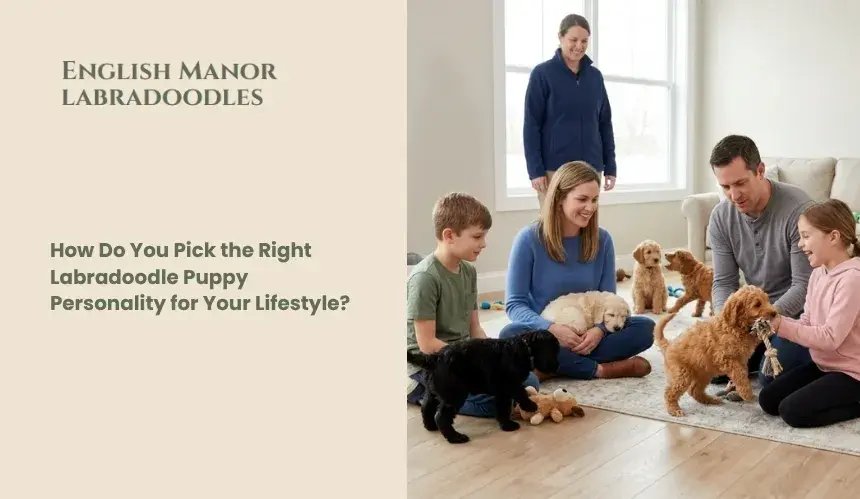
- englishmanor
How Do You Pick the Right Labradoodle Puppy Personality for Your Lifestyle?
Quick Overview: Choosing the right Labradoodle puppy starts with evaluating energy level, sociability, trainability, coat type, and grooming tolerance. Standard, Miniature, and Medium Labradoodles each exhibit different behavioral tendencies that influence compatibility with your household, children, other pets, and living space. Did you know? |
Bringing a Labradoodle puppy into your home is exciting, but choosing the right personality is key to a harmonious relationship. Not all Labradoodles are alike, energy levels, sociability, independence, and trainability can vary widely, even within the same litter.
Selecting a puppy whose temperament matches your family structure, activity level, living space, and grooming commitment ensures fewer behavioral challenges and a happier household. For example, high-energy Standard Labradoodles thrive in active homes with yards, while Miniature Labradoodles are often better suited for apartments or smaller families.
Understanding these personality traits and observing a puppy’s initial behavior, such as curiosity, playfulness, and response to people, helps predict long-term compatibility and makes your adoption or purchase decision much more informed.
What Are the Common Labradoodle Personalities?
Labradoodles vary in temperament based on breed type, genetics, and early socialization. Understanding these common personality traits helps homeowners select a puppy that fits their lifestyle, household activity level, and family dynamics.
How Do Standard, Miniature, and Medium Labradoodles Differ in Personality?
- Standard Labradoodles: High energy, playful, and highly social. Require daily exercise and outdoor activity to stay happy. Often thrive in homes with yards or active families.
- Miniature Labradoodles: Moderate energy, adaptable, and often calmer. Well-suited for apartments or smaller households, while still enjoying play and social interaction.
- Medium Labradoodles: Balanced energy and temperament. Adaptable to a variety of home environments, combining social engagement with moderate exercise needs.
Did you know? Standard Labradoodles tend to have more intense bursts of play and may require structured training to manage their high energy levels effectively.
What Behavioral Tendencies Should Homeowners Expect?
- Playful and sociable: Enjoy interaction with family members and other pets.
- Calm and affectionate: Prefer lounging and gentle companionship.
- Independent vs people-oriented: Some puppies require consistent guidance, while others naturally seek human attention.
- Curiosity and exploration: Puppies with high curiosity may require safe spaces to prevent mischief.
Observing these traits early can predict how well a puppy will integrate with children, other pets, and the household routine.
Why Early Observation Matters
- Puppies begin displaying temperament traits at a few weeks old.
- Watching responses to novel stimuli, toys, and people helps gauge sociability, fear response, and energy levels.
- Early insights guide breeders or adopters to select a puppy that aligns with household expectations.
How Do You Match Puppy Personality to Your Lifestyle?
Selecting a Labradoodle puppy that fits your lifestyle ensures a harmonious home and reduces future behavioral challenges. Personality traits such as energy level, sociability, independence, and trainability should align with your household activity, family structure, living space, and daily routine.
Which Energy Levels Suit Different Owners?
- High-energy puppies: Ideal for active families, owners who enjoy long walks, outdoor play, and structured training.
- Moderate-energy puppies: Fit families with balanced activity schedules or smaller yards; adaptable to indoor play sessions.
- Calm or low-energy puppies: Better for sedentary households, apartment living, or older adults seeking a more relaxed companion.
Did you know? High-energy Standard Labradoodles require at least 60–90 minutes of structured exercise daily to prevent boredom-related behaviors like chewing or excessive barking.
How Does Living Space Influence Puppy Selection?
- Apartment or small homes: Miniature or medium Labradoodles with moderate energy adapt well, requiring less outdoor space.
- Houses with yards: Standard Labradoodles thrive, as larger spaces accommodate running and playtime for high-energy breeds.
How Do Family Dynamics Affect Choice?
- Children: Sociable, patient puppies integrate best with kids.
- Other pets: Puppies with adaptable, friendly personalities are easier to introduce to cats or other dogs.
- Busy households: Independent or moderately social puppies cope better with intermittent attention and variable routines.
Why Trainability and Curiosity Matter
- Quick learners: Respond well to structured training but require mental stimulation.
- Independent types: May need more consistent guidance to develop good habits.
- Curiosity level: Highly curious puppies benefit from safe exploration areas to prevent mischief and accidents.
Matching these behavioral traits to your daily routine ensures the puppy’s personality complements your household environment.
How Do You Observe Energy and Playfulness in Puppies?
Assessing a Labradoodle puppy’s temperament early helps ensure a good match for your lifestyle. Observation should focus on social interaction, curiosity, playfulness, and response to stimuli, rather than just appearance or breed reputation.
What to Look for in Play and Exploration
- Puppies that engage with toys and explore their surroundings demonstrate curiosity and adaptability.
- Observe how they interact with people and littermates—sociable puppies often integrate more easily into family routines.
- Note responses to new sounds, environments, or gentle handling, which indicate confidence or potential anxiety.
Did you know?
Puppies showing balanced playfulness and curiosity early are more likely to develop into confident, trainable adults who adapt well to family and household activities.
How to Gauge Energy Without Overstimulation
- Short play sessions provide insight into endurance, attention span, and focus.
- Watch for natural activity cycles: a mix of bursts of energy followed by calm periods indicates a balanced temperament.
- Avoid judging high-energy puppies negatively, proper exercise and training can channel their energy productively.
How Do Trainability and Intelligence Influence Puppy Selection?
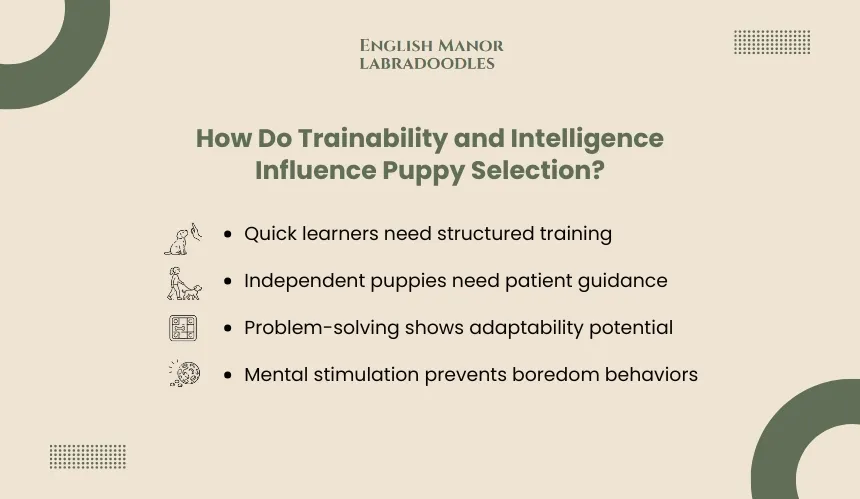
Trainability and intelligence are key factors when matching a Labradoodle puppy to your lifestyle. Highly intelligent puppies learn commands quickly, adapt well to routines, and excel in activities like obedience, agility, or therapy work. However, they also require mental stimulation to prevent boredom-related behaviors.
How Learning Style Affects Daily Life
- Puppies that are quick learners respond well to structured training and socialization.
- More independent or stubborn puppies may need consistent, patient guidance to develop good habits.
- Observing how a puppy solves simple challenges or responds to new cues provides insight into problem-solving ability and adaptability.
Did you know?
Intelligent Labradoodles can become bored without mental engagement, leading to destructive behavior. Early training and interactive play help channel their intelligence positively.
Balancing Independence and People-Oriented Behavior
- People-oriented puppies enjoy interaction, making them easier to train with positive reinforcement.
- Independent types may require more focused attention initially but can thrive in structured households.
Choosing a puppy whose learning style and intelligence level align with your schedule, attention availability, and household dynamics ensures smoother integration and long-term companionship.
How Does Grooming Tolerance Affect Puppy Personality Selection?
Grooming tolerance is an important factor in choosing a Labradoodle puppy, as coat type and patience for handling can influence daily care routines and overall adaptability. Puppies with curly or dense coats may require regular brushing, trimming, and professional grooming, while wavier or looser coats may be easier to maintain at home.
How Coat Type Influences Grooming Needs
Curly or dense coats require more frequent grooming to prevent mats and tangles, whereas wavier or looser coats can be maintained with simpler weekly brushing. Choosing a puppy with a coat that fits your time and attention ensures long-term coat health.
Why Temperament Affects Grooming Tolerance
Calm and sociable puppies typically tolerate brushing, bathing, and trimming without stress. Independent or sensitive puppies may require gradual acclimation and consistent handling to build grooming comfort. Early exposure to grooming routines can prevent behavioral issues related to coat maintenance.
Early Grooming Habits and Long-Term Adaptation
Introducing puppies to grooming early helps them adapt to regular care, reducing stress and resistance. Selecting a puppy whose grooming tolerance matches your household schedule ensures both coat health and a smoother, long-term relationship.
Did you know?
Puppies exposed to gentle grooming before 12 weeks of age are more likely to tolerate adult grooming sessions calmly, supporting healthier coats and easier maintenance.
Decision Framework Table: Matching Labradoodle Traits to Lifestyle
This table helps homeowners and prospective owners match Labradoodle puppy personalities to their household environment, activity level, and family dynamics, integrating energy, sociability, trainability, and grooming tolerance for informed selection.
Puppy Trait | Lifestyle Fit | Key Considerations |
Energy Level | High-energy: active households; Moderate: balanced homes; Calm: low-activity or apartment living | Exercise needs and playtime commitment |
Breed Type | Standard: large homes with yards; Miniature: apartments or small yards; Medium: adaptable | Space and activity compatibility |
Sociability | Families with children or other pets | Early socialization and supervision |
Trainability | Quick learners: structured training; Independent: consistent guidance | Mental stimulation and learning pace |
Coat & Grooming | Curly/dense: frequent brushing; Wavy/loose: moderate | Household grooming schedule and patience |
Temperament | Calm/affectionate vs playful/excitable | Match to family routines and attention availability |
Did you know?
Matching a puppy’s energy, sociability, and grooming tolerance to your household reduces stress, prevents behavioral challenges, and ensures a long-term harmonious relationship.
Frequently Asked Questions
How can I assess a Labradoodle puppy’s personality before adoption?
Observe the puppy’s interaction with people, littermates, toys, and new environments. Look for curiosity, sociability, energy levels, and initial response to handling to predict long-term temperament.
Are high-energy Labradoodles suitable for families with young children?
Yes, if the household can provide daily exercise and structured play. Standard Labradoodles often need more space and activity to channel their energy safely and positively.
How does coat type affect a puppy’s temperament or handling?
Curly or dense coats require more grooming, which can affect how a puppy responds to handling. Early grooming exposure helps develop tolerance and reduces stress during brushing or trimming.
Can a shy or independent Labradoodle adapt to a busy household?
Yes, with gradual socialization and consistent training. Independent or sensitive puppies may need patience but can thrive if routines and exposure are structured.
How important is early socialization for behavior development?
Critical. Puppies exposed to varied people, pets, sounds, and environments during early weeks develop confidence, adaptability, and better integration with family life.
Should I prioritize trainability over energy level?
Both matter. High-energy puppies with strong trainability are ideal for active households, while calm, intelligent puppies suit less active environments. Matching both traits ensures compatibility with your lifestyle.