- englishmanor
How Do You Choose The Best Food For A Labradoodle Puppy’s Growth Stage?
Quick Overview: Choosing the best food for a Labradoodle puppy involves selecting a high-quality, balanced diet formulated for growth, with the right protein, fats, and minerals. Food should match the puppy’s size, age, and energy needs to support healthy development and long-term well-being.
|
Labradoodle puppies grow rapidly in their first year, and their nutritional needs change just as quickly. Feeding the wrong type of food during this stage can lead to poor growth, weak bones, digestive issues, or long-term health problems. Because Labradoodles can vary in size and energy levels, choosing the right diet is not always straightforward.
Many puppy owners rely on generic food options without considering ingredient quality, nutrient balance, or breed-specific needs. However, proper nutrition during the growth stage directly impacts muscle development, bone strength, immune function, and overall health. A well-balanced diet ensures that puppies develop at a steady, healthy rate without deficiencies or overeating.
- Growth-stage nutrition influences long-term health outcomes
- Incorrect feeding can lead to developmental and digestive issues
- Balanced diets support consistent and healthy growth
Did you know: Puppies require nearly twice the energy intake per unit body weight of adult dogs, making nutrient-dense food essential during early development.
Understanding how to choose the right food helps ensure that Labradoodle puppies receive the nutrients they need at each stage of growth. This guide explains what to look for, what to avoid, and how to make informed feeding decisions.
Why Is Nutrition Critical During A Labradoodle Puppy’s Growth Stage?
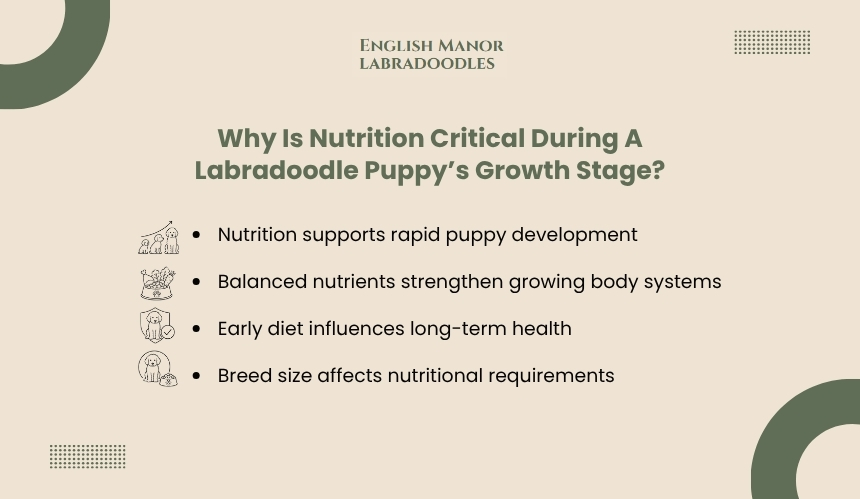
Nutrition during the growth stage directly influences how a Labradoodle puppy develops physically and internally. Since this phase involves rapid changes in body structure, organ function, and energy demand, a well-balanced diet is essential to support healthy, consistent development.
How Does Rapid Growth Affect Nutritional Needs?
Labradoodle puppies experience accelerated growth, especially in the first few months. This requires a steady supply of nutrients to support the development of muscles, bones, and internal systems.
From a biological perspective, insufficient or imbalanced nutrition during this phase can slow growth or cause structural issues.
Did you know: Puppies grow much faster than adult dogs, increasing their energy demands and the need for essential nutrients.
What Role Do Balanced Nutrients Play?
A balanced diet ensures that all essential nutrients, proteins, fats, vitamins, and minerals are provided in the correct proportions. Excess or deficiency of any nutrient can disrupt normal development.
For example, too little calcium can weaken bone formation, while too much can lead to skeletal abnormalities.
Did you know: Nutrient imbalances during growth can have long-term effects that are difficult to correct later.
How Does Diet Impact Long-Term Health?
The food a puppy consumes during its early stages sets the foundation for future health. Proper nutrition supports immune function, reduces the risk of chronic conditions, and improves overall vitality.
From a long-term perspective, early dietary choices influence factors such as weight management, joint health, and metabolic function.
Did you know: Proper nutrition during puppyhood significantly reduces the risk of obesity and related health issues later in life.
Why Is Breed-Specific Nutrition Important For Labradoodles?
Labradoodles can vary in size depending on whether they are standard, medium, or miniature. Their nutritional needs may differ based on growth rate and expected adult size, particularly for bone and joint development.
Did you know: Medium to large breed puppies require controlled calcium and calorie intake to support healthy skeletal development.
What Nutrients Should Labradoodle Puppies Get?
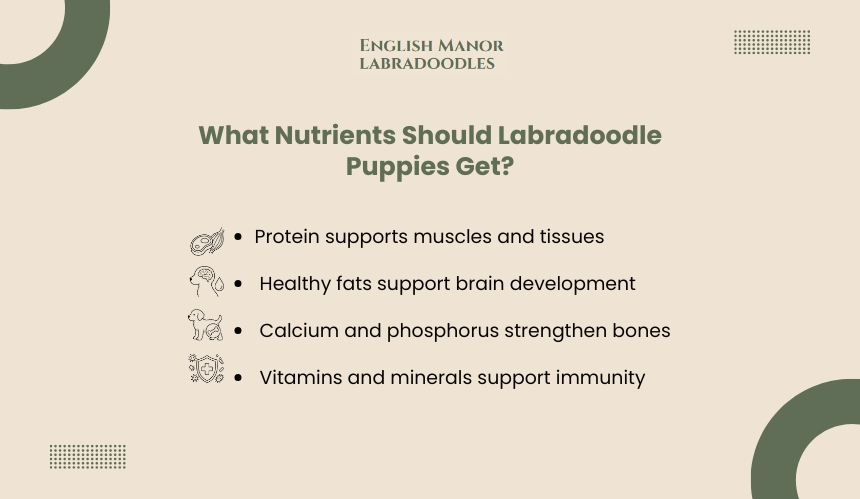
Labradoodle puppies require a balanced combination of essential nutrients to support rapid growth, energy needs, and overall development. Each nutrient plays a specific role, and maintaining the right balance is critical to avoid deficiencies or excesses that can affect health.
Why Is Protein Important For Muscle Development?
Protein is one of the most important nutrients for growing puppies. It supports the development of muscles, tissues, and organs, and helps repair cells as the body grows.
High-quality protein sources such as chicken, fish, or lamb provide essential amino acids that puppies need for proper development.
Did you know:
- Growing puppies typically require diets containing around 22–32% protein, depending on size and activity level.
How Do Fats Support Energy And Brain Development?
Fats are a concentrated source of energy and are essential for brain development, especially in early life stages. They also support healthy skin and coat.
Omega-3 and omega-6 fatty acids play a key role in cognitive development and overall health.
Did you know:
- DHA, a type of omega-3 fatty acid, is critical for brain and vision development in puppies.
Why Are Calcium And Phosphorus Important For Bone Growth?
Calcium and phosphorus are essential for building strong bones and teeth. These minerals must be provided in the correct ratio to ensure proper skeletal development.
An imbalance, especially in medium- to large-breed dogs like Labradoodles, can lead to joint or bone issues.
Did you know:
- The ideal calcium-to-phosphorus ratio is critical for proper bone development, particularly in growing puppies.
How Do Vitamins And Minerals Support Immunity?
Vitamins and minerals contribute to immune function, metabolism, and overall health. Nutrients such as vitamin A, vitamin D, and zinc help maintain bodily functions and support disease resistance.
Did you know:
- A balanced supply of vitamins and minerals helps strengthen the immune system during early development.
Why Is Balanced Nutrition More Important Than Individual Nutrients?
While each nutrient plays a specific role, overall balance is what ensures proper development. Excess or deficiency in one area can disrupt the effectiveness of others.
Did you know:
- Balanced diets are more effective than supplementing individual nutrients without proper guidance.
How Do You Choose The Right Type Of Puppy Food?
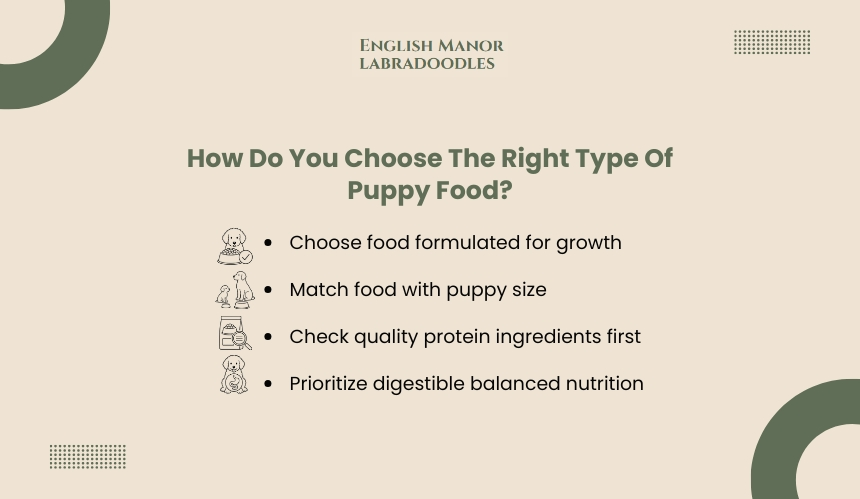
Choosing the right type of food for a Labradoodle puppy involves more than selecting a popular brand. It requires evaluating the food’s formulation, ingredient quality, and suitability for the puppy’s size and growth rate. The goal is to select a diet that delivers balanced nutrition in a form that supports digestion, energy needs, and development.
Should You Choose Dry Food, Wet Food, Or Raw Diet?
Puppy food is commonly available in dry (kibble), wet (canned), or raw formats. Each has specific advantages, but the choice should be based on practicality, nutritional balance, and consistency.
- Dry food is widely used due to convenience, balanced formulation, and dental benefits
- Wet food provides higher moisture content and may be easier to eat for some puppies
- Raw diets require careful planning to ensure nutritional balance and safety
From a nutritional perspective, properly formulated dry or wet puppy food is generally more consistent and reliable for meeting growth requirements.
Did you know:
- Commercial puppy foods are formulated to meet established nutritional standards, reducing the risk of deficiencies compared to unbalanced diets.
Why Do Breed Size And Growth Rate Matter?
Labradoodles can fall into the medium- or large-breed categories, depending on their size. Growth rate affects how nutrients, especially calcium and calories, should be managed.
Large or fast-growing puppies require controlled nutrient intake to support proper skeletal development without overloading the system.
Did you know:
- Large-breed puppies benefit from controlled-calorie diets to reduce the risk of joint and bone issues.
How Do You Read Puppy Food Ingredient Labels?
Ingredient labels provide insight into the quality of the food. The first few ingredients should include high-quality protein sources, followed by a balanced mix of nutrients.
Key things to look for:
- Named protein sources (e.g., chicken, lamb, fish)
- Balanced fat and carbohydrate content
- Absence of excessive fillers or artificial additives
Understanding labels helps ensure that the food meets the puppy’s nutritional needs.
Did you know: The first ingredient listed on pet food labels typically represents the highest proportion in the formula.
What Role Do Nutritional Standards Play In Selection?
Quality puppy foods are formulated to meet established nutritional guidelines, ensuring they provide complete and balanced nutrition for growth.
These standards help ensure that essential nutrients are included in the correct proportions.
Did you know:
- Foods labeled as “complete and balanced” are designed to meet specific nutritional requirements for growing puppies.
How Do You Choose Food Based On Digestibility?
Digestibility affects how well a puppy can absorb nutrients. High-quality ingredients are easier to digest and reduce the likelihood of digestive issues such as diarrhea or discomfort.
Did you know:
- Highly digestible diets improve nutrient absorption and support steady growth in puppies.
What Ingredients Should Be Avoided In Puppy Food?
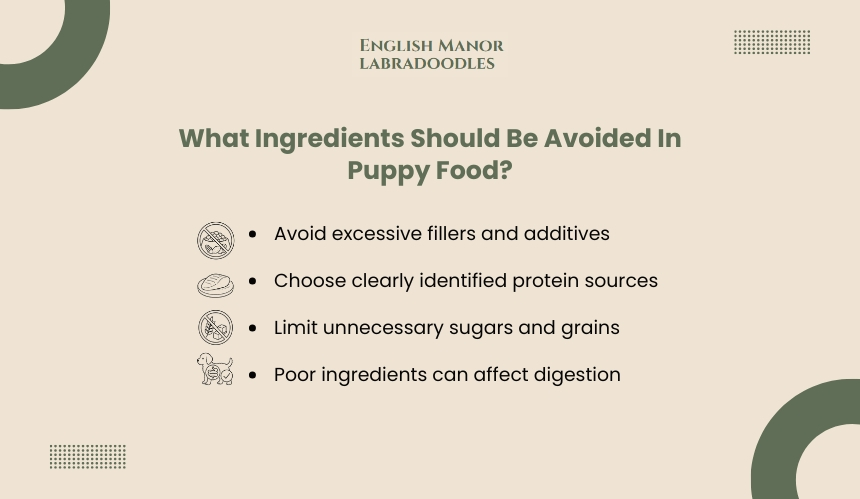
Choosing the right food is not only about what to include but also what to avoid. Certain ingredients can reduce nutritional quality, affect digestion, or contribute to long-term health issues. For Labradoodle puppies, avoiding low-quality or unnecessary additives is essential to support proper growth and development.
Why Should Fillers And Artificial Additives Be Avoided?
Fillers such as excessive corn, soy, or wheat are often used to bulk up food without providing significant nutritional value. Artificial colors, flavors, and preservatives may also be included to enhance appearance or shelf life, but do not contribute to health.
From a nutritional standpoint, these ingredients can reduce the overall quality of the diet and may lead to digestive sensitivity in some puppies.
Did you know:
- Diets high in fillers provide fewer essential nutrients per serving, which can affect growth and energy levels.
What Are Low-Quality Protein Sources?
Not all protein sources are equal. Generic or unspecified ingredients such as “meat by-products” or “animal meal” can indicate lower-quality protein. High-quality protein should come from clearly identified sources like chicken, lamb, or fish.
Did you know:
- High-quality protein sources are more digestible and provide better amino acid profiles for growth.
Why Should Excessive Grains Or Sugars Be Limited?
While some grains can be part of a balanced diet, excessive amounts may reduce protein content and overall nutritional value. Added sugars are unnecessary and can contribute to weight gain or energy imbalances.
Did you know:
- Diets high in carbohydrates and sugar can lead to unstable energy levels and unnecessary weight gain.
What Risks Do Artificial Preservatives Pose?
Certain artificial preservatives are used to extend shelf life, but may not be ideal for long-term health. Natural preservation methods are generally preferred for maintaining food quality.
Did you know:
- Natural preservatives are increasingly used in modern pet foods as safer alternatives to synthetic additives.
How Do Poor-Quality Ingredients Affect Digestion?
Low-quality ingredients can be harder for puppies to digest, leading to symptoms such as loose stools, bloating, or discomfort. Consistent digestive issues often indicate that the food is not suitable.
Did you know:
- Digestive health is directly linked to ingredient quality, especially during early growth stages.
How Much And How Often Should Labradoodle Puppies Be Fed?
Feeding the correct amount at the right frequency is essential for maintaining steady growth in Labradoodle puppies. Overfeeding can lead to rapid weight gain and joint stress, while underfeeding can result in nutrient deficiencies and poor development. A structured feeding routine ensures balanced energy intake throughout the day.
What Feeding Frequency Is Recommended By Age?
Feeding frequency changes as the puppy grows and its digestive system develops.
- 8–12 weeks: 3–4 meals per day
- 3–6 months: 3 meals per day
- 6 months and older: 2 meals per day
Smaller, frequent meals help maintain stable energy levels and support digestion during early growth stages.
Did you know: Puppies have smaller stomachs but higher energy needs, which is why frequent feeding is recommended in the early months.
How Is Portion Size Determined?
Portion size depends on the puppy’s weight, age, activity level, and the calorie density of the food. Feeding guidelines provided on food packaging offer a starting point, but adjustments may be needed based on growth and body condition.
From a practical standpoint, monitoring weight and physical condition helps refine portion sizes over time.
Did you know: Feeding guidelines are estimates, and actual needs can vary based on individual growth rates.
What Are The Risks Of Overfeeding?
Overfeeding can lead to excessive weight gain, which places stress on developing bones and joints. This is particularly important for Labradoodles, which may fall into the medium- or large-breed categories.
Did you know:
- Rapid weight gain in puppies increases the risk of joint and skeletal issues later in life.
What Happens If A Puppy Is Underfed?
Underfeeding can result in inadequate nutrient intake, leading to slow growth, low energy levels, and weakened immunity. Puppies require consistent energy and nutrients to support development.
Did you know:
- Insufficient nutrition during growth stages can have long-term effects on health and development.
How Can Feeding Routines Be Managed Effectively?
Establishing a consistent feeding schedule helps regulate digestion and energy levels. Feeding at the same times each day also supports routine and behavioral development.
Did you know:
- Consistent feeding routines improve digestion and help maintain stable energy levels in puppies.
How Do You Adjust Diet As A Labradoodle Puppy Grows?
As Labradoodle puppies grow, their nutritional needs change in terms of calorie intake, nutrient balance, and feeding structure. Adjusting the diet at the right time ensures steady growth, prevents health issues, and supports the transition from rapid development to maintenance.
When Should You Transition Between Growth Stages?
Puppies move through different growth phases, and their diet should reflect these changes. Early stages require higher calorie intake and frequent feeding, while later stages focus on controlled growth and balanced nutrition.
Transitions should be gradual to allow the digestive system to adapt without disruption.
Did you know:
- Sudden changes in diet can cause digestive issues, which is why gradual transitions over several days are recommended.
How Do You Monitor Weight And Body Condition?
Regular monitoring of weight and body condition helps determine whether dietary adjustments are needed. Puppies should maintain steady growth without excessive weight gain or noticeable underdevelopment.
From a practical perspective, visible signs such as body shape, energy levels, and coat condition can indicate whether the diet is appropriate.
Did you know:
- Maintaining an ideal body condition during growth reduces the risk of long-term health issues, especially in medium- to large-breed dogs.
When Should You Switch To Adult Dog Food?
Labradoodles typically transition to adult food between 9 and 12 months, depending on their size and growth rate. Larger dogs may require a longer growth phase before switching.
Adult food contains different nutrient levels and is designed for maintenance rather than growth.
Did you know:
- Switching to adult food too early can limit the intake of nutrients needed for proper development.
How Should Food Portions Be Adjusted Over Time?
As puppies grow, portion sizes need to be adjusted based on weight, activity level, and energy requirements. Increased activity may require more calories, while slower growth phases may require controlled intake.
Did you know:
- Caloric needs change throughout development, making portion adjustments essential for balanced growth.
Why Is Consistency Important During Diet Changes?
Consistency helps maintain digestive stability and ensures that the puppy adapts well to dietary changes. Gradual adjustments reduce stress on the digestive system and improve nutrient absorption.
Did you know:
- Consistent feeding practices support better digestion and overall health during growth transitions.
What Signs Indicate A Labradoodle Puppy’s Diet Needs Adjustment?
Even with a well-planned feeding routine, a Labradoodle puppy’s diet may need adjustments based on how the body responds. Puppies often show clear physical and behavioral signs when their nutritional needs are not being fully met. Recognizing these signs early helps maintain proper growth and overall health.
What Signs Indicate Poor Growth Or Weight Issues?
If a puppy is not gaining weight steadily or appears underweight or overweight, it may indicate that the current diet is not balanced correctly. Slow growth can result from insufficient calories or nutrients, while excessive weight gain may be caused by overfeeding or high-calorie intake.
Did you know: Maintaining a steady growth curve is more important than rapid weight gain for healthy development.
What Digestive Problems Suggest Dietary Issues?
Frequent diarrhea, vomiting, or bloating can indicate that the food is unsuitable or difficult to digest. Poor-quality ingredients or sudden dietary changes are common causes of digestive disturbances.
From a practical perspective, consistent digestive issues often signal the need to evaluate ingredient quality or feeding practices.
Did you know: Digestive health is one of the first indicators of whether a puppy’s diet is appropriate.
What Does Low Energy Or Lethargy Indicate?
Puppies are typically active and energetic. A noticeable drop in energy levels may indicate that the diet is not providing sufficient nutrients or calories. Inadequate fat or protein intake can affect energy availability.
Did you know: Proper nutrition directly influences energy levels and activity in growing puppies.
How Does Coat Condition Reflect Diet Quality?
A dull, dry, or thinning coat can indicate deficiencies in essential nutrients, particularly fatty acids. Healthy puppies usually have soft, shiny coats, which reflect proper nutrition and overall health.
Did you know: Omega fatty acids play a key role in maintaining the health of dogs’ skin and coats.
What Behavioral Changes Can Signal Dietary Imbalance?
Changes such as irritability, restlessness, or reduced interest in food can indicate that the diet is not meeting the puppy’s needs. Behavioral signs often accompany physical symptoms and should be considered together.
Did you know: Nutritional imbalances can affect both physical health and behavior in puppies.
Frequently Asked Questions
Can Labradoodle Puppies Eat Regular Dog Food?
Labradoodle puppies should not be fed regular adult dog food during their growth stage. Puppy-specific food contains higher levels of essential nutrients required for development, while adult formulas are designed for maintenance and may not support proper growth.
How Do You Know If A Puppy Food Is High Quality?
High-quality puppy food typically lists real protein sources as the first ingredient, avoids excessive fillers, and is labeled as complete and balanced for growth. Consistent digestion, healthy weight gain, and a shiny coat also indicate good quality.
Is Grain-Free Food Better For Labradoodle Puppies?
Grain-free diets are not necessary for most puppies unless there is a specific sensitivity. Balanced diets that include healthy grains can provide essential nutrients and energy for growth when properly formulated.
Can You Switch Puppy Food Brands Frequently?
Frequent changes in food are not recommended, as they can disrupt digestion. If a change is needed, it should be done gradually over several days to allow the puppy’s system to adjust properly.
How Much Water Should A Labradoodle Puppy Drink?
Puppies should have constant access to fresh water. Hydration needs vary based on activity level and diet, but adequate water intake is essential for digestion, temperature regulation, and overall health.
Should Supplements Be Added To Puppy Food?
Supplements are usually not necessary if the puppy is eating a complete and balanced diet. Adding supplements without guidance can disrupt nutrient balance and should only be done under veterinary advice.